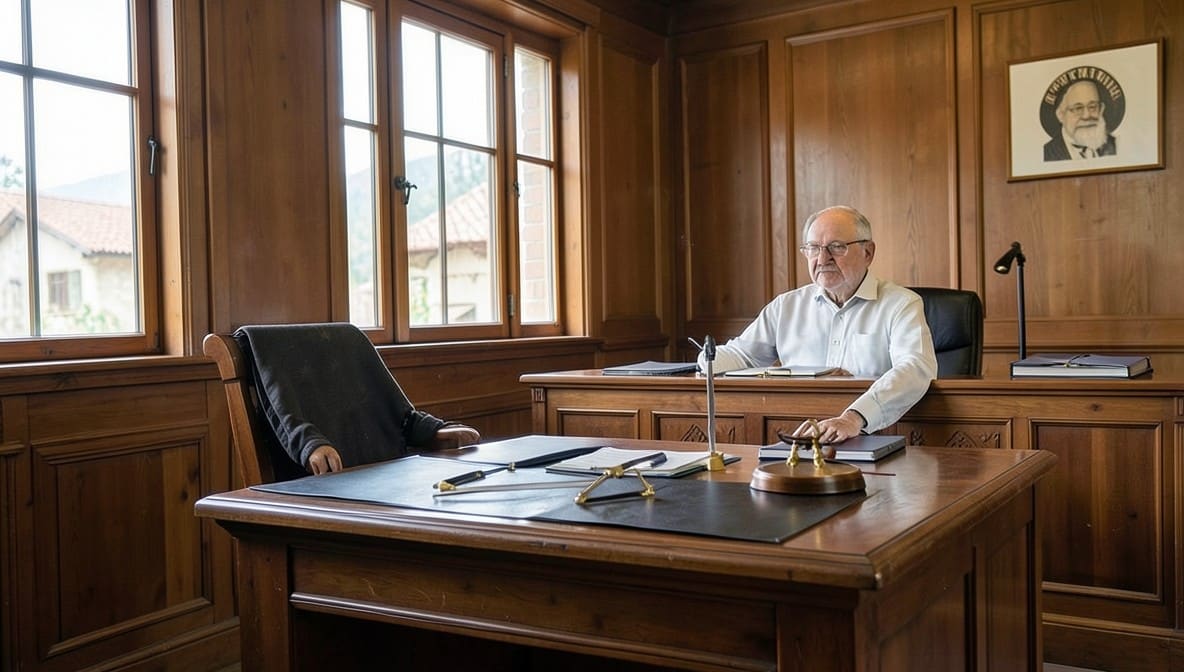
The Rajasthan High Court has clarified that mere nomination as a director of a company, without specific allegations of responsibility for its day-to-day affairs, cannot sustain criminal liability under Section 138 of the Negotiable Instruments Act. This ruling reinforces the requirement of personal culpability in cheque bounce cases involving corporate directors.
Background & Facts
The Dispute
The petitioner, Alok Kumar Joshi, a retired Executive Director (Operation) of HUDCO, was arrayed as Accused No. 5 in a criminal complaint filed by respondent No. 2, Om Prakash Dhabai, under Section 138 of the Negotiable Instruments Act, 1881. The complaint arose from the dishonour of a cheque issued by M/s Jai Shree Ram Enterprises, a private company, in payment of a debt. The petitioner was not a promoter, shareholder, or managing director of the company. He was nominated as a Director by HUDCO pursuant to a loan agreement entered into between HUDCO and the company.
Key Facts
- The petitioner was appointed as a Director of M/s Jai Shree Ram Enterprises on the nomination of HUDCO, a public financial institution, under the terms of a loan agreement dated 12.05.2020
- The petitioner held no managerial or operational role in the company and was not involved in its financial decisions or day-to-day administration
- The cheque in question (No. 001234 dated 15.07.2024) was drawn on the company’s account and signed by the company’s authorized signatory, not by the petitioner
- The complaint filed on 02.08.2024 named five accused, including the petitioner, without specifying any act, omission, or responsibility attributable to him
- No averment was made in the complaint that the petitioner was in charge of or responsible for the conduct of the company’s business at the time the cheque was issued
- The petitioner had no authority to sign cheques, approve payments, or control the company’s finances
Procedural History
- 02.08.2024: Complaint filed under Section 138 NI Act before Special Judicial Magistrate, NI Act Cases No. 3, Udaipur (Criminal Regular Case No. 88179/2024)
- 04.09.2024: Magistrate took cognizance against all accused, including the petitioner, without requiring any preliminary inquiry or specific averments
- 15.09.2024: Petitioner filed application before the Magistrate seeking discharge, arguing lack of prima facie case against him
- 20.09.2024: Magistrate dismissed the discharge application without addressing the legal sufficiency of allegations against the petitioner
- 25.10.2024: Petitioner filed the present Criminal Miscellaneous Petition under Section 528 of the Bharatiya Nagarik Suraksha Sanhita, 2023
- 29.06.2026: Hearing concluded before the High Court
Relief Sought
The petitioner sought quashing of the entire proceedings against him under Section 528 BNSS, arguing that the complaint failed to disclose any offence against him and that his nomination as a director was purely formal and statutory.
The Legal Issue
The central question was whether a nominee director, who has no role in the management or operations of a company, can be held vicariously liable under Section 138 of the Negotiable Instruments Act without specific averments that he was "in charge of and responsible for the conduct of the business" of the company at the time of the offence.
Arguments Presented
For the Petitioner
Counsel for the petitioner relied on K. Srinivas v. M. Srinivas and S. Sreesanth v. State of Kerala to argue that vicarious liability under Section 138 requires a direct nexus between the accused and the company’s operational control. He emphasized that the complaint contained no allegation that the petitioner signed the cheque, authorized its issuance, or had any role in the company’s financial affairs. He further cited V. Sivakumar v. S. Rajendran to assert that mere directorship, especially when nominal or statutory, cannot attract criminal liability. The petitioner’s role was purely as a representative of HUDCO, a financial institution, and he had no authority to act on behalf of the company.
For the Respondent
The Public Prosecutor did not contest the factual position regarding the petitioner’s role. He conceded that no specific averments were made against the petitioner in the complaint but argued that the Magistrate was entitled to take cognizance based on the overall allegations against the company. He submitted that the petitioner’s name was included as a director and that the law presumes liability unless disproved.
The Court's Analysis
The Court examined the statutory framework under Section 138 of the Negotiable Instruments Act and the requirements for vicarious liability under Section 141. It noted that Section 141 mandates that for a director to be liable, the complaint must specifically allege that the accused was "in charge of, and responsible for, the conduct of the business of the company" at the time the offence was committed.
"The mere fact that a person is a director of a company does not make him liable under Section 138. There must be a specific averment that he was in charge of and responsible for the conduct of the business of the company."
The Court observed that the complaint was entirely silent on the petitioner’s role, responsibilities, or involvement in the transaction. It was not alleged that he signed the cheque, authorized its issuance, or had any control over the company’s finances. The Court held that the inclusion of the petitioner as an accused was based solely on his nominal designation as a director, which is legally insufficient.
The Court further noted that the Magistrate had taken cognizance in a "cyclostyled manner" - applying the same standard to all accused without individualized scrutiny. This, the Court held, violated the principles of natural justice and the mandatory requirements of Section 141. The Court distinguished S. Sreesanth v. State of Kerala, where the accused was an active director, from the present case where the petitioner was a nominee with no operational role.
The Verdict
The petitioner succeeded. The Court quashed the proceedings against him under Section 528 BNSS. The order dated 04.09.2024 taking cognizance against the petitioner is set aside. All proceedings in Criminal Regular Case No. 88179/2024 against the petitioner are hereby quashed. The stay on proceedings against the petitioner is lifted as the case against him stands terminated. The Court directed that the complainant may file an application before the trial court for deletion of the petitioner’s name from the array of accused, if not already done.
What This Means For Similar Cases
Nominee Directors Are Not Automatically Liable
- Practitioners must ensure that complaints under Section 138 NI Act contain specific, factual averments linking the accused director to the company’s operational control
- Mere inclusion of a director’s name without alleging responsibility for the business is a fatal defect
- Defence counsel should move for discharge at the earliest stage if no such averments exist
Corporate Liability Requires Individualized Allegations
- Courts must scrutinize each accused individually under Section 141
- Generic allegations against "directors" without distinguishing roles will not sustain prosecution
- Nominee directors appointed by financial institutions, regulators, or lenders cannot be held liable unless actively involved in management
Procedural Safeguards Must Be Enforced
- Magistrates cannot take cognizance in a mechanical or boilerplate manner
- The burden of pleading specific responsibility lies with the complainant
- Failure to meet this burden renders the complaint legally unsustainable against the nominee director