High Courts judgments

10232 High Courts judgments explained in plain English: what was decided, the law applied and why it matters. Page 81 of 427.

Article 21 | Police Duty to Protect Couples in Live-in Relationships from Threats Without Legality Scrutiny : Punjab & Haryana HC
Case Law Analysis
|Punjab and Haryana High Court

Article 21 | Police Duty to Protect Couples in Live-in Relationships from Threats Without Legality Scrutiny : Punjab & Haryana HC

The Punjab & Haryana High Court reaffirmed that the right to life under Article 21 includes protection from threats, even for couples in live-in relationships, without adjudicating the relationship's legality. The ruling mandates police to assess threat perceptions and provide protection, reinforcing state responsibility to safeguard personal liberty regardless of social or legal judgments on relationship status.

Section 12A Commercial Courts Act | Pre-Institution Mediation Not Retrospective for Suits Filed Before 20.08.2022 : Sikkim HC
Case Law Analysis
|Sikkim High Court

Section 12A Commercial Courts Act | Pre-Institution Mediation Not Retrospective for Suits Filed Before 20.08.2022 : Sikkim HC

Sikkim High Court clarifies that mandatory pre-institution mediation under Section 12A of the Commercial Courts Act does not apply to suits filed before the 20.08.2022 amendment, shielding litigants from procedural dismissals. The ruling ensures legal certainty for pending commercial disputes and reinforces the non-retrospective application of procedural amendments.

BNS Section 438 | Gravity of Offence Alone Insufficient to Deny Anticipatory Bail When Accused’s Role Is Administrative, Not Operational : Jharkhand HC
Case Law Analysis
|Jharkhand High Court

BNS Section 438 | Gravity of Offence Alone Insufficient to Deny Anticipatory Bail When Accused’s Role Is Administrative, Not Operational : Jharkhand HC

The Jharkhand High Court granted anticipatory bail to a medical officer whose duties did not include blood collection or transfusion, holding that under BNS Section 438, the mere gravity of HIV transmission charges cannot override the accused’s minimal, non-operational role. This sets a critical precedent for healthcare professionals facing vicarious liability in systemic failures, reinforcing that bail must be assessed by individual culpability, not collective blame.

Unregistered Compromise Deeds Invalid for Title Transfer | Boundary Discrepancies Nullify Ownership Claims: HP HC
|Himachal Pradesh High Court

Unregistered Compromise Deeds Invalid for Title Transfer | Boundary Discrepancies Nullify Ownership Claims: HP HC

The Himachal Pradesh High Court has ruled that unregistered compromise deeds cannot establish legal title to land, and discrepancies in boundary descriptions in property documents render ownership claims invalid. This reinforces the mandatory requirement of registration under the Registration Act and protects bona fide purchasers from informal, undocumented transfers.

BNS Section 317(2) | Custodial Interrogation Unnecessary When Accused Fully Cooperates in Investigation : HP HC
|Himachal Pradesh High Court

BNS Section 317(2) | Custodial Interrogation Unnecessary When Accused Fully Cooperates in Investigation : HP HC

The Himachal Pradesh High Court has ruled that when an accused person voluntarily joins the investigation and fully cooperates, custodial interrogation becomes legally unjustified under the Bhartiya Nyaya Sanhita. This reinforces that personal liberty under Article 21 prevails over speculative investigative needs, setting a clear standard for bail decisions in non-violent, non-fleeing cases across India.

SC/ST Act Section 3(1)(r)-(s) | Anticipatory Bail Granted When Allegations Lack Caste-Based Abuse, Not Just General Fraud: Patna HC
Case Law Analysis
|Patna High Court

SC/ST Act Section 3(1)(r)-(s) | Anticipatory Bail Granted When Allegations Lack Caste-Based Abuse, Not Just General Fraud: Patna HC

The Patna High Court granted anticipatory bail to an accused under the SC/ST Act, holding that mere financial fraud allegations without evidence of caste-based humiliation or abuse do not constitute an atrocity under Sections 3(1)(r) and (s). This clarifies that the Act cannot be invoked as a general criminal tool, protecting innocent individuals from misuse while preserving its core purpose of safeguarding Scheduled Castes and Tribes from targeted discrimination.

Rule 11, Rajasthan Prisoners Parole Rules 2021 | Emergent Parole Granted for Post-Funeral Rituals Under Humanitarian Clause : Rajasthan HC
Case Law Analysis
|Rajasthan High Court

Rule 11, Rajasthan Prisoners Parole Rules 2021 | Emergent Parole Granted for Post-Funeral Rituals Under Humanitarian Clause : Rajasthan HC

The Rajasthan High Court has recognized that the death of a close relative triggers an automatic humanitarian right to emergent parole for post-funeral rites, even for convicts, provided strict bond conditions are met. This ruling affirms that custodial punishment must yield to fundamental familial obligations under the Rules of 2021, setting a precedent for compassionate release in grief-related emergencies.

Electricity Duty Act, 2009 Section 11(2) | Excess Duty Paid Under Revoked Notification Must Be Adjusted Against Future Liabilities: HP HC
Case Law Analysis
|Himachal Pradesh High Court

Electricity Duty Act, 2009 Section 11(2) | Excess Duty Paid Under Revoked Notification Must Be Adjusted Against Future Liabilities: HP HC

The Himachal Pradesh High Court mandates that industries which paid higher electricity duty under a now-amended notification are entitled to automatic adjustment of the excess amount against future duty liabilities. This ruling ensures compliance with the state’s industrial policy and prevents unjust enrichment by the revenue department, directly benefiting eligible industrial units under the 2019 Investment Policy.

NDPS Act Section 20 | Bail Granted Post-Charge Sheet When Custodial Interrogation Unnecessary, Even for Intermediate Quantity Charas: HP HC
Case Law Analysis
|Himachal Pradesh High Court

NDPS Act Section 20 | Bail Granted Post-Charge Sheet When Custodial Interrogation Unnecessary, Even for Intermediate Quantity Charas: HP HC

The Himachal Pradesh High Court granted bail to a petitioner accused of possessing 254g of charas, ruling that once the investigation is complete and no risk of witness tampering or flight is established, continued custody violates Article 21 - reinforcing BNSS Section 483’s shift away from automatic detention in drug cases. This sets a critical precedent for accused persons in intermediate quantity NDPS cases across India.

Section 7(7) Payment of Gratuity Act | 120-Day Appeal Window Is Mandatory, No Extension Beyond: HP HC
Case Law Analysis
|Himachal Pradesh High Court

Section 7(7) Payment of Gratuity Act | 120-Day Appeal Window Is Mandatory, No Extension Beyond: HP HC

The Himachal Pradesh High Court has held that appeals under Section 7(7) of the Payment of Gratuity Act, 1972 must be filed within 120 days-60 days statutory plus 60 days condonable delay-and any delay beyond this period renders the appeal non-maintainable. This reinforces that statutory limitation periods in special enactments like the Gratuity Act are strictly enforceable, affecting employers and beneficiaries alike in gratuity disputes.

Cross-FIRs Must Be Investigated Jointly to Avoid Contradictory Testimonies | Acquittal Upheld for Failure to Do So : HP HC
Case Law Analysis
|Himachal Pradesh High Court

Cross-FIRs Must Be Investigated Jointly to Avoid Contradictory Testimonies | Acquittal Upheld for Failure to Do So : HP HC

The Himachal Pradesh High Court ruled that when multiple FIRs arise from the same incident, failure to investigate them together creates irreconcilable contradictions in witness accounts, undermining the prosecution’s burden of proving guilt beyond reasonable doubt. This sets a critical precedent for prosecutors and investigating agencies: fragmented investigations in cross-cases risk automatic acquittal, regardless of the severity of alleged injuries.

Rule 8 Tamil Nadu Pharmacy Council Rules, 1953 | Independent Monitoring Mandated for Free & Fair Elections Under Writ of Mandamus : Madras HC
Case Law Analysis
|Madras High Court

Rule 8 Tamil Nadu Pharmacy Council Rules, 1953 | Independent Monitoring Mandated for Free & Fair Elections Under Writ of Mandamus : Madras HC

Madras High Court directs the appointment of an independent Returning Officer to oversee Tamil Nadu Pharmacy Council elections, ensuring compliance with Rule 8 of the Tamil Nadu Pharmacy Council Rules, 1953. The ruling addresses allegations of irregularities and reinforces statutory compliance in electoral processes for statutory bodies.

Contributory Negligence No Defence in Criminal Driving Deaths | Sections 279 & 304A IPC Upheld: HP HC
Case Law Analysis
|Himachal Pradesh High Court

Contributory Negligence No Defence in Criminal Driving Deaths | Sections 279 & 304A IPC Upheld: HP HC

The Himachal Pradesh High Court affirmed that contributory negligence cannot absolve criminal liability under Sections 279 and 304A IPC, even when the victim shares some fault. This ruling reinforces that reckless driving resulting in death demands deterrence-focused sentencing, and consistent witness testimony suffices for conviction - a critical precedent for road safety prosecutions across India.

Writ of Mandamus Cannot Displace Civil Court's Exclusive Jurisdiction Over Property Possession | Disconnection of Utilities Requires Prior Declaration of Unlawful Occupation: Patna HC
Case Law Analysis
|Patna High Court

Writ of Mandamus Cannot Displace Civil Court's Exclusive Jurisdiction Over Property Possession | Disconnection of Utilities Requires Prior Declaration of Unlawful Occupation: Patna HC

The Patna High Court has ruled that no administrative or writ court authority can order disconnection of essential utilities like electricity and water based solely on disputed possession. Only a civil court, after adjudicating title and possession, may declare occupancy unlawful - safeguarding fundamental rights under Article 21 and reinforcing the separation between civil remedies and writ jurisdiction.

Locus Standi | Directors of Educational Institutions Cannot File Writ Petitions on Behalf of Unsuccessful Recruitment Candidates : Patna HC
Case Law Analysis
|Patna High Court

Locus Standi | Directors of Educational Institutions Cannot File Writ Petitions on Behalf of Unsuccessful Recruitment Candidates : Patna HC

The Patna High Court has ruled that directors of a diploma institute lack legal standing to challenge a recruitment outcome on behalf of candidates they trained, emphasizing that only aggrieved individuals may invoke writ jurisdiction. This sets a clear boundary against third-party litigation in public employment disputes and deters institutions from acting as proxies in administrative contests.

RTE Act Section 12(1)(c) | Proof of Residence Must Be Substantive, Not Technical: Bombay HC
Case Law Analysis
|Bombay High Court

RTE Act Section 12(1)(c) | Proof of Residence Must Be Substantive, Not Technical: Bombay HC

The Bombay High Court has ruled that under the RTE Act, mere address discrepancies or digital mapping errors cannot invalidate a child’s admission claim - proof of residence must be substantive, grounded in actual habitation and documented evidence. This sets a critical precedent for low-income families navigating bureaucratic hurdles in school admissions, reinforcing that procedural technicalities must not override the fundamental right to education.

Retrospective Application of Substituted Rules Validates Late Land Resumption Applications Under HP Tenancy Act Section 104 | Doctrine of Estoppel Bars Belated Procedural Objections : HP HC
Case Law Analysis
|Himachal Pradesh High Court

Retrospective Application of Substituted Rules Validates Late Land Resumption Applications Under HP Tenancy Act Section 104 | Doctrine of Estoppel Bars Belated Procedural Objections : HP HC

The Himachal Pradesh High Court has held that substituted rules under the HP Tenancy and Land Reforms Act operate retrospectively, validating land resumption applications filed within the extended limitation period. Tenants are estopped from raising belated objections to procedural defects, reinforcing legal certainty for landowners and revenue authorities relying on amended procedural timelines.

Bihar TPDSC Order, 2016 Order 27(ii) | Show-Cause Notice Must Disclose Proposed Action & Attach Enquiry Report to Satisfy Natural Justice: Patna HC
|Patna High Court

Bihar TPDSC Order, 2016 Order 27(ii) | Show-Cause Notice Must Disclose Proposed Action & Attach Enquiry Report to Satisfy Natural Justice: Patna HC

The Patna High Court has ruled that cancelling a PDS license without disclosing the proposed action in the show-cause notice or enclosing the enquiry report violates the mandatory procedural safeguards under Order 27(ii) of the Bihar TPDSC Order, 2016. This sets a binding standard for all food distribution authorities in Bihar, ensuring licensees are not deprived of livelihood without fair notice and evidence.

Email Reminder of Premium Due Does Not Revive Lapsed Life Insurance Policy | Unjust Enrichment Mandates Premium Refund : Maharashtra State Consumer Commission
Case Law Analysis
|Bombay High Court

Email Reminder of Premium Due Does Not Revive Lapsed Life Insurance Policy | Unjust Enrichment Mandates Premium Refund : Maharashtra State Consumer Commission

The Maharashtra State Consumer Commission ruled that an insurer's email reminder about a pending premium does not constitute revival of a lapsed life insurance policy, but holding onto premiums after denial of claim constitutes unjust enrichment, requiring full refund to the policyholder's estate. This sets a critical precedent for insurers: administrative communication cannot create contractual obligations, yet financial retention without coverage violates consumer rights under the Consumer Protection Act.

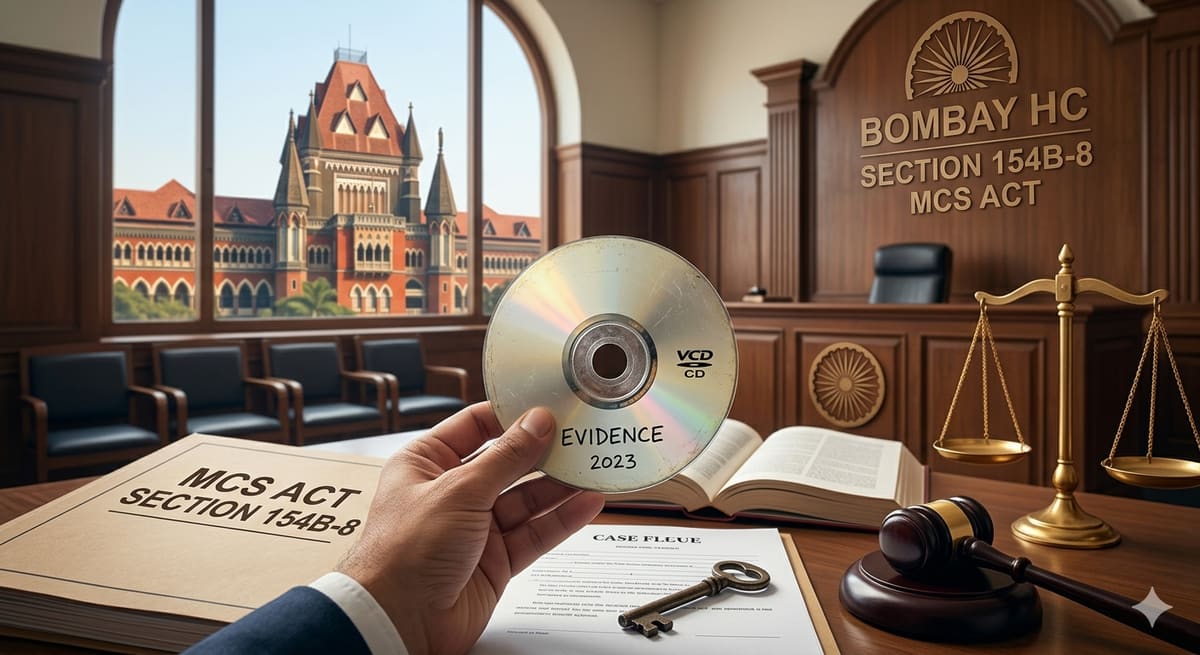
Section 154B-8 MCS Act | Demand for Video CD Not a Statutory Right; Disqualification Requires Proven Breach of Duty : Bombay HC
Case Law Analysis
|Bombay High Court

Section 154B-8 MCS Act | Demand for Video CD Not a Statutory Right; Disqualification Requires Proven Breach of Duty : Bombay HC

The Bombay High Court has ruled that co-operative society members cannot compel management to provide video recordings or translations under Section 154B-8 of the MCS Act, and that disqualification of committee members requires evidence of substantive breach-not just administrative non-cooperation. This clarifies the limits of member rights and raises the threshold for removing elected representatives, impacting governance across Maharashtra’s housing societies.

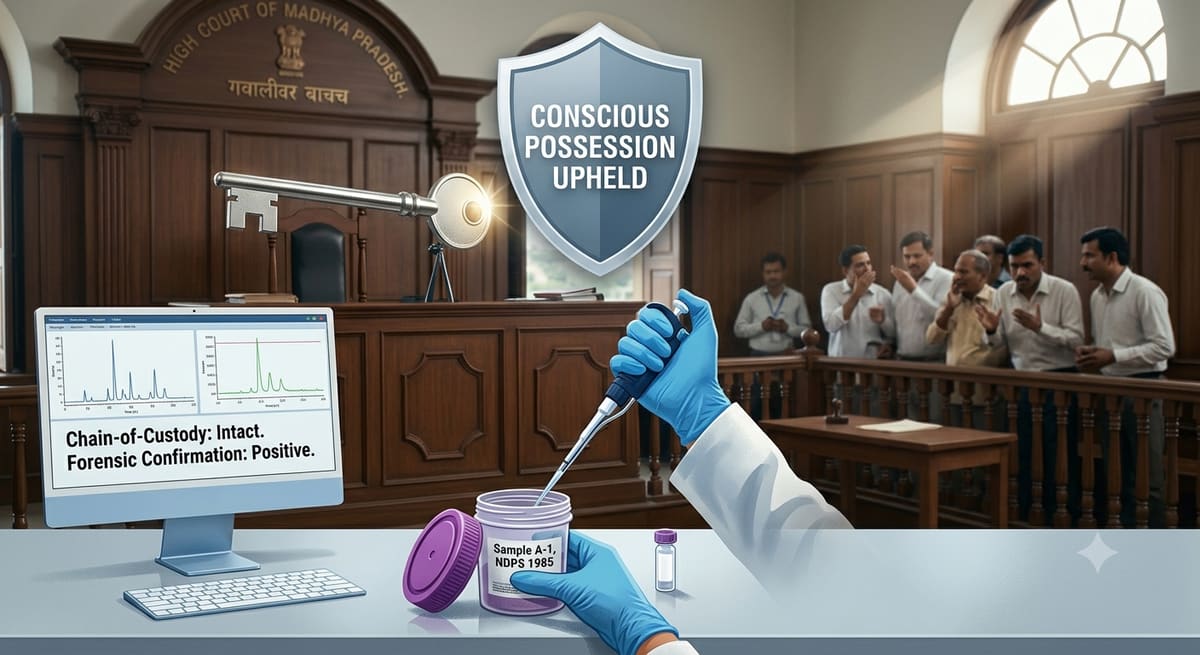
Conscious Possession Under NDPS Act Upheld Despite Witness Contradictions When Forensic and Chain-of-Custody Evidence Is Unbroken : Gauhati HC
Case Law Analysis
|Gauhati High Court

Conscious Possession Under NDPS Act Upheld Despite Witness Contradictions When Forensic and Chain-of-Custody Evidence Is Unbroken : Gauhati HC

The Gauhati High Court affirmed that minor inconsistencies in witness testimony do not invalidate a conviction under the NDPS Act when forensic analysis and unbroken chain of custody establish deliberate possession. This reinforces that procedural hiccups cannot override substantive evidence in drug trafficking cases, setting a clear standard for trial courts handling similar evidentiary challenges.

Assam RTPS Act, 2012 Section 10 | Delay in Converting Allotment Certificate to Periodic Patta Requires Exhaustion of First Appellate Remedy: Gauhati HC
Case Law Analysis
|Gauhati High Court

Assam RTPS Act, 2012 Section 10 | Delay in Converting Allotment Certificate to Periodic Patta Requires Exhaustion of First Appellate Remedy: Gauhati HC

The Gauhati High Court has ruled that petitioners seeking conversion of allotment certificates to periodic pattas must first file an appeal before the First Appellate Authority within 30 days, as mandated by the Assam Right to Public Services Act, 2012. This reinforces that writ jurisdiction cannot bypass statutorily prescribed administrative appeals, affecting thousands of landholders in Assam reliant on formal land records for tenure security.