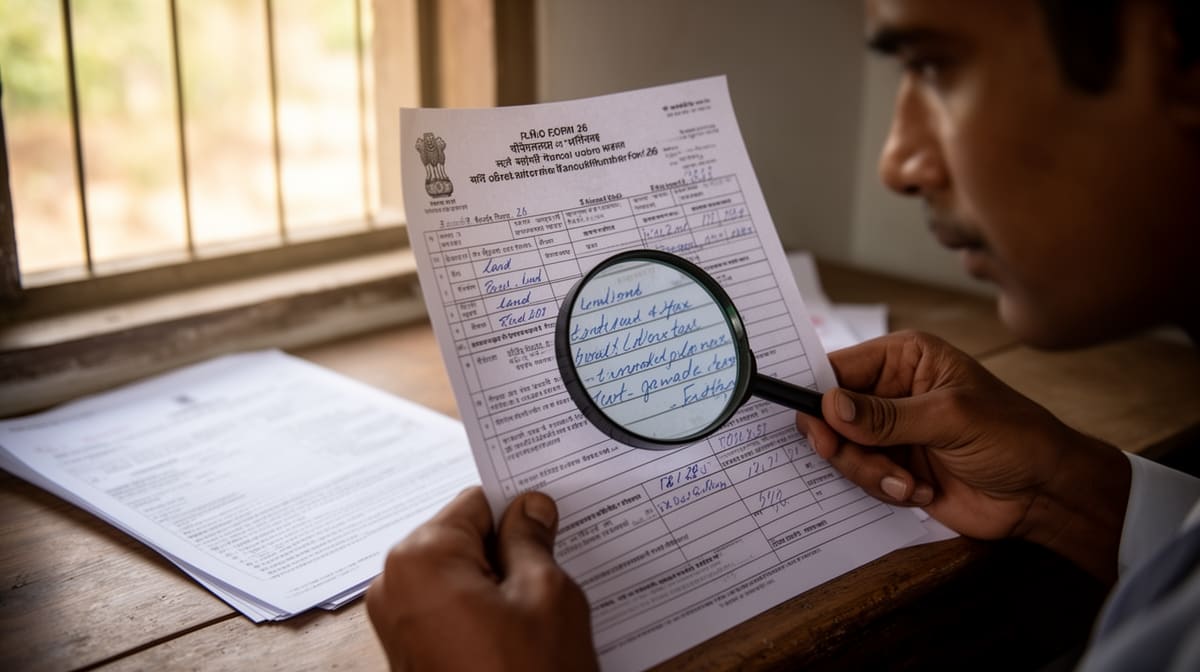
The Rajasthan High Court has delivered a significant judgment on the standards for voiding an election based on defects in the Form-26 affidavit under the Representation of the People Act, 1951 (RP Act). The Court held that minor irregularities, such as incomplete or technically defective disclosures, do not automatically amount to corrupt practices or justify declaring an election void under Section 100(1)(b) and (d) of the RP Act. The judgment underscores the need for strict proof of material impact on the election outcome before invalidating a popular mandate.
Background & Facts
The Dispute
The petitioner, Purushottam Lal, challenged the election of Ritu Banawat (respondent No.1) as the Member of Legislative Assembly (MLA) from Bayana Constituency (No. 076), Bharatpur, in the 2023 Rajasthan State Assembly Elections. The petitioner, who secured only 689 votes compared to respondent No.1’s 105,749 votes, sought to declare the election void on the grounds that respondent No.1’s Form-26 affidavit (filed with her nomination) contained material omissions and false disclosures, amounting to corrupt practices under Section 100(1)(b) and (d) of the RP Act. The petitioner also sought the cancellation of nomination forms of the other nine contesting candidates (respondents No.2 to 10) and his own declaration as the unopposed winner.
Key Facts
- Election Details: The election for Bayana Constituency (No. 076) was held as part of the Rajasthan State Assembly Elections, 2023. Respondent No.1 (Ritu Banawat) was declared the returned candidate on 03.12.2023, having secured 105,749 votes. The petitioner secured 689 votes, while the other nine candidates collectively received 85,743 votes.
- Nomination and Affidavit: Respondent No.1 filed her nomination on 04.11.2023, along with Form-26 affidavit (Exhibit-4), which is mandated under Rule 4A of the Conduct of Elections Rules, 1961. The petitioner alleged several defects in the affidavit, including:
- Non-disclosure of active social media accounts (Facebook and Twitter).
- Omission of details of two bank accounts (SBI and Canara Bank) and deposits therein.
- Incorrect or incomplete disclosure of bank accounts and vehicle valuations belonging to respondent No.1’s husband.
- Non-disclosure of immovable assets, including agricultural lands and a residential plot.
- Concealment of sources of income, including income from wholesale/retail trade and savings.
- Leaving certain columns in the affidavit blank or unfilled.
Procedural History
- 08.12.2023: Election petition filed before the Rajasthan High Court under Sections 80/81 of the RP Act.
- 22.12.2023: Summons issued to respondents. Respondent No.1 evaded service for nearly 10 months, requiring unprecedented measures, including service through the Secretary of the Rajasthan Legislative Assembly.
- 19.12.2024: Issues framed by the Court, encompassing challenges to the election of respondent No.1 and the nomination forms of respondents No.2 to 10.
- Evidence: Petitioner produced 167 documents and his affidavit as evidence-in-chief. Respondent No.1 filed her affidavit and Exhibits A/1 to A/6 in rebuttal. Both parties were cross-examined.
- 25.05.2026: Arguments concluded, and judgment reserved.
- 29.06.2026: Judgment pronounced.
The Parties' Positions
For the Petitioner
- Relied on judgments such as Union of India v. Association for Democratic Reforms [(2002) 5 SCC 294], Resurgence India v. Election Commission of India [(2014) 14 SCC 189], and Krishnamoorthy v. Sivakumar [(2015) 3 SCC 467] to argue that non-disclosure of assets or false disclosures in Form-26 amount to corrupt practices under Section 123(2) and (4) of the RP Act.
- Contended that respondent No.1’s affidavit contained material omissions that misled voters and violated their right to information under Article 19(1)(a) of the Constitution.
- Argued that the defects in the affidavit were substantial and warranted cancellation of respondent No.1’s nomination and declaration of her election as void.
For the Respondent (No.1)
- Defended the affidavit as substantially compliant with legal requirements, arguing that minor defects (e.g., non-disclosure of social media accounts, bank accounts with negligible balances) were inconsequential and did not affect the election outcome.
- Submitted that the SBI account was non-operative with a balance of Rs. 1,458/- and the Canara Bank account was closed before nomination, with a residual balance of Rs. 83/-.
- Clarified that the agricultural land measurements were correctly disclosed, and any discrepancies were due to miscalculation, not deliberate concealment.
- Emphasized that the total value of movable and immovable assets was correctly disclosed, and no material information was withheld.
The Legal Issue
The central question was whether minor defects or omissions in Form-26 affidavit, such as non-disclosure of social media accounts, bank accounts with negligible balances, or incomplete columns, constitute corrupt practices under Section 123 of the RP Act and warrant declaring the election void under Section 100(1)(b) and (d). Additionally, the Court had to determine whether the improper acceptance of nomination forms of respondents No.2 to 10 materially affected the election result.
Arguments Presented
For the Petitioner
- Cited Resurgence India v. Election Commission of India [(2014) 14 SCC 189] to argue that blank columns in Form-26 render the affidavit nugatory and justify rejection of the nomination.
- Relied on Krishnamoorthy v. Sivakumar [(2015) 3 SCC 467] to contend that non-disclosure of assets amounts to undue influence, a corrupt practice under Section 123(2) of the RP Act.
- Argued that the right to information of voters was violated, as the defects in the affidavit were material and substantial.
For the Respondent (No.1)
- Distinguished the facts from cited precedents, arguing that the defects in Form-26 were minor, technical, and inconsequential.
- Submitted that the total value of assets was correctly disclosed, and the omissions did not mislead voters or affect the election outcome.
- Contended that the standard of proof for corrupt practices is beyond reasonable doubt, and the petitioner failed to meet this burden.
- Emphasized that election results should not be lightly interfered with, as the will of the people is sacrosanct.
The Court's Analysis
The Court conducted a detailed examination of the defects alleged by the petitioner, analyzing each objection in light of statutory provisions, judicial precedents, and evidence adduced by the parties. The analysis is summarized below:
Non-Disclosure of Social Media Accounts
"In respect of non-disclosure of social media accounts of respondent No.1 in her affidavit Form-26, this Court has noticed that in the concerned column, mobile number and e-mail ID of respondent No.1 are mentioned. Although, her social media accounts, available on Facebook and Twitter are not specifically mentioned but a judicial notice may be taken that these social media accounts are not very secret rather, they can easily be traced and are accessible by any person by using name and e-mail ID of the person concerned."
- The Court observed that respondent No.1’s social media accounts were traceable using her name, mobile number, and email ID, which were disclosed in the affidavit.
- No evidence was produced to show that voters were misled or that the election was affected by the non-disclosure.
- The defect was held to be inconsequential and did not warrant cancellation of the nomination.
Non-Disclosure of Bank Accounts
"In respect of non-disclosure of SBI Account, respondent No.1 in her evidence (DW-1) has made it clear that her SBI account number was non-operative and carried no liability or substantial balance, so it is not that she deliberately concealed it. Otherwise also, same is already indicated in her Income Tax Return for assessment year 2023-24 with disclosure of deposited amount therein Rs.1458/- only."
- The SBI account had a negligible balance of Rs. 1,458/- and was non-operative. The balance was disclosed in respondent No.1’s Income Tax Return (ITR).
- The Canara Bank account was closed before nomination, with a residual balance of Rs. 83/-.
- The Court held that non-disclosure of these accounts was not deliberate and did not materially affect the election.
Incorrect Disclosure of Husband’s Assets
"As far as the incorrect mention of the bank account number of PNB Bank is concerned, correct bank account No. is 9814000100009376, but it appears that while mentioning this bank account by hand, digit '3' in the last four digits was inadvertently omitted and instead of '9376', only digit '976' came to be mentioned. This error has been stated to be a bonafide and human error committed inadvertently, while mentioning the long digits of bank account number by hand."
- The incorrect mention of a PNB bank account number was attributed to a bonafide human error.
- The total value of movable assets belonging to respondent No.1’s husband was correctly disclosed as Rs. 49,09,862/-, which included deposits in all five bank accounts.
- The valuation of vehicles was held to be reasonable, considering depreciation over time. The petitioner failed to produce evidence of current market valuation.
- The Court reiterated that corrupt practices must be proved beyond reasonable doubt, and the petitioner failed to meet this standard.
Non-Disclosure of Immovable Assets
"In respect of showing source of income by way of transportation in the nomination form of 2013, same was also correct at the relevant point of time."
- Agricultural lands: The petitioner alleged incorrect measurement of lands. Respondent No.1 clarified that the measurement was correctly disclosed, and any discrepancy was due to miscalculation, not concealment.
- Residential plot: The plot in Anupam Vihar, Jaipur, was agreed to be sold before nomination, hence not disclosed. The Court noted that Form-26 does not require disclosure of properties under agreement to sell.
- Ancestral house: The house in New Colony, Roopwas, was self-acquired property of respondent No.1’s mother-in-law, not an HUF property. The petitioner’s objection was baseless.
- The Court held that none of these omissions were material or affected the election.
Concealment of Source of Income
"Respondent No.1 submits that agriculture produce is sold in both ways, wholesale as also in retail, and such sale is a trade from agriculture produce."
- Respondent No.1 disclosed her income from agricultural land, which was consistent with her ITR showing income from wholesale/retail trade.
- The income from savings and shares (Rs. 6,670/-) was negligible and did not warrant disclosure.
- The Court rejected the objection as inconsequential.
Blank Columns in Form-26
"If relevant column 7(iv) is considered as a whole and in seriatim, same pertains to residential apartments and in the final column, the current market value of Apartment Nos.604 & 605, Jagatpura, Jaipur, measuring 1900 Sq. Feet and 1400 Sq. Feet respectively have been mentioned by respondent No.1 as 40 lacs and 30 lacs. Thus, the unfilled column is deemed to record zero value as is mentioned in the same caption of column belonging to agriculture properties."
- Column 7(iv): Pertained to residential apartments, and the value of disclosed apartments was correctly mentioned. Blank columns were deemed to record zero value.
- Column 8(i): Related to loans from banks/financial institutions. Since no properties were disclosed, no loans were obtained, making the column irrelevant.
- Column 8(ii): Required disclosure of Government accommodation. Respondent No.1 correctly filled "No", as she had occupied the accommodation for less than 10 years.
- The Court held that blank columns did not amount to corrupt practices and were inconsequential.
Legal Principles Applied
The Court relied on judicial precedents to establish the following principles:
-
Standard of Proof: Corrupt practices must be proved beyond reasonable doubt, not merely on preponderance of probabilities (Santosh Yadav v. Narendra Singh [(2002) 1 SCC 160]).
-
Materiality of Defects: Only substantial defects that materially affect the election can warrant voidance. Minor or technical irregularities are insufficient (Ajmera Shyam v. Smt. Kova Laxmi [(2026) 3 SCC 373]).
-
Right to Information vs. Popular Mandate: While voters’ right to information under Article 19(1)(a) is vital, it must be balanced against the sanctity of the popular mandate. Courts should not invalidate elections based on minor technicalities (Resurgence India v. Election Commission of India [(2014) 14 SCC 189]).
-
Judicial Restraint: Courts must exercise restraint in interfering with election results, as unwarranted invalidation can erode public trust in democratic institutions (Karikho Kri v. Nuney Tayang [(2024) 15 SCC 112]).
The Verdict
The Court dismissed the election petition, holding that the petitioner failed to establish any corrupt practice or material defect in respondent No.1’s Form-26 affidavit that warranted declaring her election void. However, respondent No.1 was saddled with costs of Rs. 1,00,000/-, payable to the petitioner within 30 days, for evading service of summons and delaying proceedings for nearly 10 months. All pending applications were disposed of.
What This Means For Similar Cases
Minor Defects Do Not Invalidate Elections
- Strict Proof Required: Practitioners must note that corrupt practices must be proved beyond reasonable doubt. Mere technical defects or minor omissions in Form-26 are insufficient to void an election.
- Materiality Test: Courts will examine whether the defect materially affected the election outcome. Defects that do not mislead voters or impact the result will not warrant interference.
Right to Information vs. Judicial Restraint
- Balancing Act: While voters’ right to information is constitutionally protected, Courts must balance this against the sanctity of the popular mandate. Elections should not be invalidated lightly.
- Judicial Precedents: Judgments like Resurgence India and Ajmera Shyam emphasize that minor irregularities do not justify voiding elections. Practitioners should distinguish material defects from technical ones.
Evading Legal Process Has Consequences
- Costs for Delay: The Court strongly deprecated respondent No.1’s conduct in evading service of summons for 10 months. Practitioners should note that avoiding legal process can result in costs and adverse inferences.
- Public Trust: Elected representatives must uphold the rule of law. Courts will penalize attempts to circumvent legal processes, especially by those holding constitutional positions.
Practical Takeaways for Election Petitions
- Evidence of Impact: Petitioners must prove that defects in Form-26 materially affected the election. Mere allegations of non-disclosure are insufficient.
- Substantial Compliance: Respondents can argue substantial compliance with legal requirements if defects are technical or inconsequential.
- Judicial Notice: Courts may take judicial notice of facts (e.g., traceability of social media accounts) to dismiss frivolous objections.
- Depreciation of Assets: Valuation of assets like vehicles should account for depreciation, and petitioners must produce evidence of current market value to challenge disclosures.