Topic

Encroachment

Encroachment in Indian law refers to unauthorized occupation or use of public or government land, often involving disputes over ownership, possession, and statutory protections.

25 articlesLatest 2 weeks ago
Permissive Use by Family Member Cannot Ripen into Adverse Possession; Burden of Proof Never Shifts : Bombay HC
Case Law Analysis
|Bombay High Court

Permissive Use by Family Member Cannot Ripen into Adverse Possession; Burden of Proof Never Shifts : Bombay HC

The Bombay HC ruled that permissive use by a relative cannot mature into adverse possession regardless of duration, placing the burden of proof squarely on the claimant. The court also held that an encroachment suit survives technical defects in property description and that the limitation period does not commence against permissive possession.
AMASR Act | Natural Justice Requires Hearing Before Demolition Notices Near Protected Monuments : Rajasthan HC
Case Law Analysis
|Rajasthan High Court

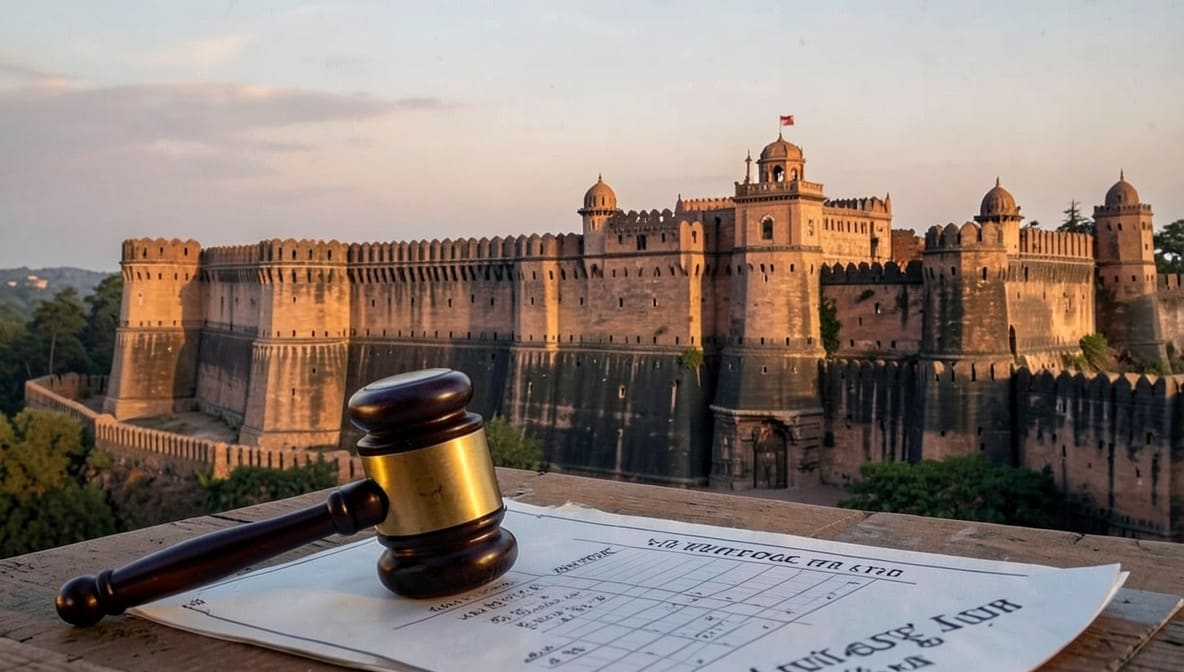
AMASR Act | Natural Justice Requires Hearing Before Demolition Notices Near Protected Monuments : Rajasthan HC

The Rajasthan High Court has ruled that the Archaeological Survey of India must provide affected residents a meaningful opportunity to be heard before issuing demolition orders near the Chittorgarh Fort, reinforcing that heritage protection cannot override fundamental procedural rights. This sets a critical precedent for all notified monuments under the AMASR Act, ensuring local communities are not silenced by bureaucratic enforcement.

Public Trust Doctrine | Mandamus Issued to Remove Encroachments on Revenue-Recorded Pond Land Under U.P. Revenue Code : Allahabad HC
Case Law Analysis
|Allahabad High Court

Public Trust Doctrine | Mandamus Issued to Remove Encroachments on Revenue-Recorded Pond Land Under U.P. Revenue Code : Allahabad HC

The Allahabad High Court has directed the Tehsildar to decide pending encroachment cases on revenue-recorded pond land within three months, reinforcing that public utility land held in trust cannot be lawfully occupied. This ruling strengthens accountability for local revenue authorities and affirms that encroachments on community water bodies violate the Public Trust Doctrine, affecting thousands of citizens reliant on such lands for ecological and livelihood security.

CrPC Section 133 | Cannot Be Invoked for Boundary or Title Disputes Within Municipal Limits; Must Be Resolved Under Karnataka Municipalities Act, 1964 : Karnataka HC
Case Law Analysis
|Karnataka High Court

CrPC Section 133 | Cannot Be Invoked for Boundary or Title Disputes Within Municipal Limits; Must Be Resolved Under Karnataka Municipalities Act, 1964 : Karnataka HC

The Karnataka High Court has ruled that administrative orders under CrPC Section 133 cannot override municipal law by adjudicating property boundary or title claims. Such disputes fall exclusively within the domain of municipal authorities under the Karnataka Municipalities Act, 1964, preventing misuse of criminal procedure for civil land conflicts and clarifying jurisdictional boundaries for local governance.

Due Process Under Andhra Pradesh Municipal Corporation Act | Eviction Without Show-Cause Notice Violates Natural Justice: AP HC
Case Law Analysis
|Andhra Pradesh High Court

Due Process Under Andhra Pradesh Municipal Corporation Act | Eviction Without Show-Cause Notice Violates Natural Justice: AP HC

The Andhra Pradesh High Court ruled that municipal corporations must adhere to principles of natural justice, including issuing show-cause notices and conducting hearings, before evicting alleged encroachers. The Court directed the Kakinada Municipal Corporation to consider evidence of title and possession, reinforcing that procedural fairness is mandatory under the Andhra Pradesh Municipal Corporation Act, 1994.

Registered Exchange Deed Defines Property Boundaries | Municipal Authorities Cannot Override with Unregistered Communications: Karnataka HC
Case Law Analysis
|Karnataka High Court

Registered Exchange Deed Defines Property Boundaries | Municipal Authorities Cannot Override with Unregistered Communications: Karnataka HC

The Karnataka High Court has ruled that a registered exchange deed conclusively establishes property boundaries, and municipal bodies cannot unilaterally alter them through unregistered notices or permit encroachments on designated public roads. This reinforces that documented title trumps administrative convenience, protecting landowners from arbitrary municipal overreach in urban planning disputes.

Mandatory Injunction Denied for Encroachment Without Precise Measurement & Documentary Proof : Karnataka HC
Case Law Analysis
|Karnataka High Court

Mandatory Injunction Denied for Encroachment Without Precise Measurement & Documentary Proof : Karnataka HC

Karnataka High Court rules that mandatory injunction in property disputes cannot be granted without clear proof of encroachment, emphasizing the need for precise property measurements and strict compliance with documentary evidence. The judgment sets a precedent for procedural rigor in declaratory suits, impacting landowners and litigants in boundary disputes.

Order XXVI Rule 9 CPC | Delay in Seeking Court Commissioner Appointment Not Fatal Where Physical Inspection Is Essential to Resolve Encroachment Dispute: Karnataka HC
|Karnataka High Court

Order XXVI Rule 9 CPC | Delay in Seeking Court Commissioner Appointment Not Fatal Where Physical Inspection Is Essential to Resolve Encroachment Dispute: Karnataka HC

The Karnataka High Court has ruled that procedural delays in filing applications under Order XXVI Rule 9 CPC cannot override the need for accurate fact-finding when encroachment claims require on-site inspection. This reinforces judicial discretion to prioritize substantive justice over technical non-compliance, benefiting property litigants in rural and contested land cases where visual evidence is decisive.

Tenancy Area Determined by Rent Paid and Plaintiff's Admission, Not Speculative Structural Inference | Bombay HC
Case Law Analysis
|Bombay High Court

Tenancy Area Determined by Rent Paid and Plaintiff's Admission, Not Speculative Structural Inference | Bombay HC

The Bombay High Court ruled that the extent of let-out premises in a tenancy dispute must be fixed by the rent paid and the landlord's own admission in pleadings, rejecting the trial court's unsupported calculation based on unverified truss assumptions. This sets a critical precedent for landlords and tenants: documentary evidence of rent and self-serving statements carry more weight than conjectural architectural interpretations in property disputes.

Public Trust Doctrine | Madurai HC Bars Idol Installation on Encroached Tank Land, Orders Foundation Removal by 02.06.2026 : Madras HC
Case Law Analysis
|Madras High Court

Public Trust Doctrine | Madurai HC Bars Idol Installation on Encroached Tank Land, Orders Foundation Removal by 02.06.2026 : Madras HC

Madurai HC reinforces the Public Trust Doctrine by prohibiting religious activities on encroached waterbody land, directing removal of unauthorized structures within a fixed deadline. The ruling underscores judicial authority to protect environmental resources from religious encroachment, setting a precedent for waterbody conservation under constitutional writ jurisdiction.

Consolidation Proceedings | Land Earmarked for Sarvajanik Abadi Not Encroachment Even if Used for Residential Structures : Allahabad HC
Case Law Analysis
|Allahabad High Court

Consolidation Proceedings | Land Earmarked for Sarvajanik Abadi Not Encroachment Even if Used for Residential Structures : Allahabad HC

The Allahabad High Court held that land recorded as Navin Parti and designated for public residential use during land consolidation does not constitute illegal encroachment when occupied by villagers, including the petitioner. This affirms that administrative earmarking during consolidation overrides revenue record classifications for residential intent, protecting low-income households from punitive action based on technical land categorization.

Section 67 U.P. Revenue Code, 2006 | Tehsildar Must Decide Gaon Sabha Encroachment Case Within 3 Months: Allahabad HC
Case Law Analysis
|Allahabad High Court

Section 67 U.P. Revenue Code, 2006 | Tehsildar Must Decide Gaon Sabha Encroachment Case Within 3 Months: Allahabad HC

The Allahabad High Court has mandated that the Tehsildar of Salempur decide the pending encroachment case on Gaon Sabha land within three months, reinforcing that statutory duties under the U.P. Revenue Code cannot be delayed by administrative inertia. This ruling strengthens accountability for revenue officers tasked with protecting community land and ensures timely justice for villagers facing illegal occupation.

Public Drain as Revenue-Recorded Asset | Encroachment Must Be Removed to Preserve Drainage Flow and Prevent Urban Flooding: Allahabad HC
|Allahabad High Court

Public Drain as Revenue-Recorded Asset | Encroachment Must Be Removed to Preserve Drainage Flow and Prevent Urban Flooding: Allahabad HC

The Allahabad High Court has ordered the District Magistrate of Azamgarh to demarcate and clear all encroachments on a revenue-recorded public drain, affirming that such drains cannot terminate abruptly due to private construction. This ruling reinforces that revenue records confer public easement rights, and obstructing natural water flow violates public safety and environmental integrity under Article 21.

Revenue Records Not Conclusive Where Cancellation Proceeding Is Pending | U.P. Z.A. & L.R. Act, Section 122-B(4)(f) : Allahabad HC
Case Law Analysis
|Allahabad High Court

Revenue Records Not Conclusive Where Cancellation Proceeding Is Pending | U.P. Z.A. & L.R. Act, Section 122-B(4)(f) : Allahabad HC

The Allahabad High Court has ruled that recorded land rights in revenue documents cannot override pending legal challenges to their validity, reinforcing that administrative entries are provisional until judicial or quasi-judicial review concludes. This clarifies the legal position for landowners, revenue authorities, and PIL petitioners alike - possession based on disputed settlements carries no conclusive title.