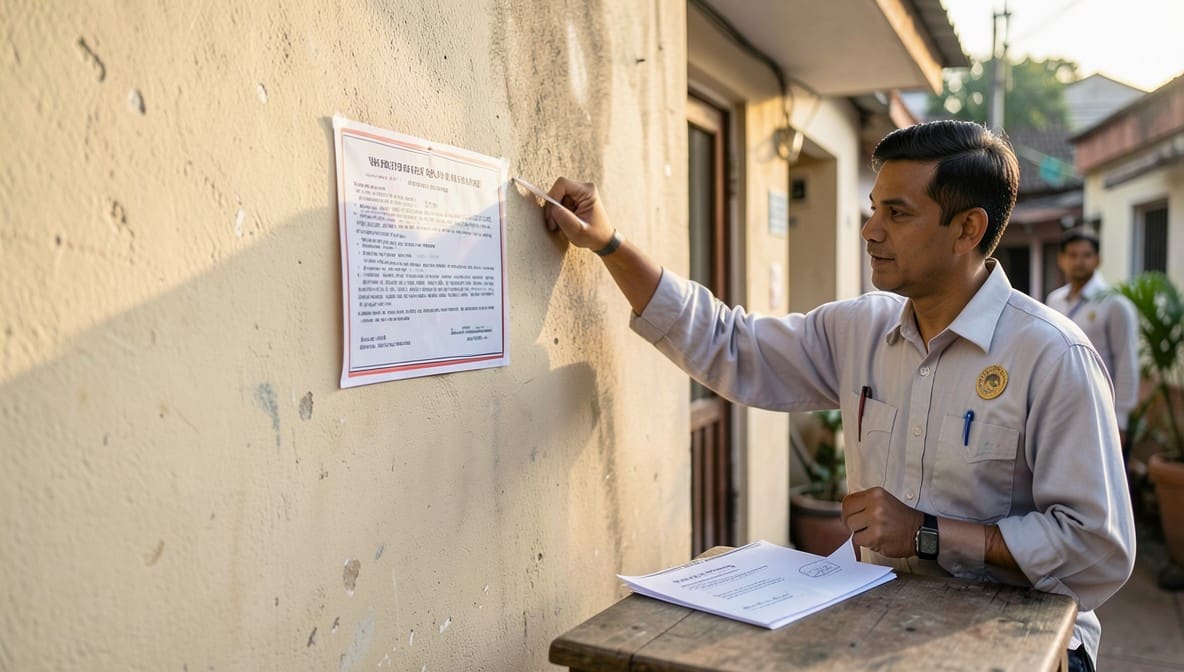
The Andhra Pradesh High Court has underscored the importance of due process in eviction proceedings under the Andhra Pradesh Municipal Corporation Act, 1994. In a significant ruling, the Court directed the Kakinada Municipal Corporation to grant an opportunity of hearing to alleged encroachers before evicting them, reinforcing that natural justice cannot be bypassed even in matters of public interest.
Background & Facts
The Dispute
The case involves three writ petitions filed by occupants of properties in Kakinada, East Godavari District, challenging a notice issued by the Kakinada Municipal Corporation under Sections 401, 405, and 406 of the Andhra Pradesh Municipal Corporation Act, 1994. The impugned notice, dated 15.06.2026, directed the petitioners to remove alleged encroachments by 21.06.2026, branding them as unauthorized occupants without issuing a prior show cause notice or affording an opportunity of hearing.
Key Facts
- The petitioners, represented by The Kakinada Mini Goods Auto Owners Association and two individuals, claimed possession of the subject properties for nearly 30 years.
- The properties in question are located in Sy.No. 31 of Medaline Revenue Village, Kakinada.
- The petitioners had earlier filed W.P.No. 4843 of 2016, wherein the High Court directed the respondents to follow due process of law if eviction was intended.
- The impugned notice (Roc.No.3659/2026-H3) was issued under Sections 401, 405, and 406 of the Municipal Corporation Act, 1994, alleging encroachment for public purposes.
- The petitioners contended that the notice violated Articles 14, 16, 21, and 300-A of the Constitution of India, as well as the provisions of the Municipal Corporation Act.
Procedural History
- 15.06.2026: Impugned notice issued by the Kakinada Municipal Corporation.
- 16.06.2026: Petitioners filed Writ Petition Nos. 16080, 16087, and 16088 of 2026 before the Andhra Pradesh High Court.
- 23.06.2026: High Court disposed of the writ petitions with the present order.
Relief Sought
The petitioners sought:
- A writ of mandamus declaring the impugned notice arbitrary, illegal, and violative of constitutional and statutory provisions.
- An order setting aside the notice dated 15.06.2026.
- Directions to the respondents to follow due procedure before evicting the petitioners.
- Stay of all proceedings, including eviction, pending disposal of the writ petitions.
The Legal Issue
The central question was whether the Kakinada Municipal Corporation could evict alleged encroachers under Sections 401, 405, and 406 of the Andhra Pradesh Municipal Corporation Act, 1994 without affording them an opportunity of hearing, thereby violating principles of natural justice and Article 21 of the Constitution.
Arguments Presented
For the Petitioners
- The petitioners contended that the impugned notice was issued without any show cause notice or hearing, rendering it arbitrary and illegal.
- They relied on the earlier judgment in W.P.No. 4843 of 2016, wherein the Court had directed the respondents to follow due process.
- The notice violated Articles 14, 16, 21, and 300-A of the Constitution, as well as the provisions of the Municipal Corporation Act, 1994.
- The petitioners had been in continuous possession for 30 years, and their eviction without due process would amount to a violation of their right to livelihood under Article 21.
For the Respondents
- The learned Government Pleader submitted that the petitioners had not established their title to the properties, having filed only electricity bills and photographs.
- The notice issued under Section 405 of the Municipal Corporation Act was within the purview of the Corporation’s powers.
- The possession of the petitioners was disputed, and they had not produced any documents to prove their title.
The Court's Analysis
The Court observed that the petitioners had been in continuous possession for nearly three decades, and their eviction without affording an opportunity of hearing would violate principles of natural justice. The Court emphasized that even in cases where public interest is involved, due process cannot be bypassed.
"Considering the submissions that the petitioners have been in continuous possession for the last three decades, the respondents may grant an opportunity of hearing to the petitioners and the petitioners to submit any documents relating to title and possession of the subject property and the respondent corporation shall consider the same before evicting the encroachments."
The Court further noted that the Government Pleader’s submission regarding the disputed possession of the petitioners should be considered by the Municipal Corporation while granting an opportunity of hearing. The Court clarified that the respondents were not precluded from taking appropriate steps for clearing the encroachments after completing the due process.
The Verdict
The High Court disposed of the writ petitions with the following directions:
- The Kakinada Municipal Corporation was directed to grant an opportunity of hearing to the petitioners.
- The petitioners were permitted to submit documents relating to title and possession of the subject properties.
- The Municipal Corporation was directed to consider the submissions of the petitioners before proceeding with eviction.
- The Court clarified that the respondents could take appropriate steps for clearing encroachments after completing the due process.
- There was no order as to costs.
- Pending miscellaneous petitions, if any, were closed.
What This Means For Similar Cases
Due Process Is Non-Negotiable
This judgment reinforces that municipal corporations cannot bypass due process under the guise of public interest. Practitioners should note:
- Show cause notices and hearings are mandatory before eviction under Sections 401, 405, and 406 of the Andhra Pradesh Municipal Corporation Act, 1994.
- Even in cases of alleged encroachment, principles of natural justice must be adhered to, failing which eviction orders may be set aside.
Long Possession Raises Presumption of Rights
- The Court’s observation regarding the petitioners’ 30-year possession suggests that long-standing occupation may raise a presumption of rights, requiring stricter scrutiny before eviction.
- Practitioners should highlight the duration of possession in similar cases to argue for procedural safeguards.
Burden of Proof in Eviction Cases
- The judgment clarifies that mere allegations of encroachment are insufficient; the Corporation must consider evidence of title and possession submitted by occupants.
- Occupants should be prepared to submit documentary evidence (e.g., electricity bills, tax receipts, photographs) to establish their claim.
- Municipal corporations must evaluate such evidence before proceeding with eviction, ensuring compliance with Article 21 of the Constitution.