The Karnataka High Court's judgment in M.A. Rajaiah v. Smt. Veena Achar addresses critical issues in property disputes, particularly the burden of proof in establishing encroachment and the scope of mandatory injunctions. The Court's analysis underscores the importance of precise measurements and documentary evidence in declaratory suits, offering key takeaways for property litigants and practitioners.
Background & Facts
The Dispute
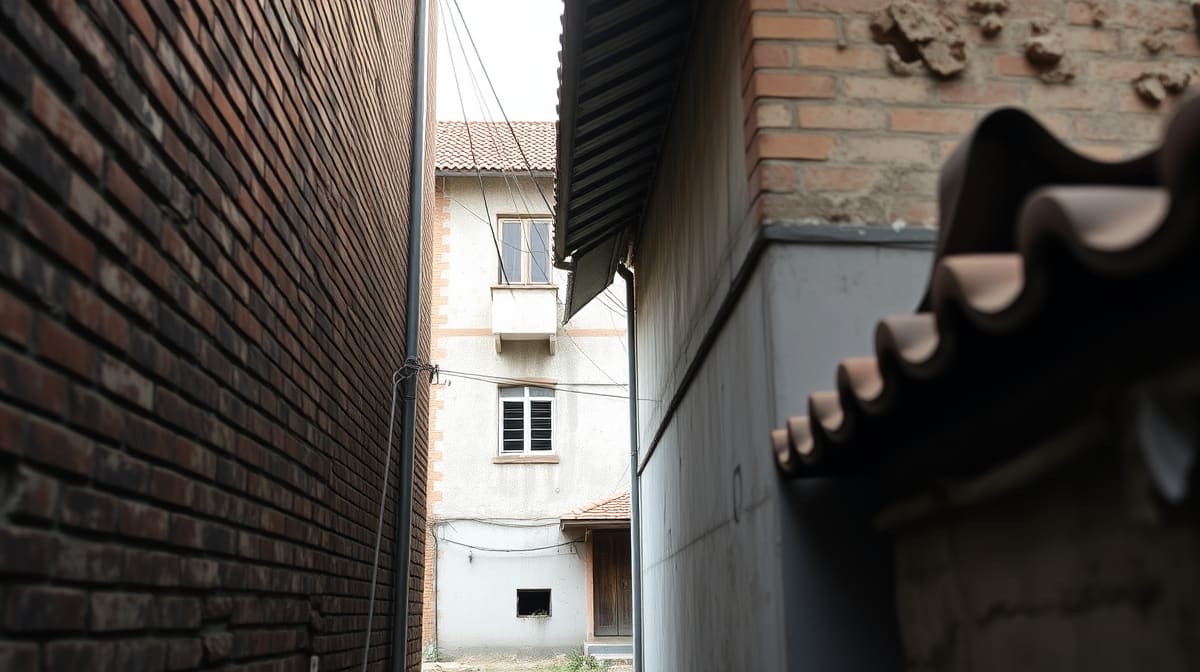
The dispute involves adjacent properties in Holenarasipura Town, Hassan District, owned by M.A. Rajaiah (plaintiff/appellant) and Vishnupadachar (defendant/respondent). The plaintiff alleged encroachment by the defendant on a lane (oni) measuring 2 feet East-West and 40 feet North-South, along with unauthorized construction of windows and a chajja (sunshade) on the plaintiff’s property. The plaintiff sought declaration of title, mandatory injunction for demolition, possession, and damages.
Key Facts
- Plaintiff’s Property: Purchased via registered sale deed dated 02.09.1994 (Exhibit P-1), measuring East-West 49 feet and North-South 61 feet, including a passage (oni) measuring 4¾+4x27/2 feet.
- Defendant’s Property: Purchased via sale deed dated 24.09.1979 (Exhibit P-2), measuring East-West 18½ feet and North-South 116 feet. The defendant demolished an old mud-walled house and constructed a new one, allegedly encroaching 2 feet of the plaintiff’s property.
- Alleged Encroachment: The plaintiff claimed the defendant encroached 2 feet x 40 feet of the oni and constructed windows and a chajja on the plaintiff’s side.
Procedural History
- 1995-1996: Plaintiff filed O.S. No. 92/1995 and O.S. No. 15/1996 before the Civil Judge (Sr. Dn.), Holenarasipura, seeking declaration, mandatory injunction, and damages.
- 24.02.2007 and 15.02.2002: Trial Court dismissed both suits, holding no encroachment was proved.
- 2007-2009: Plaintiff appealed to the Addl. District Judge, Fast Track Court, Holenarasipura in R.A. No. 32/2007 and R.A. No. 26/2002.
- 19.12.2009: First Appellate Court allowed both appeals, declaring the plaintiff’s title but denying mandatory injunction for demolition.
- 2010: Plaintiff filed RSA No. 198/2010, while the defendant filed RSA No. 337/2010 and RSA No. 339/2010 before the Karnataka High Court.
Relief Sought
- Plaintiff: Quashing of the First Appellate Court’s order denying mandatory injunction; direction for demolition of encroachments and closure of windows.
- Defendant: Dismissal of the plaintiff’s appeal; confirmation of the First Appellate Court’s finding of no encroachment.
The Legal Issue
The appeals raised three substantial questions of law:
- Whether the First Appellate Court was justified in reconciling varying descriptions of the suit property in O.S. No. 92/1995 and O.S. No. 15/1996?
- Whether the First Appellate Court erred in declaring ownership of the oni despite a High Court order in W.A. Nos. 4683/2002 and 4685/2002 holding it as municipal property?
- Whether the First Appellate Court was justified in denying mandatory injunction after declaring the plaintiff’s title, despite evidence of encroachment?
Arguments Presented
For the Appellant (Plaintiff)
- The First Appellate Court erred in denying mandatory injunction after decreeing the suit, leading to a miscarriage of justice.
- The Commissioner’s report (Exhibit C-1) was tainted due to the defendant’s influence, and the plaintiff’s failure to furnish documents was immaterial.
- The measurements in the sale deed (Exhibit P-1) clearly established the plaintiff’s title, including the oni.
- The defendant’s construction violated the sanctioned plan, justifying mandatory injunction.
For the Respondent (Defendant)
- The plaintiff failed to prove encroachment; the Commissioner’s report (Exhibit C-1) confirmed no encroachment on the oni.
- The measurements in the plaintiff’s sale deed were inconsistent with revenue records (Exhibits P-5 to P-7), casting doubt on the plaintiff’s title.
- The windows and chajja were constructed within the defendant’s property, and the plaintiff’s objection was baseless.
- The burden of proof lay on the plaintiff to establish encroachment, which was not discharged.
The Court's Analysis
The High Court conducted a meticulous examination of the evidence, focusing on the following key aspects:
Discrepancies in Property Measurements
- The plaintiff’s sale deed (Exhibit P-1) described the property as 49 feet East-West and 61 feet North-South, including a passage (oni) of 4¾+4x27/2 feet. However, revenue records (Exhibits P-5 to P-7) showed the property as 44½ feet East-West, creating a discrepancy of 4½ feet.
- The plaintiff suppressed material facts, such as the existence of a petty shop and gutter within the property, which were only revealed during cross-examination.
- The Commissioner’s report (Exhibit C-1) and sketch (Exhibit C-2) confirmed the oni measured 4 feet x 33 feet, contradicting the plaintiff’s claim of 2 feet x 40 feet encroachment.
Burden of Proof and Encroachment
- The plaintiff failed to discharge the burden of proof to establish encroachment. The Court noted:
"Plaintiffs were duty-bound to establish the existence of the property as per the measurements in the sale deed. The discrepancies in the documents and oral evidence cast doubt on their claim."
- The defendant admitted constructing 20 feet East-West (instead of 18½ feet in the sale deed) but explained this was due to reducing the width of mud walls during reconstruction. The Court accepted this explanation, holding no encroachment was proved.
Mandatory Injunction and Sanctioned Plan
- The First Appellate Court erred in recording a finding that the defendant violated the sanctioned plan, as this was not an issue framed in the suit.
- The windows and chajja were constructed within the defendant’s property, and the plaintiff’s objection was without merit, as the defendant had opened windows in the old house (ground floor) decades earlier.
Municipal Lane and Title Dispute
- The existence of the oni was disputed, with the Municipality claiming it as public property. The High Court in W.A. Nos. 4683/2002 and 4685/2002 had directed the Municipality to adjudicate the title after the civil suit.
- The plaintiff failed to implead the Municipality as a party, weakening their claim over the oni.
The Verdict
The High Court partly allowed and partly dismissed the appeals:
- RSA No. 198/2010 (Plaintiff’s Appeal): Dismissed. The First Appellate Court was justified in denying mandatory injunction due to discrepancies in measurements and failure to prove encroachment.
- RSA No. 337/2010 (Defendant’s Appeal): Allowed. The First Appellate Court erred in granting mandatory injunction for closure of windows and removal of chajja, as no encroachment was proved.
- RSA No. 339/2010 (Defendant’s Appeal): Dismissed. The declaration of the plaintiff’s title was upheld, subject to actual measurements on the spot (excluding the petty shop and gutter).
- No costs were awarded.
What This Means For Similar Cases
Precision in Property Descriptions Is Non-Negotiable
- Documentary Evidence Trumps Oral Testimony: Courts will strictly scrutinize sale deeds, revenue records, and Commissioner reports to resolve discrepancies. Oral testimony alone is insufficient to establish title or encroachment.
- Burden of Proof Lies on the Plaintiff: In declaratory suits, the plaintiff must prove the exact boundaries of the property. Vague or inconsistent descriptions will fatal to the case.
Mandatory Injunction Requires Clear Proof of Encroachment
- No Presumption of Encroachment: Mandatory injunction for demolition will not be granted unless encroachment is clearly established. Courts will not interfere based on speculative claims.
- Sanctioned Plans Are Not Conclusive: Violations of sanctioned plans must be specifically pleaded and proved. General allegations without evidence will not suffice.
Procedural Compliance Is Critical
- Implead Necessary Parties: Failure to implead local authorities (e.g., Municipality) in disputes involving public property (e.g., lanes, gutters) will weaken the plaintiff’s case.
- Commissioner Reports Are Binding: If parties fail to furnish documents during local inspection, they cannot later challenge the Commissioner’s findings.