The Allahabad High Court has reaffirmed the state’s affirmative duty to protect community land from unlawful encroachment by directing expeditious adjudication of a pending revenue proceeding. This judgment underscores the judicial enforcement of statutory obligations under the U.P. Revenue Code, 2006, in public interest litigation where administrative inaction threatens common property rights.
Background & Facts
The Dispute
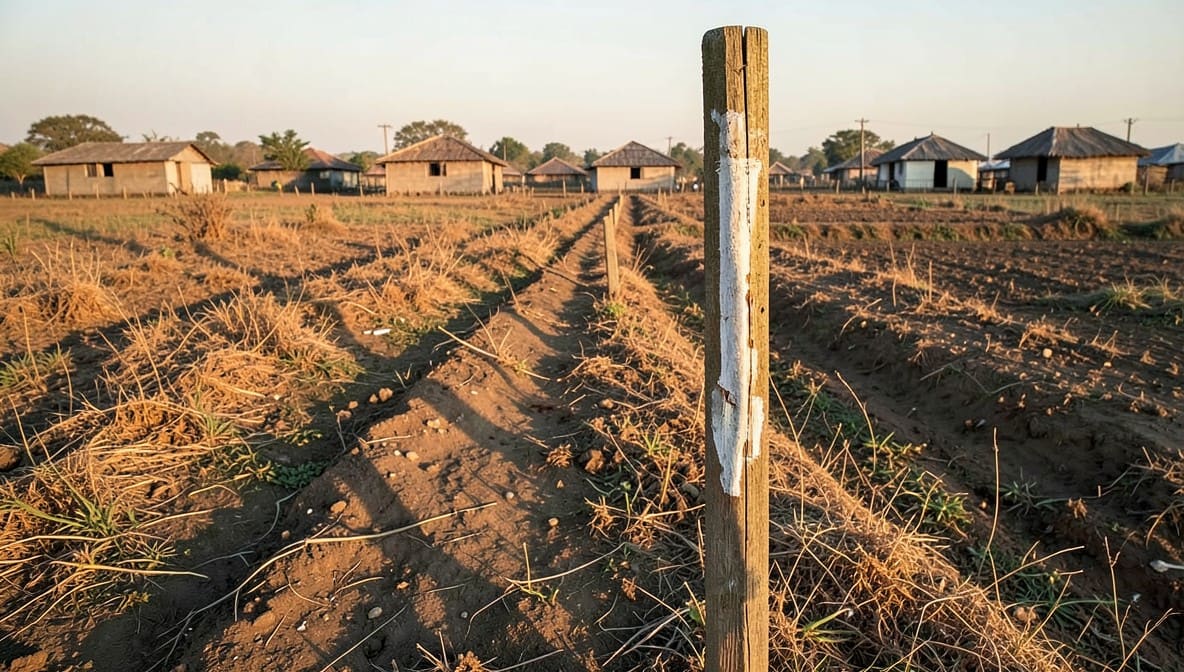
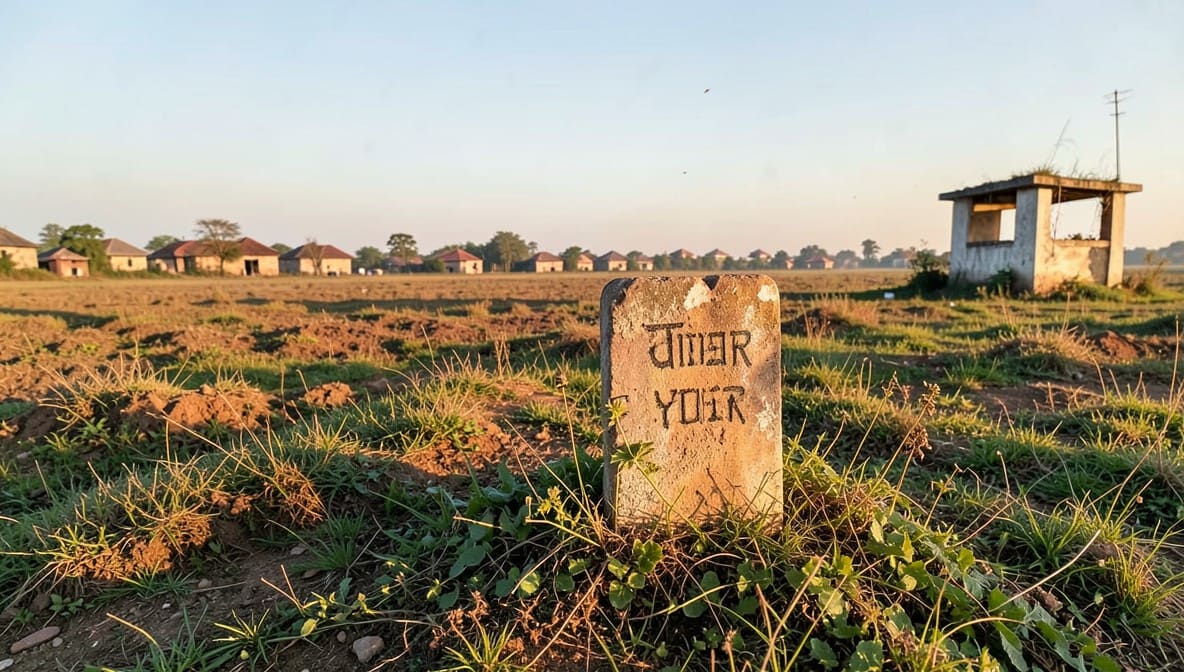
The petitioner, Yuvraj Pratap Singh, filed a Public Interest Litigation seeking removal of encroachments on Gaon Sabha land in Village Bardiha Prasuram, Tehsil Salempur, District Deoria. The encroachments allegedly affected two plots: Gata No. 630 (0.0810 hectare) designated as Banjar land, and Gata No. 648 (0.1780 hectare) designated as a pond. The petitioner alleged that these lands, held in trust for the village community, were being illegally occupied and utilized without legal authority.
Key Facts
- Gata No. 630, measuring 0.0810 hectare, was found to be free of encroachment following a spot inspection on 18.01.2026, as confirmed by photographic evidence submitted to the Court.
- Gata No. 648, measuring 0.1780 hectare, was found to have an encroachment by Tetri Devi, wife of Vindhyachal.
- An area of 0.014 hectare within Gata No. 648 had been lawfully settled in favor of Bauna S/o Videsh under Section 123(1) of the U.P. Zamindari Abolition and Land Reforms Act, 1950, by an order dated 23.08.1996 issued by the Sub-Divisional Officer, Deoria.
- The remaining encroached portion of Gata No. 648 was subject to a pending proceeding under Section 67 of the U.P. Revenue Code, 2006, with Case No. T202605200201725 registered before the Tehsildar, Salempur.
- No action had been concluded on the encroachment matter despite the lapse of time and public interest involved.
Procedural History
- 07.01.2026: Public Interest Litigation (PIL No. 77 of 2026) filed before the High Court of Judicature at Allahabad.
- 09.02.2026: Deputy District Magistrate, Salempur, issued instructions to the Tehsildar regarding the status of encroachments, submitted to the Court.
- 18.01.2026: Spot inspection conducted by revenue officials, photographs taken and submitted as evidence.
- 14.05.2026: Judgment delivered by the Court.
Relief Sought
The petitioner sought a writ of mandamus directing the respondent authorities to:
- Remove encroachments from Gata No. 630 and Gata No. 648;
- Initiate and conclude proceedings against the encroacher;
- Complete all actions expeditiously, preferably within a stipulated timeframe.
The Legal Issue
The central question was whether the Court can issue a mandamus directing a revenue authority to decide a pending proceeding under Section 67 of the U.P. Revenue Code, 2006, when administrative delay threatens the integrity of Gaon Sabha land.
Arguments Presented
For the Petitioner
Sri Mohammad Jamil Akhtar argued that Gaon Sabha land is held in public trust for the benefit of the village community and cannot be lawfully alienated or encroached upon without due process. He emphasized that the state has a statutory duty under the U.P. Revenue Code, 2006, to protect such land and that prolonged inaction by the Tehsildar amounted to a failure of public duty warranting judicial intervention. He cited the principle that public property cannot be permitted to be usurped with impunity.
For the Respondent
The Standing Counsel for the State and Sri Sudhir Bharti, appearing for respondent no. 10, acknowledged the pendency of Case No. T202605200201725 before the Tehsildar and confirmed that proceedings were underway. They submitted that the matter was not dormant but under active consideration, and that the Court should not interfere in the administrative process unless there was manifest mala fide or undue delay.
The Court's Analysis
The Court examined the nature of Gaon Sabha land under the U.P. Zamindari Abolition and Land Reforms Act, 1950, and the procedural safeguards under the U.P. Revenue Code, 2006. It noted that while Gata No. 630 was cleared of encroachment, the encroachment on Gata No. 648 remained unresolved despite the initiation of proceedings under Section 67. The Court emphasized that Section 67 empowers the Tehsildar to inquire into and determine claims of unlawful occupation, and that such proceedings must be concluded with reasonable expedition.
"The State has a constitutional and statutory obligation to protect community land from unlawful encroachment. The pendency of a proceeding for over several months without finality, in the face of clear evidence of encroachment, cannot be permitted to continue without judicial oversight."
The Court rejected the notion that administrative proceedings must be left entirely to the discretion of revenue officers when public interest is at stake. It held that where a PIL is filed to enforce a public right and the authority has already initiated proceedings, the Court may intervene to ensure timely disposal. The Court distinguished this from cases where no proceedings had been initiated, noting that here, the machinery was already set in motion.
The Verdict
The petition was disposed of with the direction that the Tehsildar, Salempur, District Deoria, decide the pending Case No. T202605200201725 under Section 67 of the U.P. Revenue Code, 2006, after hearing all concerned parties, within a period of three months from the date of presentation of a certified copy of this order. The Court directed that a copy of the final order be submitted to the High Court.
What This Means For Similar Cases
Administrative Delay in Revenue Proceedings Is Judicially Reviewable
- Practitioners may now invoke PIL to compel timely adjudication of pending encroachment cases under Section 67 where public land is involved.
- Mere initiation of proceedings is insufficient; courts will demand reasonable expediency.
Gaon Sabha Land Is Protected by Statutory and Constitutional Duty
- Encroachments on Gaon Sabha land trigger a non-delegable duty under the U.P. Zamindari Abolition and Land Reforms Act, 1950, and the U.P. Revenue Code, 2006.
- Any settlement or transfer must comply with statutory procedures; unauthorized occupation is voidable.
Mandamus Is Available Even Without Mala Fide
- Courts will issue mandamus not only for maladministration but also for inordinate delay in statutory processes affecting public rights.
- A certified copy of the order must be submitted to the Court as a compliance mechanism.