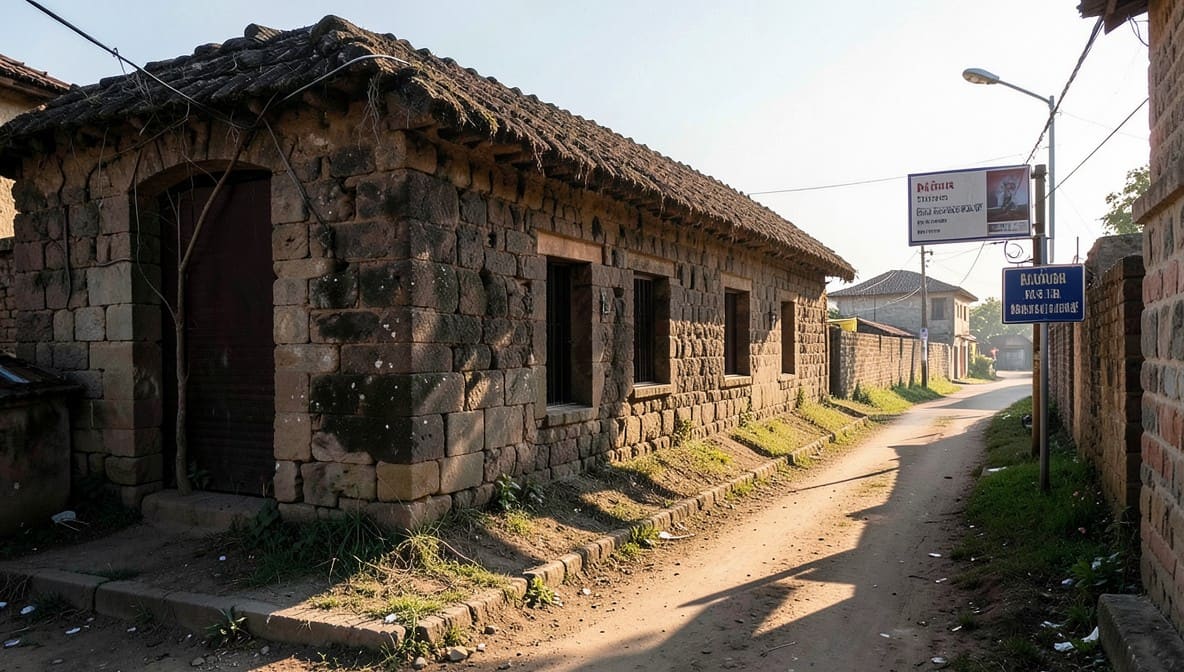
The Karnataka High Court has clarified that proceedings under Section 133 of the Code of Criminal Procedure cannot be weaponized to resolve private property disputes involving title, boundary, or easementary rights. This ruling reinforces the principle that summary criminal remedies must not supplant civil adjudication or usurp the statutory domain of municipal authorities.
Background & Facts
The Dispute
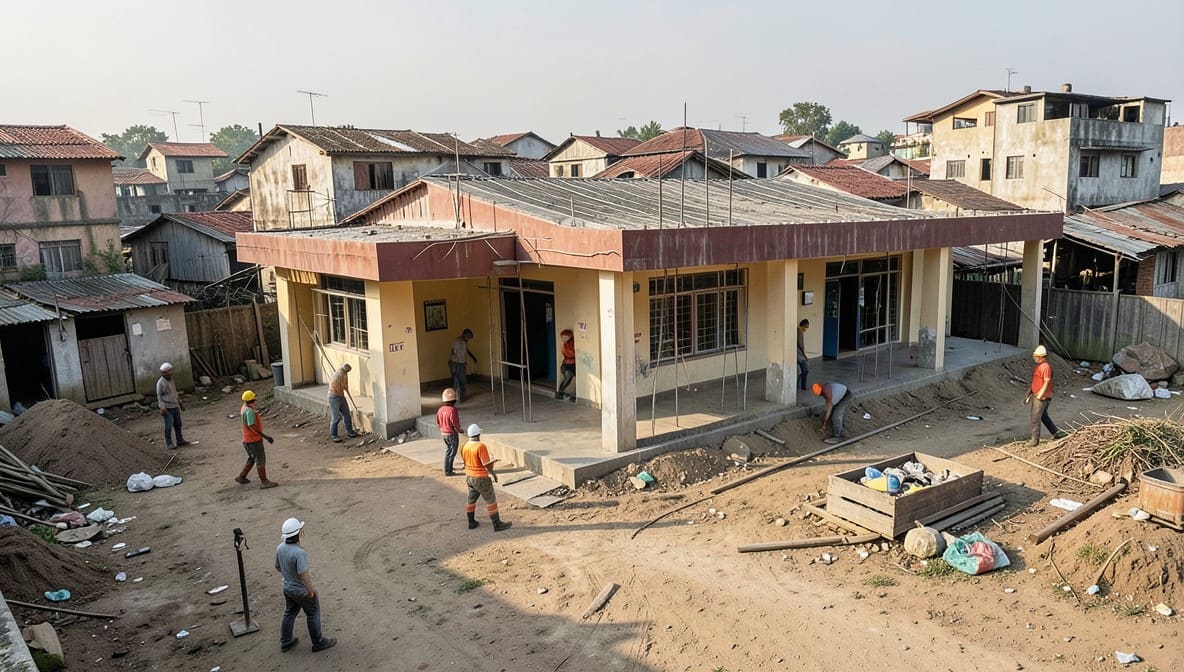
The petitioner, Guru Kottureshwara Kalyana Mantap, a registered society under the Mysore Societies Registration Act, 1960, claims absolute ownership and possession of property bearing Survey No. 684/6 in Kottur Town, Bellary District. It asserts that its title was formally recognized by an allotment certificate issued by the Tahsildar on 23.11.1972. The society constructed a godown on this property. The fourth respondent, Sri Karnam Mahantappa, who claims ownership of an adjoining property, lodged a complaint alleging that the godown encroached upon a public road, obstructing his right of access. He sought removal of the structure under Section 133 of the CrPC.
Key Facts
- The petitioner’s property is located within the municipal limits of Kottur Town.
- The godown was constructed prior to 2008 and had been leased to the son of the fourth respondent, who was formerly the Secretary of the petitioner society.
- A personal dispute arose between the parties, leading to legal proceedings and eventual recovery of possession of the godown by the petitioner.
- The fourth respondent filed a complaint with the Deputy Commissioner on or before 2014, alleging unauthorized construction and encroachment.
- The Tahsildar submitted a report to the Assistant Commissioner (second respondent) without specifying the legal basis for the inspection or measurement.
- The impugned order dated 26.07.2014 (Annexure-Q) directed removal of the structure based solely on the Tahsildar’s report.
- No notice was issued to the petitioner prior to the order.
- No title documents of either party were examined or referenced in the order.
- No survey procedure under the Karnataka Land Revenue Act or municipal building regulations was followed.
Procedural History
- 23.11.1972: Allotment certificate issued by Tahsildar recognizing petitioner’s possession over Survey No. 684/6.
- Pre-2008: Godown constructed on the property.
- 2008 - 2014: Personal dispute between petitioner and fourth respondent; possession of godown recovered by petitioner.
- 2014 (before 26.07.2014): Fourth respondent files complaint with Deputy Commissioner.
- 26.07.2014: Assistant Commissioner passes impugned order under Section 133 CrPC directing removal of encroachment.
- 2014: Writ Petition No. 107936 of 2014 filed before the High Court at Dharwad.
- 23.06.2026: Judgment delivered by Justice Sachin Shankar Magadum.
The Parties' Positions
For the Petitioner
- The dispute is civil in nature, concerning title, boundary, and easementary rights.
- Section 133 CrPC is meant for public nuisance, not private property disputes.
- The Tahsildar’s report lacks legal foundation, procedural fairness, and evidentiary basis.
- Municipal authorities under the Karnataka Municipalities Act, 1964, have exclusive jurisdiction over unauthorized construction.
- The complaint is mala fide, arising from a personal vendetta.
For the Respondents
- The construction is unauthorized and obstructs a public road.
- The Assistant Commissioner has inherent power to maintain public order and prevent encroachment.
- The Tahsildar’s report is sufficient to establish encroachment.
- The petitioner’s claim of ownership is not substantiated by title documents.
Relief Sought
The petitioner seeks quashing of the order dated 26.07.2014, restoration of possession over the godown, and a declaration that the Assistant Commissioner lacked jurisdiction to act under Section 133 CrPC.
The Legal Issue
Can the Assistant Commissioner invoke Section 133 of the CrPC to adjudicate a private dispute over the existence of a road, boundary, and easementary rights, when the properties lie within municipal limits and the alleged violation pertains to building regulations?
Arguments Presented
For the Petitioner
The petitioner relied on State of U.P. v. Mohammad Noor and K. Srinivas v. State of Andhra Pradesh to argue that Section 133 CrPC is a summary remedy for public nuisance, not a tool for determining title or boundary. It emphasized that the Tahsildar’s report was devoid of procedural safeguards, lacked jurisdictional basis, and failed to establish the existence of a public road. The petitioner further contended that the Karnataka Municipalities Act, 1964, provides a complete code for dealing with unauthorized construction, making the Assistant Commissioner’s action ultra vires.
For the Respondent
The State, through the AGA, argued that the Assistant Commissioner, as a senior revenue officer, has a duty to prevent encroachment on public land. It submitted that the Tahsildar’s report, though minimal, was sufficient to trigger action under Section 133 CrPC. It did not address the jurisdictional conflict with municipal authorities or the absence of notice and hearing.
The Court's Analysis
The Court conducted a rigorous analysis of the nature of proceedings under Section 133 CrPC, distinguishing them from civil adjudication. It held that the provision is designed to remove public nuisances threatening the health, safety, or convenience of the community - not to resolve private disputes over land boundaries or ownership.
"Proceedings under Section 133 of CrPC are intended to deal with cases of public nuisance and cannot be converted into a mechanism for resolving intricate civil disputes relating to title, boundary and right of way."
The Court noted that the impugned order was based entirely on a report from the Tahsildar, yet contained no details on how the inspection was conducted, whether notice was issued, or whether measurements were made in accordance with land revenue procedures. Crucially, the order made no reference to title documents, survey maps, or easementary rights of the fourth respondent.
The Court further emphasized that the properties in question fall squarely within the municipal limits of Kottur, governed by the Karnataka Municipalities Act, 1964. Under Section 187 of that Act, the Chief Officer of the Municipality has exclusive authority to investigate and act upon complaints of unauthorized construction. The Assistant Commissioner’s action, therefore, encroached upon a field exclusively occupied by statutory municipal authorities.
"The impugned exercise undertaken by respondent No.2 has the effect of encroaching upon a field exclusively occupied by the Municipal authorities under the scheme of the Karnataka Municipalities Act, 1964, which is impermissible in law."
The Court rejected the notion that revenue officers may act as de facto building inspectors. It held that even if the complaint were genuine, the remedy lay exclusively with the Municipal authority, not under the criminal summary jurisdiction of Section 133 CrPC.
The Verdict
The writ petition is allowed. The impugned order dated 26.07.2014 passed by the second respondent is quashed and set aside. The Court clarifies that this order does not preclude the fourth respondent from approaching the competent Municipal authority under Section 187 of the Karnataka Municipalities Act, 1964, if aggrieved by the construction. Any such proceeding must be conducted independently, with due notice and hearing, and uninfluenced by the observations in this judgment. All rival contentions are kept open.
What This Means For Similar Cases
Municipal Jurisdiction Is Exclusive for Unauthorized Construction
- Practitioners must advise clients to approach Municipal authorities under Section 187 of the Karnataka Municipalities Act, 1964 for complaints about unauthorized construction, not revenue officers under CrPC.
- Any order passed by a Tahsildar or Assistant Commissioner under Section 133 CrPC for building violations is liable to be quashed.
Section 133 CrPC Cannot Be Used for Civil Title or Boundary Disputes
- Section 133 CrPC is not a substitute for civil suits or land revenue proceedings.
- Allegations of encroachment must be substantiated by title documents, survey records, and easementary proof - none of which can be determined in summary proceedings.
- Courts will not uphold orders based solely on unverified reports lacking procedural compliance.
Procedural Deficiencies Invalidate Administrative Orders
- Administrative orders must record the basis of inspection, notice given, and evidence considered.
- Silence on these elements renders the order unsustainable, even if the outcome appears just.
- Practitioners should challenge such orders on grounds of natural justice and lack of jurisdiction, not merely on merits.