Topic

Chain of Custody

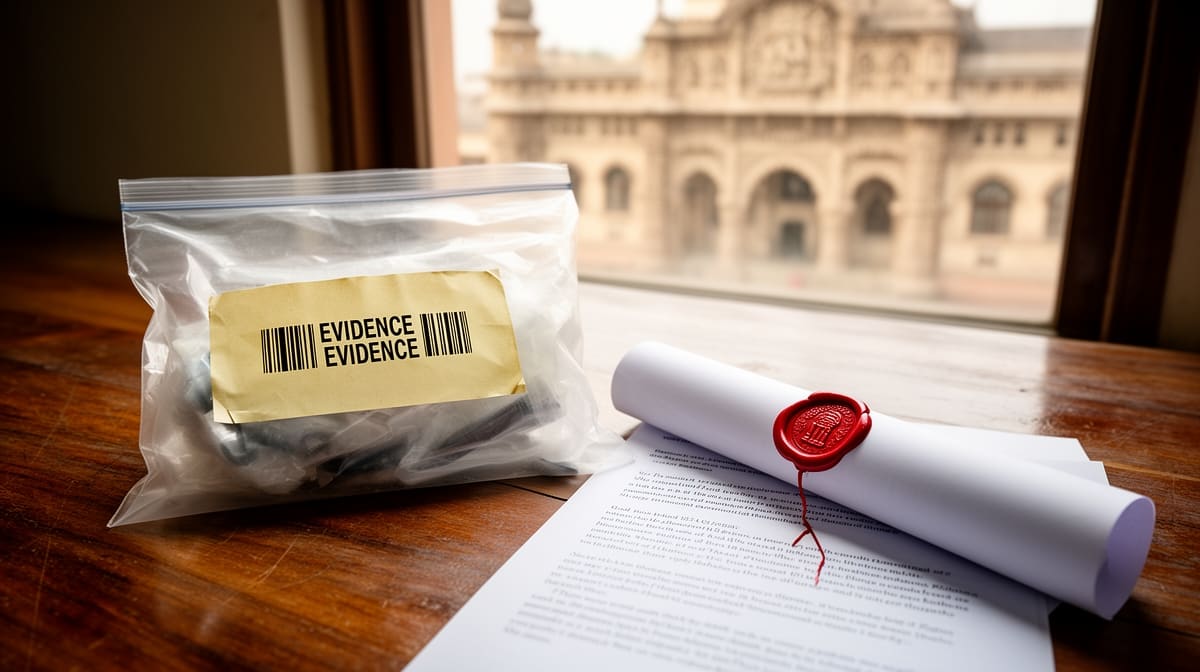
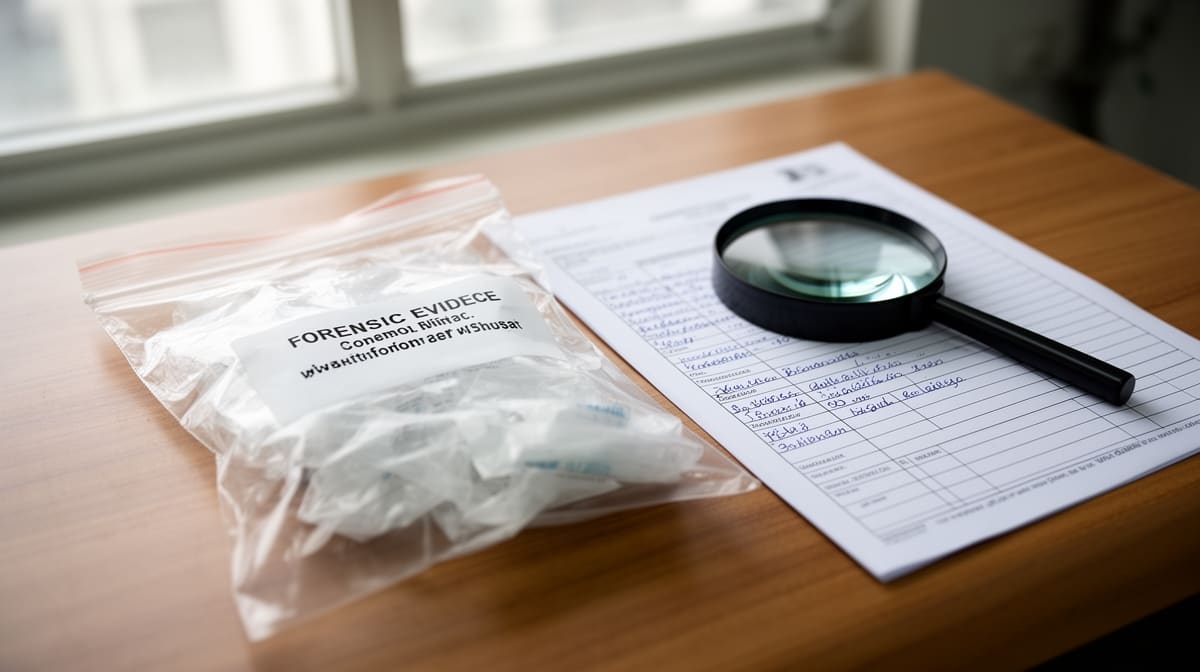
Chain of custody in Indian law refers to the documented, unbroken handling of evidence from seizure to court presentation, critical in cases under NDPS, POCSO, and electronic evidence rules.

18 articlesLatest September 2026
Section 65B Evidence Act & Chain of Custody | Inadmissible Electronic Records Break Circumstantial Evidence Chain: Kerala HC Acquits in Murder Case
Case Law Analysis
|Kerala High Court

Section 65B Evidence Act & Chain of Custody | Inadmissible Electronic Records Break Circumstantial Evidence Chain: Kerala HC Acquits in Murder Case

Kerala High Court acquitted the accused in a murder trial, ruling that the prosecution failed to establish a complete chain of circumstantial evidence due to inadmissible electronic records under Section 65B of the Indian Evidence Act. The judgment underscores the critical role of forensic integrity and procedural compliance in criminal convictions based on circumstantial evidence.

NDPS Act Section 20(b)(ii)(B) | Unbroken Chain of Custody Mandatory for Conviction; Procedural Lapses Lead to Acquittal : Chhattisgarh HC
Case Law Analysis
|Chhattisgarh High Court

NDPS Act Section 20(b)(ii)(B) | Unbroken Chain of Custody Mandatory for Conviction; Procedural Lapses Lead to Acquittal : Chhattisgarh HC

Chhattisgarh High Court acquitted the accused in an NDPS case, ruling that broken chain of custody and failure to prove exclusive possession invalidate prosecution evidence. The judgment underscores strict procedural compliance as a prerequisite for conviction under the NDPS Act, impacting drug-related prosecutions nationwide.

NDPS Act Section 21 | Chance Recovery by Patrolling Police Valid Without Mandatory Independent Witnesses : Himachal Pradesh HC
Case Law Analysis
|Himachal Pradesh High Court

NDPS Act Section 21 | Chance Recovery by Patrolling Police Valid Without Mandatory Independent Witnesses : Himachal Pradesh HC

Himachal Pradesh High Court rules that police testimony alone suffices for conviction under NDPS Act when contraband is recovered during patrolling, even without independent witnesses. The court upheld a heroin possession conviction while reducing the sentence from five to one year on proportionality grounds, clarifying that seal non-production is not fatal if specimen impressions are exhibited.

NDPS Act Bail | Chain of Custody Discrepancy in Contraband Description Voids Prosecution Case: Bombay HC Grants Bail Despite Commercial Quantity
Case Law Analysis
|Bombay High Court

NDPS Act Bail | Chain of Custody Discrepancy in Contraband Description Voids Prosecution Case: Bombay HC Grants Bail Despite Commercial Quantity

Bombay High Court ruled that material discrepancies in the description of seized contraband (wet vs. dry ganja) undermine the prosecution's chain of custody, justifying bail even for commercial quantities under the NDPS Act. The ruling sets a precedent for scrutinizing forensic documentation in narcotics cases.

POCSO Act | Identification Under Darkness & Broken Chain of Custody Fatal to Conviction : Uttarakhand HC Acquits Accused
Case Law Analysis
|Uttarakhand High Court

POCSO Act | Identification Under Darkness & Broken Chain of Custody Fatal to Conviction : Uttarakhand HC Acquits Accused

Uttarakhand High Court acquitted an accused in a POCSO case, ruling that unreliable identification due to darkness, absence of a test identification parade, and a broken chain of custody vitiated the prosecution's case. The court also emphasized the failure to confront the accused with the FSL report under Section 313 Cr.P.C., setting a precedent for strict adherence to evidentiary standards in sexual offence cases.

NDPS Act Section 20 | Non-Production of Seized Contraband in Court Vitiates Conviction Despite Forensic Report: Patna HC
Case Law Analysis
|Patna High Court

NDPS Act Section 20 | Non-Production of Seized Contraband in Court Vitiates Conviction Despite Forensic Report: Patna HC

Patna High Court acquitted an accused under the NDPS Act after finding that the prosecution failed to produce the seized ganja in court, despite a forensic report confirming its nature. The court ruled that non-production of physical evidence breaks the chain of custody, rendering the conviction unsustainable even with scientific validation.

NDPS Act | Failure to Secure Independent Witnesses During Contraband Recovery Vitiates Conviction : HP HC
Case Law Analysis
|Himachal Pradesh High Court

NDPS Act | Failure to Secure Independent Witnesses During Contraband Recovery Vitiates Conviction : HP HC

The Himachal Pradesh High Court acquitted an accused under the NDPS Act, ruling that the prosecution's failure to involve independent witnesses during contraband recovery-despite nearby habitation and passing vehicles-creates reasonable doubt. The judgment underscores that procedural compliance, including proper sealing and witness participation, is mandatory to sustain convictions under the Act.

NDPS Act | Chain of Custody Break + Failure to Examine Accused Under Section 313 CrPC Vitiates Conviction: Punjab & Haryana HC
Case Law Analysis
|Punjab and Haryana High Court

NDPS Act | Chain of Custody Break + Failure to Examine Accused Under Section 313 CrPC Vitiates Conviction: Punjab & Haryana HC

The Punjab & Haryana High Court overturned an NDPS conviction after the prosecution failed to maintain an unbroken chain of custody for seized contraband and did not examine the accused under Section 313 CrPC - even though forensic reports confirmed the substance. This ruling reinforces that procedural integrity in evidence handling and accused rights are non-negotiable pillars of fair trial, not mere technicalities.

Section 65-B Evidence Act | Mandatory Certificate Requirement for Electronic Evidence Non-Negotiable : SC Overturns Conviction Based on Call Detail Records Without Certification
Case Law Analysis
|Supreme Court of India

Section 65-B Evidence Act | Mandatory Certificate Requirement for Electronic Evidence Non-Negotiable : SC Overturns Conviction Based on Call Detail Records Without Certification

The Supreme Court reaffirmed that electronic evidence, including call detail records, is inadmissible without a valid Section 65-B certificate. This ruling overturned a conviction reliant solely on circumstantial evidence, setting a strict precedent for the admissibility of digital records in criminal trials.