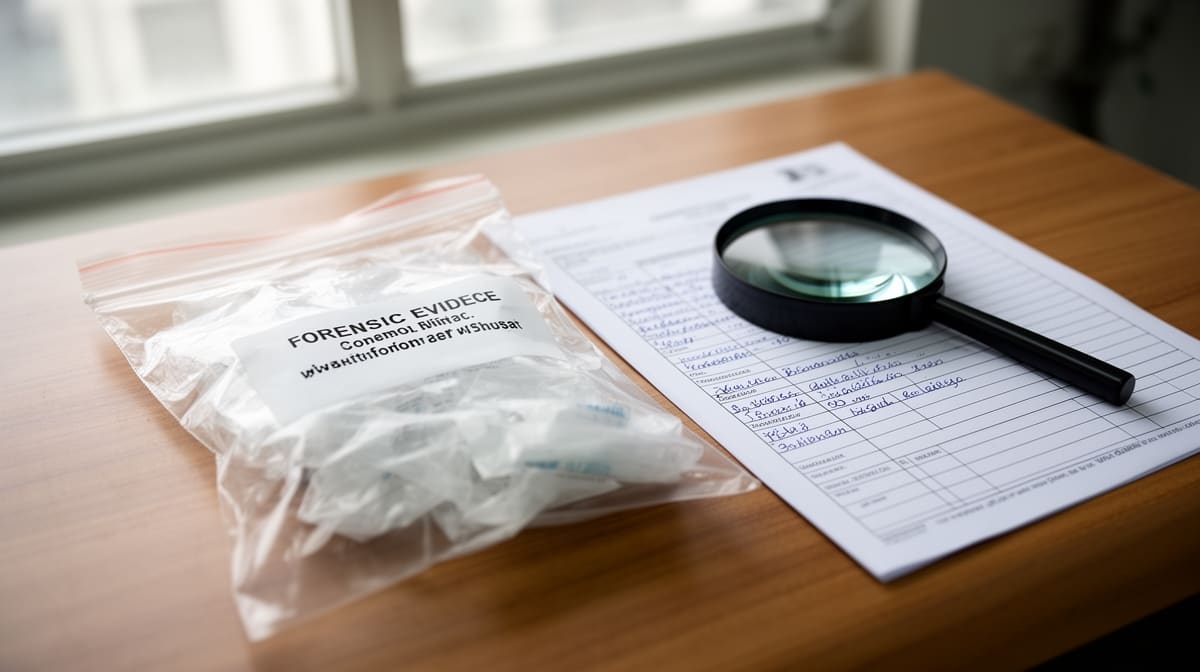
The High Court of Kerala has reaffirmed that prosecution under the NDPS Act cannot succeed without establishing an unbroken, tamper-proof chain of custody for seized contraband. The acquittal of the accused underscores that procedural lapses in evidence handling are not mere technicalities - they strike at the heart of evidentiary reliability.
Background & Facts
The Dispute
The accused, K.K. Mathew, was charged under Section 20(b)(ii)(A) of the Narcotic Drugs and Psychotropic Substances Act, 1985 for transporting 520 grams of ganja in an autorickshaw on June 12, 2008. The contraband was seized by the Excise Circle Inspector near Mahadevar Temple, Ariparambu, Kottayam. The prosecution claimed the substance was recovered from the vehicle’s dashboard and subsequently sent for chemical analysis.
Procedural History
- 2009: Criminal Case No. 355 of 2009 filed before Judicial Magistrate First Class, Kottayam
- 2013: Trial court convicted the accused and sentenced him to three months’ rigorous imprisonment
- 2015: Additional Sessions Judge dismissed the appeal, upholding the conviction
- 2015: Revision petition filed before Kerala High Court under Section 397 read with Section 401 Cr.P.C.
Relief Sought
The petitioner sought acquittal on grounds that the prosecution failed to produce the forwarding note or any evidence proving the sample sent to the forensic laboratory was the same as the one seized, thereby creating a fatal gap in the chain of custody.
The Legal Issue
The central question was whether the prosecution’s failure to produce the forwarding note or establish a tamper-proof chain of custody for the seized ganja sample renders the conviction unsustainable, even when other circumstantial evidence exists.
Arguments Presented
For the Petitioner
The learned counsel contended that the absence of the forwarding note, coupled with no testimony regarding the dispatch or receipt of the sample at the forensic laboratory, created an irreparable break in the chain of custody. Reliance was placed on Ali v. State of Kerala, Ramachandran v. State of Kerala, and Jalaludeen v. State of Kerala to argue that without such documentation, the authenticity of the chemical report cannot be presumed. The failure to prove the sample’s integrity invites the benefit of reasonable doubt under Section 101 of the Evidence Act.
For the Respondent
The Public Prosecutor argued that the seizure was witnessed by multiple witnesses, the contraband was properly marked, and the chemical report confirmed the presence of ganja. The absence of the forwarding note, they submitted, was a procedural lapse that did not invalidate the entire prosecution case, especially since the trial and appellate courts had independently appreciated the evidence.
The Court's Analysis
The Court emphasized that while revisional jurisdiction does not permit reappreciation of evidence, it must intervene where glaring procedural failures undermine the foundation of the prosecution’s case. The Court noted that the chemical analysis report (Ext.P2) was the sole scientific evidence linking the seized substance to the accused. However, without the forwarding note or any evidence of its secure transit to the laboratory, the link between the seized contraband and the tested sample remained speculative.
"When forwarding note/requisition for sending the sample was not produced, prosecution cannot establish the tamper proof dispatch of sample to the laboratory, as there was no satisfactory link evidence to show that it was the same sample that was drawn from the contraband seized, which eventually reached the chemical examination laboratory."
The Court distinguished this case from those where minor lapses were cured by corroborative testimony. Here, no witness testified to the sealing, labeling, or dispatch of the sample. The Court held that in NDPS cases, where the stakes are high and the evidence is often circumstantial, the chain of custody is not a formality but a constitutional safeguard against wrongful conviction. The failure to discharge this burden, the Court concluded, entitles the accused to the benefit of reasonable doubt.
The Verdict
The petitioner won. The Court held that the absence of a forwarding note and failure to establish a tamper-proof chain of custody for the seized contraband sample invalidates the prosecution’s case. The convictions of the trial and appellate courts were set aside, and the accused was acquitted of the charge under Section 20(b)(ii)(A) of the NDPS Act. His bail bond was cancelled, and he was set at liberty.
What This Means For Similar Cases
Chain of Custody Is Non-Negotiable
- Practitioners must now treat the forwarding note as indispensable in NDPS cases
- Prosecutors must call the investigating officer to testify about sealing, labeling, and dispatch procedures
- Defense counsel should routinely object to chemical reports where the forwarding note is missing
Chemical Reports Are Not Self-Authenticating
- A forensic report alone cannot prove the identity of the tested substance
- The report’s admissibility hinges on proof that the sample tested is the same as the one seized
- Courts will no longer accept assumptions - link evidence must be affirmative and documented
Reasonable Doubt Applies Even in Serious Offences
- Gravity of the offence does not excuse procedural failures
- The burden remains on the prosecution to prove every link in the chain
- Acquittals based on chain-of-custody gaps are now legally sustainable even where the accused appears guilty