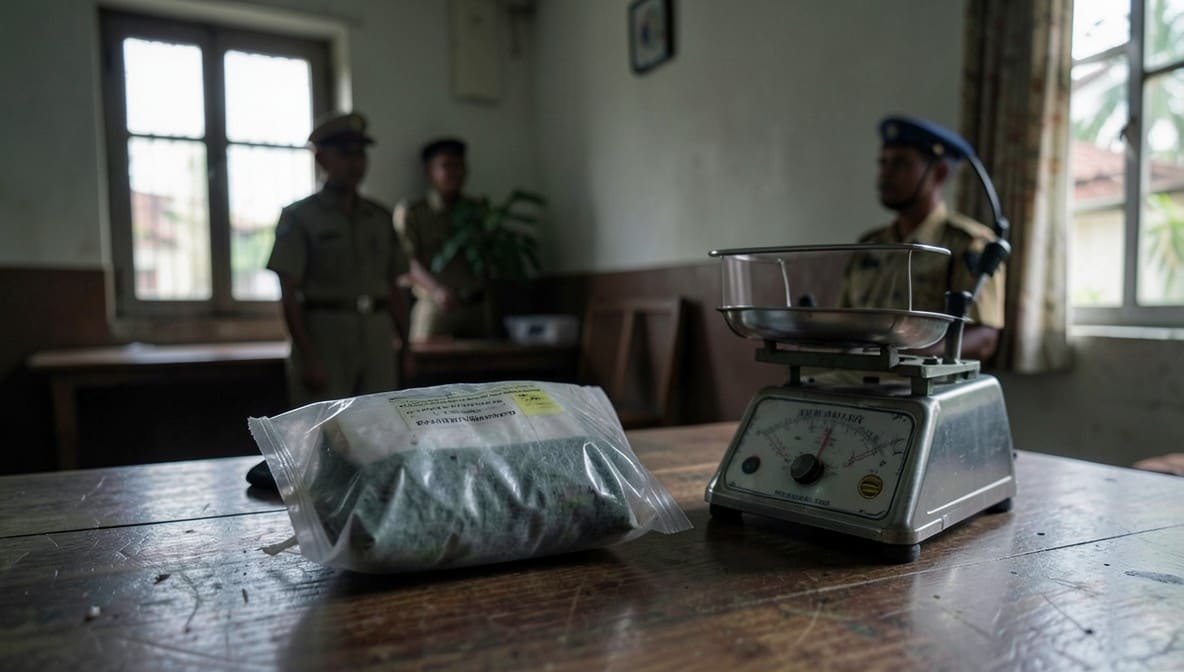
The Himachal Pradesh High Court has reaffirmed that the failure of police to make genuine efforts to secure independent witnesses during contraband recovery, despite favorable circumstances, renders the prosecution’s case unreliable and mandates acquittal. This judgment underscores the non-negotiable nature of procedural compliance under the Narcotic Drugs and Psychotropic Substances Act, 1985, particularly where the absence of neutral observers casts doubt on the integrity of seizure.
Background & Facts
The Dispute
The State of Himachal Pradesh appealed against the acquittal of respondent Pandav Ram by the Special Judge, Chamba, in Sessions Trial No. 16/12, arising from FIR No. 246/11 dated 02.10.2011 registered at Police Station Sadar, Chamba, under Section 20 of the NDPS Act. The respondent was charged with exclusive and conscious possession of 400 grams of charas without a license.
Key Facts
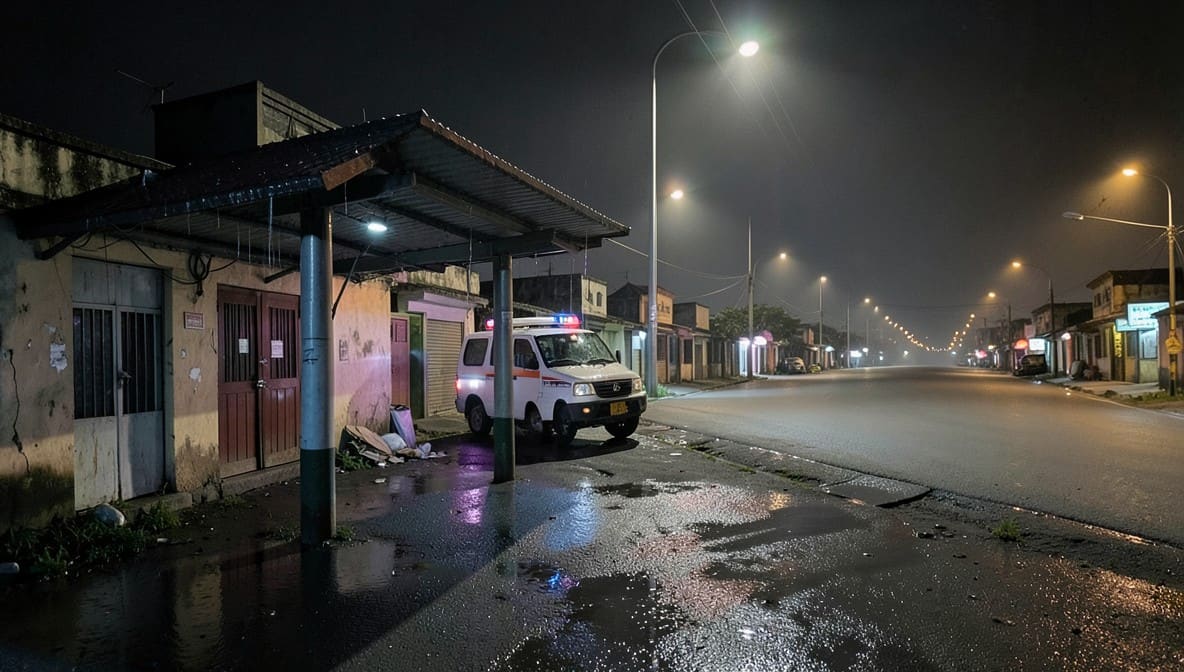
- On 02.10.2011 at 9:15 P.M., a police party led by ASI Kuldeep Chand (PW-8) stopped a government vehicle at Zero Point Bharmour Chowk, Chamba, after observing Pandav Ram sitting inside a rain shelter with a bag.
- Upon seeing the police, the respondent allegedly rose and walked briskly toward Hardaspura, prompting suspicion.
- The respondent was detained, informed of his right to a personal search in the presence of a Magistrate or Gazetted Officer, and opted for search by police personnel.
- A consent memo (Ext. PW1/A) and personal search memo (Ext. PW1/B) were prepared and signed by the respondent and two police personnel: PSI Harish Kumar (PW-1) and HC Ramesh.
- A bag containing two laces was opened, revealing a corduroy trouser and a cloth bag with polythene containing 400 grams of brown, cylindrical hard substance identified as charas.
- The substance was weighed, sealed in a cloth parcel with five impressions of seal ‘K’, and a sample impression (Ext. PW1/C) was taken and signed by witnesses and the respondent.
- A seizure memo (Ext. PW1/D) was prepared and signed by PW-1 and PW-8, with the respondent’s signature.
- A ruqua (Ext. PW8/A) was prepared at 10:25 P.M. and sent to the Police Station, where FIR No. 246/11 was registered at 10:40 P.M.
- The case property was handed over to MHC Pawan Kumar (PW-7) on 02.10.2011 and entered in Malkhana Register No. 19, Sr. No. 604.
- On 04.10.2011, the property was handed to HHC Ramesh Kumar (PW-11) for deposit at SFSL Junga via RC No. 154/11.
- Due to Dussehra holidays from 06.10.2011 to 09.10.2011, the property was temporarily stored at Police Station Kandaghat, with daily diary entries (Ext. PW7/F to PW7/J) documenting custody.
- The property was finally deposited at SFSL Junga on 10.10.2011.
- The seal ‘K’ was handed to PSI Harish Kumar (PW-1), who failed to produce it in court, claiming it was misplaced during a transfer.
- No sample impression of seal ‘T’ (used for resealing at the Police Station) was taken on the NCB form (Ext. PW7/E).
- The arrest memo and intimation memo were allegedly overwritten to change the time of arrest to 12:20 A.M. on 03.10.2011.
- The prosecution examined only three of six police personnel: PW-1, PW-2, and PW-8. HC Ramesh, C. Vinod Kumar, and driver C. Vishal Kumar were not examined.
- No independent witnesses were present during search or seizure.
Procedural History
- 02.10.2011: FIR No. 246/11 registered at 10:40 P.M. after recovery at 9:15 P.M.
- 04.10.2011: Case property handed to HHC Ramesh Kumar (PW-11) for SFSL deposit.
- 06.10.2011 - 09.10.2011: SFSL Junga closed due to Dussehra holidays; property stored at Police Station Kandaghat.
- 10.10.2011: Property deposited at SFSL Junga.
- 19.04.2012: Charge framed under Section 20 of NDPS Act.
- 30.04.2013: Trial Court acquitted respondent Pandav Ram.
- 07.03.2026: Appeal reserved.
- 24.03.2026: Judgment delivered by the High Court.
The Parties' Positions
Prosecution: Argued that recovery was lawful, consent was obtained, and the absence of independent witnesses was due to the late hour and lack of availability. Relied on police testimony and documentary evidence.
Respondent: Did not lead evidence but challenged the credibility of the prosecution’s narrative, highlighting inconsistencies in timelines, non-production of seal, and failure to secure independent witnesses.
Relief Sought
The State sought reversal of the acquittal and conviction of the respondent under Section 20 of the NDPS Act.
The Legal Issue
The central question was whether the prosecution’s failure to make any genuine effort to secure independent witnesses during the recovery of contraband, despite the presence of nearby habitation, commercial establishments, and passing vehicles at 9:15 P.M., renders the evidence unreliable and mandates acquittal under the principle of reasonable doubt.
Arguments Presented
For the Appellant
The State contended that the recovery was lawful and conducted in accordance with procedure. It argued that the absence of independent witnesses was justified due to the late hour and the secluded nature of the location. It relied on Ranjan Kumar Chaddha v. State of Himachal Pradesh (AIR 2023 SC 5164) to assert that Section 50 of the NDPS Act was not applicable since no personal search was conducted on the accused’s body. It further argued that police testimony, when consistent and corroborated by documents, is sufficient for conviction.
For the Respondent
The respondent’s counsel emphasized the glaring procedural lapses: non-production of seal ‘K’, failure to stop passing vehicles to secure witnesses, contradictory accounts of the arrest, and tampering of arrest timing. He relied on settled jurisprudence that non-association of independent witnesses is not fatal only if genuine efforts were made, and that deliberate avoidance of such efforts vitiates the entire prosecution case.
The Court's Analysis
The Court undertook a meticulous review of the prosecution’s narrative and found it riddled with inconsistencies and omissions. It emphasized that while police officers can be relied upon as witnesses, their testimony must be scrutinized with heightened caution in the absence of independent corroboration.
"It is not a case where Investigating Officer had tried to join independent witnesses, but witnesses were not found, rather it is a case where no effort was made to join independent witnesses, despite existence of local market near the spot and also some vehicles had crossed from Zero Point Bharmour Chowk at the relevant point of time."
The Court noted that Zero Point Bharmour Chowk was a well-trafficked transit point with a State Bank, S.P. Office, and shops within 50 - 200 meters. Multiple buses departed from Chamba Bus Stand at 9:30 P.M., 10:30 P.M., 10:45 P.M., and 11:30 P.M., all passing through the spot. Yet, the police admitted they did not stop any vehicle or approach nearby residents to secure witnesses.
The Court further highlighted the implausibility of the arrest narrative: the ruqua stated the respondent was fleeing when the vehicle approached, while the police witnesses claimed he started running only after they alighted. This discrepancy, though minor, undermined the credibility of the entire account.
The Court also found the delay in returning to the spot after registering the FIR - over an hour for a two-kilometer distance - unexplained and suspicious. The overwriting of the arrest time on official documents further indicated an attempt to manipulate the record.
Crucially, the seal ‘K’, which was critical to maintaining the chain of custody, was handed to PSI Harish Kumar, a trained police officer, who failed to produce it in court. His explanation - that it was misplaced during a transfer - was deemed unbelievable given his awareness of its evidentiary importance.
The Court rejected the Trial Court’s reliance on the overruled judgment in Sunil Kumar v. State of H.P., but affirmed the acquittal on independent grounds. It held that the cumulative effect of the procedural failures, inconsistencies, and lack of genuine effort to secure independent witnesses created a reasonable doubt that could not be dispelled.
"When there is a doubt, benefit has to be extended to the accused. Respondent has been acquitted by the Trial Court, which has fortified presumption of innocence in his favour. The State has failed to point out cogent, convincing and reliable evidence to rebut the said presumption."
The Verdict
The State’s appeal was dismissed. The acquittal of Pandav Ram was upheld. The Court held that the prosecution’s failure to secure independent witnesses despite their availability, coupled with unexplained delays, contradictory statements, non-production of the seal, and tampering of official documents, rendered the evidence unreliable. No conviction could be sustained under Section 20 of the NDPS Act.
What This Means For Similar Cases
Independent Witnesses Are Not a Formality
- Practitioners must argue that the absence of independent witnesses is fatal if the prosecution fails to demonstrate a genuine, active effort to secure them - even in late hours.
- Merely stating that no one was available is insufficient; courts will examine whether police made reasonable attempts to approach nearby shops, residences, or passing vehicles.
Chain of Custody Must Be Unbroken and Documented
- Non-production of seals, especially when handed to police personnel, will be viewed as a serious lapse, particularly when combined with other irregularities.
- Sample impressions of seals must be preserved and produced; failure to do so invites suspicion of tampering.
Inconsistencies in Police Depositions Are Fatal
- Minor discrepancies in timelines or narratives between ruqua, FIR, and witness statements will be amplified by courts when other procedural failures exist.
- Overwriting of official documents to alter time or date of arrest constitutes tampering and will be treated as evidence of bad faith.
Burden of Proof Remains on the State
- The presumption of innocence is not displaced by police testimony alone.
- The State must prove every element of the case beyond reasonable doubt, and failure to comply with mandatory procedural safeguards under the NDPS Act will result in acquittal, regardless of the quantity of contraband.