The Chhattisgarh High Court has reaffirmed that strict compliance with procedural safeguards under the Narcotics Drugs and Psychotropic Substances Act, 1985 is non-negotiable for conviction. In this appeal, the Court upheld the acquittal of an accused after finding fatal lapses in the recovery, sampling, and custody of ganja, emphasizing that procedural irregularities undermine the integrity of the entire prosecution case.
Background & Facts
The Dispute
The respondent, Abhimanyu Yadav, was charged under Section 20(b)(ii)(B) of the Narcotics Drugs and Psychotropic Substances Act, 1985 for possessing 7 kg of ganja. The prosecution alleged that the contraband was recovered from the verandah of his residence in Khantadand, District Jashpur, following a secret tip-off on 01.02.2017. The case hinged on whether the recovery was from his exclusive possession and whether the chain of custody for the seized sample was properly maintained.
Key Facts
- On 01.02.2017, Sub-Inspector Ashish Goutam (PW-7) received secret information about illegal ganja storage at respondent’s residence.
- Two independent witnesses, Sanjay Goswami and Avinash Singh, were summoned under Section 160 CrPC and present during the search.
- Section 50 of the NDPS Act was complied with: respondent was informed of his right to be searched before a Magistrate or Gazetted Officer and consented to police search.
- Three bundles of ganja in yellow and white bags were recovered from the verandah and recorded in Baramdagi Panchanama (Ex.P-10).
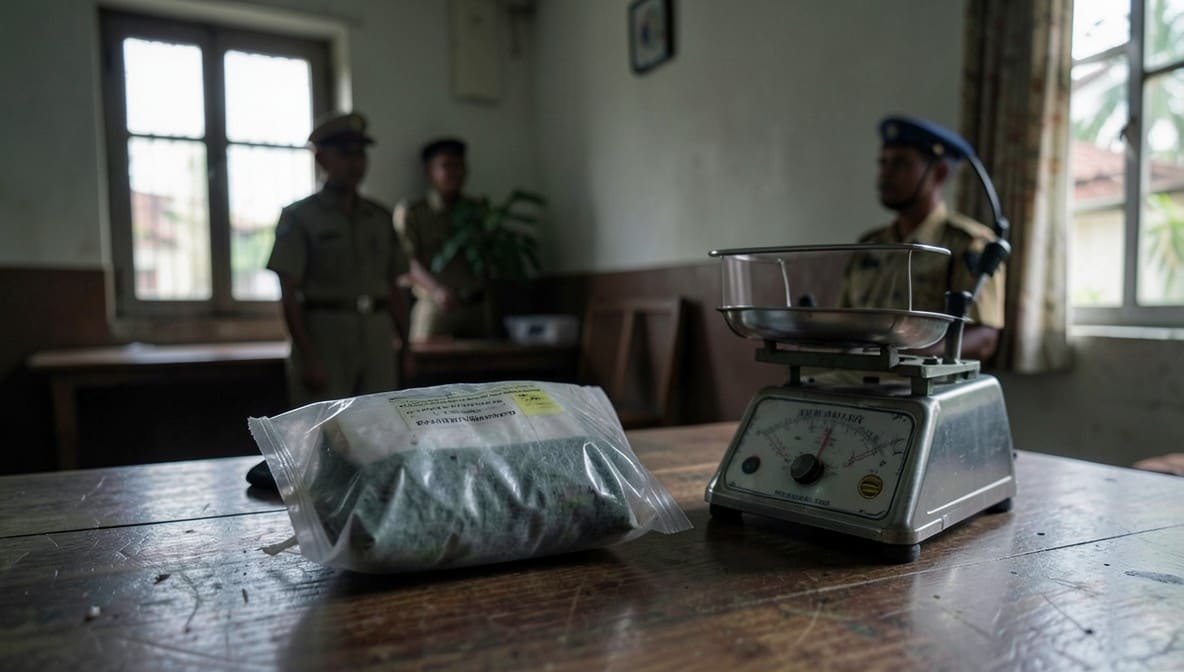
- The contraband was weighed by Arun Singh using a weighing machine, yielding a total of 7 kg, recorded in Ex.P-13.
- A Samras Panchanama (Ex.P-14) was prepared at 16.45 hrs on 01.02.2017 after mixing the ganja.
- Two sampling packets of 100 grams each were prepared at 16.50 hrs (Ex.P-15).
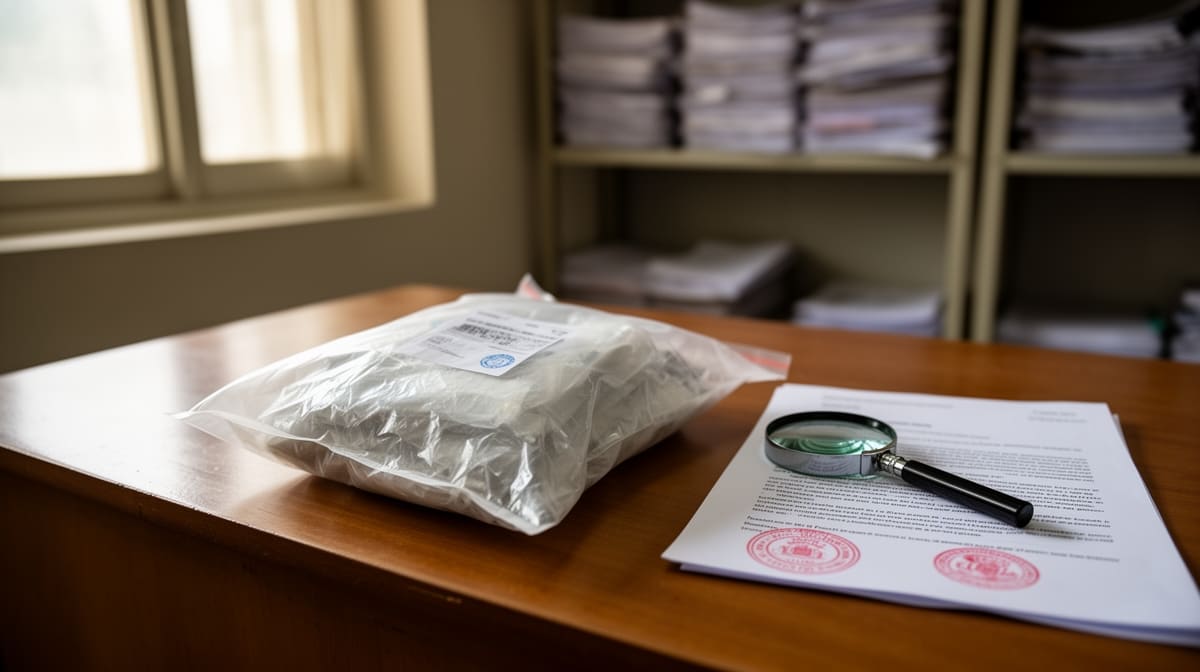
- The sampling packets were not sealed, as admitted by the Investigating Officer in para 25 of his testimony.
- The seizure memo (Ex.P-16) confirmed the absence of seals on the samples.
- The 7 kg of ganja and the two 100-gram samples were deposited in the Malkhana of Police Station Bagicha, acknowledged by Moharrir Manoj Bhagat (PW-9) via Japti Mal Supurdagi Panchanama (Ex.P-36).
- The samples were handed over to Constable Neelam Sai Paikra (PW-8) for transport to the Regional Science Laboratory, Ambikapur.
- The samples were marked as "A" and "B" by the Investigating Officer, but PW-8 could not confirm the markings.
- PW-9 (Manoj Bhagat) could not confirm whether the samples were marked "A" and "B" at the time of deposit.
- The Laboratory’s acknowledgment (Ex.P-38) dated 06.02.2017 showed no sample seal.
- The chemical report (Ex.P-39) dated 21.02.2017, however, falsely claimed the presence of a "P.S. Bagicha" sample seal.
- The verandah where ganja was recovered was a common area used by the respondent’s family, including his wife, daughter, daughter-in-law, and adult son.
Procedural History
- 01.02.2017: Search and recovery conducted at respondent’s residence.
- 01.02.2017: Investigation initiated; charge-sheet prepared.
- 16.08.2017: Special Judge (NDPS Act), Jashpur, acquitted the respondent.
- 22.07.2021: State filed appeal under Section 378 CrPC before the High Court (ACQA No. 228 of 2021).
- 15.04.2026: Judgment reserved.
- 07.05.2026: Judgment pronounced.
The Parties' Positions
The State contended that the evidence, though imperfect, was sufficient to establish guilt beyond reasonable doubt. It argued that the trial court erred in discounting the recovery and chemical report.
The respondent maintained that the prosecution failed to prove exclusive possession and that the chain of custody was irreparably broken, rendering the chemical report inadmissible.
Relief Sought
The State sought reversal of the acquittal and conviction of the respondent under Section 20(b)(ii)(B) of the NDPS Act, 1985.
The Legal Issue
The central questions were: (1) Whether the trial court’s finding that the ganja was not recovered from the respondent’s exclusive possession was perverse? (2) Whether the trial court was justified in holding that the sampling packets sent for chemical examination were not traceable to the original recovery due to non-sealing and procedural lapses?
Arguments Presented
For the Appellant/Petitioner
The State argued that the recovery was witnessed, the sample was chemically confirmed, and the accused’s presence at the scene established possession. It relied on State of Punjab v. Baldev Singh to assert that minor irregularities do not vitiate the prosecution case if the core evidence is reliable. It contended that the trial court overemphasized technicalities and ignored the totality of evidence.
For the Respondent/State
The respondent’s counsel emphasized that the NDPS Act mandates strict compliance with Sections 50 and 55. The absence of seals on samples, conflicting testimonies on markings, and the Laboratory’s contradictory acknowledgment rendered the chemical report unreliable. He cited State of Punjab v. Baldev Singh and Rajesh v. State of Haryana to argue that when the chain of custody is broken, the presumption of authenticity collapses. He further argued that the verandah was a common area, negating exclusive possession.
The Court's Analysis
The Court undertook a meticulous review of the evidence and found that the prosecution’s case was fatally compromised by procedural failures. The Investigating Officer’s admission that the sampling packets were not sealed was decisive. The Court noted that the absence of seals violated Section 55 of the NDPS Act, which requires that samples be sealed in the presence of witnesses and marked for identification.
"The alleged sample packets sent for chemical examination were, thus, not found to be ‘sealed’... the report (Ex.P-39) falsely claimed the presence of a ‘P.S. Bagicha’ sample seal."
The Court held that the discrepancy between the Laboratory’s acknowledgment (Ex.P-38) and its report (Ex.P-39) created an irrebuttable doubt about the identity of the substance tested. The Court further observed that the Investigating Officer’s inability to confirm the markings on the samples, coupled with the witness’s inability to verify them, rendered the entire chain of custody speculative.
Regarding exclusive possession, the Court noted that the verandah was a shared space used by multiple family members. The prosecution failed to establish that the ganja was under the respondent’s sole control or that he had knowledge of its presence. The Court cited K. S. S. S. S. v. State of Kerala to affirm that mere proximity to contraband is insufficient to establish possession.
The Court concluded that the trial court’s acquittal was not perverse but was, in fact, the only legally tenable conclusion given the evidence. The prosecution’s failure to comply with mandatory statutory procedures rendered the entire case unsustainable.
The Verdict
The appeal was dismissed. The acquittal of the respondent under Section 20(b)(ii)(B) of the NDPS Act, 1985 was upheld. The High Court found no legal infirmity in the trial court’s judgment. No monetary relief or direction was issued as the respondent was acquitted.
What This Means For Similar Cases
Chain of Custody Is Non-Negotiable
- Practitioners must ensure that every sample under the NDPS Act is sealed in the presence of independent witnesses and marked with unique identifiers.
- Any failure to seal or document sealing renders the chemical report inadmissible, regardless of the substance’s nature.
- Prosecutors must produce the person who received the sample at the lab and confirm its integrity.
Exclusive Possession Requires More Than Proximity
- Recovery from a common area, even within a residence, does not establish possession unless the accused had exclusive control or knowledge.
- Evidence must show the accused’s dominion over the contraband - mere presence is insufficient.
- Defense counsel should challenge possession claims where multiple persons have access to the location of recovery.
Procedural Compliance Trumps Substantive Evidence
- The NDPS Act’s procedural safeguards are not technicalities but substantive rights.
- Courts will not overlook breaches of Sections 50 and 55, even if the contraband is confirmed.
- A single unsealed sample or unverified chain of custody can lead to acquittal, irrespective of the quantity recovered.