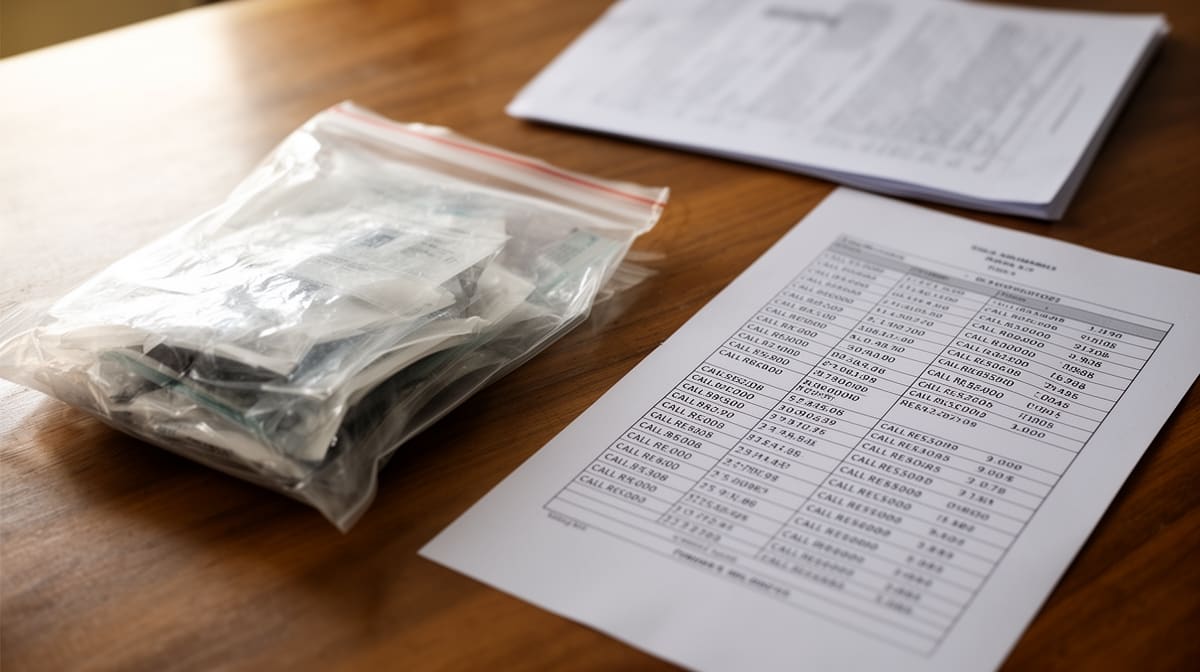
The Chhattisgarh High Court has delivered a pivotal ruling that redefines the admissibility of digital evidence in child pornography cases, emphasizing that possession of screenshots or messages alone cannot sustain a conviction without rigorous authentication of origin, context, and intent. This judgment sets a critical precedent for prosecutors and defense counsel navigating the complexities of electronic evidence under the Information Technology Act and the Indian Penal Code.
Background & Facts
The Dispute
The case arose from allegations that the appellant, Mahesh Lal Sah, a 43-year-old resident of Dhamtari, Chhattisgarh, had shared sexually explicit content involving a minor through WhatsApp. The prosecution claimed that images and videos of a minor were transmitted via the appellant’s mobile device, leading to his arrest under Section 67 of the Information Technology Act and Section 509 IPC. The core of the case rested entirely on digital evidence - WhatsApp screenshots, metadata, and forensic reports.
Procedural History
The case progressed through the following stages:
- September 2022 to January 2023: Alleged transmission of explicit content occurred over a four-month period.
- January 26, 2023: First Information Report (FIR) filed at Dhamtari Police Station based on a complaint by the minor’s guardian.
- December 5, 2023: Additional Sessions Judge convicted the appellant under Section 67 IT Act and Section 509 IPC, sentencing him to imprisonment.
- February 2026: Appeal filed before the Chhattisgarh High Court challenging the conviction on grounds of insufficient and unauthenticated digital evidence.
Relief Sought
The appellant sought quashing of the conviction, arguing that the prosecution failed to establish:
- The source of the digital content
- The authenticity of the WhatsApp screenshots
- The identity of the sender and recipient
- The context in which the content was shared
The Parties' Positions
For the Appellant:
- The WhatsApp screenshots presented were not verified for metadata, device ownership, or transmission logs.
- The prosecution did not prove the minor’s identity in the images or that the appellant was the originator.
- The forensic report lacked chain of custody documentation for the seized mobile device.
- The trial court relied on speculative inferences rather than concrete evidence.
For the Respondent (State):
- The screenshots were recovered from the appellant’s phone during a lawful search.
- The content was explicitly sexual and involved a minor.
- The appellant’s failure to deny the content during interrogation amounted to tacit admission.
- The trial court’s findings were based on cumulative evidence and should not be disturbed.
The Legal Issue
The central question was whether mere possession of WhatsApp screenshots containing sexually explicit material of a minor, without authentication of origin, context, or chain of custody, is sufficient to establish guilt under Section 67 of the Information Technology Act.
Arguments Presented
For the Appellant
The appellant’s counsel relied on State of Maharashtra v. Dr. Praful B. Desai (2003) and Anvar P.V. v. P.K. Basheer (2014), arguing that electronic evidence must be accompanied by a certificate under Section 65B of the Indian Evidence Act to be admissible. They emphasized that the prosecution failed to:
- Produce the original device or verified backup
- Establish the identity of the sender and recipient
- Prove the content was not fabricated, altered, or taken out of context
- Demonstrate the appellant’s intent to distribute or possess such material
They further cited Shafhi Mohammad v. State of Himachal Pradesh (2018), which held that secondary electronic evidence without a 65B certificate is inadmissible unless the original is unavailable due to circumstances beyond control.
For the Respondent
The State contended that the screenshots were recovered during a lawful search of the appellant’s phone and were corroborated by the complainant’s testimony. They argued that:
- The content was inherently incriminating and unmistakably involved a minor
- The appellant’s silence during interrogation implied guilt
- The trial court’s appreciation of evidence was fact-specific and should not be interfered with
- Strict compliance with Section 65B was not mandatory if the original device was not destroyed
The State did not produce a Section 65B certificate or forensic expert testimony verifying the integrity of the data.
The Court's Analysis
The High Court undertook a meticulous review of the evidentiary record and found the prosecution’s case fundamentally flawed. The Court held that digital evidence cannot be treated as self-authenticating merely because it appears on a device owned by the accused.
"The mere recovery of a WhatsApp screenshot from the accused’s phone does not establish that he created, sent, or even viewed the content with criminal intent. The source, context, and integrity of the digital file must be proven beyond reasonable doubt."
The Court distinguished this case from those involving direct downloads or cloud-stored material, noting that WhatsApp messages are end-to-end encrypted and can be forwarded, edited, or fabricated. The prosecution failed to:
- Trace the original source of the images
- Verify the timestamp or device ID associated with the messages
- Establish whether the images were shared by the appellant or forwarded by someone else
- Produce the original phone or a certified forensic copy
The Court further noted that the trial court had relied on the complainant’s uncorroborated testimony and speculative assumptions about the appellant’s intent. The absence of a Section 65B certificate rendered the screenshots inadmissible as secondary evidence under the Evidence Act.
The Court also rejected the argument that silence during interrogation amounted to admission, citing State of U.P. v. Krishna Gopal (1988), which held that silence cannot be equated with guilt in the absence of a clear right to remain silent being explained to the accused.
The Court emphasized that in cases involving child pornography, the gravity of the offense does not lower the standard of proof. The burden remains on the prosecution to establish every element of the offense with certainty.
The Verdict
The appellant won. The Chhattisgarh High Court set aside the conviction, holding that digital evidence without authentication under Section 65B of the Evidence Act and without corroboration of origin and intent is insufficient to sustain a conviction under Section 67 IT Act. The Court directed the release of the appellant, subject to any pending bail conditions.
What This Means For Similar Cases
Digital Evidence Requires Chain of Custody
- Practitioners must now ensure that all digital evidence - WhatsApp messages, screenshots, or cloud files - is accompanied by a Section 65B certificate
- Forensic reports must include device serial numbers, timestamps, hash values, and chain of custody logs
- Merely recovering files from a suspect’s phone is no longer sufficient
Intent Must Be Proven, Not Assumed
- Prosecutors cannot rely on the nature of the content alone to infer criminal intent
- Evidence must show the accused knowingly possessed, created, or distributed the material
- Defense counsel can challenge convictions where context, forwarding history, or third-party access is unexamined
Trial Courts Must Scrutinize Digital Evidence Rigorously
-
Judges must refuse to admit electronic evidence lacking proper certification
-
Speculative inferences based on possession or silence are legally untenable
-
The burden of proof remains on the State, even in heinous cases
-
Always demand a Section 65B certificate for electronic evidence
-
File objections to unauthenticated screenshots or messages at the earliest opportunity
-
Request forensic examination of original devices, not just exported files
-
Challenge convictions where the source of digital content is not traced to the accused