The High Court of Orissa has reaffirmed that strict adherence to procedural safeguards under the Narcotic Drugs and Psychotropic Substances Act is not optional but mandatory. A conviction based on contraband recovery cannot stand when the prosecution fails to produce documentary evidence of compliance with Section 50 and Section 55, even if the accused is suspected of possession.
Background & Facts
The Dispute
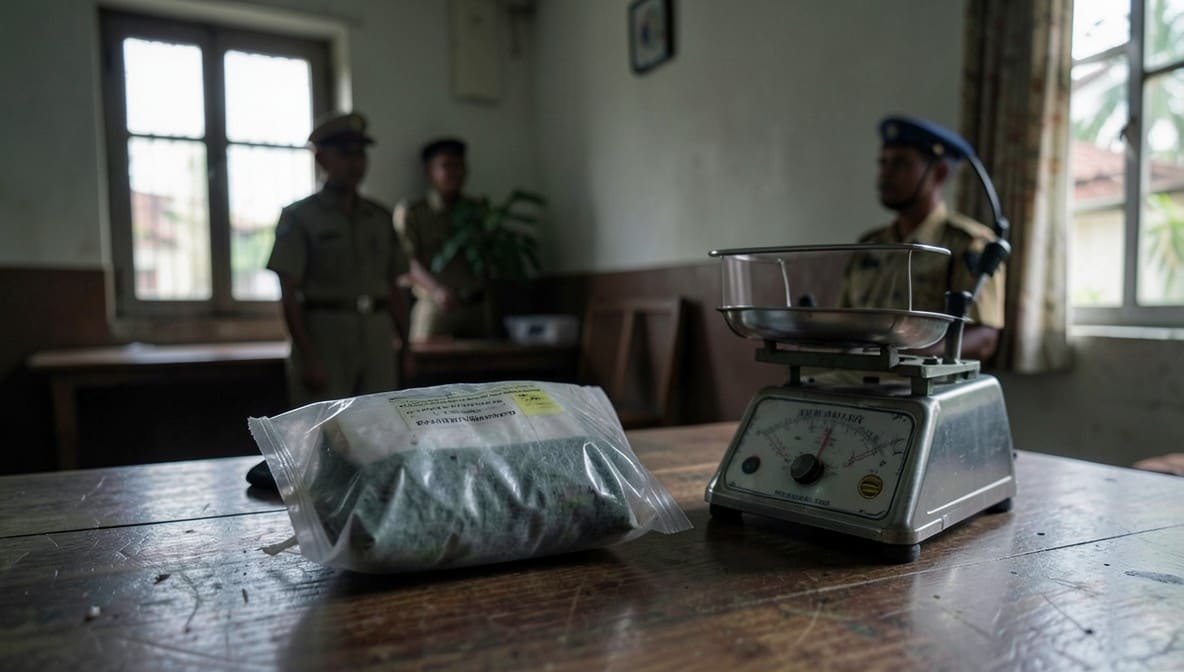
The appellant, Ranjit Kumar Singh, was convicted under Section 20(b)(i) of the Narcotic Drugs and Psychotropic Substances Act, 1985 and Section 47(a) of the Bihar and Orissa Excise Act for possessing 6 kg of ganja and 4 kg of bhanga. The prosecution claimed the contraband was recovered during a search conducted by Excise personnel on 25.07.1994 near Mituani Tank, Jajpur.
Procedural History
- 25.07.1994: Accused detained; three bags of contraband seized; samples allegedly drawn on the same day.
- 26.07.1994: Contraband and samples produced before the J.M.F.C., Jajpur Road; samples sent for chemical analysis.
- 19.01.1995: Trial Court convicted the appellant and sentenced him to four years’ R.I. and fines.
- 01.08.1995: Orissa High Court set aside the conviction due to denial of fair trial, particularly failure to allow cross-examination of P.W.2 after supplementary report.
- 22.11.1995: On remand, the trial court re-convicted the appellant on identical grounds.
- 19.02.2026: High Court of Orissa allowed the appeal and acquitted the appellant.
Relief Sought
The appellant sought quashing of the conviction and sentence on grounds of material procedural violations under the NDPS Act, including non-compliance with Section 50 and Section 55, and failure to produce documentary proof of consent and chain of custody.
The Legal Issue
The central question was whether conviction under Section 20(b)(i) of the NDPS Act can be sustained when the prosecution fails to produce written evidence of compliance with Section 50 - particularly the accused’s consent to be searched by a police officer - and when the seized contraband remained in the custody of the Investigating Officer for 24 hours without being deposited in the Malkhana, thereby violating Section 55.
Arguments Presented
For the Appellant
Mr. B.K. Ragada, Amicus Curiae, argued that:
- Section 50(5) of the NDPS Act mandates that search must be conducted in the presence of at least two independent witnesses, yet only one witness (P.W.1) was named, and the other remained unidentified.
- No written document evidencing the accused’s option to be searched by a Gazetted Officer or Magistrate, or his consent to be searched by the police, was exhibited.
- Section 55 requires that seized contraband be immediately forwarded to the nearest officer-in-charge of a police station, but the contraband was kept in the personal custody of P.W.4 for 24 hours before production before the Magistrate.
- The order sheet of the J.M.F.C. Court clearly showed production on 26.07.1994, contradicting P.W.4’s claim of same-day production.
- Reliance was placed on Niranjan Basantia v. State of Orissa to show that such procedural lapses create reasonable doubt.
For the Respondent
The State contended that:
- The testimony of P.W.2 and P.W.4, being official witnesses, was credible and should be presumed truthful unless disproved.
- The accused had orally refused to be searched by a Magistrate or Gazetted Officer, and the procedural compliance was recorded in the Police Report (P.R.) and the accused’s statement.
- The delay in production was minor and did not affect the integrity of the sample.
- The trial court had rightly appreciated the evidence and applied the presumption under Section 54 of the NDPS Act.
The Court's Analysis
The Court undertook a rigorous examination of statutory compliance, distinguishing between mere oral assertions and the mandatory requirement of documentary proof. It held that Section 50 is not a mere formality but a substantive safeguard designed to prevent fabrication and ensure transparency.
"The absence of any written record of the option given to the accused, or his consent to be searched by the police officer, renders the search fundamentally defective and non-compliant with the statutory mandate."
The Court emphasized that the prosecution’s reliance on oral testimony from official witnesses cannot substitute for the statutory requirement of written documentation. The failure to exhibit any document evidencing the accused’s consent - even if recorded in the P.R. or statement - amounts to non-production of evidence, which is fatal to the prosecution’s case.
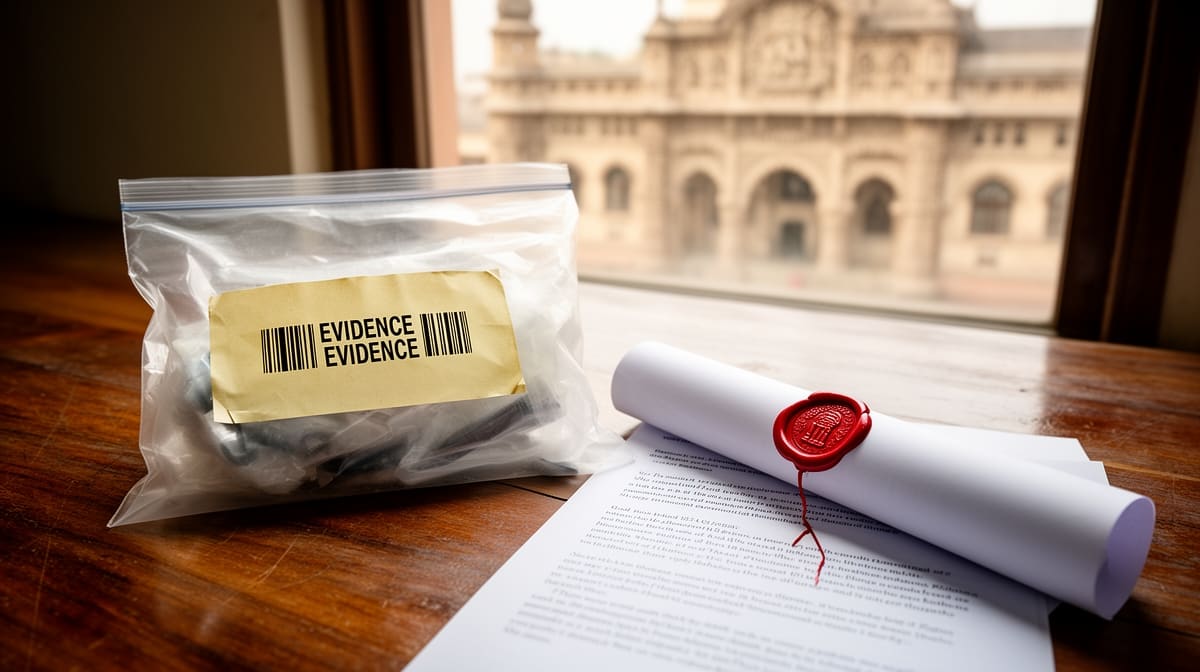
Regarding Section 55, the Court noted that the contraband remained in the exclusive custody of P.W.4 for 24 hours without being deposited in the Malkhana. The order sheet of the J.M.F.C. Court, which recorded production only on 26.07.1994, directly contradicted the Investigating Officer’s testimony. This discrepancy created an unexplained gap in the chain of custody, raising a reasonable possibility of tampering.
The Court further observed that the presumption under Section 54 of the NDPS Act - that possession of contraband implies unlawful possession - can only be invoked if the seizure itself is lawful and procedurally sound. Since the seizure was vitiated by non-compliance with Sections 50 and 55, the presumption could not be triggered.
The Court also rejected the State’s argument that the trial court’s appreciation of evidence was final, noting that when statutory violations are patent and unexplained, appellate courts are duty-bound to intervene.
The Verdict
The appellant succeeded. The High Court of Orissa set aside the conviction and sentence, holding that non-compliance with Section 50 and Section 55 of the NDPS Act renders the entire prosecution case unsustainable. The Court acquitted the appellant, emphasizing that procedural integrity is non-negotiable in drug cases.
What This Means For Similar Cases
Written Consent Is Mandatory, Not Optional
- Practitioners must now insist on production of the written consent form under Section 50 as a sine qua non for admissibility of seized contraband.
- Oral testimony alone, even from official witnesses, is insufficient to discharge the burden of proving compliance.
- Failure to exhibit the written option or consent must be raised as a ground for acquittal at trial and on appeal.
Chain of Custody Must Be Unbroken and Documented
- Any delay in forwarding seized contraband to the Malkhana - even 24 hours - without justification violates Section 55.
- The production date in the Magistrate’s order sheet must match the prosecution’s claim; discrepancies must be explained with contemporaneous records.
- Prosecutors must ensure that seized items are immediately handed over to the police station and that a custody receipt is obtained and exhibited.
Presumption Under Section 54 Is Conditional
- The presumption under Section 54 applies only if the seizure is lawful.
- If procedural violations are established, the burden does not shift to the accused.
- Defense counsel must systematically challenge compliance with Sections 50 and 55 before addressing the merits of possession.