Tribunals and Commissions judgments

1767 Tribunals and Commissions judgments explained in plain English: what was decided, the law applied and why it matters. Page 16 of 74.

ELFA Diagnostic Kits Qualify as ELISA for Customs Duty Exemption Under Notification No. 50/2017-Cus : CESTAT Chennai
Case Law Analysis
|Custom, Excise & Service Tax Tribunal

ELFA Diagnostic Kits Qualify as ELISA for Customs Duty Exemption Under Notification No. 50/2017-Cus : CESTAT Chennai

CESTAT Chennai ruled that ELFA diagnostic kits, operating on the ELISA principle, are eligible for concessional customs duty under Notification No. 50/2017-Cus, overturning a ₹68.20 crore demand. The decision underscores purposive interpretation of tax laws to accommodate technological advancements in diagnostic methods, impacting importers of similar medical devices.


Section 50C Tolerance Limit Applies Retrospectively | ITAT Delhi Deletes Rs. 4.47 Lakh Addition for Minor Valuation Difference : ITAT Delhi
Case Law Analysis
|Income Tax Appellate Tribunal

Section 50C Tolerance Limit Applies Retrospectively | ITAT Delhi Deletes Rs. 4.47 Lakh Addition for Minor Valuation Difference : ITAT Delhi

ITAT Delhi holds that the 10% tolerance limit under Section 50C of the Income Tax Act applies retrospectively, deleting a Rs. 4.47 lakh addition for a minor valuation discrepancy in property sales. The ruling clarifies that valuation differences within the tolerance limit cannot justify additions to capital gains, impacting taxpayers contesting stamp duty-based assessments.

Section 250(6) Income Tax Act | CIT(A) Must Adjudicate Appeals on Merits, Not Dismiss for Non-Prosecution: ITAT Pune
Case Law Analysis
|Income Tax Appellate Tribunal

Section 250(6) Income Tax Act | CIT(A) Must Adjudicate Appeals on Merits, Not Dismiss for Non-Prosecution: ITAT Pune

ITAT Pune holds that the Commissioner of Income Tax (Appeals) cannot dismiss appeals merely for non-prosecution but must adjudicate grounds on merit under Section 250(6) of the Income Tax Act. The ruling reinforces the obligation of appellate authorities to ensure substantive justice, impacting taxpayers facing procedural dismissals.

Central Excise Act Section 11A | Burden of Proof for Clandestine Removal Requires Tangible Evidence, Not Presumptions or Private Records: CESTAT Ahmedabad
Case Law Analysis
|Custom, Excise & Service Tax Tribunal

Central Excise Act Section 11A | Burden of Proof for Clandestine Removal Requires Tangible Evidence, Not Presumptions or Private Records: CESTAT Ahmedabad

CESTAT Ahmedabad has ruled that revenue authorities cannot sustain excise duty demands based solely on handwritten notes or unverified challans. The burden lies squarely on the department to produce concrete, corroborated evidence of clandestine removal-rejecting speculative inferences from incomplete records. This sets a vital precedent for manufacturers facing arbitrary tax assessments under the Central Excise Act.

Section 68 Finance Act 1994 | RCM Applicable Only on GTA Services with Consignment Note: CESTAT Ahmedabad
Case Law Analysis
|Custom, Excise & Service Tax Tribunal

Section 68 Finance Act 1994 | RCM Applicable Only on GTA Services with Consignment Note: CESTAT Ahmedabad

CESTAT Ahmedabad holds that service tax under Reverse Charge Mechanism (RCM) for Goods Transport Agency (GTA) services cannot be imposed unless a consignment note is issued. The ruling clarifies that cargo handling contracts cannot be artificially split to attract RCM, impacting businesses relying on GTA services without proper documentation.

Notification 12/2012-CE Sr. No. 203 | Hot Rolling of SS Flats into Pattas/Pattis Qualifies for Nil Duty, Even Without Further Processing: CESTAT Ahmedabad
Case Law Analysis
|Custom, Excise & Service Tax Tribunal

Notification 12/2012-CE Sr. No. 203 | Hot Rolling of SS Flats into Pattas/Pattis Qualifies for Nil Duty, Even Without Further Processing: CESTAT Ahmedabad

CESTAT Ahmedabad clarifies that hot-rolled stainless steel pattas/pattis are eligible for nil excise duty under Sr. No. 203 of Notification 12/2012-CE, even when no process beyond hot rolling is applied. This resolves long-standing ambiguity for manufacturers, affirming that cold rolling is the only excluded step - not mere slitting or shaping - significantly impacting SS flat product manufacturers across Gujarat and beyond.

Revenue Sharing with Food Outlets Not Business Support Service Under Service Tax : CESTAT Chennai
Case Law Analysis
|Custom, Excise & Service Tax Tribunal

Revenue Sharing with Food Outlets Not Business Support Service Under Service Tax : CESTAT Chennai

CESTAT Chennai rules that revenue-sharing payments from licensees operating food and beverage outlets within a property do not constitute taxable Business Support Services under the Finance Act, 1994. This clarifies a critical boundary for mall operators and entertainment complexes, shielding them from service tax demands on ancillary commercial partnerships that lack direct operational control or support functions.

Section 36(1)(iii) IT Act | Commercial Expediency Validates Interest-Free Advances to Subsidiaries: ITAT Delhi Upholds Deletion of Notional Interest Addition
|Income Tax Appellate Tribunal

Section 36(1)(iii) IT Act | Commercial Expediency Validates Interest-Free Advances to Subsidiaries: ITAT Delhi Upholds Deletion of Notional Interest Addition

ITAT Delhi rules that interest-free advances to wholly owned subsidiaries are justified under commercial expediency, rejecting Revenue's notional interest addition. The tribunal also deleted ad-hoc disallowances, emphasizing documentary evidence over presumptive additions, reinforcing tax treatment of intra-group transactions.

Section 167B IT Act | Registered Societies Under Karnataka Act Exempt from Maximum Marginal Rate Taxation : ITAT Bangalore
Case Law Analysis
|Income Tax Appellate Tribunal

Section 167B IT Act | Registered Societies Under Karnataka Act Exempt from Maximum Marginal Rate Taxation : ITAT Bangalore

ITAT Bangalore rules that registered societies under the Karnataka Societies Registration Act are not liable for taxation at the maximum marginal rate under Section 167B of the Income-tax Act. The ruling clarifies that such entities are taxed at slab rates, offering relief to welfare associations and similar bodies from higher tax burdens.

Voyage Charter = Transportation Service, Not Supply of Tangible Goods | Reverse Charge Not Triggered Under Section 65(105)(zzzzj) : CESTAT Chennai
Case Law Analysis
|Custom, Excise & Service Tax Tribunal

Voyage Charter = Transportation Service, Not Supply of Tangible Goods | Reverse Charge Not Triggered Under Section 65(105)(zzzzj) : CESTAT Chennai

CESTAT Chennai rules that payments under voyage charter agreements for coastal cargo transport constitute taxable transportation services, not supply of vessels for use, thereby excluding them from reverse charge under service tax law. This clarifies the tax treatment for shipping intermediaries and manufacturers relying on third-party vessels, ending ambiguous classification of freight-based payments as goods rental.

Peak Theory Applied to Digital Books | Only Peak Negative Cash Balance May Be Added Under Section 69A IT Act: ITAT Delhi
Case Law Analysis
|Income Tax Appellate Tribunal

Peak Theory Applied to Digital Books | Only Peak Negative Cash Balance May Be Added Under Section 69A IT Act: ITAT Delhi

The ITAT Delhi has ruled that negative cash balances in digital accounting records cannot be aggregated as unexplained income under Section 69A. Only the highest single negative balance - if substantiated - may be considered, preventing automatic tax additions from system errors or duplicate entries. This protects businesses from punitive assessments based on flawed digital data and clarifies the limits of the Peak Theory in modern bookkeeping contexts.

Legitimate Expectation | Misstatement of Limitation Period in Adjudication Order Bars Summary Dismissal of Appeal : CESTAT Mumbai
Case Law Analysis
|Custom, Excise & Service Tax Tribunal

Legitimate Expectation | Misstatement of Limitation Period in Adjudication Order Bars Summary Dismissal of Appeal : CESTAT Mumbai

CESTAT Mumbai rules that when an adjudication order incorrectly states the limitation period for filing an appeal, the taxpayer’s reliance on that error constitutes a legitimate expectation that overrides procedural dismissal for non-filing of condonation application. This protects taxpayers from punitive outcomes arising from official legal misstatements, reinforcing administrative accountability in tax proceedings.

Customs Supervision Charges | MOT Basis Mandatory for Services Under Half-Day Under Circular 32/2016-Cus : CESTAT Kolkata
|Custom, Excise & Service Tax Tribunal

Customs Supervision Charges | MOT Basis Mandatory for Services Under Half-Day Under Circular 32/2016-Cus : CESTAT Kolkata

CESTAT Kolkata has ruled that customs supervision fees for special bonded warehouse operators must be calculated on Merchant Over Time (MOT) basis when services last less than half a day, invalidating Cost Recovery Charges (CRC) demands under Circular 32/2016-Cus. This sets a critical precedent for duty-free retailers and warehouse operators across India, ensuring fair cost allocation based on actual time rendered, not arbitrary daily billing.

Binding Precedent in Tariff Classification | Revenue Barred from Re-litigating Tribunal's Final Classification After Supreme Court Affirmation : CESTAT Allahabad
Case Law Analysis
|Custom, Excise & Service Tax Tribunal

Binding Precedent in Tariff Classification | Revenue Barred from Re-litigating Tribunal's Final Classification After Supreme Court Affirmation : CESTAT Allahabad

CESTAT Allahabad has ruled that once a tariff classification is finally settled by the Tribunal and upheld by the Supreme Court, revenue authorities cannot reopen or challenge it in subsequent assessments. This reinforces the principle of finality in tax adjudication, providing certainty to importers and curbing repetitive litigation by tax authorities.

Finance Act 2015 Retrospective Exemption | Value of Free-Supplied Rails Excluded from Assessable Value of Glued Joints : CESTAT Hyderabad
Case Law Analysis
|Custom, Excise & Service Tax Tribunal

Finance Act 2015 Retrospective Exemption | Value of Free-Supplied Rails Excluded from Assessable Value of Glued Joints : CESTAT Hyderabad

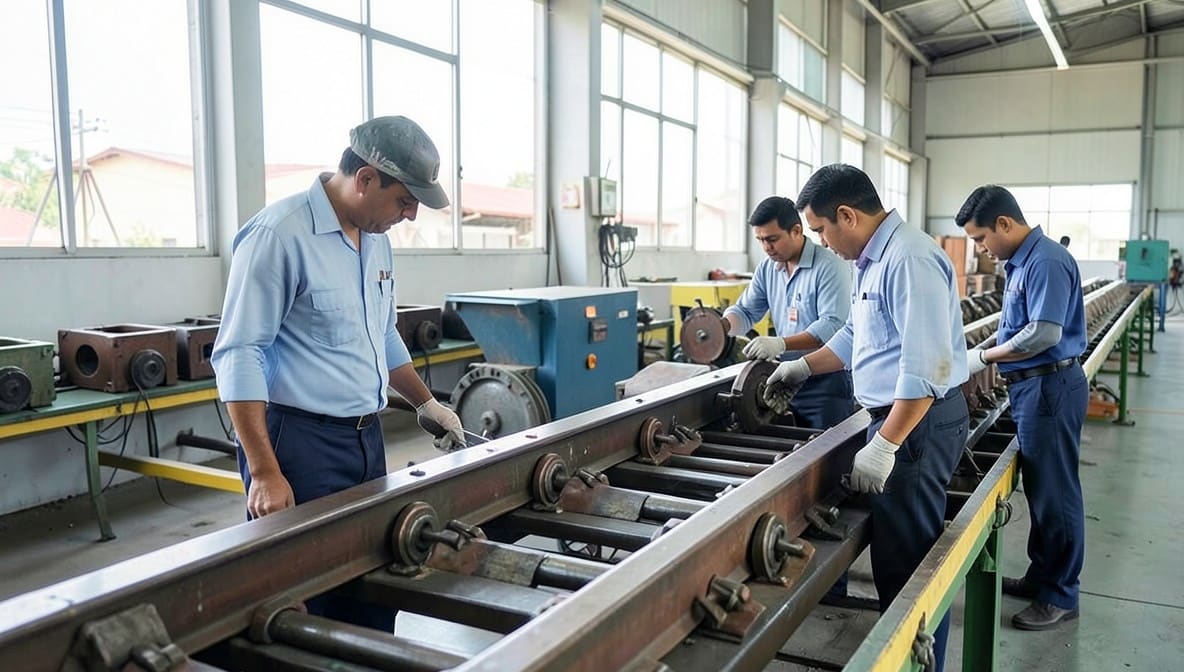
CESTAT Hyderabad ruled that the value of rails supplied free of cost by Indian Railways cannot be included in the assessable value of glued joints, following the retrospective amendment under Finance Act 2015. This sets a critical precedent for manufacturers supplying goods to public infrastructure entities under contract, clarifying that free inputs provided by the buyer are not taxable components of assessable value.

SVLDRS Rule 7 | Late Payment After Deadline Voids Benefit, But Penalty Waived for COVID-Induced Delay : CESTAT New Delhi
Case Law Analysis
|Custom, Excise & Service Tax Tribunal

SVLDRS Rule 7 | Late Payment After Deadline Voids Benefit, But Penalty Waived for COVID-Induced Delay : CESTAT New Delhi

CESTAT New Delhi rules that failure to pay the SVLDRS-3 amount within the stipulated deadline forfeits the scheme’s benefit, but waives penalties when the delay is directly attributable to pandemic-related banking disruptions. This sets a critical precedent for legacy tax litigants facing similar force majeure challenges, affirming that statutory deadlines are not absolute when external crises impede compliance.

Customs Act 1962, Sections 112(a) & 114AA | Bonafide Emission Certificate from Authorized Agency Negates Penalty Even Without Type Approval: CESTAT Kolkata
Case Law Analysis
|Custom, Excise & Service Tax Tribunal

Customs Act 1962, Sections 112(a) & 114AA | Bonafide Emission Certificate from Authorized Agency Negates Penalty Even Without Type Approval: CESTAT Kolkata

CESTAT Kolkata has ruled that importers who submit a valid emission certificate issued by a Ministry-empanelled laboratory cannot be penalized under Sections 112(a) and 114AA of the Customs Act merely because the Type Approval certificate is missing. This sets a critical precedent for environmental compliance in customs clearance, protecting bonafide importers from disproportionate penalties when core environmental standards are met.

CPCB Guidelines 2020 | Petrol Pumps Must Maintain 50-Metre Buffer from Irrigation Canals: NGT Southern Zone
Case Law Analysis
|National Green Tribunal

CPCB Guidelines 2020 | Petrol Pumps Must Maintain 50-Metre Buffer from Irrigation Canals: NGT Southern Zone

The National Green Tribunal has mandated that all petrol retail outlets must be situated at least 50 metres away from irrigation canals to prevent contamination of water sources and protect agricultural livelihoods. This ruling enforces the Central Pollution Control Board’s environmental siting standards and sets a binding precedent for state authorities issuing NOCs near water bodies.

CENVAT Credit on Capital Goods | Eligibility Based on Post-Registration Use, Not Receipt Date: CESTAT Kolkata
Case Law Analysis
|Custom, Excise & Service Tax Tribunal

CENVAT Credit on Capital Goods | Eligibility Based on Post-Registration Use, Not Receipt Date: CESTAT Kolkata

CESTAT Kolkata ruled that CENVAT credit on capital goods like tippers is valid if used for taxable services after registration, even if purchased and received earlier. This removes the department’s arbitrary denial of credit based on pre-registration acquisition, empowering service providers to claim rightful input tax credits without being penalized for timing mismatches.

CAS-4 Governs Valuation for State-Owned Manufacturers; Unjust Enrichment Inapplicable to Central Excise Refund Claims : CESTAT Chennai
Case Law Analysis
|Custom, Excise & Service Tax Tribunal

CAS-4 Governs Valuation for State-Owned Manufacturers; Unjust Enrichment Inapplicable to Central Excise Refund Claims : CESTAT Chennai

CESTAT Chennai rules that Integral Coach Factory’s refund claims for excess excise duty are not barred by unjust enrichment, as state-owned entities engaged in public manufacturing are exempt from this doctrine. Valuation must follow CAS-4 standards, not the Railway Code, affirming that cost-based accounting methods used in batch production are legally valid for duty calculation and refund eligibility.

RMC Plant Siting | Distance to Highway Must Be Measured from Emission Source, Not Property Boundary : NGT (SZ)
Case Law Analysis
|National Green Tribunal

RMC Plant Siting | Distance to Highway Must Be Measured from Emission Source, Not Property Boundary : NGT (SZ)

The National Green Tribunal has ruled that for Ready-Mix Concrete plants, the mandatory distance from highways must be calculated from the actual emission source, not the property boundary. This sets a critical precedent for environmental compliance, forcing regulators to assess pollution impact at its origin and impacting future RMC plant approvals across India.

DFIA Scheme | Actual User Conditions Cannot Be Imposed via DGFT Public Notice; Only Statutory Notification Can Alter FTP Terms : CESTAT Kolkata
Case Law Analysis
|Custom, Excise & Service Tax Tribunal

DFIA Scheme | Actual User Conditions Cannot Be Imposed via DGFT Public Notice; Only Statutory Notification Can Alter FTP Terms : CESTAT Kolkata

CESTAT Kolkata invalidates DGFT's use of public notices to impose actual user conditions on Transferable Duty-Free Import Authorizations, affirming that only notifications issued in the Official Gazette have legal force to amend Foreign Trade Policy terms. This ruling protects importers and transferees from retroactive administrative overreach and reinforces the hierarchy of delegated legislation under the Foreign Trade (Development and Regulation) Act.

Acheson Process Exemption | Pet Coke as Carbon Source in Silicon Carbide Production Not Classified as Fuel: NGT Southern Zone
Case Law Analysis
|National Green Tribunal

Acheson Process Exemption | Pet Coke as Carbon Source in Silicon Carbide Production Not Classified as Fuel: NGT Southern Zone

The National Green Tribunal Southern Zone has ruled that pet coke used as a carbon reductant in silicon carbide manufacturing under the Acheson process is not fuel and thus exempt from prohibition orders under environmental directives. This distinction protects specialized industrial processes while reinforcing the need for precise regulatory categorization of industrial inputs, directly impacting chemical manufacturers in Kerala and beyond.