The National Green Tribunal Southern Zone has reaffirmed the mandatory environmental buffer requirement for petrol retail outlets near water bodies, dismissing an application seeking to quash a No Objection Certificate on grounds of proximity to an irrigation canal. The Tribunal emphasized that compliance with CPCB guidelines, verified by the Tamil Nadu Pollution Control Board, negates environmental harm claims absent evidence of actual violation.
Background & Facts
The Dispute
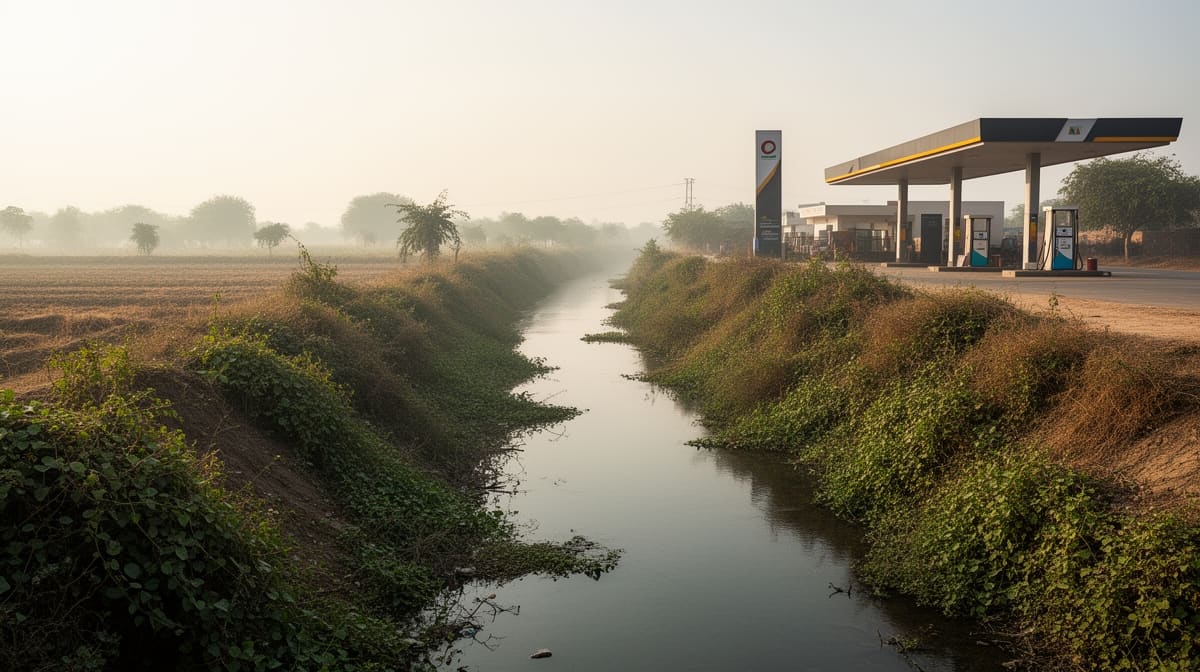
The applicant, Sakthivel S/o Mani, a resident of Sathamangalam Village, Chidambaram Taluk, Cuddalore District, challenged the No Objection Certificate (NOC) dated 18.11.2025 issued by the Additional District Magistrate and District Revenue Officer, Cuddalore. The NOC permitted the establishment of a petrol and diesel retail outlet on Survey Nos. 103/10 and 103/11, located near the Allur-Sathamangalam Canal - an irrigation canal supplying water to agricultural lands and fed by Veeranam Lake. The applicant alleged that the proposed site violates the Central Pollution Control Board (CPCB) Guidelines dated 07.01.2020 and its Addendum dated 16.08.2021, which prohibit petrol pump establishment within 50 metres of any water body, including canals.
Key Facts
- The proposed petrol retail outlet is located on land adjacent to the Allur-Sathamangalam Canal
- The applicant contends the outlet is within 50 metres of the canal, posing risk of petroleum leakage contaminating water and agricultural soil
- The Tamil Nadu Pollution Control Board (TNPCB) conducted a site inspection on 23.06.2025 and issued a communication on 24.06.2025 indicating that NOC issuance could be considered subject to conditions
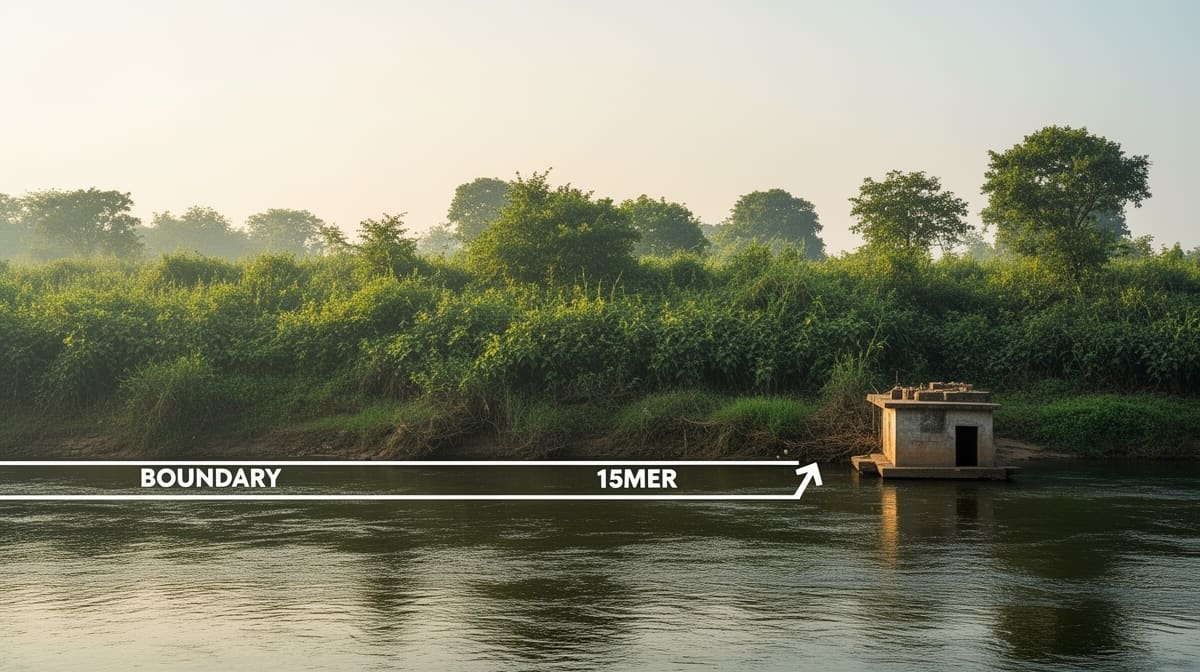
- On 14.11.2025, TNPCB submitted a detailed report to the District Revenue Officer stating that the canal on the northern side was located 75 metres from the proposed petroleum storage point, and no water body existed within 50 metres on the southern side
- TNPCB explicitly recommended issuance of NOC subject to the condition that a minimum distance of 50 metres be maintained between petroleum storage and the canal bank
- The NOC dated 18.11.2025 incorporated this 50-metre condition and additional safeguards including secondary containment for underground storage tanks
- The applicant did not challenge the Petroleum and Explosives Safety Organisation (PESO) licence granted for the outlet
Procedural History
- 14.11.2025: TNPCB submits report to District Revenue Officer confirming 75-metre distance and recommending NOC with conditions
- 18.11.2025: Additional District Magistrate issues NOC incorporating TNPCB’s conditions
- 24.06.2025: TNPCB communicates inspection findings to District Revenue Officer
- 07.01.2020: CPCB Guidelines issued mandating 50-metre buffer from water bodies
- 16.08.2021: CPCB Addendum reiterates and reinforces the 50-metre restriction
- 27.02.2026: Hon’ble Madras High Court dismisses W.P. No.7422 of 2026 filed by R. Elangovan, a rival applicant, holding that challenge was motivated by commercial rivalry and not environmental concern
- 18.01.2026: Original Application No.62 of 2026 (SZ) filed before NGT Southern Zone seeking quashing of NOC
- 05.06.2026: Judgment reserved by the Tribunal
- 18.06.2026: Judgment delivered
The Parties' Positions
For the Applicant
- Argued that the proposed site violates CPCB Guidelines dated 07.01.2020 and 16.08.2021
- Claimed that proximity to the canal poses irreversible risk of groundwater and soil contamination
- Asserted that the NOC was granted without adequate environmental scrutiny
- Contended that the 75-metre distance cited by TNPCB was inaccurate or misleading
For the Respondents (BPCL and Authorities)
- Presented TNPCB’s 14.11.2025 report confirming 75-metre distance from canal bank
- Highlighted that the NOC explicitly incorporates the 50-metre buffer condition and secondary containment measures
- Cited the Madras High Court’s dismissal of a prior writ petition challenging the same NOC, noting the petitioner was a rival applicant
- Emphasized that PESO’s licence for the outlet remains unchallenged
- Argued that the Tribunal lacks jurisdiction over licensing disputes unless environmental violation is established
Relief Sought
The applicant sought:
- Quashing of the NOC dated 18.11.2025
- Direction to the respondents to comply with CPCB Guidelines by relocating the outlet beyond 50 metres from the canal
- Order for environmental audit of the site
- Costs of litigation
The Legal Issue
The central question was whether the issuance of a No Objection Certificate for a petrol retail outlet, which complies with the 50-metre buffer requirement under CPCB Guidelines as verified by the Tamil Nadu Pollution Control Board, constitutes an environmental violation warranting intervention by the National Green Tribunal, when the applicant has not challenged the underlying PESO licence and the site distance has been independently confirmed.
Arguments Presented
For the Applicant
The applicant relied on the CPCB Guidelines and Addendum to assert that any petrol pump within 50 metres of a water body is per se illegal. He argued that the Tribunal’s mandate under the National Green Tribunal Act, 2010, extends to preventing potential environmental harm, even in the absence of actual contamination. He contended that the TNPCB’s report was insufficiently documented and that the 75-metre measurement might not reflect the true distance to the canal bank. He further argued that the High Court’s dismissal of the prior writ petition was based on locus standi, not merits, and thus could not preclude environmental review.
For the Respondent
BPCL and the authorities relied on the TNPCB’s detailed inspection report dated 14.11.2025, which confirmed compliance with the 50-metre rule. They cited the Madras High Court’s judgment dismissing a challenge to the same NOC on grounds of mala fide intent, reinforcing that the procedural and technical compliance had been validated. They emphasized that the Tribunal’s jurisdiction under Section 14 of the NGT Act is limited to adjudicating environmental harm or violations of environmental laws - not licensing disputes or commercial rivalries. They further noted that the NOC conditions were binding and enforceable by statutory authorities.
The Court's Analysis
The Tribunal undertook a two-pronged analysis: jurisdictional and substantive. First, it examined whether the matter fell within its purview under the National Green Tribunal Act, 2010. The Tribunal recalled its own precedent in S. Lakshmikanthan v. District Magistrate, Puducherry (O.A. No.266 of 2025), wherein it held that the Tribunal lacks jurisdiction over pure licensing disputes unless they involve demonstrable environmental violations.
"This Tribunal adjudicates substantial questions relating to the environment under the National Green Tribunal Act, 2010, such as violations of Environmental Clearance or instances of ecological harm. However, it lacks jurisdiction over pure licensing disputes, such as pre-grant approvals by PESO, unless such matters are connected to environmental impacts, like proximity to sensitive areas in violation of CPCB or PESO guidelines."
The Tribunal found that the applicant had not challenged the PESO licence, which is the primary statutory approval for the outlet’s operation. The only challenge was to the NOC issued by the District Revenue Officer, which was based on TNPCB’s technical assessment. The Tribunal noted that TNPCB, as the statutory environmental regulator, had conducted a field inspection, measured the distance, and explicitly recommended issuance of the NOC subject to the 50-metre condition.
The Tribunal further observed that the NOC itself incorporated the required safeguards, including secondary containment for underground storage tanks, thereby mitigating risk. The applicant’s allegations of potential harm were speculative and not supported by evidence of actual contamination or breach of the 50-metre buffer. The Tribunal held that the mere possibility of future harm, without proof of non-compliance, does not trigger NGT jurisdiction.
The Tribunal also noted that the Madras High Court had already examined the same NOC and dismissed the challenge on grounds of lack of bona fide interest, reinforcing that the procedural and technical compliance had been validated by multiple authorities.
The Verdict
The applicant’s petition was dismissed. The Tribunal held that the NOC dated 18.11.2025 was lawfully issued in compliance with CPCB Guidelines. The following directions were issued:
- Respondent No.4 (BPCL) shall strictly comply with all conditions stipulated in the NOC dated 18.11.2025 and the TNPCB’s conditions dated 14.11.2025
- BPCL shall ensure the minimum 50-metre distance between petroleum storage facilities and the canal bank is maintained at all times
- If any violation of the 50-metre buffer or other conditions occurs, statutory authorities may initiate proceedings under environmental laws
- The pending interlocutory applications I.A. Nos.39 and 40 of 2026 are closed
What This Means For Similar Cases
Environmental Compliance Must Be Demonstrated, Not Alleged
- Applicants cannot invoke NGT jurisdiction based on speculative environmental risks without evidence of non-compliance
- Mere proximity to a water body is insufficient; the burden lies on the applicant to prove violation of prescribed distances or safeguards
- TNPCB’s technical reports and site measurements carry significant weight in environmental adjudication
Licensing and Environmental Approvals Are Distinct but Interlinked
- Challenges to NOCs must be tied to environmental violations - not commercial disputes or licensing preferences
- If the primary licence (e.g., PESO) is unchallenged and environmental conditions are met, NGT will not intervene
- Practitioners must ensure that environmental compliance documentation is contemporaneous, detailed, and publicly accessible
Procedural Validity Trumps Post-Hoc Challenges
- Once statutory authorities (TNPCB, District Collector) have conducted inspections and imposed binding conditions, subsequent challenges without new evidence are unlikely to succeed
- The dismissal of a prior writ petition on locus standi does not preclude environmental review, but it reinforces the need for credible, non-malicious standing
- Practitioners should document all inspections, measurements, and conditions in writing to preempt future litigation