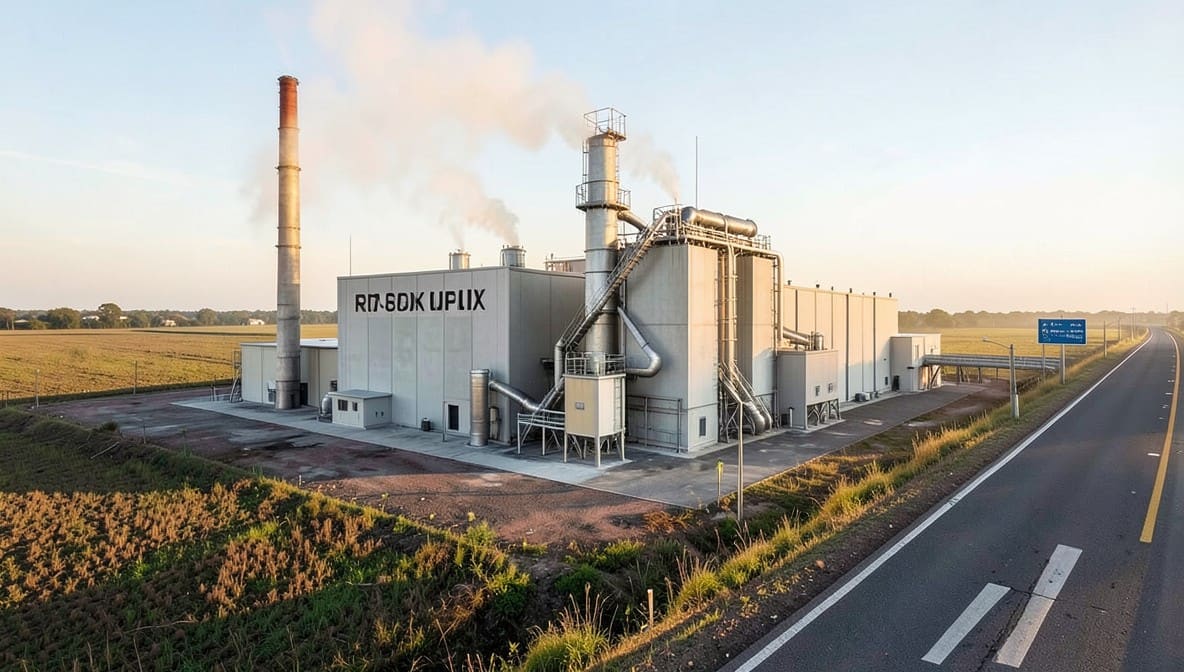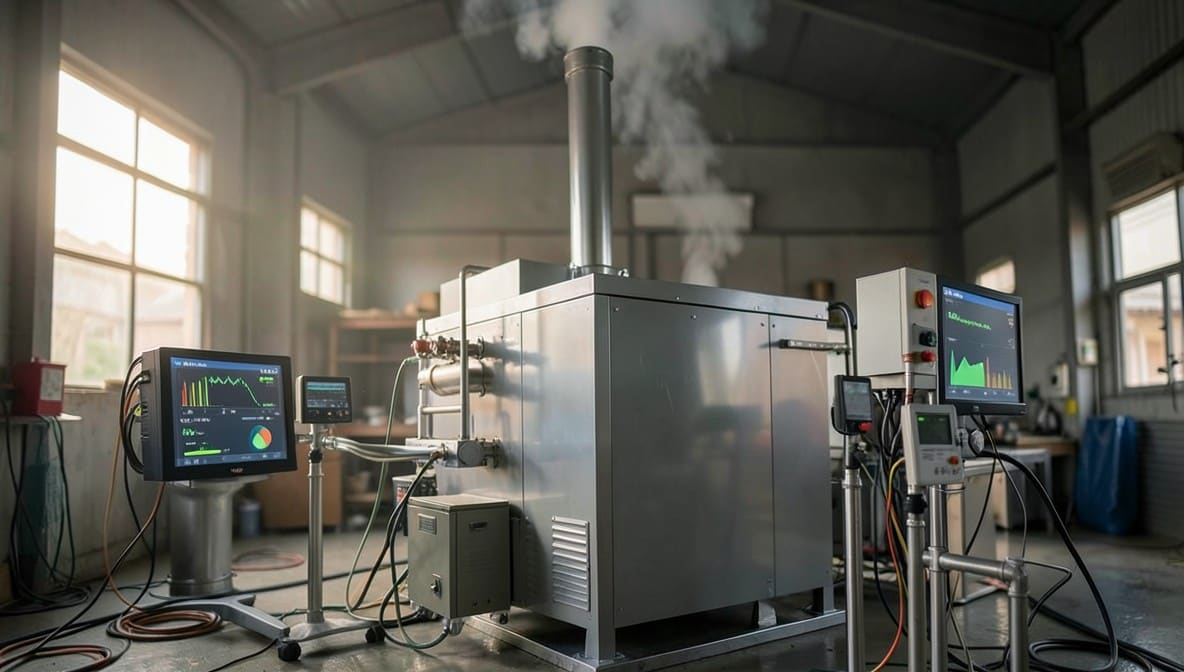
The National Green Tribunal Southern Zone has clarified a critical distinction in environmental regulation: the use of petroleum coke as a raw material in industrial chemical reactions does not constitute its use as fuel, thereby exempting such processes from blanket prohibitions issued under the M.C. Mehta judgment. This ruling resolves a long-standing ambiguity affecting industries reliant on pet coke for carbon reduction reactions, with significant implications for manufacturing sectors across India.
Background & Facts
The Dispute
The applicant, Mr. Jonatt Jose, a resident living approximately 100 meters from M/s Carborandum Universal Limited in Nalukettu, Thrissur District, Kerala, filed an Original Application before the National Green Tribunal seeking prohibition of the company’s use of petroleum coke (pet coke) and furnace oil. He alleged that the company was burning pet coke as fuel in excess of permitted limits, emitting toxic gases, causing odour nuisance, and corroding nearby metal structures. He further contended that the company’s operations violated the Supreme Court’s 2017 order and subsequent NGT directives banning pet coke and furnace oil as fuels.
Key Facts
- The company, established in 1985, manufactures silicon carbide using the Acheson process
- The process involves heating a mixture of quartz (silicon dioxide) and petroleum coke in an electric resistance furnace at approximately 2000°C
- The company holds a valid Consent to Operate (No. KSPCB/TS/ICO/10041755/2023) issued on 09.01.2024, valid until 30.06.2028
- The Consent to Operate conditionally permits use of ordinary coke instead of pet coke, and mandates stack height and wastewater treatment
- The company claims to use 20 MT/day of pet coke and 24 MT/day of quartz as raw materials, not fuel
- The applicant alleges pet coke consumption exceeds 45 MT/day, with sulphur content of 4 - 7%, resulting in 1800 - 3150 kg/day of sulphur emissions
- The company denies using pet coke as fuel, asserting it is chemically consumed as a carbon source in the reaction: SiO₂ + 3C → SiC + 2CO
- No combustion occurs; the heat is generated solely by electric current through a graphite resistor
- The company operates three furnaces at a time, with nine total, using electricity exclusively for heating
- The cooling process involves intermittent water spraying, not direct combustion
- No liquid effluents are generated in the silicon carbide production process
- Odour complaints were recorded, but no continuous emission of visible smoke or particulate matter was observed during inspections
- Stack emissions tested on 21.05.2025 and 25.06.2025 showed:
- Particulate Matter: 33.6 mg/Nm³ (standard: 150 mg/Nm³)
- Sulphur Dioxide: <3 mg/Nm³ (standard: 400 mg/Nm³)
- Oxides of Nitrogen: <2 mg/Nm³ (standard: 600 mg/Nm³)
- Hydrogen Sulphide: 16.4 mg/Nm³ (no prescribed standard)
- Ambient air monitoring at four locations on 08.01.2026 and 09.01.2026 showed all parameters within limits; H₂S was below detectable limits
- The Kerala State Pollution Control Board issued directions on 02.05.2024 and 12.07.2024 requiring installation of hood-cum-blower systems, chimney, CAAQMS, and dust control
- The company submitted a compliance report on 17.03.2025 stating installation of fume extraction, cyclone separators, and chimney was complete, with trial run expected by end-March 2025
- A health survey conducted on 16.04.2024 by the Health Department found no spike in respiratory or other health issues among residents of Wards 6 and 7 of Koratty Village
- No fuel policy has been formulated or notified by the Government of Kerala despite directions from CPCB dated 23.08.2019
Procedural History
- 02.05.2023: First inspection by Kerala SPCB triggered by applicant’s complaint
- 27.11.2023: Company submitted proposal for pollution control upgrades
- 09.01.2024: Consent to Operate renewed by Kerala SPCB with conditions
- 12.07.2024: Kerala SPCB issued further directions for pollution control improvements
- 12.02.2024: Company submitted proposal for hood, cyclone, scrubber, and chimney installation
- 17.03.2025: Company informed SPCB of completion of fume extraction and dust suppression systems
- 21.05.2025: Stack emission monitoring conducted by Kerala SPCB
- 25.06.2025: Second stack emission monitoring conducted
- 08.01.2026: Additional ambient air monitoring conducted
- 09.01.2026: Further ambient air monitoring conducted
- 16.04.2026: Final report filed by Kerala SPCB confirming pet coke as raw material
- 18.06.2026: Judgment delivered by NGT Southern Zone
The Parties' Positions
For the Applicant
- Pet coke is being used as fuel in violation of Supreme Court order dated 17.11.2017 and NGT orders dated 28.03.2019 and 04.07.2019
- Excessive emissions of sulphur dioxide, hydrogen sulphide, and particulate matter are causing health and environmental harm
- The company lacks adequate chimney height and pollution control infrastructure
- Odour nuisance is persistent and unaddressed
- The State of Kerala has failed to implement a fuel policy despite CPCB directions
For the Respondents
- Pet coke is used solely as a carbon source in the Acheson process, not as fuel
- Heat is generated exclusively by electric current; no combustion occurs
- The chemical reaction consumes pet coke as a reactant, not as an energy source
- Emissions are within prescribed limits for PM, SO₂, and NOₓ
- No liquid effluents are generated
- Odour is intermittent and subjective; no standard exists for H₂S
- Pollution control systems have been installed and are operational
- The company is compliant with Consent to Operate conditions
- Kerala has not formulated a fuel policy due to administrative delay, not negligence
Relief Sought
The applicant sought:
- Prohibition order against use of pet coke and furnace oil as fuel
- Installation of effluent treatment plants
- Installation of public-facing carbon monitoring system
- Direction to the Government of Kerala to formulate and notify a fuel policy
The Legal Issue
The central question was whether petroleum coke used as a carbon reactant in the Acheson process for silicon carbide manufacturing constitutes its use as "fuel" under the Supreme Court’s 2017 order and subsequent NGT directives, thereby triggering a prohibition.
Arguments Presented
For the Appellant/Petitioner
The applicant relied on the Supreme Court’s order in M.C. Mehta v. Union of India and the NGT’s orders in Sumit Kumar v. State of Himachal Pradesh and Amarjeet Kumar v. Union of India, which prohibited the use of pet coke and furnace oil as fuels by industries. He argued that the term "fuel" should be interpreted broadly to include any substance combusted to generate heat, regardless of whether it is the primary energy source. He contended that the chemical reaction in the furnace still involves oxidation of pet coke, and that the presence of odour and corrosion proves harmful emissions. He further cited the absence of a state fuel policy as evidence of regulatory failure.
For the Respondent/State
The company argued that the Acheson process is an electrochemical reduction reaction, not a combustion process. It emphasized that the heat source is entirely electrical, and pet coke is chemically consumed as a reducing agent, not burned. It cited technical literature and process diagrams to show that combustion would destroy the carbon needed for SiC formation. The company also presented stack emission data, compliance reports, and health survey results to demonstrate adherence to environmental norms. The Kerala SPCB and CPCB supported this position, noting that pet coke used as feedstock is distinct from fuel use.
The Court's Analysis
The Tribunal undertook a detailed examination of the chemical process, the nature of the Supreme Court’s prohibition, and the intent behind the NGT’s directives. It noted that the Supreme Court’s 2017 order specifically targeted industries using pet coke and furnace oil as fuels to generate heat, particularly in power plants, brick kilns, and cement units where combustion is the primary energy source.
"Pet coke is used solely as a raw material supplying carbon for the reaction and not as a fuel."
The Tribunal accepted the company’s technical explanation that the Acheson process relies on electric resistance heating, with pet coke acting as a reactant in the carbothermal reduction of silica. It observed that if pet coke were combusted, the carbon would be oxidized to CO or CO₂, leaving insufficient carbon to form silicon carbide. This would render the manufacturing process chemically impossible.
The Court distinguished between combustion (fuel use) and chemical reduction (raw material use). It held that the prohibition in M.C. Mehta was not intended to cover industrial processes where pet coke serves as a chemical reactant, especially when no combustion occurs. The Tribunal emphasized that the CPCB’s 2019 directions to States contemplated a nuanced approach, allowing for case-specific assessments.
Regarding emissions, the Tribunal noted that stack monitoring data consistently showed PM, SO₂, and NOₓ levels well within prescribed limits. While hydrogen sulphide (H₂S) was detected at 16.4 mg/Nm³, the Tribunal acknowledged that no national ambient air quality standard exists for H₂S in silicon carbide units. It directed the Kerala SPCB to prescribe such a standard.
On odour, the Tribunal accepted that the nuisance was intermittent and subjective, but directed ongoing monitoring. It rejected the applicant’s claim of water pollution, noting the process is zero-effluent.
On the failure of the State of Kerala to formulate a fuel policy, the Tribunal found the inaction of the Department of Environment and Climate Change and the Kerala SPCB to be in dereliction of duty. Despite six years having passed since the CPCB’s 2019 directions, no policy had been notified.
The Verdict
The applicant’s petition was partially allowed. The Tribunal held that M/s Carborandum Universal Limited may continue using pet coke as a raw material in the Acheson process, as it is not being used as fuel. The company must:
- Fully implement all pollution control measures ordered by the Kerala SPCB, including the hood-cum-blower system, chimney, and cyclone separators
- Ensure continuous operation of air quality monitoring systems
- Explore substitution of pet coke with ordinary coke or cleaner carbon sources
- Maintain compliance with all conditions of its Consent to Operate
The Kerala State Pollution Control Board must:
- Monitor odour levels during non-rainy days
- Prescribe an emission standard for Hydrogen Sulphide (H₂S) for silicon carbide units
- Verify compliance with all directions
The Secretary, Department of Environment & Climate Change, Government of Kerala, must:
- Formulate and notify a Fuel Policy within three months of the order
- File a compliance report within two weeks of the deadline
All pending interlocutory applications are dismissed.
What This Means For Similar Cases
Pet Coke Use Is Not Automatically Prohibited
- Industries using pet coke as a chemical reactant in non-combustion processes (e.g., silicon carbide, ferroalloys, calcium carbide) are exempt from fuel bans
- The burden is on the industry to demonstrate the chemical role of pet coke through technical documentation
- Regulatory authorities must distinguish between fuel use and feedstock use before imposing prohibitions
Regulatory Gaps in Odour and H2S Standards
- No national standards exist for hydrogen sulphide emissions from industrial chemical processes
- Practitioners must now argue for site-specific standards based on toxicity and exposure data
- Odour complaints, while subjective, trigger mandatory monitoring obligations under NGT’s directive
State-Level Fuel Policy Enforcement Is Mandatory
- States cannot delay implementing fuel policies indefinitely despite CPCB directions
- Non-compliance by State agencies may now be challenged as administrative inaction under NGT’s jurisdiction
- Legal practitioners should routinely check for state fuel policy notifications in cases involving pet coke or furnace oil