The Central Excise and Service Tax Appellate Tribunal, Chennai Regional Bench, has delivered a landmark ruling clarifying that state-owned manufacturers like the Integral Coach Factory are not subject to the doctrine of unjust enrichment when claiming refunds of excess excise duty paid on railway coaches. The judgment also establishes that valuation for excise purposes must strictly follow CAS-4, not internal railway accounting codes, and reinforces the strict application of Section 11B’s one-year limitation period in the absence of provisional assessment.
Background & Facts
The Dispute
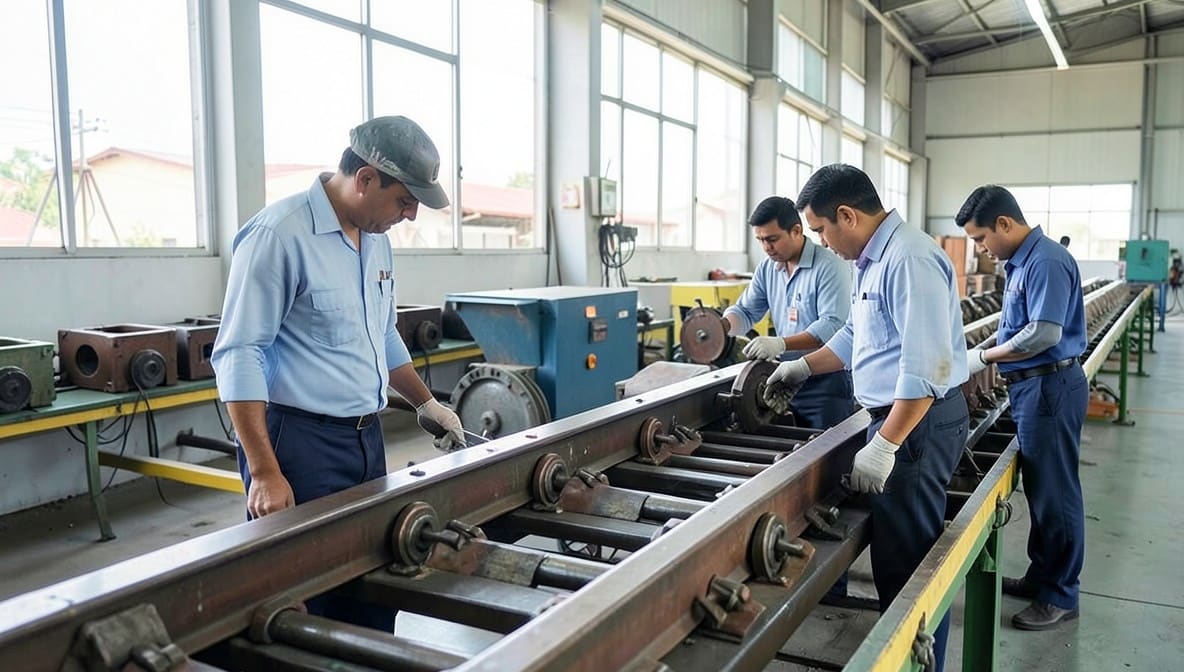
The appellant, Integral Coach Factory (ICF), a production unit under the Ministry of Railways, Government of India, manufactures railway coaches and spare parts. These coaches are not sold commercially but are supplied to Indian Railways for operational use. ICF follows a batch-based costing system, where the actual cost of production is determined only after the completion of an entire batch, which may extend beyond one year. At the time of clearance, assessable value was estimated at 110% of the projected cost, leading to payment of excise duty based on provisional estimates. Upon finalization of actual costs, where the final cost was lower than the estimated value, ICF claimed refunds of the excess duty paid under Section 11B of the Central Excise Act, 1944.
Key Facts
- ICF commenced batch costing for railway coaches from 2010 onwards
- Duty was paid at 110% of estimated cost at the time of clearance
- Final cost reports were prepared after batch completion, sometimes years later
- Refund applications were filed for multiple financial years between 2011 and 2016
- The Department rejected refund claims on grounds of unjust enrichment, limitation, lack of batch numbers on invoices, and non-adoption of provisional assessment
- The Department also denied refund claims for spare parts amounting to Rs. 34,44,404 based on TRU Letter F. No. 334/1/2012-TRU dated 01.06.2012
- ICF did not file applications for provisional assessment under Rule 7 of the Central Excise Rules, 2002
Procedural History
- 2011 - 2016: Multiple refund applications filed by ICF for various periods
- 2015 - 2016: Adjudicating Authority issued Show Cause Notices and passed Orders-in-Original, partly allowing and partly rejecting refund claims
- 30.12.2016: Commissioner of Central Excise (Appeals-II) passed common Orders-in-Appeal rejecting most refund claims
- 2017: ICF filed ten Excise Appeals (Nos. 40732 - 40741 of 2017) before CESTAT Chennai
- 25.03.2026: Oral arguments heard before CESTAT Chennai
- 18.06.2026: Final Order pronounced
The Parties' Positions
For the Appellant (ICF):
- Argued that refund claims arise from downward revision of production cost, not commercial price variation
- Emphasized that Indian Railways is a state entity and does not resell coaches; hence, no commercial benefit accrues to ICF
- Relied on Sescot Sheet Metal Works Ltd. v. Commissioner of Central Excise [2015 (321) E.L.T. 545 (Mad.)] and Board Circular No. 1063/2/2018-CX dated 16.02.2018
- Contended that batch costing is a legitimate and consistent methodology, and absence of batch numbers on invoices is procedural, not substantive
- Asserted that CAS-4 is the only legally recognized standard for cost determination under Rule 8 of the Central Excise Valuation Rules, 2000
For the Respondent (Department):
- Argued that ICF benefited from excess duty collected and passed on to Indian Railways
- Claimed that refund claims were time-barred under Section 11B as they were filed beyond one year from the date of clearance
- Contended that invoices lacked batch numbers or cost-sheet references, making verification impossible
- Maintained that the Department had accepted differential duty payments based on final cost, but this did not equate to provisional assessment
- Relied on TRU Letter dated 01.06.2012 to deny refund for spare parts
Relief Sought
ICF sought:
- Allowance of refund claims for excess duty paid on railway coaches
- Rejection of unjust enrichment as a ground for denial
- Recognition of CAS-4 as the sole basis for valuation under Rule 8
- Reversal of denial of refund for spare parts
- Direction to the Adjudicating Authority to verify claims based on batch records, not invoice details
The Legal Issue
The central questions were: (1) Whether the doctrine of unjust enrichment applies to a state-owned manufacturer claiming refund of excess excise duty paid on goods supplied to another state entity; (2) Whether the one-year limitation under Section 11B applies when provisional assessment under Rule 7 was not invoked; (3) Whether valuation for excise purposes may be determined under internal railway accounting codes instead of CAS-4; and (4) Whether absence of batch numbers on invoices justifies outright rejection of refund claims.
Arguments Presented
For the Appellant
The appellant relied on Sescot Sheet Metal Works Ltd. and the Supreme Court’s decision in Mafatlal Industries v. Union of India [2002-TIOL-54SC-CX-CB], arguing that the doctrine of unjust enrichment cannot apply to state entities, as the State represents the people and cannot be said to have been enriched at the expense of another arm of the State. ICF emphasized that Indian Railways is not a commercial buyer and does not resell coaches. The Tribunal had previously accepted this position in Excise Appeal No. 42334 of 2018. ICF further argued that CAS-4 is the only statutory standard recognized for cost determination under Rule 8, and internal Railway Code provisions cannot override it. The absence of batch numbers on invoices was characterized as an administrative oversight, not a substantive defect, especially since the Department had consistently accepted cost sheets for differential duty recovery.
For the Respondent
The Department contended that ICF had received the benefit of excess duty paid by Indian Railways, and therefore unjust enrichment was attracted. It argued that Section 11B’s one-year limitation was mandatory and that the date of clearance, not finalization of cost, was the relevant date. The Department maintained that without provisional assessment under Rule 7, the assessments were final and refund claims were time-barred beyond one year. It further asserted that invoices without batch numbers or cost references could not be verified, and the TRU Letter dated 01.06.2012 barred refund for spare parts.
The Court's Analysis
The Tribunal conducted a detailed analysis of each issue, applying statutory interpretation and precedent.
On unjust enrichment, the Court observed:
"The Appellant has successfully rebutted the statutory presumption under Section 12B and established that the incidence of the excess duty has not been passed on to any other person."
It held that since Indian Railways is a state entity and the coaches are not marketable goods, the doctrine of unjust enrichment cannot apply. The Tribunal reaffirmed its earlier decision in Excise Appeal No. 42334 of 2018 and adopted the Madras High Court’s reasoning that state-owned entities supplying to other state organs cannot be deemed enriched.
Regarding limitation under Section 11B, the Court acknowledged the equitable force of ICF’s argument that actual cost was ascertainable only after batch completion. However, it held that in the absence of provisional assessment under Rule 7, the assessments were final at the time of clearance. The Court stated:
"The substantive right to seek refund may survive; however, in the absence of provisional assessment, the remedy can only be pursued under Section 11B which is again subject to the limitation prescribed therein."
Thus, refund claims filed beyond one year from the date of clearance were barred.
On valuation, the Court rejected the use of Chapter 13 of the Indian Railway Code, stating:
"The statutory valuation mechanism under the Central Excise law cannot be substituted by internal costing methodologies followed for administrative, budgeting or accounting purposes within the Railways."
It affirmed that CAS-4 is the only legally recognized standard for cost determination under Rule 8.
On invoice documentation, the Court held:
"The absence of batch numbers on invoices may justify detailed verification of the claim, but cannot, by itself, constitute a valid ground for denial of refund."
It directed the Adjudicating Authority to verify claims using batch-costing records, production logs, and dispatch records, in the same manner as differential duty claims had been accepted.
Finally, the Court upheld the denial of refund for spare parts, noting that ICF had not challenged this specific finding before the Tribunal.
The Verdict
The Appeals were partly allowed. The Tribunal set aside the rejection of refund claims on grounds of unjust enrichment and lack of batch numbers on invoices. Refund claims filed within one year of the date of clearance are admissible, subject to verification of quantification and correlation with batch records. Claims filed beyond one year are barred under Section 11B. Valuation for excise purposes must be determined exclusively on the basis of CAS-4. The denial of refund for spare parts amounting to Rs. 34,44,404 is upheld. The matter is remanded to the Adjudicating Authority for verification of eligible claims, with directions to use the same methodology applied for differential duty recovery. Compliance is to be completed within 12 weeks.
What This Means For Similar Cases
Unjust Enrichment Does Not Apply to State-Owned Entities
- Practitioners can now confidently argue that refund claims by government-owned manufacturers supplying to other government entities are not barred by unjust enrichment
- The burden shifts to the Department to prove actual pass-on to third parties, which is nearly impossible in state-to-state transactions
- This principle extends to entities like HAL, DRDO, and other public sector production units
Provisional Assessment Is Mandatory for Extended Refund Periods
- If cost determination is inherently delayed, assessees must proactively apply for provisional assessment under Rule 7
- Failure to do so locks the assessee into Section 11B’s one-year limitation, regardless of equitable circumstances
- Legal advisors must advise clients to file provisional assessment applications even if the final cost is expected to be determined months later
CAS-4 Is the Only Legally Recognized Costing Standard
- Internal departmental codes (e.g., Indian Railway Code, Navy Accounting Manual) cannot override CAS-4 for excise valuation
- Any valuation based on non-CAS-4 methodologies is legally invalid and subject to challenge
- Tax auditors must verify that cost sheets used for valuation are prepared in accordance with CAS-4 guidelines
Documentation Must Support, Not Define, Refund Claims
- Absence of batch numbers on invoices is not fatal if contemporaneous records (production logs, cost sheets, dispatch records) establish correlation
- Practitioners should maintain robust batch-wise documentation to support both refund and differential duty claims
- The Tribunal’s directive to verify claims using the same methodology as differential duty recovery sets a clear precedent for administrative consistency