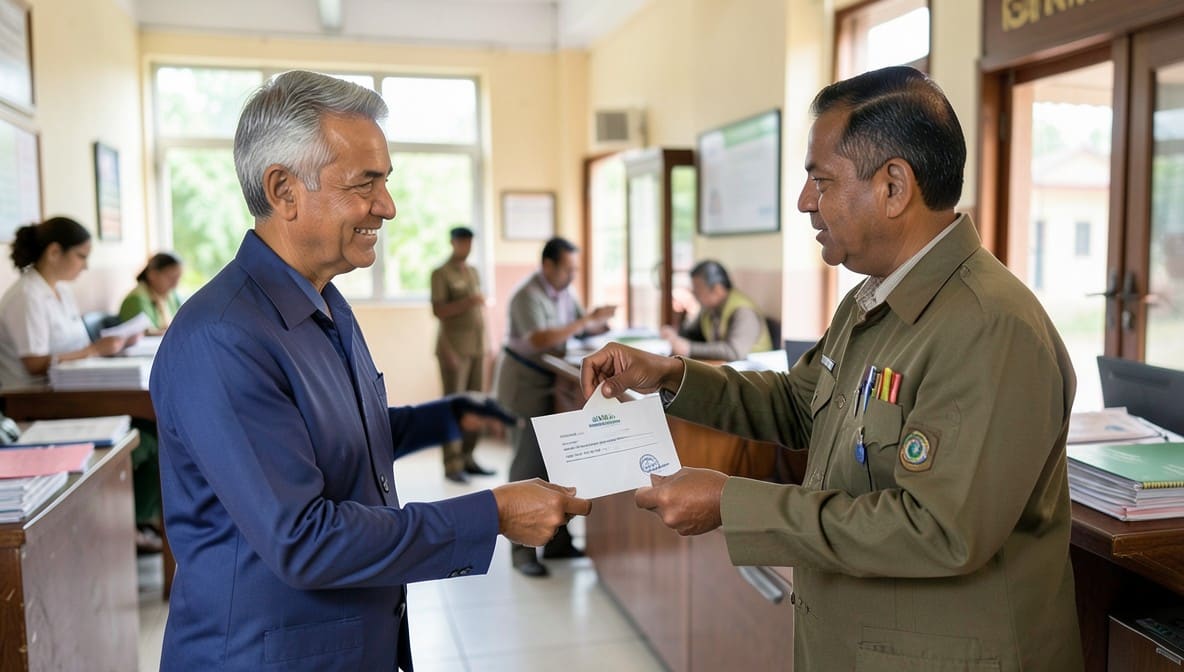
The Customs, Excise & Service Tax Appellate Tribunal has clarified that voluntary disclosure under the Sabka Vishwas (Legacy Dispute Resolution) Scheme, 2019 is irrevocably lost if the mandated payment is not made within the strictly prescribed timeline, even in the face of extraordinary circumstances like the COVID-19 pandemic. However, the Tribunal also recognized that such delays, when devoid of mala fide intent, do not warrant penalty imposition - a nuanced holding with significant implications for taxpayers seeking amnesty.
Background & Facts
The Dispute
The appellant, M/s. T.D. Shibu (Proprietor: Shantha Anthony), was registered under the service tax regime for providing Works Contract Service. It had not discharged its service tax liability and, on the last day of the scheme’s operational window, filed a voluntary disclosure application under the Sabka Vishwas (Legacy Dispute Resolution) Scheme, 2019 (SVLDRS) on 31.12.2019, declaring a liability of Rs. 2,90,031. The Designated Committee accepted the disclosure and issued SVLDRS-3 form on 30.01.2020, requiring payment within 30 days.
Key Facts
- The appellant’s SVLDRS-3 form, issued on 30.01.2020, mandated payment by 29.02.2020.
- Due to the onset of the COVID-19 pandemic, the Central Board of Indirect Taxes and Customs (CBIC) extended the payment deadline to 30.06.2020 via Advisory No. 02/2020 dated 03.04.2020.
- The appellant made the payment on 27.10.2020, over four months after the extended deadline.
- The department issued Show Cause Notice No. 639/2019-20 dated 30.09.2020 proposing recovery of Rs. 2,90,031 as service tax, along with interest and penalty.
- Order-in-Original No. 54/2021-22 dated 30.11.2021 confirmed the demand and penalty.
- Commissioner (Appeals) upheld the order via Order-in-Appeal dated 21.12.2022.
Procedural History
- 31.12.2019: Appellant filed voluntary disclosure under SVLDRS.
- 30.01.2020: SVLDRS-3 form issued, original payment deadline: 29.02.2020.
- 03.04.2020: CBIC Advisory extended deadline to 30.06.2020.
- 27.10.2020: Appellant made payment.
- 30.09.2020: Show Cause Notice issued.
- 30.11.2021: Order-in-Original confirmed demand and penalty.
- 21.12.2022: Commissioner (Appeals) upheld the order.
- 13.04.2026: Hearing before CESTAT.
- 22.06.2026: Final order pronounced.
Relief Sought
The appellant sought quashing of the Show Cause Notice and the impugned orders, arguing that the payment, though delayed, was made in good faith and the scheme’s objective of resolving legacy disputes should prevail. The appellant requested waiver of penalty and recognition of the payment as valid under the scheme.
The Legal Issue
The central question was whether Section 127(5) of the SVLDRS, 2019 renders the declaration void if payment is made after the extended deadline, even when the delay is attributable to the COVID-19 pandemic and not to mala fide intent.
Arguments Presented
For the Appellant
The appellant’s Chartered Accountant argued that the SVLDRS was an amnesty scheme designed to resolve legacy disputes, and its spirit should prevail over hyper-technical compliance. The payment was made on 27.10.2020, shortly after the pandemic’s peak, and was supported by bank records. Reliance was placed on multiple High Court judgments - including M/s. LG Chaudhary v. Union of India, Capgemini Technology Services India Ltd. v. Union of India, and M/s. Jai Guru Cables v. Principal Chief Commissioner of GST - which held that substantial compliance and bona fide intent should be considered. The appellant emphasized the Finance Minister’s budget speech highlighting the scheme’s intent to bring closure to unresolved tax disputes.
For the Respondent
The Department’s Authorized Representative contended that Section 127(5) of the SVLDRS is unambiguous: non-payment within the stipulated time, regardless of reason, results in automatic lapse of the declaration. The scheme was a time-bound, conditional benefit, and extending it beyond the deadline would undermine its structure. Reliance was placed on M/s. Balaji Electrical Engineering v. Designated Committee and Union of India v. Dharmendra Textile Processors, affirming that statutory timelines in tax amnesty schemes are inviolable. CBIC Circular No. 1071/4/2019 was cited to reinforce the non-negotiable nature of the payment deadline.
The Court's Analysis
The Tribunal examined the language of Section 127(5) of the SVLDRS, which states: "The declarant shall pay the amount indicated in the statement issued by the designated committee... within a period of thirty days... If the declarant does not pay the amount within the stipulated time, due to any reason, the declaration shall be treated as lapsed."
The Tribunal noted that the provision contains no exception for force majeure, pandemic, or hardship. Citing Kanai Lal Sur v. Paramnidhi Sadhukhan (AIR 1957 SC 907), it held that where statutory language is clear and unambiguous, courts must enforce it as written, irrespective of consequences. The Tribunal further relied on Commissioner of Customs v. Dilip Kumar and Company (2018-TIOL-302-SC-CUS-CD), which affirmed that beneficial provisions cannot be stretched by courts to favor the assessee when the language is plain.
"The law is clear and settled that when the words in statute are clear, plain and unambiguous and only one meaning can be inferred, the courts are bound to give effect to the said meaning irrespective of consequences."
The Tribunal acknowledged the appellant’s good faith and the extraordinary nature of the pandemic. However, it held that the scheme’s benefit was conditional upon strict compliance with timelines. Since payment was made on 27.10.2020 - well beyond 30.06.2020 - the declaration lapsed under Section 127(5), and the tax demand of Rs. 2,90,031 was validly confirmed.
However, the Tribunal departed from the lower authorities on penalty. It observed that the appellant had voluntarily disclosed liability, applied under the scheme in good faith, and made payment as soon as practicable after the pandemic’s worst phase. There was no evidence of fraud, concealment, or deliberate delay. The Tribunal held that imposing penalty under these circumstances would be unjust and disproportionate, especially given the scheme’s overarching objective of encouraging voluntary compliance.
The Verdict
The appeal was partly allowed. The Tribunal upheld the demand of Rs. 2,90,031 as service tax and interest at applicable rates, but set aside the imposition of penalty. No further interest or penalty beyond statutory interest was levied. The appellant’s payment of Rs. 2,90,031 on 27.10.2020 was recognized as a voluntary settlement, but without the benefit of the SVLDRS scheme’s waiver of interest or penalty.
What This Means For Similar Cases
Strict Timelines in Tax Amnesty Schemes Are Non-Negotiable
- Practitioners must advise clients that deadlines under schemes like SVLDRS are absolute; even pandemic delays do not extend eligibility.
- Applications filed on the last day carry high risk - delays in payment, even by days, result in automatic lapse.
- Courts will not read in exceptions not expressly provided in the statute.
Penalty May Be Waived for Bona Fide Delays Despite Lapsed Benefit
- While scheme benefits are lost on technical default, penalty imposition may be challenged on grounds of absence of mala fide intent.
- Taxpayers who act in good faith, disclose voluntarily, and pay as soon as feasible may successfully argue for penalty waiver under principles of equity and proportionality.
- This creates a two-track outcome: tax liability remains enforceable, but punitive measures may be mitigated.
Strategic Takeaway for Practitioners
- Advise clients to prioritize payment within the original deadline, even if extended.
- If payment is delayed, document reasons thoroughly (bank records, lockdown notices, communication delays).
- In appeals, separate arguments for tax liability (defensive) and penalty (offensive) - the latter may be waived even if the former is upheld.