The Chennai Regional Bench of the Customs, Excise & Service Tax Appellate Tribunal has clarified a critical boundary in service tax jurisprudence by holding that revenue-sharing arrangements between entertainment centers and food/beverage licensees do not constitute taxable Business Support Services. This decision resolves long-standing ambiguity in the application of service tax to joint business models and reinforces the principle that shared economic risk negates the existence of a service provider-client relationship.
Background & Facts
The Dispute
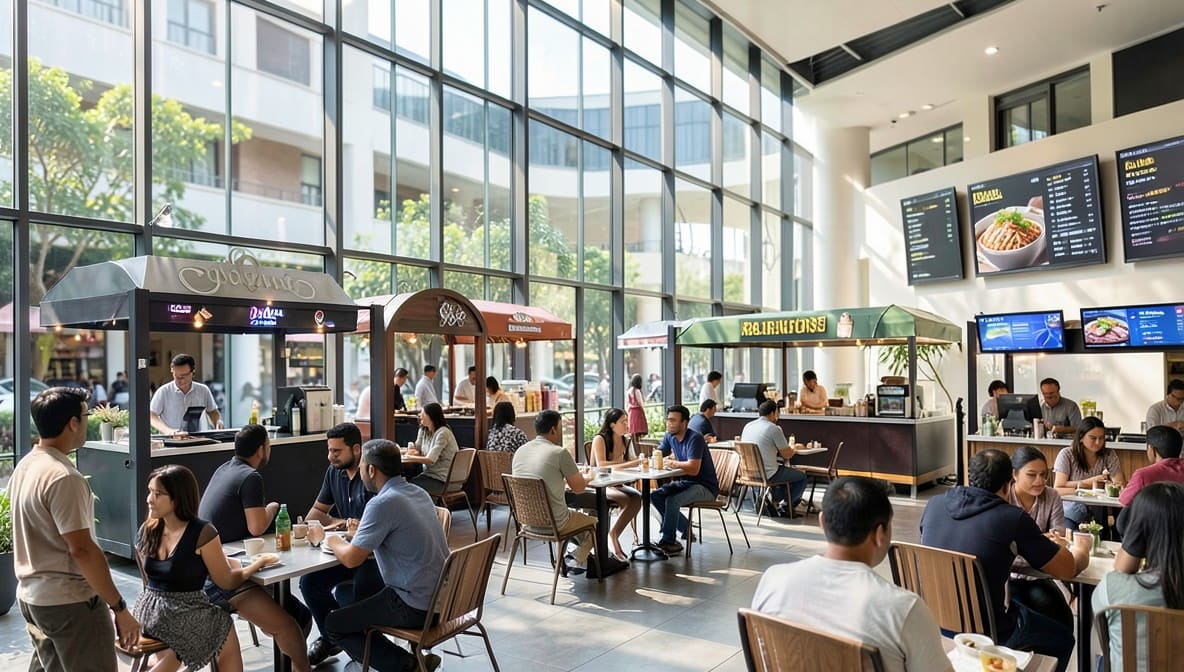
The appellant, Tvl. Mayajaal Entertainment Ltd., operates an entertainment center in Kanathur Reddy Kuppam, Chennai, under the name 'Mayajaal'. It entered into agreements with various restaurant and food court operators (licensees) to allocate space within its premises for the sale of food and beverages. The Revenue contended that by providing infrastructure, billing support, power backup, and promotional assistance, Mayajaal rendered taxable Business Support Services (BSS) and failed to pay service tax on the revenue share it received - typically 20% of net sales.
Key Facts
- The appellant entered into standardized agreements with licensees, beginning as early as 29.07.2008.
- Under these agreements, the licensee was responsible for: preparing and serving food/beverages, hiring staff, paying statutory dues (including service tax and VAT), procuring equipment, obtaining licenses, and managing waste disposal.
- The appellant’s obligations included: providing the physical space, uninterrupted power backup (cost shared proportionately), employing personnel for billing and collection, and promoting the licensee’s business.
- The consideration paid to the appellant was not a fixed rent but a percentage (e.g., 20%) of the net revenue generated from food and beverage sales.
- Payments were made on a bi-weekly basis, with no obligation to pay if no sales occurred (e.g., due to strikes or natural calamities).
- The agreement explicitly stated that neither party was liable for the other’s taxes.
- The Revenue issued multiple Show Cause Notices (SCNs) for the period April 2005 to March 2012, culminating in a Statement of Demand (SOD) dated 26.11.2013 for October 2011 to March 2012, proposing a service tax demand of Rs. 10,26,195/-, interest, and penalty under Section 76 of the Finance Act, 1994.
Procedural History
- 20.10.2010: SCN No. 686/2010 issued for April 2005 - September 2009.
- 27.03.2012: OIO No. 11/2012 adjudicated the above SCN.
- 08.04.2011: SCN No. 171/2011 issued for October 2009 - June 2010.
- 04.04.2012: SCN No. 87/2012 issued for October 2010 - September 2011.
- 16.06.2014: OIO Nos. 39 & 40/2014 adjudicated the above two SCNs.
- 26.11.2013: SOD No. 368/2013 issued for October 2011 - March 2012.
- 09.03.2016: Adjudicating Authority passed OIO No. 63/2016, confirming demand and penalty.
- 01.06.2017: Commissioner (Appeals-I) upheld the demand via Order-in-Appeal No. 290/2017.
- 27.03.2026: Hearing before CESTAT Chennai.
- 29.06.2026: Final Order No. 40831/2026 issued.
The Parties' Positions
For the Appellant
The appellant relied on a prior Final Order No. 40698 - 40701/2024 dated 20.06.2024, wherein the same Tribunal had ruled in its favor on identical facts and agreements. It argued that the arrangement was a revenue-sharing partnership, not a service provision, and that Circular No. 109/3/2009 explicitly excluded such arrangements from taxation. It further cited INOX Leisure v. CST, Hyderabad and its affirmation by the Supreme Court as binding precedent.
For the Respondent
The Revenue maintained that the appellant provided infrastructure, billing, and promotional services, which fell squarely within the definition of Business Support Services under the Finance Act, 1994. It contended that the mode of payment (revenue share vs. fixed rent) was irrelevant to the nature of the service rendered.
Relief Sought
The appellant sought: (1) setting aside of the impugned Order-in-Appeal dated 01.06.2017; (2) cancellation of the service tax demand of Rs. 10,26,195/-; (3) cancellation of interest and penalty imposed under Section 76; and (4) consequential relief in law.
The Legal Issue
The central question was whether a revenue-sharing arrangement between an entertainment center and food/beverage licensees, where the center provides space and ancillary support but shares in the business risk and income, constitutes a taxable Business Support Service under the Finance Act, 1994.
Arguments Presented
For the Appellant
The appellant relied on Circular No. 109/3/2009, which explicitly states that revenue-sharing arrangements between theatre owners and film distributors are not taxable because the parties act as principals, not service provider and recipient. It argued that the present arrangement mirrored this model: the licensee bore all operational risks, paid all statutory dues, and the appellant’s share was contingent on sales. It further cited INOX Leisure v. CST, Hyderabad [2022(60) GSTL 326 (Tri. Hyd.)] and its affirmation by the Supreme Court [2022(62) GSTL 342 (SC)] as binding precedent. The appellant emphasized that judicial discipline required adherence to its own prior decision in Final Order No. 40698 - 40701/2024.
For the Respondent
The Revenue argued that the appellant’s provision of space, billing staff, power backup, and promotional support constituted tangible services irrespective of the payment mechanism. It contended that Circular No. 109/3/2009 applied only to cinema theatres and film distributors, not to food outlets in entertainment centers. It further asserted that the revenue-sharing model was merely a disguise for disguised rent and that the appellant was the dominant party controlling operations.
The Court's Analysis
The Tribunal undertook a detailed examination of the contractual terms and the relevant circular. It noted that the agreement did not impose fixed obligations on the licensee to pay the appellant regardless of business performance. In the absence of sales, no payment was due - indicating shared commercial risk, not a service fee.
"Therefore, the arrangement between the appellant and the occupier are purely on revenue sharing basis, hence, would not fall under the scope of Business Support Service."
The Tribunal held that the circular’s reasoning applied by analogy: when two parties enter into a joint venture where income is shared and risk is mutual, neither is providing a service to the other. The appellant’s role - providing space, power, and billing support - was incidental to the licensee’s primary business and was compensated through a share of revenue, not a fixed fee.
The Tribunal further distinguished this from renting of immovable property, as the appellant did not charge a fixed amount for space. It also rejected the Revenue’s argument that the circular was limited to cinema theatres, noting that the principle of revenue-sharing as a non-service arrangement was grounded in the nature of the relationship, not the industry.
The Tribunal emphasized that the prior Final Order No. 40698 - 40701/2024, rendered on identical facts, was binding under the doctrine of stare decisis, as affirmed in CCE, Mumbai v. Bigen Industries Ltd. and Jayswals Neco Ltd v. CCE, Nagpur. The Revenue failed to demonstrate any material distinction between the earlier case and the present one.
Regarding penalty under Section 76, the Tribunal held that where the law was ambiguous and subject to differing interpretations - even among Tribunal members - the imposition of penalty was unjustified. The appellant had acted in good faith based on a reasonable interpretation of the circular and prevailing judicial trends.
The Verdict
The appeal was allowed. The impugned Order-in-Appeal dated 01.06.2017 was set aside. The service tax demand of Rs. 10,26,195/-, along with interest and penalty under Section 76 of the Finance Act, 1994, was cancelled. Consequential reliefs, including refund of any amounts already paid, were directed to be processed within 8 weeks.
What This Means For Similar Cases
Revenue Sharing Trumps Form Over Substance
- Practitioners must now argue that contingent, profit-linked payments based on sales volume negate the existence of a service provider-client relationship.
- Fixed rent is taxable; revenue share is not - provided the agreement reflects genuine risk-sharing.
- Any attempt to reclassify revenue-sharing as BSS will face strong precedent under Circular 109/3/2009 and INOX Leisure.
Penalty Cannot Be Imposed for Ambiguous Legal Interpretations
- Where multiple judicial interpretations exist - even within the same Tribunal - penalty under Section 76 is not sustainable.
- Taxpayers acting in good faith on reasonable legal grounds are protected from punitive action.
- Authorities must distinguish between bona fide errors and deliberate evasion.
Precedent Binding Even Across Different Periods
- A final order in favor of a taxpayer on identical facts and agreements binds the department in subsequent assessments, even for different financial periods.
- The doctrine of stare decisis applies within the Tribunal system, especially when the same bench has previously ruled.
- Tax authorities cannot ignore prior favorable orders merely because they pertain to an earlier period.
Documentary Evidence Prevails Over Assumptions
- Courts will examine the actual terms of agreements, not the Revenue’s assumptions about control or dominance.
- Clauses on risk allocation, payment contingency, and statutory responsibility are decisive.
- Oral submissions or generalized allegations of 'disguised rent' will not override written contractual terms.
Applicability Beyond Entertainment Centers
- This ruling extends to any business model involving revenue-sharing with third-party operators: food kiosks in malls, salon booths in spas, retail stalls in markets, or franchisee arrangements.
- Businesses must ensure agreements clearly delineate risk, responsibility, and payment structure to avoid misclassification.
- Tax advisors should advise clients to avoid fixed monthly fees in such arrangements unless intended as rent.