The National Green Tribunal Southern Zone has clarified that environmental compliance for Ready-Mix Concrete plants must be assessed based on the actual location of emission sources, not arbitrary boundary measurements. This judgment reinforces the principle that regulatory frameworks must be applied with technical precision and contextual fairness, particularly when infrastructure projects serve public interest.
Background & Facts
The Dispute
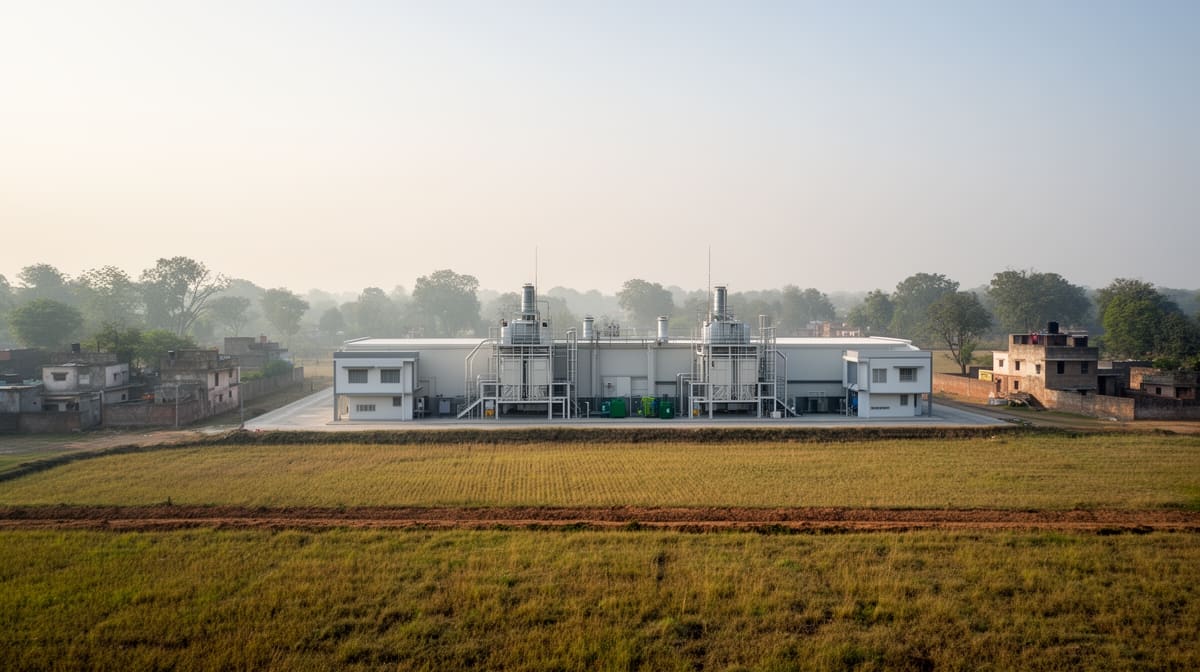
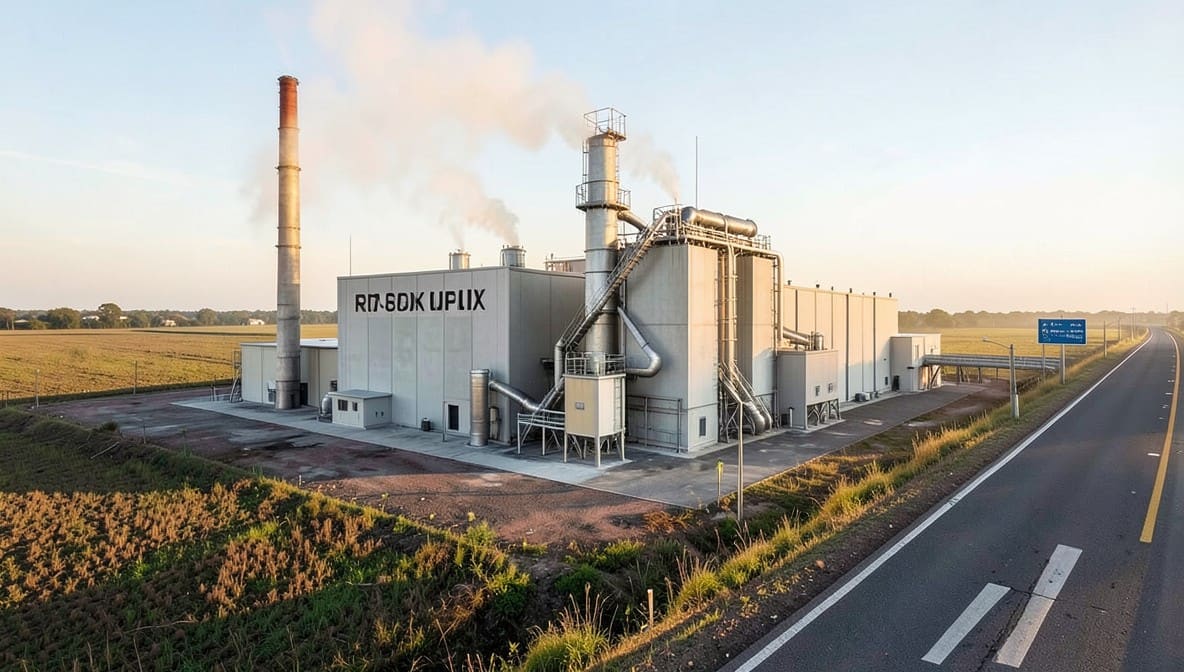
M/s VPMR Construction, a construction entity engaged in infrastructure projects, established a Green Category Ready-Mix Concrete (RMC) plant on land bearing Survey Nos. 1069/1, 1070/2 (P) and 1030/3A2 (P), Medur Village, Ponneri Taluk, Tiruvallur District. The plant was designed to produce up to 360 tonnes per day of RMC using cement, M-sand, coarse aggregates, and admixtures, with advanced pollution control systems including bag filters for cement silos and acoustic enclosures for diesel generator sets.
The plant is situated adjacent to an existing, legally consented Hot Mix Plant that has been operational since 2015. The nearest residential areas are located 800 to 1000 metres away. The primary point of contention is the distance between the RMC plant and State Highway No. 104 (Ponneri-Pulicat Road), which the Tamil Nadu Pollution Control Board (TNPCB) measured at 55 metres.
Key Facts
- The RMC plant was established in early 2025.
- On 29.05.2025, TNPCB inspected the site and found the plant operating without Consent to Establish or Consent to Operate.
- A show cause notice dated 02.06.2025 was issued alleging violation of environmental laws.
- The appellant submitted an explanation on 12.06.2025, claiming the plant was used only for trial runs and not for commercial production.
- A surprise inspection on 08.08.2025 confirmed the plant was non-operational.
- On 29.07.2025 and 07.08.2025, the appellant applied online for Consent to Operate.
- On 03.09.2025, TNPCB conducted another inspection and found the plant operational using DG sets without consent.
- On 08.09.2025, the District Environment Engineer recommended closure under Section 33A of the Water Act and Section 31A of the Air Act.
- A closure and sealing order dated 14.10.2025 was issued, and machinery was sealed on 16.10.2025.
- On 17.10.2025, the appellant informed TNPCB that the adjacent Hot Mix Plant’s DG set had also been sealed, despite its valid consent.
- On 17.12.2025, TNPCB permitted de-sealing of the DG set exclusively for the Hot Mix Plant’s use during power failures.
- On 25.08.2025, the application for Consent to Operate was rejected solely on the ground that the plant was 55 metres from the State Highway.
- On 21.01.2026, the Appellate Authority, TNPCB, dismissed the appeals against the rejection and closure orders.
- On 28.03.2026, the appellant filed the present appeals before the National Green Tribunal (SZ).
Procedural History
- 29.05.2025: First inspection by TNPCB; plant found operating without consent.
- 02.06.2025: Show cause notice issued.
- 12.06.2025: Appellant’s explanation submitted.
- 08.08.2025: Surprise inspection; plant found non-operational.
- 29.07.2025 & 07.08.2025: Online applications for Consent to Operate filed.
- 03.09.2025: Second inspection; plant found operational using DG sets.
- 08.09.2025: Recommendation for closure.
- 14.10.2025: Closure and sealing order issued.
- 16.10.2025: Machinery sealed by Tahsildar and TNPCB officials.
- 17.10.2025: Notification of DG set sealing affecting adjacent Hot Mix Plant.
- 17.12.2025: De-sealing permitted for Hot Mix Plant’s DG set only.
- 25.08.2025: Consent to Operate application rejected.
- 21.01.2026: Appellate Authority dismissed appeals.
- 18.06.2026: Judgment delivered by National Green Tribunal (SZ).
The Parties' Positions
Appellant (M/s VPMR Construction): Argued that the plant was never engaged in commercial production except for limited trial runs; that the 55-metre distance was incorrectly measured from the property boundary rather than the emission source; that the draft guidelines cited by TNPCB are not legally enforceable; and that the plant’s proximity to an existing consented Hot Mix Plant (Orange Category) mitigates environmental risk.
Respondents (TNPCB and District Environment Engineer): Contended that the plant operated without consent, as confirmed by multiple inspections; that the siting guidelines are binding despite being labeled "Draft"; and that the 55-metre distance from the highway violates the prescribed 250-metre norm.
Relief Sought
The appellant sought: (1) setting aside of the impugned order dated 21.01.2026; (2) grant of temporary Consent to Operate for public infrastructure projects; (3) de-sealing of plant equipment; and (4) direction to TNPCB to measure distance from emission source, not boundary.
The Legal Issue
The central question was whether the 250-metre distance requirement for RMC plants from State Highways under TNPCB guidelines must be measured from the property boundary or from the actual emission source, and whether draft environmental guidelines lacking formal notification can be enforced as binding regulatory standards.
Arguments Presented
For the Appellant
The appellant relied on the technical reality that emissions originate from the mixing unit and silos, not the outer boundary. It cited the presence of an existing, consented Hot Mix Plant (a higher-pollution industry) adjacent to the site as evidence of low environmental risk. It argued that the guidelines cited by TNPCB were labeled "Draft" and had not undergone statutory consultation or formal notification under the Environment (Protection) Act, 1986, rendering them non-binding. It further emphasized the public interest in supplying RMC for critical infrastructure projects and the absence of residential encroachment within 1000 metres.
For the Respondent
The respondents contended that the guidelines, though labeled "Draft", were issued pursuant to the National Green Tribunal’s order dated 30.03.2017 in Application No. 24 of 2017 and had been implemented as final by TNPCB. They argued that the plant’s operation without consent constituted a clear statutory violation under Sections 25 and 22 of the Water Act and Sections 21 and 22 of the Air Act. They maintained that the 55-metre distance from the highway was objectively measured and violated the prescribed norm, regardless of emission source location.
The Court's Analysis
The Tribunal acknowledged the appellant’s claim that the plant was used for trial runs, but noted the contradiction between this assertion and the findings of operational activity on 03.09.2025. The Court held that the appellant had clearly operated the plant without statutory consent, thereby violating the Water and Air Acts.
"The contention of the Appellant that the plant was operated only once for trial purposes is inconsistent with the inspection report dated 03.09.2025, which recorded active production using DG sets without consent."
Regarding the distance criterion, the Tribunal observed that the guidelines did not specify whether the 250-metre distance was to be measured from the property boundary or the emission source. It noted that the adjacent Hot Mix Plant, classified as Orange Category with higher pollution potential, had been operating lawfully for 15 years. The Tribunal further noted that nearby habitations were over 800 metres away, and the only deviation from the guidelines was the 55-metre distance from the highway.
"The formulation and implementation of such guidelines are intended to provide a uniform regulatory framework for the application of the precautionary and preventive principles of environmental protection."
The Court rejected the appellant’s argument that the guidelines were unenforceable merely because they were labeled "Draft", holding that TNPCB had treated them as final in practice and that the Tribunal’s prior order had endorsed their application. However, the Court directed TNPCB to revise the nomenclature to "Final Guidelines" to eliminate ambiguity.
Crucially, the Tribunal held that the measurement of distance must be from the actual emission source, not the property boundary, as this aligns with the scientific basis of environmental regulation. The Court emphasized that rigid adherence to boundary measurements without technical consideration defeats the purpose of environmental safeguards.
The Verdict
The Appeals were partly allowed. The National Green Tribunal set aside the impugned order dated 21.01.2026 and directed the Tamil Nadu Pollution Control Board to reconsider the application for Consent to Operate, measuring the distance from the emission source, not the property boundary. The Tribunal further directed TNPCB to initiate appropriate action to levy Environmental Compensation for the unauthorized operation of the plant between 29.05.2025 and 03.09.2025, in accordance with law. The closure order was not vacated, but the plant may resume operations upon compliance with revised assessment.
What This Means For Similar Cases
Distance Must Be Measured from Emission Source, Not Boundary
- Practitioners must now argue that environmental compliance metrics (e.g., distance from highways, residential areas) must be assessed from the point of emission, not the property fence.
- Regulatory authorities cannot apply arbitrary measurement standards without technical justification.
- Site plans and pollution control diagrams submitted with consent applications must clearly identify emission sources.
Draft Guidelines May Be Enforceable If Implemented as Final
- Environmental guidelines labeled "Draft" may still be binding if consistently applied by authorities and endorsed by courts.
- Entities must challenge the procedural validity of guidelines through writ petitions, not merely assert their "draft" status.
- Authorities must formally notify guidelines as "Final" to avoid litigation over enforceability.
Public Interest Does Not Override Statutory Consent, But May Influence Remedies
- Operating without consent remains a statutory violation, regardless of public infrastructure purpose.
- However, courts may permit reconsideration of consent applications where environmental risk is demonstrably low and infrastructure needs are urgent.
- Environmental Compensation, not blanket closure, may be the appropriate remedy for non-compliance with siting norms.