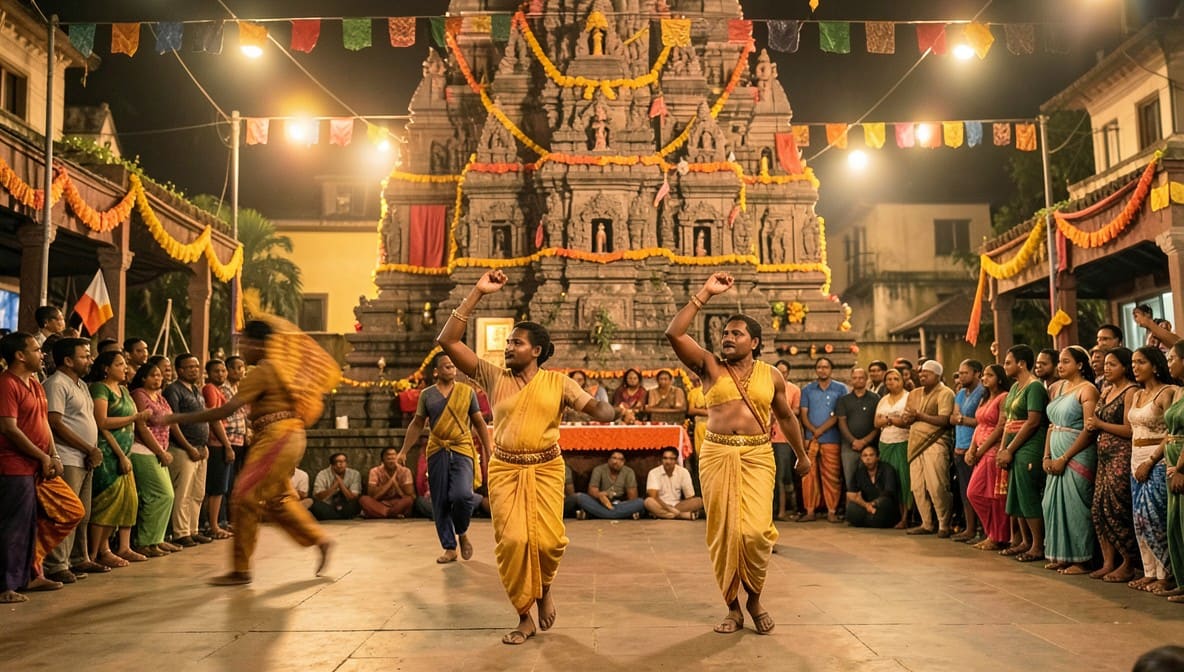
The Madras High Court, Madurai Bench, delivered a nuanced order balancing cultural expression with public order in Muthu Karuppaiah v. Superintendent of Police, Theni. The Court permitted a temple festival dance program while imposing stringent conditions to prevent obscenity, communal discord, and violations of police circulars. This judgment underscores the judiciary's role in harmonizing constitutional freedoms with regulatory oversight in public events.
Background & Facts
The Dispute
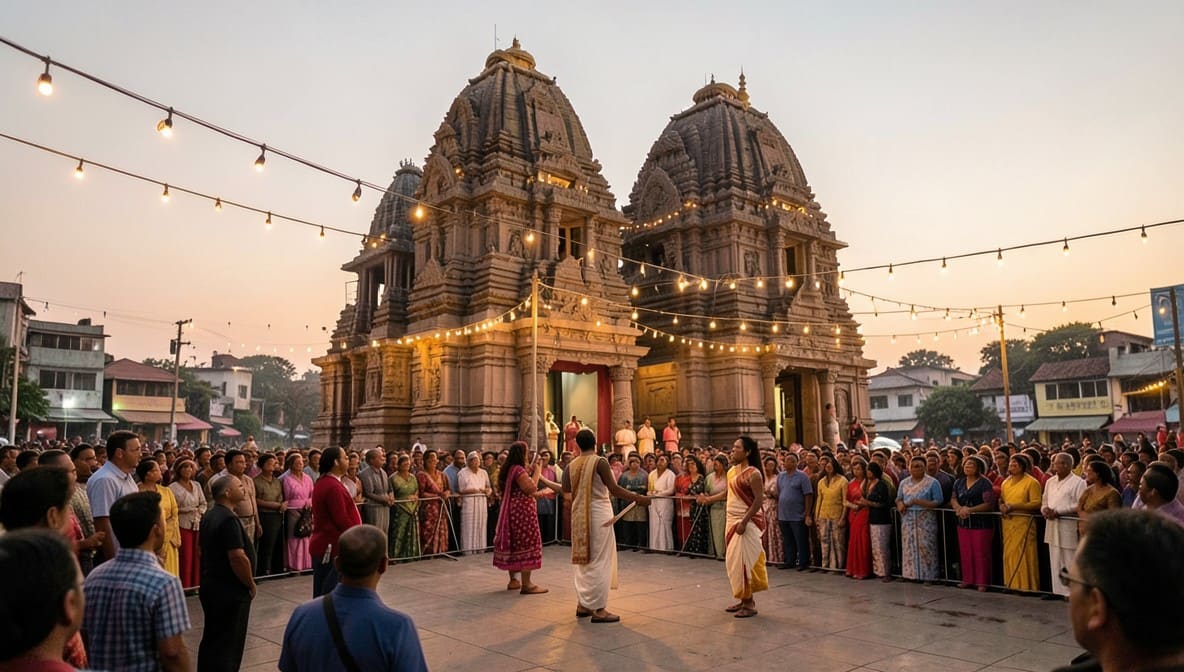
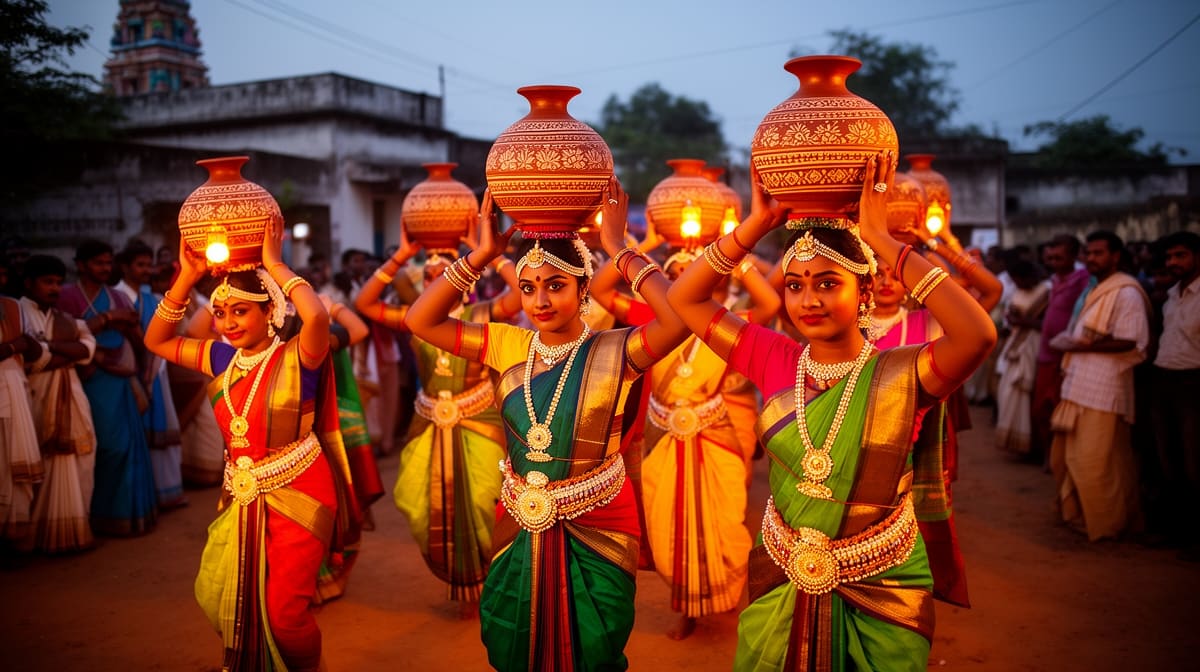
The petitioner, Muthu Karuppaiah, sought a writ of mandamus to direct the respondents - including the Superintendent of Police, Theni District, and the Returning Officer - to grant permission and necessary protection for conducting the Adalum Padalum dance program on 02.05.2026 from 6:00 PM to 10:00 PM. The program was scheduled as part of the Chitirai Powrnami Thiruvizha of Arulmigu Sri Varadharaja Perumal Temple, Kallazhagar Urchava Festival, in Upparpatti, Theni District. The petitioner argued that the respondents had failed to grant permission despite compliance with regulatory requirements.
Key Facts
- The Director General of Police (DGP), Tamil Nadu, issued two circulars:
- Rc.No.159539/Crime.4(3)/2018, dated 31.10.2018
- Rc.007301/GenlI(1)/2019, dated 09.04.2019
- These circulars provided guidelines for granting permission for cultural programs.
- The petitioner sought permission for the program on 02.05.2026, citing its cultural significance.
- The respondents had not explicitly denied permission but imposed implicit restrictions, prompting the writ petition.
Procedural History
- WP Crl.(MD) No.2444 of 2026 was filed before the Madurai Bench of Madras High Court on an unspecified date.
- The matter was heard by Mrs. Justice L. Victoria Gowri.
- The Court disposed of the petition on 29.04.2026 with specific directions.
Relief Sought
The petitioner sought:
- A writ of mandamus or other appropriate writ directing the respondents to grant permission for the program.
- Necessary police protection to ensure the event's smooth conduct.
- Consequential orders to facilitate the program on 02.05.2026.
The Legal Issue
The central question was whether the respondents could impose unwritten restrictions on cultural programs under the guise of public order, or whether they were bound to follow the DGP's circulars and grant permission with reasonable conditions to prevent misuse of regulatory authority.
Arguments Presented
For the Petitioner
- Contended that the DGP's circulars mandated the consideration of applications for cultural programs.
- Argued that the respondents had no discretion to deny permission outright without valid grounds.
- Emphasized the cultural and religious significance of the program, which was part of a temple festival.
- Sought police protection to prevent disruptions.
For the Respondents
- While no explicit counter-arguments were recorded, the respondents likely relied on:
- Public order concerns, including the potential for obscenity, communal discord, or violations of law.
- Discretionary authority under police regulations to impose conditions or deny permission.
- The need to prevent misuse of cultural programs for political or communal propaganda.
The Court's Analysis
The Court adopted a pragmatic approach, recognizing the dual imperatives of cultural freedom and regulatory oversight. It held that while the respondents could not arbitrarily deny permission, they were empowered to impose reasonable conditions to ensure public order and decency. The Court relied on the DGP's circulars as the governing framework for granting permission, thereby curtailing the respondents' discretion to impose unwritten restrictions.
Key observations included:
- The DGP's circulars provided a structured mechanism for granting permission, which the respondents were bound to follow.
- The Court emphasized that cultural programs must not be used as a pretext for obscenity, communal discord, or political propaganda.
- The conditions imposed were proportionate and aimed at preventing misuse rather than stifling cultural expression.
"The organisers shall ensure that only cultural programs having some relevance to the temple or the festival in question would be conducted and there shall not be any obscene display/dance being conducted."
"The program shall not extend beyond 10 p.m., and no women participating in the cultural program would be depicted or portrayed in an obscene or undignified manner either in the form of clothing or otherwise."
The Court's analysis underscored the balance between constitutional freedoms (such as the right to cultural expression under Article 25 and Article 19(1)(a) of the Constitution) and the state's duty to maintain public order under Article 19(2).
The Verdict
The Court allowed the writ petition with the following directions:
- The petitioner was permitted to conduct the Adalum Padalum program on 02.05.2026 from 7:00 PM to 10:00 PM (revised timing).
- The organizers (temple festival committee members) were held responsible for compliance with the 14 conditions imposed by the Court, including:
- No obscene displays or undignified portrayal of participants.
- No double-meaning songs or music inconsistent with temple precincts.
- No alcohol or intoxicating materials in the program area.
- No political, communal, or caste-based content in songs or dances.
- No digital banners/placards on arterial roads or public spaces.
- Modest attire for dancers, with no exposure of midriff, thighs, legs, or chest.
- Strict adherence to the 10:00 PM deadline.
- The police were empowered to stop the program if it exceeded the permitted time or violated any conditions.
- The organizers were made liable for any untoward incidents during the program.
- The organizers were required to obtain all other necessary permissions from relevant authorities.
- No costs were awarded.
What This Means For Similar Cases
Police Circulars Are Binding, Not Discretionary
- The judgment reaffirms that police circulars issued by the DGP are binding on subordinate authorities and cannot be arbitrarily disregarded.
- Authorities must follow the prescribed procedure for granting permission rather than imposing unwritten restrictions.
- Practitioners should cite the DGP's circulars in similar cases to challenge arbitrary denials of permission.
Conditions Must Be Proportionate and Clear
- The Court emphasized that conditions imposed on cultural programs must be:
- Proportionate to the objective (e.g., public order, decency).
- Clearly defined to avoid ambiguity.
- Non-discriminatory and non-arbitrary.
- Vague or overly broad conditions (e.g., "no obscene content" without definition) may be challenged as violative of Article 14 (equality) and Article 19 (freedom of expression).
Organizers Bear Responsibility for Compliance
- The judgment shifts the burden of compliance to the organizers, making them liable for violations.
- Key takeaways for organizers:
- Document all permissions and conditions imposed.
- Monitor the program to ensure adherence to conditions.
- Avoid last-minute changes that could lead to violations.
- Seek legal advice if conditions appear unreasonable or unclear.
Cultural Programs Cannot Be Misused for Propaganda
- The Court explicitly prohibited the use of cultural programs for:
- Political propaganda.
- Communal or caste-based messaging.
- Religious promotion beyond the festival's context.
- Practitioners should counsel clients to avoid content that could be misconstrued as violating these restrictions.
Police Have Limited Discretion to Stop Programs
- The police can stop a program only if it:
- Exceeds the permitted time.
- Violates any of the 14 conditions.
- Poses an immediate threat to public order.
- Arbitrary stoppages without valid grounds may be challenged under Article 226 (writ jurisdiction).