Karnataka High Court judgments

570 Karnataka High Court judgments explained in plain English: what was decided, the law applied and why it matters. Page 19 of 24.

Section 8 Hindu Succession Act | Daughters Entitled to Equal Share in Father’s Self-Acquired Property Irrespective of Marriage Date : Karnataka HC
Case Law Analysis
|Karnataka High Court

Section 8 Hindu Succession Act | Daughters Entitled to Equal Share in Father’s Self-Acquired Property Irrespective of Marriage Date : Karnataka HC

The Karnataka High Court ruled that daughters are entitled to an equal share in their father’s self-acquired property under Section 8 of the Hindu Succession Act, 1956, regardless of their marriage date or the 2005 amendment. This decision overturns the trial court’s erroneous application of notional partition and reinforces gender equality in intestate succession.
Section 66 Karnataka Slum Areas Act | Civil Courts Barred from Adjudicating Slum Land Disputes : Karnataka HC Upholds Statutory Exclusion
Case Law Analysis
|Karnataka High Court

Section 66 Karnataka Slum Areas Act | Civil Courts Barred from Adjudicating Slum Land Disputes : Karnataka HC Upholds Statutory Exclusion

The Karnataka High Court reaffirmed that Section 66 of the Karnataka Slum Areas Act ousts civil court jurisdiction over disputes involving slum land development, including challenges to construction resolutions. The ruling underscores that plaintiffs cannot bypass statutory bars even if estoppel or prior declarations under other laws (e.g., Urban Land Ceiling Act) are invoked, reinforcing the exclusivity of statutory mechanisms for slum-related disputes.

Section 24(2) Right to Fair Compensation Act | Beneficiary Financial Liability Entitles Participation in Compensation Proceedings : Karnataka HC Quashes Awards Without Notice
Case Law Analysis
|Karnataka High Court

Section 24(2) Right to Fair Compensation Act | Beneficiary Financial Liability Entitles Participation in Compensation Proceedings : Karnataka HC Quashes Awards Without Notice

Karnataka HC rules that project beneficiaries bearing financial liability under land acquisition must be impleaded and heard in compensation proceedings. Awards passed without their participation violate natural justice and are liable to be quashed, ensuring uniformity in compensation determination for all stakeholders.

Forest (Conservation) Act 1980 | Mysore Forest Regulation 'Reserved Land' Deemed Forest Land, Requiring Central Approval for Non-Forest Use : Karnataka HC
|Karnataka High Court

Forest (Conservation) Act 1980 | Mysore Forest Regulation 'Reserved Land' Deemed Forest Land, Requiring Central Approval for Non-Forest Use : Karnataka HC

Karnataka High Court rules that land classified as 'Reserved Land (Fodder Reserve)' under the Mysore Forest Regulation, 1900, falls under the definition of 'forest land' under the Forest (Conservation) Act, 1980. This mandates prior central government approval for non-forest activities like quarrying, impacting industries and state land-use planning.

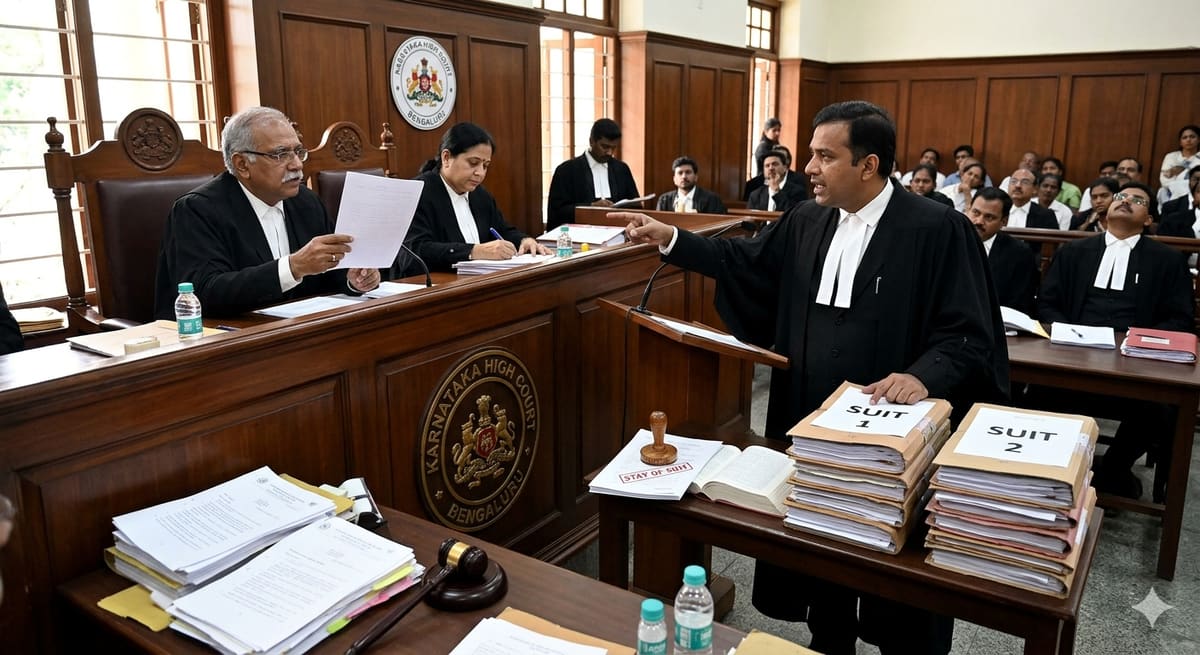
CPC Section 10 | Stay of Suit Requires Identity of Matter in Issue; Consolidation Ordered to Avoid Conflicting Findings: Karnataka HC
Case Law Analysis
|Karnataka High Court

CPC Section 10 | Stay of Suit Requires Identity of Matter in Issue; Consolidation Ordered to Avoid Conflicting Findings: Karnataka HC

The Karnataka High Court ruled that Section 10 CPC mandates an identical cause of action and subject matter for stay of suit, refusing stay where properties and issues differed. However, it directed consolidation of parallel suits to prevent contradictory judgments by the same court, reinforcing procedural efficiency in property disputes.

SARFAESI Act | Possession Under Section 14 Does Not Automatically Entitle Khata Entry; Revenue Authorities Must Consider Representations Within 3 Months : Karnataka HC
Case Law Analysis
|Karnataka High Court

SARFAESI Act | Possession Under Section 14 Does Not Automatically Entitle Khata Entry; Revenue Authorities Must Consider Representations Within 3 Months : Karnataka HC

Karnataka High Court clarifies that lenders taking possession under SARFAESI Act must still follow administrative due process for Khata issuance. Revenue authorities are mandated to consider representations within three months, reinforcing that possession does not equate to ownership in revenue records. The ruling underscores the distinction between secured creditor rights and revenue record updates, impacting financial institutions and borrowers alike.

'Equal Pay for Equal Work' Under Article 14 | Daily Wage Worker Entitled to Retroactive Pay Scale Despite Service Gap : Karnataka HC
Case Law Analysis
|Karnataka High Court

'Equal Pay for Equal Work' Under Article 14 | Daily Wage Worker Entitled to Retroactive Pay Scale Despite Service Gap : Karnataka HC

The Karnataka High Court reinforced the constitutional mandate of 'equal pay for equal work' under Article 14, holding that daily wage workers performing identical duties as regular employees must receive the same pay scale, including retroactive revisions, even if their service was interrupted by illegal termination. The ruling mandates financial parity for affected workers, setting a precedent for similar employment disputes.

Industrial Dispute Act | Unexplained Five-Year Delay Vitiates Tribunal Award Under Prabhakar Doctrine : Karnataka HC
Case Law Analysis
|Karnataka High Court

Industrial Dispute Act | Unexplained Five-Year Delay Vitiates Tribunal Award Under Prabhakar Doctrine : Karnataka HC

The Karnataka High Court quashed an Industrial Tribunal award after a five-year unexplained delay in raising the dispute, holding that such laches render the reference non-maintainable under the Supreme Court’s Prabhakar ruling. This reinforces that procedural diligence is non-negotiable in labour disputes, affecting employers and workmen alike who delay invoking statutory remedies.

Hindu Succession Act | Illegitimate Children Entitled to 1/6th Share in Joint Family Property; Adoptive Mother Gets 1/7th of Son's Share : Karnataka HC
Case Law Analysis
|Karnataka High Court

Hindu Succession Act | Illegitimate Children Entitled to 1/6th Share in Joint Family Property; Adoptive Mother Gets 1/7th of Son's Share : Karnataka HC

The Karnataka High Court ruled that illegitimate children are entitled to a 1/6th share each in their father's half of joint family property, while an adoptive mother is entitled to a 1/7th share of her son's portion. This decision clarifies the inheritance rights under the Hindu Succession Act, impacting succession disputes in joint family properties.

POCSO Act & Rarest of Rare Doctrine | Death Penalty Disproportionate for Child Rape-Murder Absent Extreme Brutality: Karnataka HC
Case Law Analysis
|Karnataka High Court

POCSO Act & Rarest of Rare Doctrine | Death Penalty Disproportionate for Child Rape-Murder Absent Extreme Brutality: Karnataka HC

Karnataka HC overturns death sentence in a POCSO case, ruling that life imprisonment without remission suffices unless extreme brutality or exceptional depravity is proven. The court merged overlapping POCSO convictions and enhanced victim compensation to ₹5 lakh, reinforcing sentencing proportionality under the 'rarest of rare' doctrine.

Order VII Rule 10 CPC | Jurisdiction for Share Transfer Suits Lies Where Contract Executed and Shares Situated: Karnataka HC
Case Law Analysis
|Karnataka High Court

Order VII Rule 10 CPC | Jurisdiction for Share Transfer Suits Lies Where Contract Executed and Shares Situated: Karnataka HC

Karnataka High Court rules that commercial courts have jurisdiction over share transfer disputes if the contract was executed and the shares are situated at the company’s registered office. The decision clarifies that plaintiffs cannot be compelled to file suits in distant courts merely based on defendant’s residence, reinforcing jurisdictional convenience for commercial litigants.

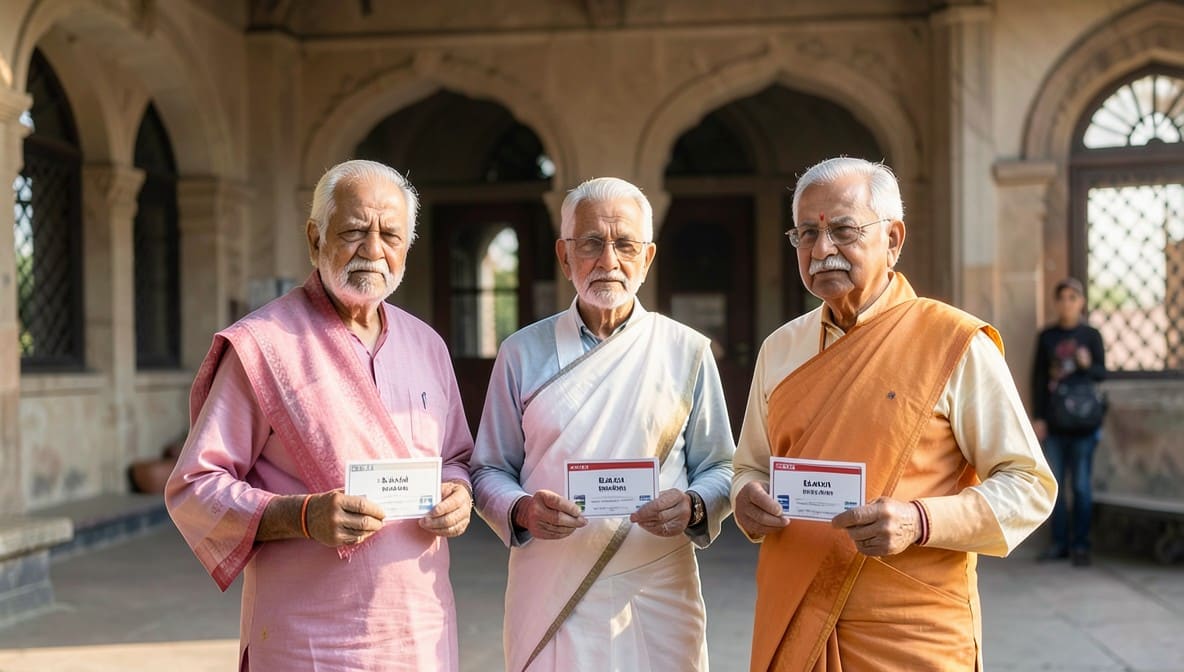
Certificate of Practice | Exclusive Practice in Karnataka Overrides Enrollment Jurisdiction for Bar Election Voting Rights : Karnataka HC
Case Law Analysis
|Karnataka High Court

Certificate of Practice | Exclusive Practice in Karnataka Overrides Enrollment Jurisdiction for Bar Election Voting Rights : Karnataka HC

The Karnataka High Court has ruled that senior advocates enrolled with the Maharashtra Bar Council may vote in Belagavi Bar Association elections if they exclusively practice in Karnataka, setting a precedent that territorial practice trumps technical COP requirements. This decision empowers advocates with deep local roots but interstate enrollment to participate in regional legal governance, reinforcing the principle that professional presence, not bureaucratic registration, defines electoral eligibility.

KIADB Regulation 10(d) | No Section 34-B Notice Required for Cancellation of Allotment Due to Non-Execution of Lease-Cum-Sale Agreement : Karnataka HC
Case Law Analysis
|Karnataka High Court

KIADB Regulation 10(d) | No Section 34-B Notice Required for Cancellation of Allotment Due to Non-Execution of Lease-Cum-Sale Agreement : Karnataka HC

The Karnataka High Court ruled that failure to execute a lease-cum-sale agreement within the stipulated time automatically triggers cancellation of land allotment under Regulation 10(d) of KIADB Regulations, rendering notice under Section 34-B of the KIAD Act unnecessary. This clarifies that regulatory timelines override procedural safeguards in land allotment, directly impacting developers, banks, and industrial investors relying on conditional allotments.

Karnataka Excise Act Sections 43-A & 54 | Conviction Invalid Without Chemical Analysis and Mandatory Seizure Protocol : Karnataka HC
Case Law Analysis
|Karnataka High Court

Karnataka Excise Act Sections 43-A & 54 | Conviction Invalid Without Chemical Analysis and Mandatory Seizure Protocol : Karnataka HC

The Karnataka High Court quashed a conviction for illicit liquor transport after finding the prosecution failed to conduct mandatory chemical analysis of seized samples and violated procedural safeguards under Sections 43-A and 54 of the Karnataka Excise Act. This ruling reinforces that procedural compliance is not optional - it is the bedrock of admissibility in excise prosecutions, directly impacting police evidence collection and trial outcomes across the state.

Reservation Policy Inapplicable to Single Post | No Vacancy Multiplicity Means No Reservation: Karnataka HC
Case Law Analysis
|Karnataka High Court

Reservation Policy Inapplicable to Single Post | No Vacancy Multiplicity Means No Reservation: Karnataka HC

The Karnataka High Court has ruled that reservation cannot be applied to a single cleaner post in a Grama Panchayat, as the constitutional and statutory framework for affirmative action requires multiple vacancies to enable meaningful implementation. This decision reinforces merit-based recruitment in isolated positions and clarifies that reservation is not a blanket entitlement but a structured mechanism tied to institutional scale and plurality.

Contempt of Court | Mere Allegations Without Proven Deliberate Disobedience of D.K. Basu Guidelines Are Insufficient : Karnataka HC
Case Law Analysis
|Karnataka High Court

Contempt of Court | Mere Allegations Without Proven Deliberate Disobedience of D.K. Basu Guidelines Are Insufficient : Karnataka HC

The Karnataka High Court dismissed a contempt petition because allegations of police non-compliance with Supreme Court arrest guidelines, without proof of intentional defiance, cannot trigger contempt proceedings. This reinforces that contempt requires clear, willful disregard-not procedural lapses or unverified claims-shaping how public accountability cases are framed against law enforcement.

Industrial Employment (Standing Orders) Act, 1946 | More Beneficial Model Standing Orders Override Certified Terms on Retirement Age : Karnataka HC
Case Law Analysis
|Karnataka High Court

Industrial Employment (Standing Orders) Act, 1946 | More Beneficial Model Standing Orders Override Certified Terms on Retirement Age : Karnataka HC

The Karnataka High Court ruled that when model standing orders under the Industrial Employment (Standing Orders) Act, 1946 offer more favorable terms - such as raising retirement age from 58 to 60 - they prevail over previously certified standing orders, even if those were lawfully approved. This establishes a binding precedent for employers and unions nationwide, ensuring statutory benefits cannot be locked in at less favorable levels once improved model orders are issued.

Section 9 Hindu Marriage Act | Spouse’s Willingness to Rejoin Overrides Prolonged Separation; Restitution Decree Upheld : Karnataka HC
Case Law Analysis
|Karnataka High Court

Section 9 Hindu Marriage Act | Spouse’s Willingness to Rejoin Overrides Prolonged Separation; Restitution Decree Upheld : Karnataka HC

Karnataka High Court rules that a spouse’s consistent efforts to reconcile and resume cohabitation defeat a divorce plea based on desertion, even after prolonged separation. The court emphasized the child’s welfare and the statutory mandate under Section 9 of the Hindu Marriage Act to restore conjugal rights where willingness exists.

Order XXI Rule 22 CPC | Staged Deposit of Arrears Under Settlement Bars Immediate Delivery Warrant: Karnataka HC
Case Law Analysis
|Karnataka High Court

Order XXI Rule 22 CPC | Staged Deposit of Arrears Under Settlement Bars Immediate Delivery Warrant: Karnataka HC

The Karnataka High Court has ruled that where a judgment debtor demonstrates genuine intent to comply with a settlement by offering to deposit rent arrears in installments, issuing a delivery warrant is disproportionate. This sets a new standard for execution courts: coercive measures must yield to structured compliance, protecting debtors who act in good faith while safeguarding decree holders' rights through phased payment.

Natural Justice | Disciplinary Action Requires Individualized Evidence of Misconduct, Not Collective Attribution : Karnataka HC
Case Law Analysis
|Karnataka High Court

Natural Justice | Disciplinary Action Requires Individualized Evidence of Misconduct, Not Collective Attribution : Karnataka HC

The Karnataka High Court has ruled that disciplinary penalties against public servants cannot be sustained based on generalized or collective allegations without direct, personal attribution of misconduct. This sets a critical precedent for administrative tribunals and departments, ensuring that service inquiries must tie specific acts to the individual officer-protecting against guilt by association and reinforcing the core of audi alteram partem.