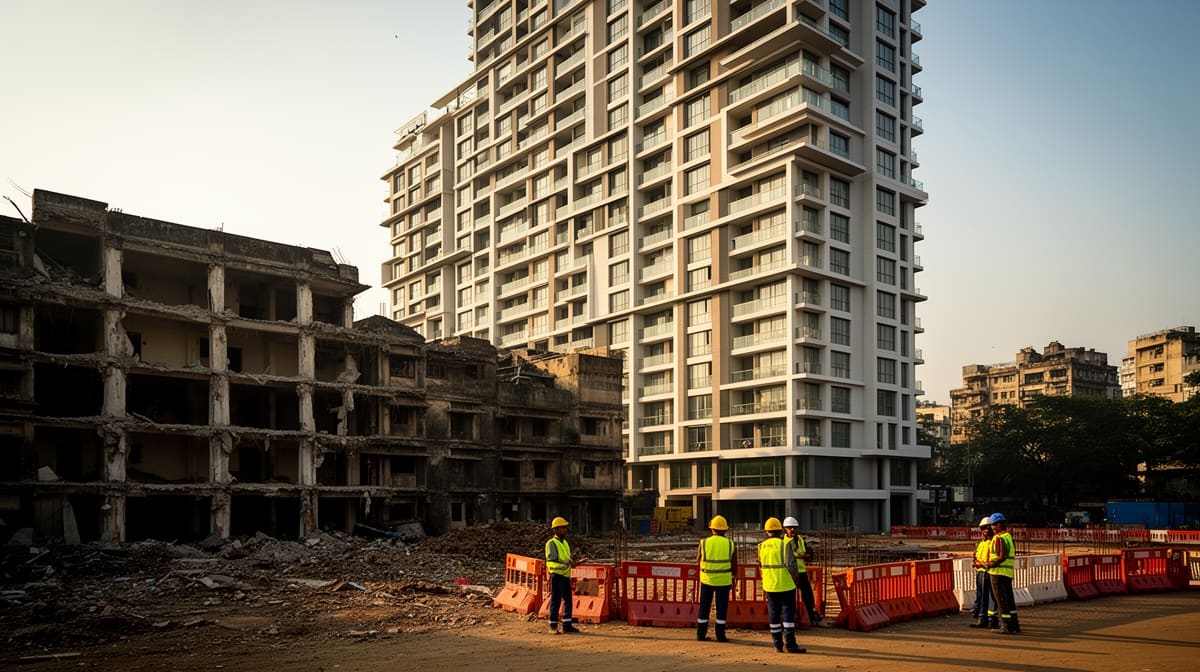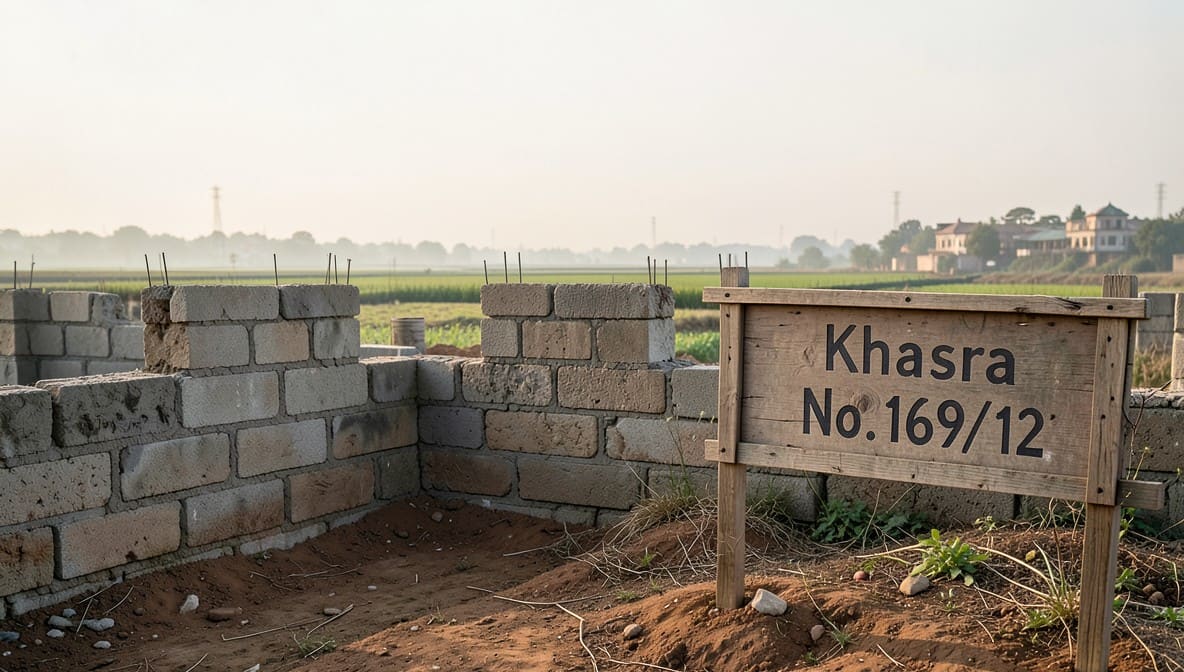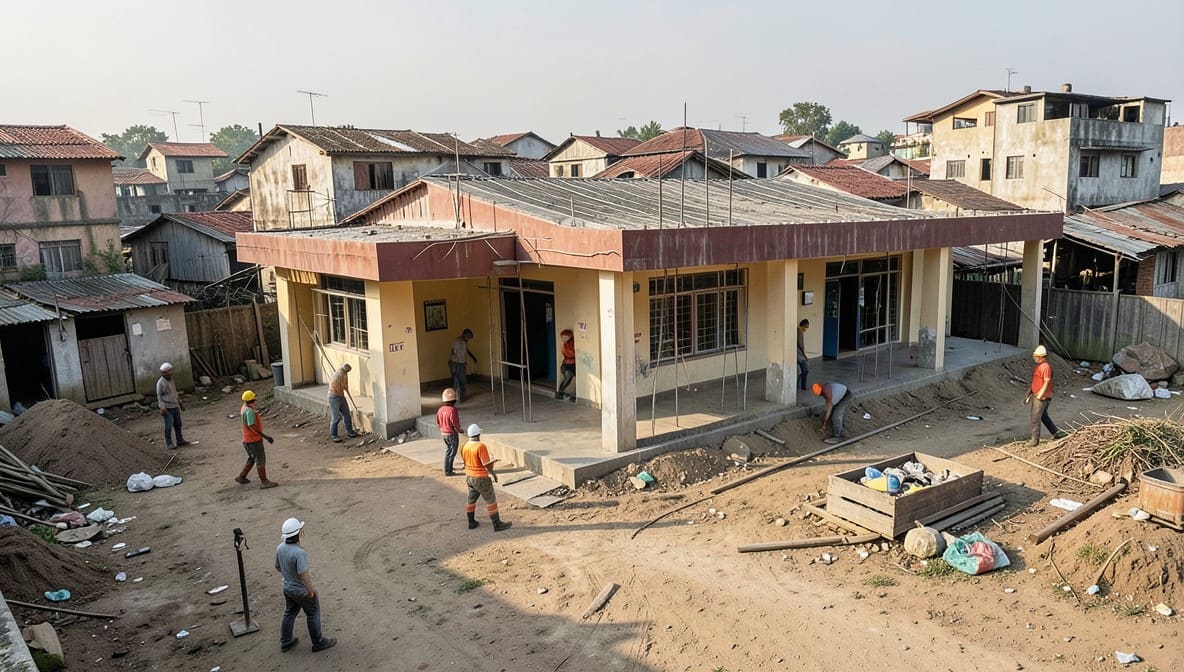
The Karnataka High Court has clarified that civil courts are statutorily barred from entertaining suits challenging slum redevelopment projects initiated by prescribed authorities under the Karnataka Slum Areas (Improvement and Clearance) Act, 1973. This judgment reinforces the legislative intent to insulate slum improvement actions from judicial interference, except where expressly provided.
Background & Facts
The Dispute
The plaintiff, Pradeep Hublikar, filed a civil suit seeking declaration that Resolution No.716 dated 28.05.1999 passed by the Commissioner of Hubli-Dharwad Municipal Corporation was illegal, null and void ab initio. The resolution authorized construction of a Community Hall on land bearing CTS Nos.3026/2B, 3023/3, 3024, and 3026/1 in Gouliwada, Hubballi. The plaintiff also sought permanent and later mandatory injunction to restrain and demolish the construction.
Key Facts
- The suit schedule property was declared a ‘Slum Area’ under Section 3 of the Karnataka Slum Areas (Improvement and Clearance) Act, 1973, by Gazette Notification dated 01.10.1977.
- The plaintiff and defendants Nos.2 and 3 are co-owners of the property.
- The father of the plaintiff, Shamsundhar Gurunathappa Hublikar, submitted a declaration before the Deputy Commissioner, Dharwad, under the Urban Land (Ceiling and Regulation) Act, 1976, stating that the property was occupied by the Gavali community for housing and cattle tethering, and was not in his possession.
- He explicitly acknowledged that the Government had declared the area a ‘slum area’ and requested that the property not be counted towards his land ceiling limit.
- The Commissioner, as Prescribed Authority, passed Resolution No.716 on 28.05.1999 to construct a Community Hall at an estimated cost of ₹2,40,500/-.
- During pendency of the suit, the Community Hall was completed.
- The plaintiff amended the plaint to seek mandatory injunction for demolition.
Procedural History
- 01.10.1977: Gazette Notification issued declaring Gavalagalli/Gouliwada area as ‘Slum Area’ under Section 3 of the Act of 1973.
- 28.05.1999: Resolution No.716 passed by the Corporation for construction of Community Hall.
- 2000: Suit O.S.No.235/2000 filed by plaintiff in the Court of I Additional Civil Judge (Jr.Dn.), Hubballi.
- 21.08.2001: Trial Court decreed the suit, declaring the resolution illegal and directing demolition of the structure within two months.
- 2001: First Appeal R.A.No.161/2001 filed by the Corporation.
- 24.02.2010: First Appellate Court dismissed the appeal, confirming the Trial Court’s decree.
- 2010: Regular Second Appeal RSA No.5575/2010 filed before the Karnataka High Court, Dharwad Bench.
- 16.04.2026: Arguments heard and reserved.
- 29.04.2026: Judgment delivered by the Division Bench.
The Parties' Positions
Plaintiff’s Position: The Corporation had no title or interest in the property; the resolution was passed without notice or acquisition under the Land Acquisition Act, 1894; the construction violated constitutional rights.
Defendant’s Position: The property was lawfully declared a slum area; the Commissioner, as Prescribed Authority, had statutory power to develop it; the plaintiff’s ownership claim was estopped by his father’s declaration under the Urban Land Ceiling Act.
Relief Sought
The plaintiff sought: (1) declaration that Resolution No.716 was illegal and void; (2) permanent injunction against construction; (3) mandatory injunction for demolition of the completed Community Hall.
The Legal Issue
Whether the civil court has jurisdiction to entertain a suit seeking declaration and injunction against construction of a community hall on land declared as a slum area under the Karnataka Slum Areas (Improvement and Clearance) Act, 1973, particularly when the plaintiff’s ownership claim is contradicted by his own prior declaration under the Urban Land Ceiling Act?
Arguments Presented
For the Appellant
Learned counsel for the Commissioner argued that:
- The suit was barred by Section 66 of the Act of 1973, which explicitly excludes civil court jurisdiction over matters entrusted to the Government or Prescribed Authority.
- The plaintiff’s father had, under oath, disclaimed ownership and acknowledged the property’s status as a slum area, thereby estopping the plaintiff from asserting ownership.
- The notification under Section 11 had been quashed in prior writ petitions, but the original declaration under Section 3 remained valid and conferred authority on the Commissioner.
- The documents produced under I.A.No.3/2010 (including the father’s declaration) were material and admissible, and their suppression rendered the suit frivolous.
For the Respondent
Learned counsel for the plaintiff contended that:
- The Corporation had no title and acted without legal authority.
- The quashing of the Section 11 notification invalidated any subsequent action.
- The father’s declaration was made only for ceiling purposes and did not extinguish ownership.
- The Gavali community were licensees, not owners, and the plaintiff retained superior rights.
- The construction was completed during court vacation, amounting to abuse of process.
The Court's Analysis
The Court undertook a rigorous analysis of Section 66 of the Karnataka Slum Areas Act, 1973, which states:
"Save as otherwise expressly provided in this Act, no Civil Court shall have jurisdiction in respect of any matter which the Government or the prescribed authority is, empowered by or under this Act, to determine and no injunction shall be granted by any Court or other authority in respect of any action taken or to be taken in pursuance of any power conferred by or under this Act."
The Court held that the resolution to construct a Community Hall on land declared a ‘slum area’ under Section 3 falls squarely within the statutory mandate of the Prescribed Authority. The Act vests exclusive power to determine slum areas, initiate improvement schemes, and authorize construction in the designated authority, not the civil courts.
The Court further emphasized that the plaintiff’s father had, in a formal declaration under the Urban Land (Ceiling and Regulation) Act, 1976, explicitly stated that the property was not in his possession and had been taken over by the Government as a slum area. This admission, made under statutory obligation, estopped the plaintiff from now claiming ownership or challenging the Corporation’s actions.
The Court noted that the earlier quashing of the Section 11 notification did not revive the plaintiff’s claim, as the Section 3 declaration remained valid and unchallenged. The Commissioner’s action under Section 3 was lawful and within statutory authority.
The Court rejected the argument that the Gavali community’s occupation conferred rights on the plaintiff. The father’s declaration acknowledged that the land was occupied by others, and no claim was made by those occupants. The plaintiff, having disclaimed ownership for ceiling purposes, could not now assert it for litigation.
The Court concluded that the Trial Court and First Appellate Court erred in entertaining a suit that was expressly barred by Section 66 and in ignoring the estoppel arising from the father’s declaration.
The Verdict
The appeal is allowed. The judgments and decrees dated 21.08.2001 and 24.02.2010 are set aside. The suit filed by the plaintiff is dismissed. The application under Order XLI Rule 27 CPC is allowed, and the additional documents are taken on record. No order as to costs.
What This Means For Similar Cases
Civil Courts Cannot Interfere in Statutorily Reserved Slum Development Powers
- Practitioners must assess whether a dispute arises from actions taken under the Karnataka Slum Areas Act before filing a civil suit.
- Suits seeking injunctions or declarations against slum redevelopment projects are likely to be dismissed at the threshold under Section 66.
- Any challenge to slum notifications must be filed as a writ petition under Article 226, not as a civil suit.
Estoppel Arising from Statutory Declarations Is Binding
- Declarations made under the Urban Land Ceiling Act or similar statutes, even if for a different purpose, can estop a party from asserting contrary claims in subsequent litigation.
- Courts will treat such admissions as conclusive unless fraud or coercion is proven.
- Legal advisors must review all prior statutory declarations before advising clients on property disputes.
Suppression of Material Documents Renders Suits Frivolous
- Failure to disclose prior declarations or notifications that contradict a party’s claim may lead to dismissal on grounds of abuse of process.
- Courts are empowered to admit additional documents even at the appellate stage if they go to the root of jurisdiction.
- Applications under Order XLI Rule 27 CPC must be filed promptly and with full disclosure of reasons for delay.