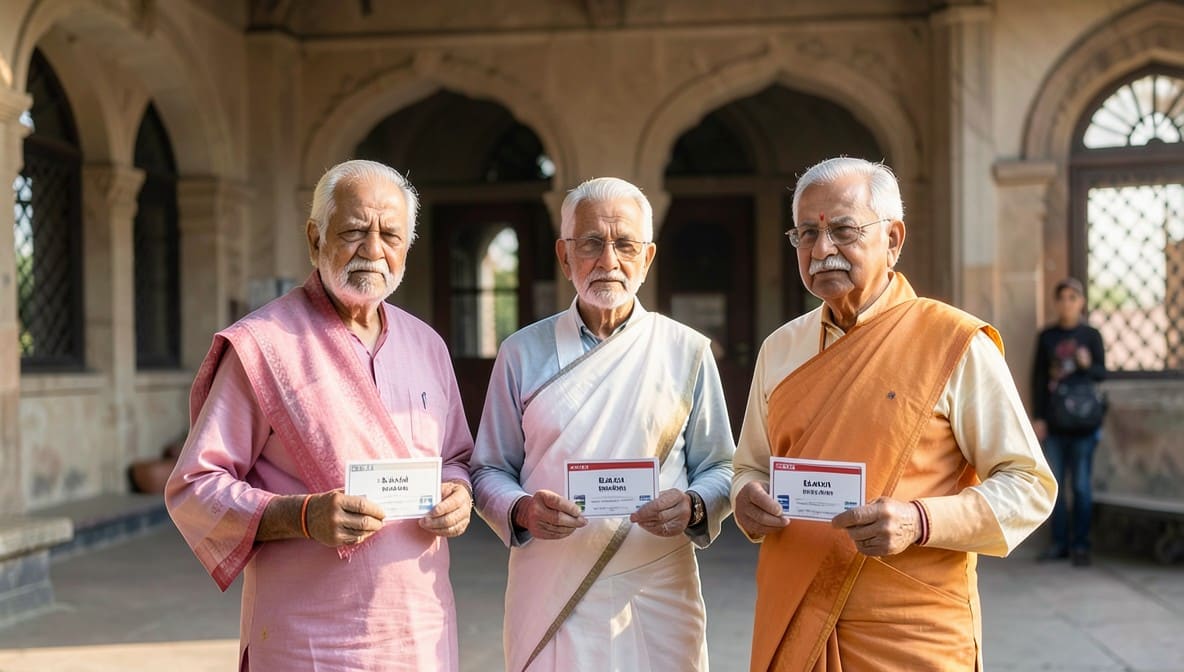
A significant precedent has been set by the Karnataka High Court in balancing technical compliance with the practical reality of legal practice. The Court permitted four senior advocates, enrolled with the Maharashtra State Bar Council but exclusively practicing in Belagavi for decades, to vote in the Belagavi Bar Association elections - despite a state-wide circular requiring Certificate of Practice from the Karnataka State Bar Council. The judgment underscores that substantive practice history may override procedural formalities in electoral rights.
Background & Facts
The Dispute
The dispute arose from the Belagavi Bar Association’s decision to exclude certain advocates from the Final Voters’ List for its 2026 elections, based on a circular issued by the Karnataka State Bar Council (KSBC) dated 16.08.2025. The circular mandated that only advocates holding a Certificate of Practice (COP) issued by KSBC were eligible to vote or contest elections in any Bar Association within Karnataka. The appellants, all senior advocates with decades of uninterrupted practice in Belagavi and surrounding districts, were excluded because they held COPs issued by the Maharashtra State Bar Council.
Key Facts
- The appellants in WA No. 100241 of 2026 are nine senior advocates, aged between 50 and 85 years, all enrolled with the Maharashtra State Bar Council between the 1970s and 1990s for personal or historical reasons.
- All appellants have practiced exclusively in Belagavi and other districts of Karnataka since enrollment.
- Eight of the nine appellants have been life members of the Belagavi Bar Association, with some having served as office bearers for multiple terms.
- Their names were included in the Provisional Voters’ List but excluded from the Final Voters’ List due to the KSBC circular.
- The appellants in WA No. 100234 of 2026 are seven other advocates with similar profiles, also excluded under the same circular.
- The Belagavi Bar Association elections are scheduled for 02.05.2026.
- The last date for filing nominations had already passed by the time the writ petitions were filed.
- The appellants filed writ petitions (WP No. 103102/2026 and WP No. 103140/2026) seeking interim relief to be included in the voters’ list.
- The Single Judge had not yet decided on the interim applications when the appeals were filed.
- Affidavits filed by the appellants revealed that seven of the nine in WA No. 100241 had previously voted in Maharashtra State Bar Council elections.
- The four appellants who had never voted in Maharashtra elections are: the first (Ashok Mahadevo Potdar, aged 85), the third (Samanath Gangaram Jayanache, aged 60), the eighth (Sharad B Desai, aged 61), and the ninth (Mrs. Sneha Sharad Desai, aged 50).
Procedural History
- 16.08.2025: KSBC issues circular mandating COP from KSBC for eligibility to vote/contest Bar Association elections in Karnataka.
- Early March 2026: Belagavi Bar Association publishes Provisional Voters’ List including all appellants.
- Late March 2026: Final Voters’ List issued, excluding appellants due to non-KSBC COP.
- 10.04.2026: Writ Petitions (WP No. 103102/2026 and WP No. 103140/2026) filed before Single Judge, seeking interim relief.
- 24.04.2026: Karnataka HC hears interim applications; records submissions from counsel.
- 27.04.2026: KSBC counsel submits that some appellants voted in Maharashtra elections.
- 28.04.2026: Affidavits filed by appellants confirming voting history.
- 28.04.2026: Karnataka HC delivers judgment on the writ appeals.
The Parties' Positions
For the Appellants
- Argued that their entire professional life has been spent practicing in Belagavi, Karnataka.
- Contended that their enrollment with Maharashtra Bar Council was a historical or personal choice, not reflective of actual practice location.
- Emphasized their long-standing membership and active participation in the Belagavi Bar Association for over 30 - 50 years.
- Asserted that the KSBC circular creates an artificial barrier inconsistent with the spirit of the Advocates Act, 1961.
- Highlighted that the Belagavi Bar Association itself had recognized them as eligible members until the circular.
For the Respondents
For the Karnataka State Bar Council
- Relied on Rule 8 and Rule 21 of the Certificate of Practice and Place of Practice Verification Rules, 2015.
- Argued that COP is mandatory for maintaining active membership status.
- Contended that advocates without KSBC COP are deemed non-practicing or defaulting under the Rules.
- Asserted that the circular is a valid exercise of statutory power under the Advocates Act.
For the Belagavi Bar Association
- Argued that the writ petitions were not maintainable as no notice had been issued to the Association.
- Claimed that the Court should not interfere once elections are notified.
- Suggested that the appellants should have exhausted remedies before the Association before approaching the Court.
Relief Sought
The appellants sought:
- Immediate inclusion in the Final Voters’ List for the Belagavi Bar Association elections scheduled on 02.05.2026.
- Interim direction to permit voting pending final adjudication of the writ petitions.
- Declaration that the KSBC circular is ultra vires or inapplicable to advocates practicing exclusively in Karnataka.
The Legal Issue
Can an advocate, enrolled with a State Bar Council outside Karnataka but practicing exclusively within Karnataka for decades and recognized as a life member of a local Bar Association, be denied the right to vote in that Association’s elections solely on the ground of holding a Certificate of Practice from another State?
Arguments Presented
For the Appellant
The appellants relied on the principle of substantive practice over technical compliance. They cited Bar Council of India v. A.K. Balaji to argue that the Advocates Act, 1961, contemplates practice based on actual location, not mere enrollment. They emphasized that the Belagavi Bar Association, which has existed for 150 years, had consistently recognized them as members. Their exclusion, they argued, was arbitrary and violated the doctrine of legitimate expectation. They further contended that the 2015 Rules do not explicitly bar advocates with COPs from other States from participating in local elections.
For the Respondent
The Karnataka State Bar Council invoked Rule 21 of the 2015 Rules, which permits the Council to exclude advocates from electoral rolls if they are listed as non-practicing or defaulting. It argued that COP is the sole legal proof of active practice and that allowing exceptions would undermine uniformity. The Belagavi Bar Association contended that the writ petitions were premature and that the Court lacked jurisdiction to interfere in internal electoral matters once the process had commenced.
The Court's Analysis
The Court acknowledged the technical validity of the KSBC circular under the 2015 Rules but declined to apply it rigidly in the specific circumstances of four appellants. It recognized that the circular, while procedurally sound, created an anomalous outcome for advocates who had no connection with Maharashtra beyond historical enrollment.
"These appellants who have not participated in any electoral activity other than in the Belagavi Bar Association must have an opportunity to cast vote without claiming any equity and the votes cast by them must be kept separately subject to the further Orders in the writ petitions."
The Court distinguished between the seven appellants who had previously voted in Maharashtra elections and the four who had not. It held that the former had demonstrated a clear association with another State Bar Council, thereby weakening their claim to exclusive practice in Karnataka. The latter four, however, had no such history and had spent their entire careers in Belagavi. The Court found their exclusion under the circular to be disproportionate and unjust.
The Court emphasized that the 2015 Rules do not explicitly prohibit voting rights based on COP from another State. It noted that the Belagavi Bar Association had itself included these advocates in its provisional list, indicating internal recognition of their membership. The Court declined to rule on the broader validity of the circular, stating that issue must be decided in the pending writ petitions. However, it intervened to prevent irreparable harm to the four appellants’ democratic rights within their own professional community.
The Verdict
The writ appeal in WA No. 100234 of 2026 was dismissed. The writ appeal in WA No. 100241 of 2026 was allowed in part. The first, third, eighth, and ninth appellants - Ashok Mahadevo Potdar, Samanath Gangaram Jayanache, Sharad B Desai, and Mrs. Sneha Sharad Desai - are permitted to cast their votes in the Belagavi Bar Association elections scheduled for 02.05.2026. Their votes shall be kept separately for counting, pending final adjudication of the writ petitions. This arrangement shall not create any equity in their favor or prejudice the respondents’ defense.
What This Means For Similar Cases
Practice Location Overrides Enrollment Formalities
- Practicing exclusively in one state for decades, even with enrollment elsewhere, may establish legitimate membership rights in local Bar Associations.
- Bar Councils cannot use COP requirements to mechanically exclude advocates with no real connection to the issuing State.
- Local Bar Associations retain discretion to recognize long-standing members, even if technical compliance is imperfect.
Interim Relief Is Available in Time-Sensitive Electoral Disputes
- Courts may grant interim relief in electoral matters even after nomination deadlines, if exclusion is arbitrary and irreparable harm is shown.
- The Court’s solution - separate counting of votes - offers a pragmatic middle path that preserves electoral integrity while protecting rights.
- Advocates facing similar exclusions should file writ petitions early and seek interim relief before elections are held.
Rule Interpretation Must Align with Purpose
- Statutory rules like the 2015 COP Rules must be interpreted in light of their purpose: ensuring active practice, not creating exclusionary barriers.
- Blanket application of rules without considering individual circumstances may violate Article 14 of the Constitution.
- Future Bar Council circulars must include exceptions for advocates with demonstrable, long-term local practice.