The Karnataka High Court has delivered a landmark ruling in a horrific case of child rape and murder, modifying a death sentence to life imprisonment without remission while affirming the gravity of the crime and clarifying the application of the 'rarest of rare' doctrine under Section 302 IPC and the POCSO Act. The judgment underscores the necessity of proportionality in sentencing and sets a critical precedent for compensation awards in sexual offences against minors.
Background & Facts
The Dispute
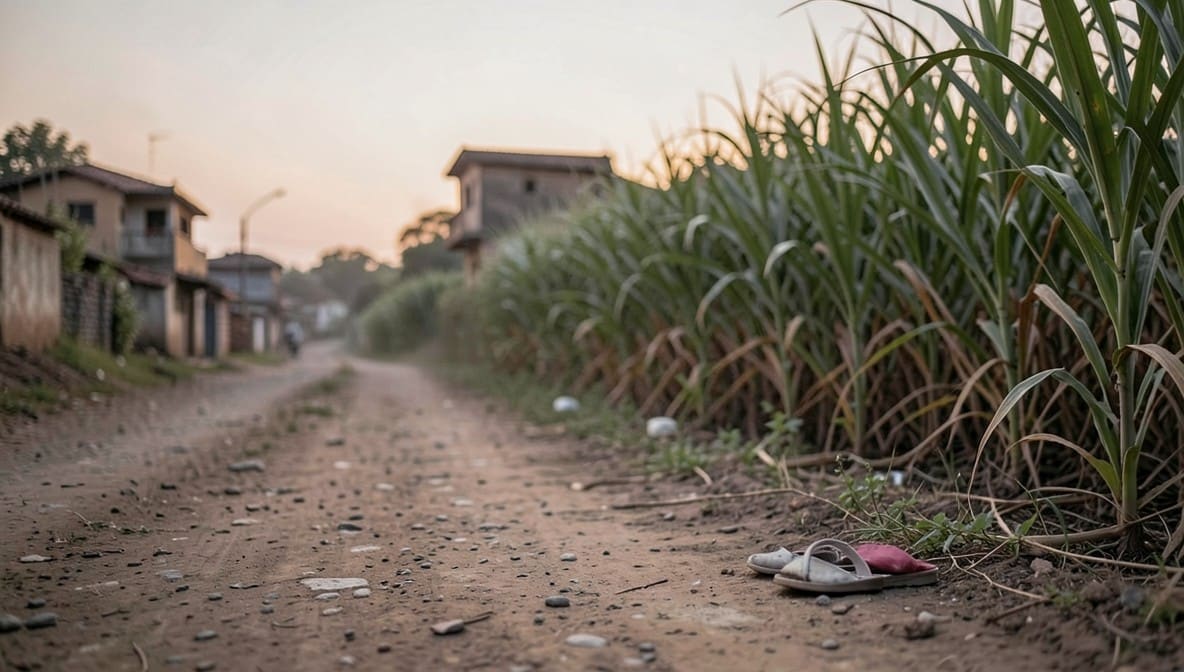
The accused, Uddappa s/o Ramappa Ganiger, aged 32, was charged with the abduction, aggravated penetrative sexual assault, and murder of a 3-year-old girl from Kurabgodi, Harugeri, Belagavi district. The incident occurred on 21.09.2017 at approximately 17:30 hours, when the child was playing near her home. The accused lured her with the promise of chocolate, purchased from the shop of CW16 (PW14), and took her to a sugarcane field owned by CW17 (PW15). There, he committed penetrative sexual assault and subsequently murdered her by smothering her mouth, nose, and eyes with mud to conceal the crime.
Key Facts
- The victim was the second daughter of PW1, the complainant, and granddaughter of PW7, the key eyewitness.
- PW7 observed the accused taking the child with chocolate in hand and reported her disappearance after 21:00 hours.
- The accused was apprehended by villagers on the same day and led police to the crime scene.
- The body was recovered from the sugarcane field with mud covering the face and torso.
- The victim’s chappals (MO1) and clothing (MO2) were recovered from the scene.
- Seized clothing of the accused (Ex.P13) tested positive for blood and mud stains.
- Forensic Science Laboratory (FSL) report (Ex.P51, Ex.P52) confirmed presence of blood and mud on the accused’s clothes.
- Post-mortem report (Ex.P29) by PW21 concluded cause of death as asphyxia due to antemortem gagging with mud.
- Vaginal smear (Ex.P30) detected spermatozoa, confirming recent sexual intercourse.
- Psychiatrist PW19 diagnosed the accused with perverted sexual behaviour.
- The accused made a voluntary statement (Ex.P32) before the police, admitting to the acts.
- The child was aged 3 years at the time of the offence.
Procedural History
- 21.09.2017: FIR registered under Section 363 IPC at 22:00 hours.
- 22.09.2017: Accused arrested; body recovered; seizure panchanamas conducted (Ex.P4, Ex.P13).
- 25.09.2017: Charge sheet filed under Sections 366A, 376, 302, 201 IPC and Sections 4, 6, 8, 12 of POCSO Act.
- 25.09.2024: Trial Court (Addl. District & Sessions Judge, Belagavi) convicted the accused on all counts and sentenced him to death under Section 302 IPC.
- 27.09.2024: Trial Court confirmed death sentence and referred the case to High Court under Section 366 CrPC (now Section 407 BNSS).
- 24.04.2026: Criminal Appeal and Criminal Referred Case heard and reserved.
- 28.04.2026: Judgment delivered by Karnataka High Court.
The Parties' Positions
For the Appellant
- Argued that prosecution evidence was inconsistent, circumstantial, and lacked corroboration.
- Contended that PW7 and PW1 were hearsay witnesses; PW11 turned hostile.
- Relied on Jai Prakash v. State of Uttarakhand to argue that rape-murder of a child does not automatically qualify as 'rarest of rare'.
- Asserted that mitigating circumstances (married, father of children) were ignored.
- Claimed trial court erred in convicting under multiple POCSO sections (4, 6, 8, 12) which merge into Section 6.
For the Respondent/State
- Emphasized the chain of circumstantial evidence: eyewitness account (PW7), purchase of chocolate (PW14), accused’s wet and blood-stained clothes, voluntary confession, recovery of body and evidence at his instance.
- Highlighted FSL and post-mortem reports confirming sexual assault and cause of death.
- Cited psychiatrist’s opinion on perverted sexual behaviour as evidence of irredeemable character.
- Relied on Rajendra Prahaladrao Wasnik v. State of Maharashtra and K.P. Tamilamara v. State to support death penalty.
- Argued that the brutality and vulnerability of the victim warranted the highest punishment.
Relief Sought
- Appellant sought acquittal or, alternatively, reduction of death sentence to life imprisonment.
- State sought confirmation of death sentence.
- Victim’s mother sought enhancement of compensation from Rs.3,00,000 to Rs.7,00,000 under POCSO Act.
The Legal Issue
The central questions were: (1) Whether the conviction under multiple sections of the POCSO Act (4, 6, 8, 12) is legally sustainable when Section 6 (aggravated penetrative sexual assault) already applies; and (2) Whether the murder of a 3-year-old child, following sexual assault, constitutes a 'rarest of rare' case warranting the death penalty under Section 302 IPC, given the accused’s age, family status, and psychiatric diagnosis.
Arguments Presented
For the Appellant
The appellant’s counsel contended that the prosecution’s case rested on circumstantial evidence with material contradictions, particularly between PW7 (grandmother) and PW1 (mother), who were not direct eyewitnesses. He argued that the trial court erred in convicting under Sections 4, 8, and 12 of the POCSO Act, which are subsumed under Section 6 for aggravated penetrative sexual assault. Citing Jai Prakash v. State of Uttarakhand, he submitted that even in cases involving rape and murder of a child, the Supreme Court has declined the death penalty where the accused is not a habitual offender and has family responsibilities. He further argued that the accused’s perverted sexual behaviour, while alarming, did not establish an irreversible threat to society beyond what life imprisonment without remission could address.
For the Respondent
The Additional SPP contended that the evidence was overwhelming and consistent: the accused was last seen with the victim, his clothes were stained with blood and mud, he led police to the body, and his confession was voluntary and corroborated by multiple witnesses. The prosecution relied on Rajendra Prahaladrao Wasnik v. State of Maharashtra, where the Supreme Court upheld the death penalty for the rape and murder of a 3-year-old girl, and Machhi Singh v. State of Punjab, which outlined aggravating factors including extreme brutality and victim’s vulnerability. The State argued that the accused’s perverted sexual behaviour, as confirmed by psychiatric evaluation, rendered him a continuing threat to society, justifying the death penalty under the 'rarest of rare' doctrine.
The Court's Analysis
The Court undertook a meticulous review of the evidence, emphasizing the principle that conviction must rest on proof beyond reasonable doubt. It found that the chain of circumstantial evidence - from PW7’s eyewitness account to the recovery of the body and forensic confirmation - was unbroken and mutually corroborative. The Court held that the trial court was justified in convicting the accused under Section 6 of the POCSO Act and Sections 302 and 201 IPC.
"The evidence of PW7, PW14, PW15, and the FSL and post-mortem reports collectively establish the accused’s guilt beyond reasonable doubt. The voluntary statement and discovery of the body at his instance are critical links in the chain."
However, the Court found a legal error in convicting the accused under Sections 4, 8, and 12 of the POCSO Act. It held that these provisions are ancillary and merge into the more serious offence under Section 6, which already encompasses the elements of aggravated penetrative sexual assault. Conviction under multiple sections for the same act violates the doctrine of merger and amounts to double punishment.
Regarding sentencing, the Court acknowledged the horrific nature of the crime: the victim was a 3-year-old child, the assault was brutal, and the murder was calculated to conceal the crime. The accused’s perverted sexual behaviour, as diagnosed by PW19, was deemed a significant aggravating factor. Yet, the Court distinguished this case from Rajendra Prahaladrao Wasnik and K.P. Tamilamara, noting that in those cases, the accused had no family ties or showed no remorse. Here, the accused was married with children, and while his conduct was depraved, the Supreme Court in Jai Prakash had declined the death penalty for a similar crime involving a 10-year-old child.
The Court emphasized that the 'rarest of rare' doctrine requires not just the gravity of the crime, but also the absence of any possibility of reformation. While the psychiatrist’s opinion suggested low reformative potential, the Court held that life imprisonment without remission - a sentence that ensures the accused never re-enters society - is a proportionate and sufficient response. The Court stated:
"The imposition of death penalty must be reserved for cases where society’s collective conscience is so shocked that it expects nothing less than the ultimate penalty. While this case is abhorrent, the availability of a sentence that ensures lifelong incarceration without remission satisfies the requirement of proportionality."
The Court also examined the Compensation Scheme for Women Victims/Survivors of Sexual Assault, 2018, and Section 33(8) of the POCSO Act read with Rule 9(4) of the POCSO Rules, 2020. It found the trial court’s award of Rs.3,00,000 inadequate given the statutory range of Rs.4,00,000 to Rs.7,00,000 for rape of a child under 12 years. The Court enhanced it to Rs.5,00,000 as a fair and just compensation.
The Verdict
The appellant’s appeal was allowed in part. The death sentence under Section 302 IPC was set aside and replaced with rigorous imprisonment for life without any remission until the end of the accused’s natural life, with a fine of Rs.20,000 for the offence under Section 6 of the POCSO Act. Convictions under Sections 4, 8, and 12 of the POCSO Act were quashed as they merged into Section 6. Sentences for other offences under IPC were confirmed to run concurrently. The Criminal Referred Case for confirmation of death sentence was rejected. Compensation to the victim’s mother was enhanced from Rs.3,00,000 to Rs.5,00,000, to be paid by the District Legal Services Authority, Belagavi, within 60 days.
What This Means For Similar Cases
Merger of POCSO Offences Is Mandatory
- Practitioners must now argue that multiple charges under Sections 4, 8, and 12 of the POCSO Act cannot be sustained when Section 6 (aggravated penetrative sexual assault) is invoked.
- Courts must apply the doctrine of merger to avoid multiplicity of punishment for a single transaction.
- Prosecutors should frame charges under the most serious applicable provision only.
Life Without Remission Is a Viable Alternative to Death in Child Rape-Murder
- The judgment establishes that even in cases of extreme brutality against children, life imprisonment without remission may be sufficient if the accused is not a habitual offender.
- Psychiatric evaluation of 'perverted sexual behaviour' alone does not mandate death; the availability of lifelong incarceration is a key mitigating factor.
- Courts must balance societal outrage with the constitutional requirement of proportionality under Article 21.
Compensation Under POCSO Must Reflect Statutory Minimums
- Compensation awards under Section 33(8) of the POCSO Act must be aligned with the 2018 Scheme’s prescribed range of Rs.4,00,000 - 7,00,000 for children under 12.
- Trial courts cannot arbitrarily award lower amounts; appellate courts will intervene if awards fall below statutory norms.
- Legal aid and DLSA must be proactively involved in ensuring timely disbursement.