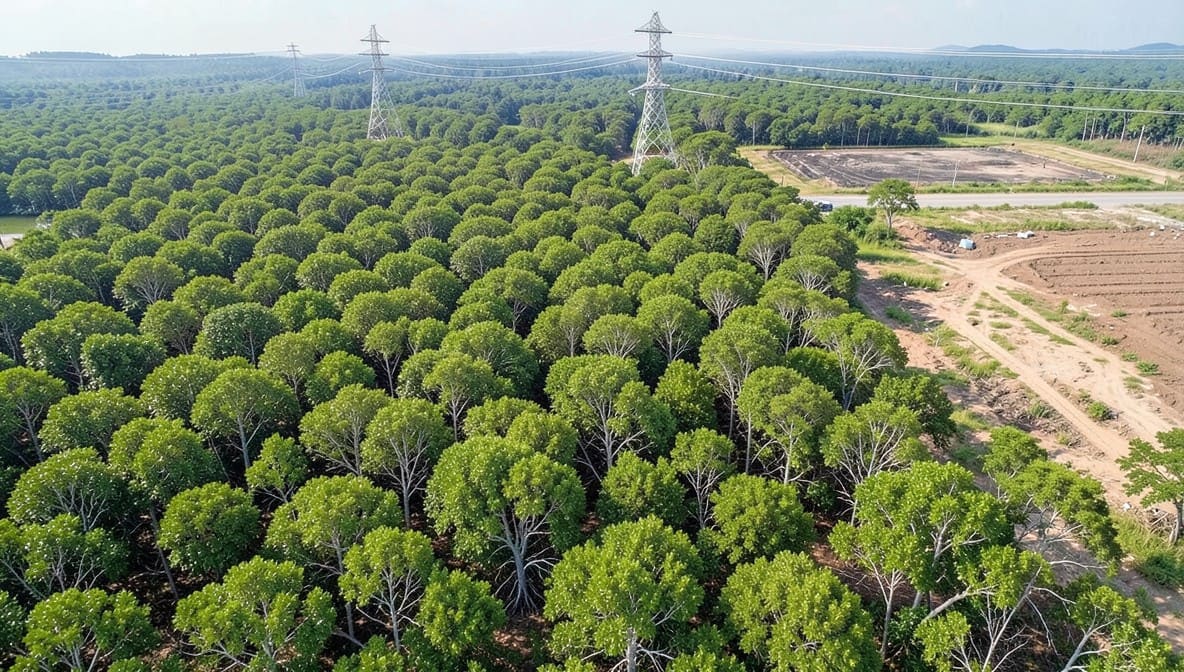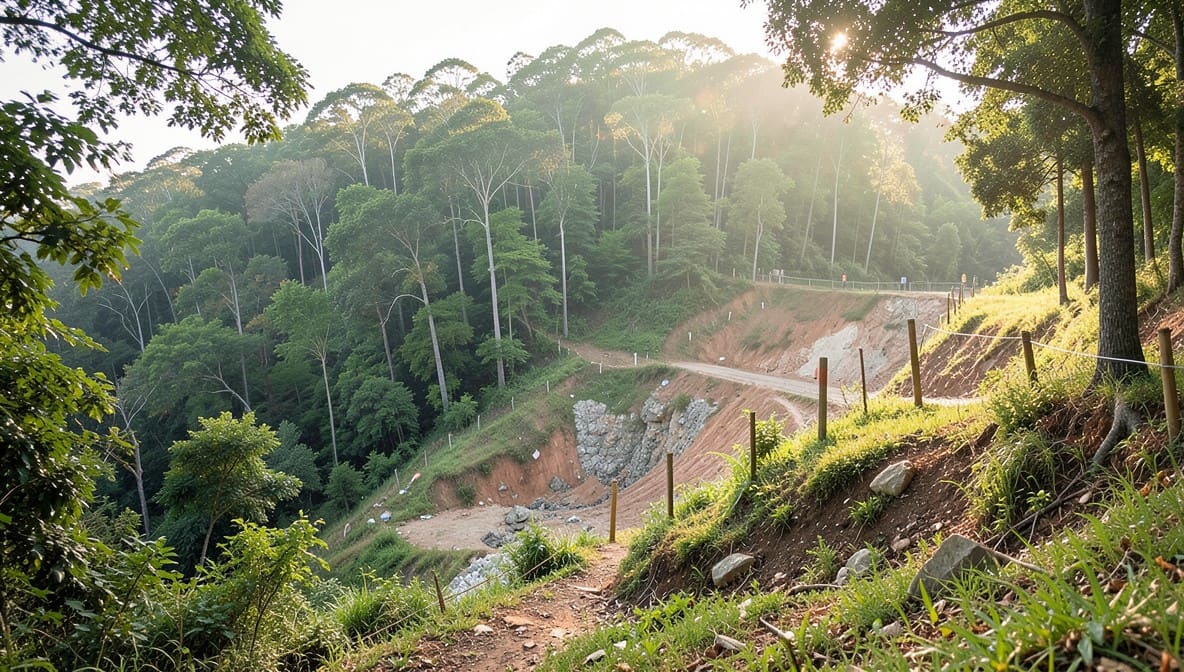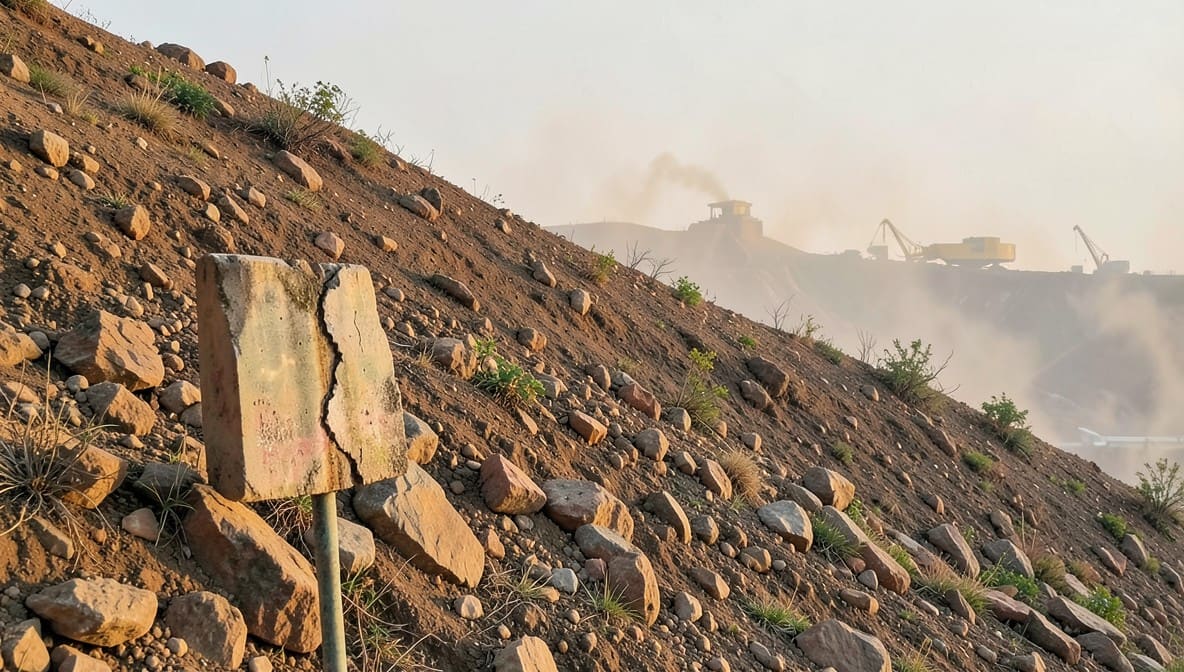
The Karnataka High Court has clarified that land declared as 'Reserved Land (Fodder Reserve)' under pre-independence forest regulations qualifies as forest land under the Forest (Conservation) Act, 1980, thereby requiring prior central government approval for any non-forest activity. This ruling reinforces the expansive interpretation of 'forest land' established by the Supreme Court in T.N. Godavarman Thirumulpad v. Union of India and has significant implications for mining, quarrying, and industrial projects on historically classified forest areas.
Background & Facts
The Dispute
The petitioner, M/s Anjanadri Stone Crushers, a registered partnership firm, holds a quarry lease (QL 2348-R1) over 8.20 acres in Survey No. 124 of Hadonahalli Village, Doddaballapura Taluk, Bengaluru Rural District, and a stone crusher licence over 1 acre on the same land. The respondents, including the Department of Mines and Geology and the Forest Department, issued communications in 2023 directing the petitioner to obtain Forest Clearance under the Forest (Conservation) Act, 1980, and threatened cancellation of the lease for operating without such clearance. The petitioner contends that the land is not forest land and that the lease was lawfully granted based on prior government clearances.
Key Facts
- The petitioner’s quarry lease (QL 2348-R1) was granted on the basis of a Revenue Opinion dated 28.04.2015 and a No Objection Certificate (NOC) dated 26.06.2015 from the Forest Department, which stated that 109.15 acres of Survey No. 124 were recorded as Government Hullubanni land and not part of reserve forest, land bank, or C&D forest.
- The stone crusher licence was granted on 27.07.2016 and extended till 31.03.2036 under the Karnataka Regulation of Stone Crushers Act, 2011 (as amended in 2020).
- The petitioner obtained Consent for Operation (CFO) from the Karnataka State Pollution Control Board.
- The land in question was originally declared a Village Forest under Section 31 of the Mysore Forest Regulation (XI of 1900) by notification dated 21.07.1927.
- On 04.09.1929, the Government of Mysore cancelled the Village Forest notification and simultaneously issued a new notification declaring the same land as 'Reserved Land (Fodder Reserve)' under Section 35 of the Mysore Forest Regulation, 1900.
- The 1929 notification, published in the Mysore Gazette, described the land as reserved for fodder purposes and included it within a defined boundary of 135 acres and 1 gunta.
- A 1933-34 Mysore Forest Survey map clearly shows the subject land within the demarcated forest boundary of the Hadonahalli Fodder Reserve.
- The petitioner has been operating since 2016, but in 2023, the Forest Department issued communications asserting that the land is forest land and that quarrying requires prior approval under the Forest (Conservation) Act, 1980.
Procedural History
- 27.07.2016: Stone crusher licence granted to petitioner.
- 28.04.2015: Revenue opinion and NOC issued by Forest Department confirming land as non-forest.
- 04.09.1929: Government of Mysore issues notification declaring land as 'Reserved Land (Fodder Reserve)' under Section 35 of Mysore Forest Regulation, 1900.
- 07.07.2023: Deputy Conservator of Forests (Respondent No. 7) issues communication to Deputy Director (Respondent No. 5) stating that the land is District Forest and non-forest activities require FC Act clearance.
- 05.09.2023: Director of Mines and Geology (Respondent No. 4) issues impugned communication referencing the 07.07.2023 communication and recommending cancellation of QL 2348-R1.
- 30.09.2023: Deputy Director (Respondent No. 5) issues endorsement directing petitioner to obtain Forest Clearance under Rule 8(2) of Karnataka Minor Mineral Concession Rules, 1994.
- 12.04.2023: Petitioner files Writ Petition No. 4619 of 2024 before the Karnataka High Court.
- 30.04.2026: Judgment pronounced by the Division Bench.
The Parties' Positions
Petitioner: Argues that the land is not forest land because:
- The 1929 notification declared it as 'Fodder Reserve', not 'Reserved Forest' under the Indian Forest Act.
- The term 'fodder reserve' implies land for grazing and fodder collection, not forest cover.
- The land was recorded as Government Hullubanni in revenue records and was never classified as reserve forest under the Indian Forest Act, 1927.
- The lease and licence were granted in good faith based on prior clearances.
Respondents: Contend that:
- The 1929 notification under Section 35 of the Mysore Forest Regulation, 1900, declared the land as 'Reserved Land' within the statutory framework of District Forests.
- The term 'Reserved Land' under the 1900 Regulation, read with the Rules framed thereunder, imposes restrictions identical to those on forest land: no felling, no clearing, no quarrying without permission.
- The Supreme Court in T.N. Godavarman held that 'forest land' includes any area recorded as forest in government records, irrespective of classification.
- The 1933-34 survey map confirms the land lies within the demarcated forest boundary.
Relief Sought
The petitioner seeks:
- Quashing of the impugned communications dated 05.09.2023, 07.07.2023, and endorsement dated 30.09.2023.
- Directions to respondents not to interfere with quarrying and stone crushing activities.
- Directions to issue Mineral Dispatch Permits through the Integrated Lease Management System (ILMS).
The Legal Issue
The central question was whether land declared as 'Reserved Land (Fodder Reserve)' under Section 35 of the Mysore Forest Regulation, 1900, constitutes 'forest land' under the Forest (Conservation) Act, 1980, thereby requiring prior central government approval for non-forest activities such as quarrying.
Arguments Presented
For the Petitioner
The petitioner’s senior counsel, Sri Vivek Reddy, argued that the term 'Reserved Land (Fodder Reserve)' under the 1929 notification was a limited administrative designation for fodder collection and did not equate to 'forest' under the FC Act. He emphasized that the land was recorded as Hullubanni in revenue records, lacked dense vegetation, and was never notified as a reserve forest under the Indian Forest Act, 1927. He relied on the principle that statutory interpretation must be context-specific and that the FC Act’s application should not be extended beyond its legislative intent. He further contended that the petitioner’s reliance on prior clearances from the Revenue and Mines Departments should be protected under the doctrine of legitimate expectation.
For the Respondent
The Additional Government Advocate, Smt. Niloufer Akbar, argued that the 1929 notification under Section 35 of the Mysore Forest Regulation, 1900, placed the land under special protection with restrictions identical to those applicable to forest land: prohibition on felling, clearing, quarrying, and removal of forest produce without permission. She cited Rule 6 and Rule 8 of the General Rules, 1901, which required Forest Department concurrence for any alteration of reserved land. She emphasized that the Supreme Court in T.N. Godavarman had held that 'forest land' includes any area recorded as forest in government records, regardless of ownership or classification. The 1933-34 survey map, she argued, confirmed the land’s inclusion within a demarcated forest boundary, making it subject to the FC Act.
The Court's Analysis
The Court began by affirming the binding precedent in T.N. Godavarman Thirumulpad v. Union of India, which held that the term 'forest' under the FC Act must be understood broadly to include any area recorded as forest in government records, irrespective of ownership or classification. The Court observed that the FC Act was enacted to prevent ecological degradation and that its provisions apply to all forests, whether designated as reserved, protected, or otherwise.
The Court then undertook a detailed textual and contextual analysis of the Mysore Forest Regulation, 1900, and the Rules framed under Section 35. It noted that Section 35 empowered the Government to place land under 'special protection' for purposes including safeguarding the supply of timber, fuel, or fodder. Rule 6 of the General Rules, 1901, defined 'reserved land' as land notified under Section 4 (for State Forests) or land specially declared under Rule 6 for protection of timber, fuel, fodder, hill sides, or water supplies.
"Rule 6 refers to lands which are classified under Rule 2 of the Rules, which are required to be placed under special protection either in view of constituting a State Forest or to safeguard the supply of timber, fuel or fodder, or for the purpose of protecting hill sides, or water supplies."
The Court held that the 1929 notification declaring the land as 'Reserved Land (Fodder Reserve)' fell squarely within this framework. The restrictions imposed under Rules 7 and 8 - prohibiting clearing, felling, quarrying, and removal of forest produce without Forest Department consent - were indistinguishable from those applicable to reserved forests under the Indian Forest Act.
The Court rejected the petitioner’s argument that 'fodder reserve' implies non-forest land, noting that the statutory scheme under the Mysore Regulation treated such land as part of District Forests under Section 2(13). The Court emphasized that the cancellation of the Village Forest notification and simultaneous declaration as Reserved Land indicated an intent to reclassify, not to declassify, the land from forest protection.
The 1933-34 survey map, which clearly demarcated the land within the forest boundary, further corroborated the Forest Department’s position. The Court concluded that the land, though not densely wooded, was legally and functionally a forest under the expansive definition in T.N. Godavarman.
The Verdict
The petition was dismissed. The Court upheld the impugned communications dated 05.09.2023, 07.07.2023, and endorsement dated 30.09.2023, holding that the subject land qualifies as forest land under the Forest (Conservation) Act, 1980. The petitioner is required to obtain prior approval from the Central Government under Section 2 of the FC Act before resuming quarrying or stone crushing activities. No mineral dispatch permits may be issued until such clearance is obtained.
What This Means For Similar Cases
Reserved Land Under Pre-Independence Laws Is Forest Land
- Practitioners must treat any land declared as 'Reserved Land', 'Fodder Reserve', or 'District Forest' under pre-1947 state forest regulations as potentially qualifying as forest land under the FC Act.
- Revenue records alone (e.g., Hullubanni, Kharab) cannot override statutory forest notifications issued under forest enactments.
- The burden shifts to project proponents to prove that the land was never placed under any form of forest protection, even if no trees are present.
Due Diligence Must Include Historical Forest Notifications
- Before acquiring or commencing operations on land, legal due diligence must include checking:
- Gazette notifications under pre-independence forest regulations (Mysore, Bombay, Madras, etc.)
- Historical forest survey maps archived with the Forest Department
- Any prior declarations as Village Forest, District Forest, or Reserved Land
- Failure to do so may result in abrupt suspension of operations and penalties under the FC Act.
FC Act Applies Even Without Vegetation
- The presence of trees is not determinative. The Godavarman principle applies to any land recorded as forest in government records, regardless of current land use or vegetation.
- Quarrying, mining, and infrastructure projects on land historically notified as reserved under any forest law now require FC Act clearance, even if the land is barren or used for grazing.
Legal Certainty Requires Central Clearance
- State-level clearances from Revenue, Mines, or Environment Departments are insufficient if the land is classified as forest under the FC Act.
- The only valid clearance is from the Ministry of Environment, Forest and Climate Change under Section 2 of the FC Act.
- Any project proceeding without such clearance is vulnerable to quashing and criminal liability under Section 3 of the FC Act.