The Karnataka High Court has clarified that mere possession of a mortgaged property under the SARFAESI Act does not confer ownership or an automatic right to have the lender’s name entered in revenue records. This judgment reinforces the distinction between possession under security enforcement and legal title, setting a critical precedent for housing finance companies and revenue authorities.
Background & Facts
The Dispute
The petitioner, Motilal Oswal Home Finance Limited (formerly Aspire Home Finance Corporation Ltd.), is a registered housing finance company under the Companies Act, 2013. It extended a loan to Shreenivas Kulkarni and Laxmi, secured by a mortgage over a property located in Ganagapura, Taluk Afzalpur, District Kalaburagi. Upon default in repayment, the petitioner initiated proceedings under Section 14 of the Securitization and Reconstruction of Financial Assets and Enforcement of Security Interest Act, 2002 (SARFAESI Act, 2002). The petitioner obtained possession of the property through an order passed by the jurisdictional Magistrate Court, as permitted under Section 14 of the SARFAESI Act.
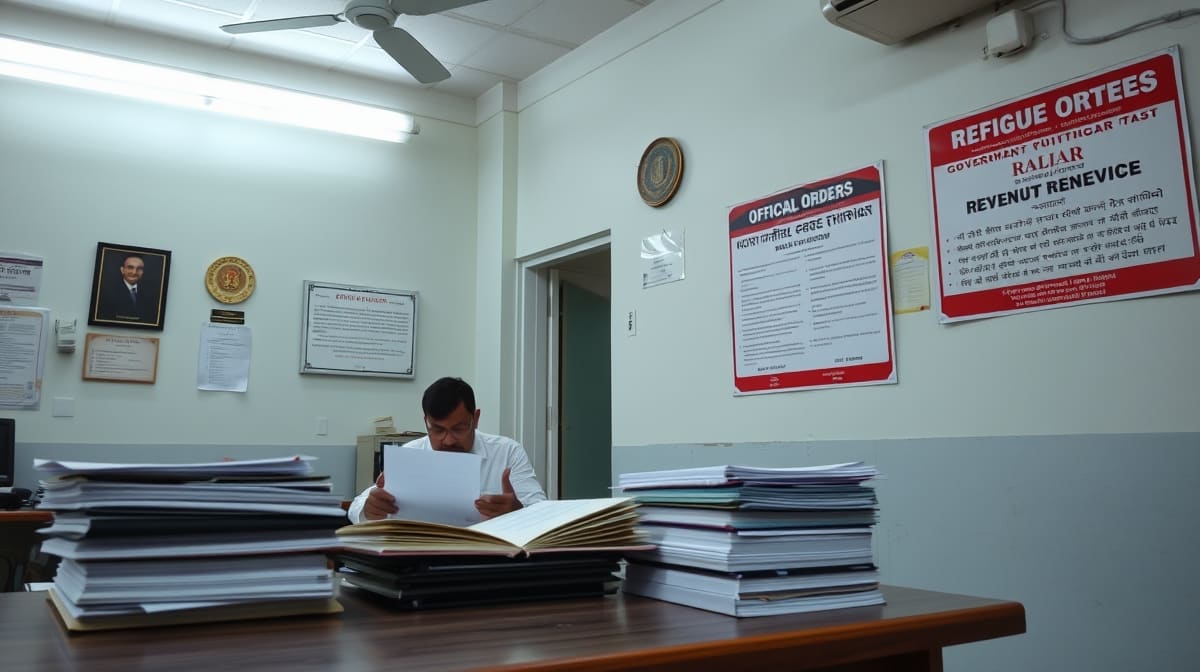
Thereafter, the petitioner submitted a representation dated 19.06.2025 (Annexure-P) to the second respondent, the Panchayat Development Officer, seeking entry of its name in the revenue records (Khata) of the property. The representation was not considered or responded to by the respondent.
Key Facts
- The loan was availed by Shreenivas Kulkarni and Laxmi against mortgage of the subject property
- Default occurred after disbursement; no repayment was made
- Possession of the property was taken by the petitioner under Section 14 of the SARFAESI Act, 2002
- The petitioner filed Annexure-P on 19.06.2025 seeking Khata entry in its name
- The second respondent did not respond to the representation
- The petitioner has no title deed or sale deed in its name; only possession under SARFAESI Act
Procedural History
- 19.06.2025: Representation (Annexure-P) submitted to Panchayat Development Officer seeking Khata entry
- No response received from respondent No.2
- 2026: Writ Petition No. 201166 of 2026 filed before the Karnataka High Court, Kalaburagi Bench under Articles 226 and 227 of the Constitution
The Parties' Positions
Petitioner’s Position: The petitioner, having lawfully taken possession under Section 14 of the SARFAESI Act, is entitled to have its name recorded in the revenue records as the de facto holder of the property. The non-consideration of Annexure-P violates principles of natural justice and administrative fairness.
Respondent’s Position: The petitioner is not the owner of the property. Under the Karnataka Land Revenue Code, only the legal owner or transferee through a registered instrument can be entered in the Khata. Possession under SARFAESI Act does not equate to ownership. The representation will be considered if given reasonable time.
Relief Sought
The petitioner sought a writ of mandamus directing respondent No.2 to consider Annexure-P dated 19.06.2025 and issue Khata in its name.
The Legal Issue
The central question was whether possession of a property under Section 14 of the SARFAESI Act, 2002 confers a legal right to have the secured creditor’s name entered in the revenue records (Khata), or whether such entry requires proof of ownership or transfer under applicable land revenue laws.
Arguments Presented
For the Petitioner
The petitioner relied on the principle that possession under SARFAESI Act is a statutory right recognized by law, and that the purpose of recording the name in revenue records is to facilitate lawful management and protection of the secured asset. It argued that refusal to consider the representation amounts to administrative inaction, violating Article 14 of the Constitution. It cited Mardia Chemicals Ltd. v. Union of India to emphasize that SARFAESI Act is a special law intended to expedite recovery, and administrative barriers like non-consideration of Khata applications defeat this objective.
For the Respondent
The respondent contended that the Khata is a revenue record reflecting legal ownership or lawful title, not possession. Under the Karnataka Land Revenue Code, only persons holding title through sale, inheritance, or court decree can be entered in Khata. The petitioner, as a secured creditor, holds only a charge over the property and not ownership. The respondent further submitted that the representation would be processed in accordance with law if given a reasonable opportunity.
The Court's Analysis
The Court examined the distinction between possession under the SARFAESI Act and ownership under land revenue law. It noted that Section 14 of the SARFAESI Act permits a secured creditor to take possession of the secured asset without court intervention, but this does not transfer title. The Court emphasized that the Khata is not a title document but a revenue record for taxation and administrative purposes, and its entry is governed by state land revenue statutes.
"The possession obtained under Section 14 of the SARFAESI Act is a statutory right for enforcement of security interest, but it does not, by itself, confer ownership or title over the property. The revenue records must reflect legal ownership as per the Karnataka Land Revenue Code."
The Court acknowledged the petitioner’s legitimate interest in having its name recorded for practical purposes - such as paying property taxes, preventing third-party encroachments, and facilitating eventual sale or auction. However, it held that such an entry cannot be mandated as a matter of right. Instead, the Court found that the respondent’s failure to even consider the representation constituted a failure of administrative duty.
The Court rejected the notion that the petitioner must first obtain a court decree of ownership before seeking Khata entry. It held that the representation must be evaluated on its merits under applicable revenue rules, including whether the petitioner qualifies as a person in lawful possession entitled to such entry under any provision of the Karnataka Land Revenue Code.
The Verdict
The writ petition was allowed. The Court directed respondent No.2 to consider the representation dated 19.06.2025 and pass appropriate orders in accordance with law, as expeditiously as possible, but not later than three months from the date of receipt of a copy of this order. No costs were awarded.
What This Means For Similar Cases
Administrative Inaction Cannot Be Justified by Legal Technicalities
- Lenders under SARFAESI Act must submit formal representations for Khata entry even without title
- Revenue authorities must process such representations within a reasonable time, not ignore them
- Non-response to representations violates Article 14 and the duty of fair administrative action
Possession ≠ Ownership in Revenue Records
- SARFAESI Act possession does not override land revenue laws on title
- Khata entries require compliance with state-specific land revenue codes
- Lenders should not assume automatic entitlement to revenue records upon taking possession
Procedural Clarity for Housing Finance Companies
- Maintain detailed records of SARFAESI proceedings and possession notices
- Submit Khata applications with supporting documents (possession notice, loan agreement, default proof)
- Follow up with written reminders if no response is received within 30 days
- Consider filing writ petitions if administrative delay exceeds six weeks