High Courts judgments

10232 High Courts judgments explained in plain English: what was decided, the law applied and why it matters. Page 82 of 427.

Legitimate Expectation | Interim Service Continuation Pending Superannuation Age Upgrade for Public Sector Employees : Andhra Pradesh HC
Case Law Analysis
|Andhra Pradesh High Court

Legitimate Expectation | Interim Service Continuation Pending Superannuation Age Upgrade for Public Sector Employees : Andhra Pradesh HC

The Andhra Pradesh High Court has directed that public sector employees be allowed to continue working beyond 60 years until the state formally decides on extending superannuation to 62, recognizing their legitimate expectation based on a binding ministerial recommendation. This interim relief protects employees from abrupt termination despite pending rule amendments, setting a critical precedent for administrative fairness in service law.

Article 235 | Registrars of Labour Courts and Industrial Tribunals Belong to Judicial Service; High Court Holds Exclusive Control Over Transfers : GAHC
Case Law Analysis
|Gauhati High Court

Article 235 | Registrars of Labour Courts and Industrial Tribunals Belong to Judicial Service; High Court Holds Exclusive Control Over Transfers : GAHC

The Gauhati High Court has ruled that Registrars in Labour Courts and Industrial Tribunals are part of the judicial service under Article 235, stripping the Labour Department of any authority to transfer them. This decision reinforces judicial independence by placing administrative control firmly with the High Court, setting a precedent for similar tribunals across India.

Legitimate Expectation | PSU Employees Entitled to Service Continuation Pending Government Decision on Superannuation Extension from 60 to 62: Andhra Pradesh HC
Case Law Analysis
|Andhra Pradesh High Court

Legitimate Expectation | PSU Employees Entitled to Service Continuation Pending Government Decision on Superannuation Extension from 60 to 62: Andhra Pradesh HC

The Andhra Pradesh High Court has ruled that PSU employees may continue in service beyond 60 years when the state government has formally recommended extending superannuation to 62, even before formal rule amendments. This establishes that a clear, high-level recommendation creates a legitimate expectation protecting employees from abrupt retirement, significantly strengthening job security for public sector workers awaiting policy finalization.

Section 17A SARFAESI Act | Chairperson of DRTAT Cannot Grant Stay on Sale Certificate - Only Appellate Tribunal Can, Subject to Pre-Deposit: Jharkhand HC
Case Law Analysis
|Jharkhand High Court

Section 17A SARFAESI Act | Chairperson of DRTAT Cannot Grant Stay on Sale Certificate - Only Appellate Tribunal Can, Subject to Pre-Deposit: Jharkhand HC

The Jharkhand High Court has ruled that the Chairperson of the Debts Recovery Appellate Tribunal lacks judicial authority under Section 17A to stay the issuance of a sale certificate under SARFAESI Act. Only the Appellate Tribunal itself, after compliance with the mandatory pre-deposit requirement under Section 17(2), may grant such relief - reinforcing the separation between administrative and judicial functions in debt recovery proceedings and safeguarding secured creditors' enforcement rights.

AERC Regulations 2019 | Representation Against Electricity Provider Must Be Treated as Formal Compensation Claim; Fault-Based Liability Triggers Rs. 4 Lakh + 12% Interest : GAHC
Case Law Analysis
|Gauhati High Court

AERC Regulations 2019 | Representation Against Electricity Provider Must Be Treated as Formal Compensation Claim; Fault-Based Liability Triggers Rs. 4 Lakh + 12% Interest : GAHC

The Gauhati High Court has ruled that a bereaved family’s representation to an electricity licensee must be treated as a formal compensation claim under AERC Regulations 2019, triggering mandatory adjudication of fault. If liability is proven, the licensee is obligated to pay Rs. 4 lakh plus 12% interest - setting a precedent for procedural fairness in statutory electrical fatality claims.

Joint Family Property Recovery Under Bihar Excise Act | Deemed Possession Abolished Post-2018 Amendment Bars Conviction Without Individual Control : Patna HC
Case Law Analysis
|Patna High Court

Joint Family Property Recovery Under Bihar Excise Act | Deemed Possession Abolished Post-2018 Amendment Bars Conviction Without Individual Control : Patna HC

The Patna High Court has ruled that recovery of liquor from a joint family home cannot sustain a charge under the Bihar Excise Act after the 2018 amendment eliminated deemed possession. Without evidence linking the accused to exclusive control or knowledge of the contraband, mere presence in a shared dwelling is insufficient for prosecution - a critical safeguard for innocent family members caught in excise raids.

Section 67-A U.P. Revenue Code | Authorities Must Decide Shelter Applications Within 6 Weeks Under Due Process Mandate : Allahabad HC
Case Law Analysis
|Allahabad High Court

Section 67-A U.P. Revenue Code | Authorities Must Decide Shelter Applications Within 6 Weeks Under Due Process Mandate : Allahabad HC

The Allahabad High Court has ruled that demolition of homes cannot proceed until authorities conclusively decide pending applications under Section 67-A of the U.P. Revenue Code, ensuring the right to shelter is protected by enforceable timelines. This binds revenue officials to act with urgency, preventing arbitrary evictions and giving legal teeth to procedural fairness in land disputes.

Caretaker Possession Lacks Legal Protection Without Title or Lease | No Injunction Granted on Mere Occupation : Bombay HC
Case Law Analysis
|Bombay High Court

Caretaker Possession Lacks Legal Protection Without Title or Lease | No Injunction Granted on Mere Occupation : Bombay HC

The Bombay High Court has ruled that long-standing or affectionate possession by a caretaker, without any legal title or lease, cannot justify an injunction against the true owner. Possession must be surrendered upon demand, reinforcing that mere physical control does not equate to lawful right under property law - a critical clarification for landlords, property managers, and tenants in urban disputes.

Bail Granted for Non-Appearance Due to Counsel's Error | Article 21 & Procedural Fairness Protect Accused Despite Serious IPC Offences : Allahabad HC
Case Law Analysis
|Allahabad High Court

Bail Granted for Non-Appearance Due to Counsel's Error | Article 21 & Procedural Fairness Protect Accused Despite Serious IPC Offences : Allahabad HC

The Allahabad High Court granted bail to an accused facing serious IPC charges after finding that non-appearance in court stemmed solely from counsel's miscommunication, not intentional defiance. This ruling reinforces that procedural fairness under Article 21 must accommodate human error in legal representation, especially when the accused offers a credible undertaking to cooperate - setting a precedent for accused persons caught in systemic communication failures.

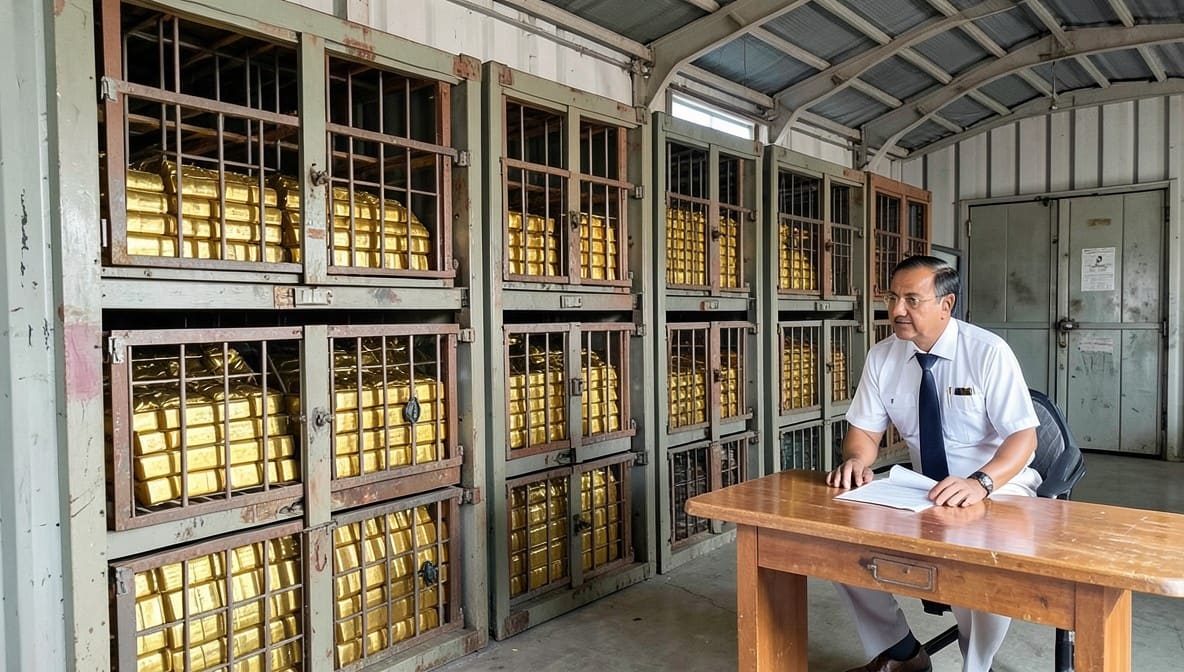
Section 135(1)(e)(i) Customs Act | Bail Granted When Gold Valuation Below Rs.1 Crore Corrects Misassessment: Allahabad HC
Case Law Analysis
|Allahabad High Court

Section 135(1)(e)(i) Customs Act | Bail Granted When Gold Valuation Below Rs.1 Crore Corrects Misassessment: Allahabad HC

The Allahabad High Court granted bail in a Customs Act case after finding the department's gold valuation exceeded Rs.1 crore only due to erroneous calculation, making the offence bailable under Section 135(1)(e)(i). This reinforces that accurate valuation, not speculative assessment, determines bailability in smuggling cases - a critical safeguard for accused facing prolonged custody.

No Cogent Evidence of Financial Gain | Bail Granted Under BNS Sections 318(4), 316(2) & 338 for Job Fraud Allegations, Citing Article 21: Allahabad HC
Case Law Analysis
|Allahabad High Court

No Cogent Evidence of Financial Gain | Bail Granted Under BNS Sections 318(4), 316(2) & 338 for Job Fraud Allegations, Citing Article 21: Allahabad HC

The Allahabad High Court granted bail in a job fraud case under the Bharatiya Nagarik Suraksha Sanhita, holding that the absence of any credible evidence showing the accused received the alleged sum renders pre-trial detention disproportionate. This reinforces that Article 21’s right to liberty prevails over speculative accusations in non-violent economic offences, especially where cooperation is assured and custody has exceeded six months.

Non-Bailable Warrant | Bail Application Must Be Decided Expeditiously Within 30 Days of Appearance : Allahabad HC
Case Law Analysis
|Allahabad High Court

Non-Bailable Warrant | Bail Application Must Be Decided Expeditiously Within 30 Days of Appearance : Allahabad HC

The Allahabad High Court mandates that trial courts decide bail applications filed within 30 days of an accused's appearance under a non-bailable warrant with urgency, citing Supreme Court and HC precedents on undue delay. This directive reinforces Article 21 rights by preventing prolonged detention pending bail hearings, directly impacting accused persons in non-bailable offences across Uttar Pradesh.

CrPC 116 | Delay Condoned for Illiterate, Landless Petitioners Due to Lawyer’s Illness and Legal Ignorance : Allahabad HC
Case Law Analysis
|Allahabad High Court

CrPC 116 | Delay Condoned for Illiterate, Landless Petitioners Due to Lawyer’s Illness and Legal Ignorance : Allahabad HC

The Allahabad High Court condoned a seven-year delay in filing an appeal under CrPC 116 for 12 landless, illiterate petitioners, recognizing that their failure to act stemmed from their lawyer’s illness and complete lack of legal awareness. The court’s decision affirms that procedural rigidity must yield to substantive justice when poverty and vulnerability undermine access to legal recourse, setting a vital precedent for marginalized litigants.

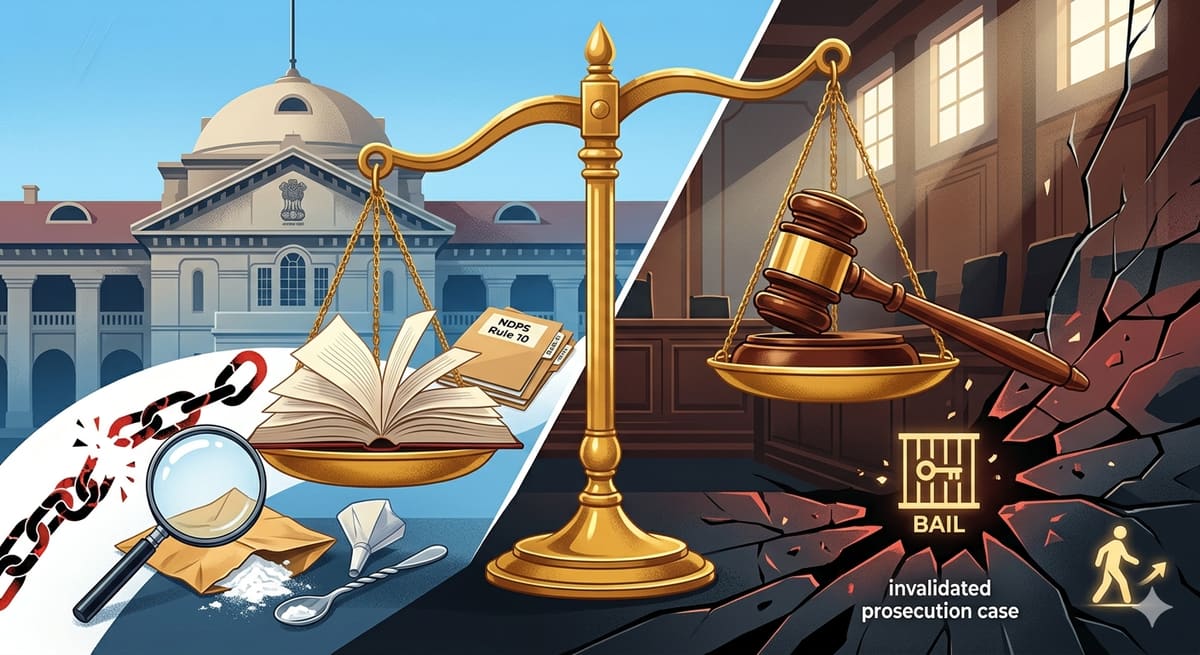
NDPS Rules 9-11 | Irregular Sampling Invalidates Prosecution Case for Bail: Allahabad HC
Case Law Analysis
|Allahabad High Court

NDPS Rules 9-11 | Irregular Sampling Invalidates Prosecution Case for Bail: Allahabad HC

The Allahabad High Court granted bail after finding that forensic samples were drawn in violation of mandatory NDPS Rules 9-11, which require magistrate-supervised, package-specific sampling. This ruling reinforces that procedural integrity in evidence handling is non-negotiable in NDPS cases, even where contraband is confirmed, protecting accused persons from tainted prosecutions.

Juvenile Justice Act Section 15 | Age Over 16 Triggers Adult Trial in Children's Court Under POCSO; No Quashing Permitted : Allahabad HC
Case Law Analysis
|Allahabad High Court

Juvenile Justice Act Section 15 | Age Over 16 Triggers Adult Trial in Children's Court Under POCSO; No Quashing Permitted : Allahabad HC

When the Juvenile Justice Board determines a person is above 16 years, the law mandates trial as an adult in the Children's Court under the POCSO Act - proceedings cannot be quashed merely because the accused claims juvenile status. This ruling closes a procedural loophole and reinforces that age determination by the JJB is final for forum allocation, binding all subsequent courts.

Bail Granted in Matrimonial Dispute Pending Mediation | No Grievous Injury & Clean Record Justify Release Under BNS & DP Act : Allahabad HC
Case Law Analysis
|Allahabad High Court

Bail Granted in Matrimonial Dispute Pending Mediation | No Grievous Injury & Clean Record Justify Release Under BNS & DP Act : Allahabad HC

The Allahabad High Court granted bail to an accused in a matrimonial case under the Bharatiya Nagarik Suraksha Sanhita and Dowry Prohibition Act, emphasizing that pending mediation, absence of grievous injury, and a clean criminal record collectively outweigh the gravity of the charges. This reinforces that mediation-backed settlements in marital disputes can justify bail even in non-bailable offences, offering a pathway for de-escalation without compromising trial integrity.

Article 21 | Lawful Occupant Entitled to Electricity Connection Without Title Deed: Allahabad HC
Case Law Analysis
|Allahabad High Court

Article 21 | Lawful Occupant Entitled to Electricity Connection Without Title Deed: Allahabad HC

The Allahabad High Court has ruled that access to electricity is a fundamental right under Article 21, and authorities cannot deny connection to a lawful occupant solely due to lack of title deed. This sets a critical precedent for vulnerable residents-especially women and displaced persons-in securing basic utilities regardless of property ownership disputes.

NDPS Act Section 50 + No Incriminating Evidence on Person | Bail Granted Despite Contraband in Vehicle, Citing Procedural Violations and Article 21 : Allahabad HC
Case Law Analysis
|Allahabad High Court

NDPS Act Section 50 + No Incriminating Evidence on Person | Bail Granted Despite Contraband in Vehicle, Citing Procedural Violations and Article 21 : Allahabad HC

The Allahabad High Court granted bail to an accused under the NDPS Act where no drugs were found on her person, the recovery lacked statutory compliance under Section 50, and her confessional statement was inadmissible. This reinforces that mere presence in a vehicle with contraband, without personal possession or corroborating evidence, cannot sustain denial of bail - especially when procedural safeguards are breached, protecting innocent bystanders from overreach.

Incomplete Circumstantial Chain + Unexplained FIR Delay Justify Bail Under BNSS Section 483 | Allahabad HC
Case Law Analysis
|Allahabad High Court

Incomplete Circumstantial Chain + Unexplained FIR Delay Justify Bail Under BNSS Section 483 | Allahabad HC

The Allahabad High Court granted bail in a murder case under BNSS where the prosecution relied solely on last-seen evidence, with no corroborative material, no CCTV, and a four-day unexplained delay in filing the FIR. This reinforces that procedural lapses and fragmented circumstantial evidence, even in serious offences, can defeat prima facie case requirements under Section 483, protecting accused persons from prolonged detention without concrete proof.

General Dying Declaration + Hostile Witnesses Invalidate Prima Facie Case | Bail Granted Under BNSS Section 483 in Acid Attack Case : Allahabad HC
Case Law Analysis
|Allahabad High Court

General Dying Declaration + Hostile Witnesses Invalidate Prima Facie Case | Bail Granted Under BNSS Section 483 in Acid Attack Case : Allahabad HC

The Allahabad High Court granted bail in a severe acid attack case after finding the dying declaration too vague to implicate the accused specifically, and all key prosecution witnesses had turned hostile. This reinforces that even in heinous BNS/DP Act cases, the absence of direct, specific evidence and credible testimony can justify bail under Section 483, protecting accused persons from prolonged detention without a prima facie case.

NDPS Act Section 20 | Bail Granted When Commercial Quantity Threshold Is Barely Met + Procedural Irregularities Undermine Prosecution : Allahabad HC
Case Law Analysis
|Allahabad High Court

NDPS Act Section 20 | Bail Granted When Commercial Quantity Threshold Is Barely Met + Procedural Irregularities Undermine Prosecution : Allahabad HC

The Allahabad High Court granted bail in an NDPS case where 1.2 kg charas just crossed the commercial quantity limit, emphasizing that procedural failures in recovery and excessive pre-trial detention outweigh the gravity of the offense. This reinforces that mechanical application of quantity thresholds cannot override Article 21 rights when investigative integrity is compromised.

Rule IV(C), MP Ayush Rules | Contractual Employees Retain Seniority Unless Transferred After Three Years: MP HC Gwalior
Case Law Analysis
|Madhya Pradesh High Court

Rule IV(C), MP Ayush Rules | Contractual Employees Retain Seniority Unless Transferred After Three Years: MP HC Gwalior

The Madhya Pradesh High Court has ruled that contractual Ayush employees must retain their seniority when transferred before completing three years of service, as per Rule IV(C) of the MP Ayush Rules. This protects them from being treated as fresh appointees, ensuring continuity of service benefits and preventing arbitrary administrative transfers that undermine career progression.

Section 300 IPC Exception 4 | Sudden Provocation in Land Dispute Reduces Murder to Culpable Homicide Not Amounting to Murder : MP HC Jabalpur
Case Law Analysis
|Madhya Pradesh High Court

Section 300 IPC Exception 4 | Sudden Provocation in Land Dispute Reduces Murder to Culpable Homicide Not Amounting to Murder : MP HC Jabalpur

The Madhya Pradesh High Court reduced a conviction under Section 302 IPC to Section 304 Part-II after finding the killing occurred in the heat of sudden provocation triggered by verbal abuse over a boundary dispute. This reaffirms that even violent altercations rooted in longstanding property tensions may qualify for Exception 4 if the provocation was grave and sudden, offering critical relief to accused in rural land conflicts where tempers flare without premeditation.

Transfer Policy Exemption for Association Office Bearers | MP HC Directs Reconsideration of Transfer Order Under Article 226 : MP HC Gwalior
Case Law Analysis
|Madhya Pradesh High Court

Transfer Policy Exemption for Association Office Bearers | MP HC Directs Reconsideration of Transfer Order Under Article 226 : MP HC Gwalior

Madhya Pradesh High Court stayed a transfer order for a female government employee serving as an association secretary, ruling that exemptions under the state's transfer policy must be reconsidered. The court emphasized that transfers violating policy exemptions for office bearers warrant judicial review, especially when hardship is demonstrated.