The Allahabad High Court has reaffirmed that no state authority may proceed with demolition of private property without adhering to the due process of law under the U.P. Revenue Code. In a clear directive, the Court halted imminent demolition and mandated timely adjudication of a pending application under Section 67-A, reinforcing procedural fairness as a non-negotiable constitutional safeguard.
Background & Facts
The Dispute
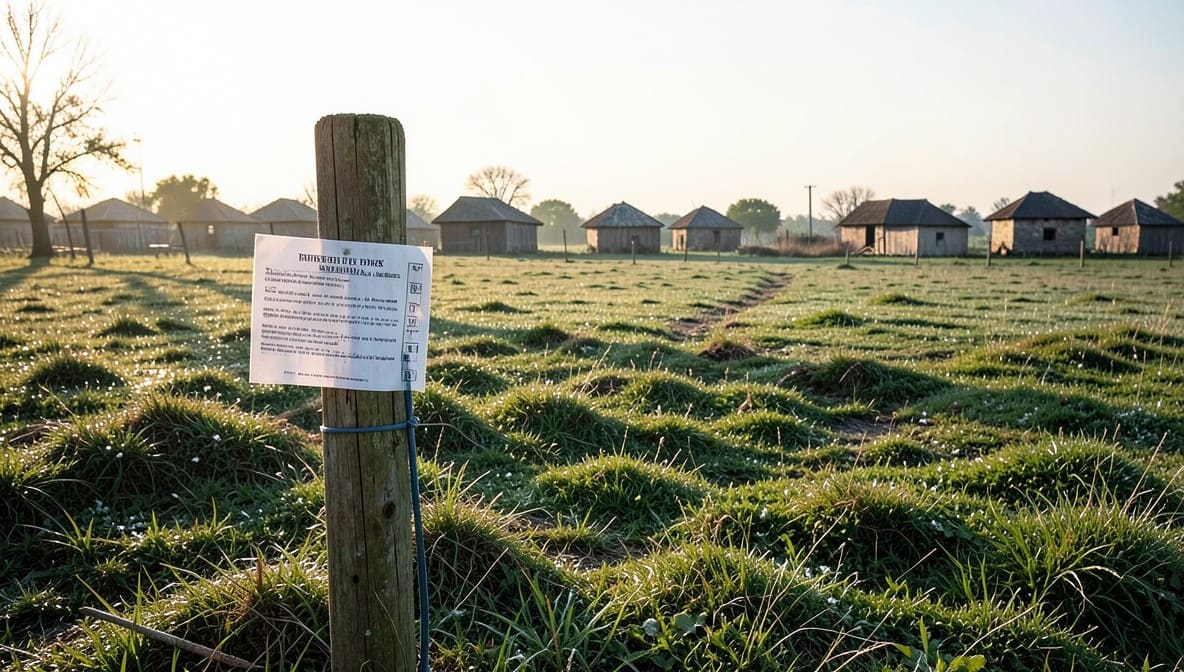
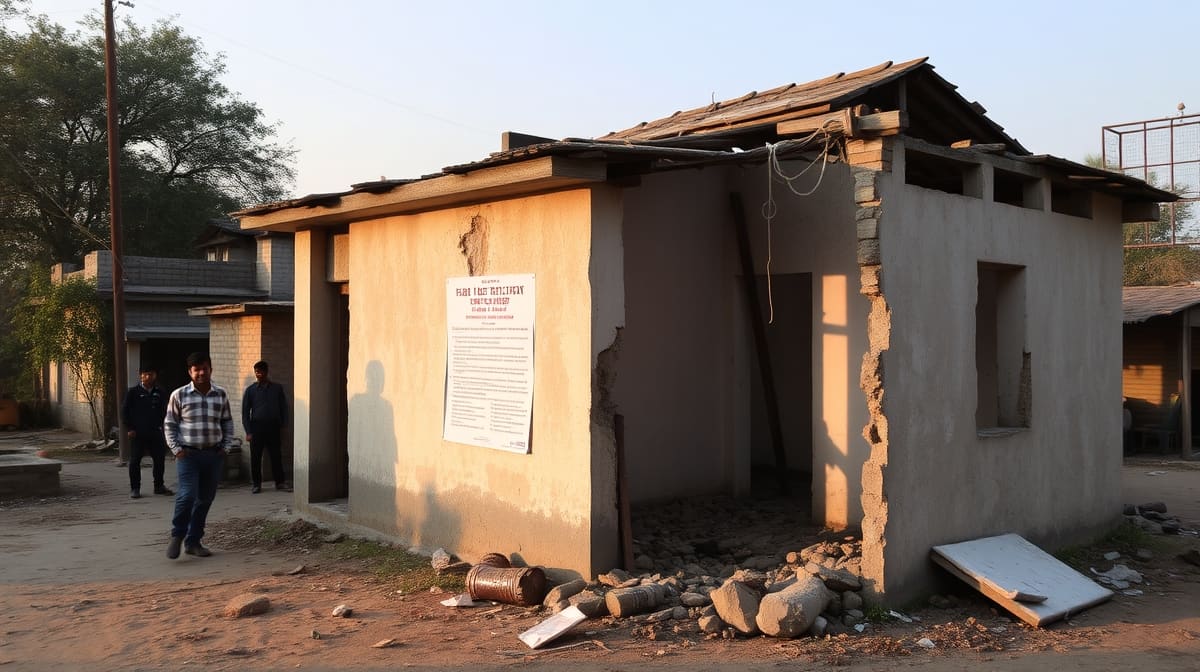
The petitioners, Kamlesh Kumar Yadav and two others, are residents of village Sujauli, Tehsil Kunda, District Pratapgarh, Uttar Pradesh. They own residential structures situated on land recorded in Gata No. 590, Banjar Land. The petitioners allege that officials of the Revenue Department, including Respondents No. 3 and 4, have threatened to demolish their houses without issuing any formal order or providing them an opportunity to be heard. No demolition order, notice, or adjudicatory record has been produced by the authorities.
Key Facts
The petitioners’ houses are located on land recorded as Banjar Land in Gata No. 590, Village Sujauli
The property is annexed as Annexure No. 1 to the writ petition
No formal order has been passed under the U.P. Revenue Code authorizing demolition
The petitioners submitted an application under Section 67-A of the U.P. Revenue Code, 2006, seeking recognition of their rights and protection from eviction
The application remains pending without any decision or communication from the competent authority
The petitioners claim they are being threatened with forcible eviction and demolition without any legal basis
Procedural History
Date of threat: Unspecified, but alleged to be imminent at the time of filing
2026: Writ Petition No. 6404 of 2026 filed before the Allahabad High Court, Lucknow Bench
25.06.2026: Hearing conducted before a Division Bench
The Parties' Positions
For the Petitioners
The petitioners, through counsel Vijay Kumar, contended that:
The threat of demolition is arbitrary and violates Article 21 of the Constitution
No order under the U.P. Revenue Code has been passed to justify eviction or demolition
The pendency of their Section 67-A application renders any action against their property illegal without adjudication
They are entitled to a fair hearing before any coercive action is taken
For the Respondents
The State, through the Chief Standing Counsel, did not dispute the absence of a formal demolition order. No counter-affidavit or documentary evidence was filed to justify the threat of demolition.
Relief Sought
The petitioners sought:
A writ of mandamus directing Respondents No. 3 and 4 not to demolish or damage their houses
A writ of mandamus directing the authorities to consider their application under Section 67-A of the U.P. Revenue Code, 2006, and grant relief in the interest of justice
The Legal Issue
Can the State proceed with demolition of private property in the absence of a formal order under the U.P. Revenue Code, and is the pendency of a Section 67-A application a bar to coercive action?
Arguments Presented
For the Petitioner
The petitioner’s counsel relied on the fundamental principle that due process of law is an essential component of Article 21. He argued that no authority can deprive a person of property without following the procedure established by law under the U.P. Revenue Code. He emphasized that the absence of any adjudicatory order renders the threat of demolition illegal and arbitrary. He further submitted that the petitioners’ application under Section 67-A is a legitimate claim for recognition of rights, and its pendency must be respected until decided.
For the Respondent
The State did not contest the absence of a demolition order. No legal justification or procedural compliance was presented. The Standing Counsel did not oppose the prayer for restraint, effectively conceding that no lawful basis existed for immediate demolition.
The Court's Analysis
The Court observed that the State cannot act on mere suspicion or administrative convenience. The right to life and personal liberty under Article 21 includes the right to shelter and protection from arbitrary eviction. The Court noted that the U.P. Revenue Code, 2006, provides a comprehensive framework for land use, possession, and eviction, and no authority may bypass its procedural mandates.
"The demolition of a dwelling cannot be undertaken without a valid order passed in accordance with the procedure prescribed under the U.P. Revenue Code. The absence of any such order renders the threat of demolition unlawful."
The Court further held that the pendency of an application under Section 67-A - which seeks recognition of rights over land and protection from dispossession - creates a legitimate expectation of adjudication. To proceed with demolition while such an application remains undecided would be to defeat the very purpose of the statutory remedy.
The Court emphasized that procedural fairness is not a technicality but a constitutional imperative. Even in cases involving revenue land, the rights of occupants must be adjudicated before any coercive action is taken.
The Verdict
The petition succeeded. The Court directed that no demolition of the petitioners’ houses shall be carried out except in accordance with due process of law under the U.P. Revenue Code. Regarding the second prayer, the respondents are directed to decide the petitioners’ application under Section 67-A of the U.P. Revenue Code, 2006, with all expedition, preferably within six weeks from the date a certified copy of this order is presented before the competent authority.
What This Means For Similar Cases
Due Process Is Non-Negotiable in Demolition Cases
Practitioners must challenge any demolition threat lacking a formal order under the U.P. Revenue Code
The absence of a hearing or adjudication renders such action void ab initio
Article 21 protections apply even to occupants of revenue land
Section 67-A Applications Cannot Be Ignored
Authorities must treat Section 67-A applications as substantive claims requiring reasoned decisions
Pendency of such applications operates as a de facto stay against coercive action
Delays in deciding Section 67-A applications may now attract judicial intervention
Always verify whether a demolition order exists under the U.P. Revenue Code before advising clients on eviction risks
File urgent writ petitions where applications under Section 67-A are pending and threats are made
Cite this judgment to argue that administrative expediency cannot override statutory and constitutional safeguards