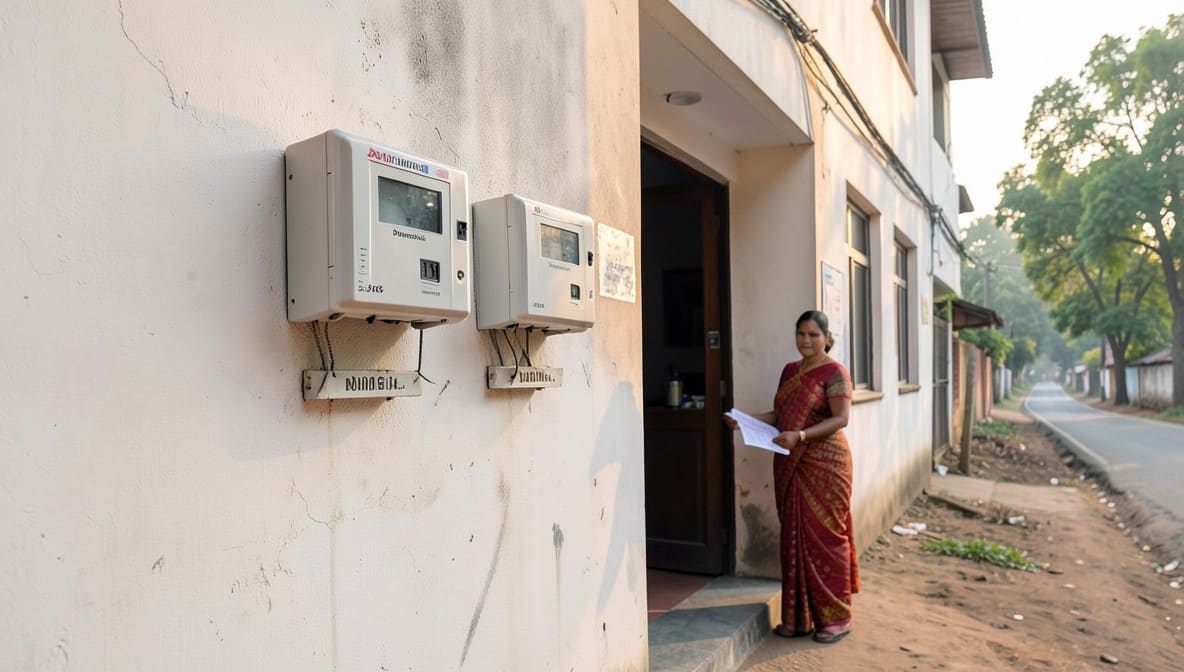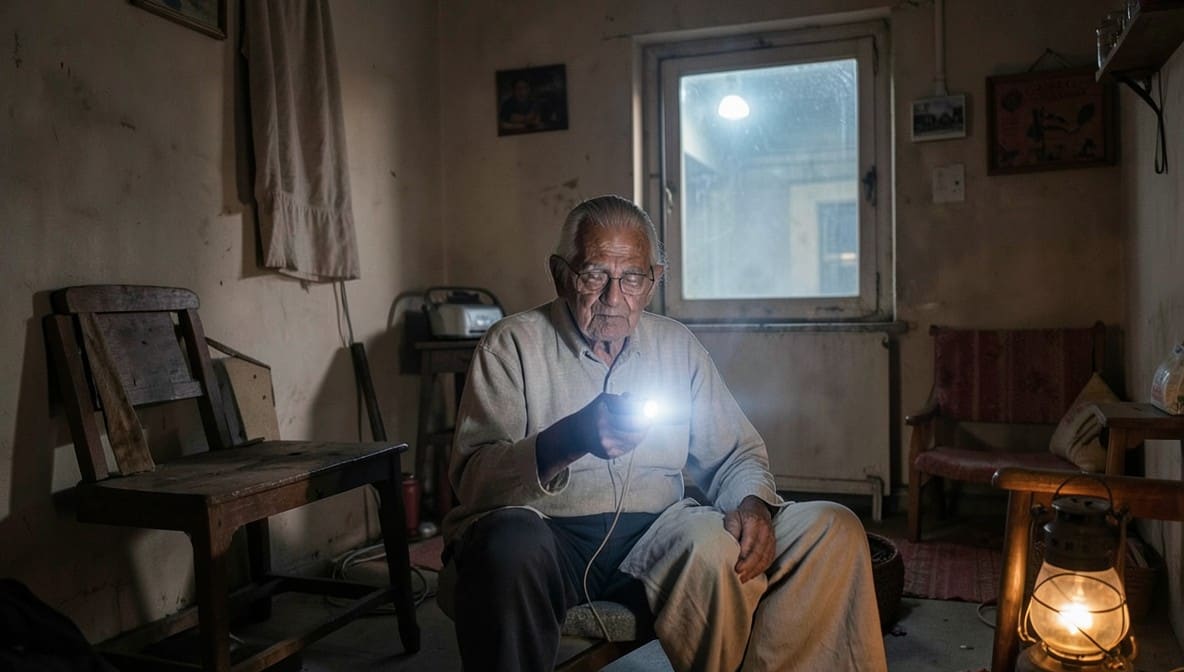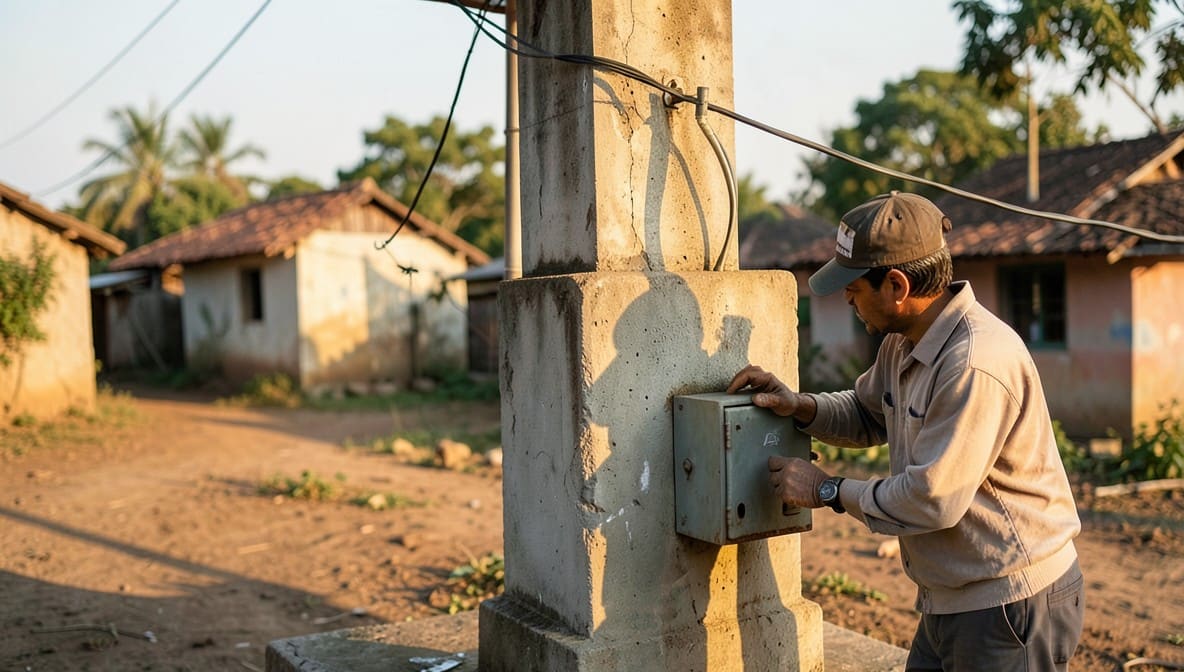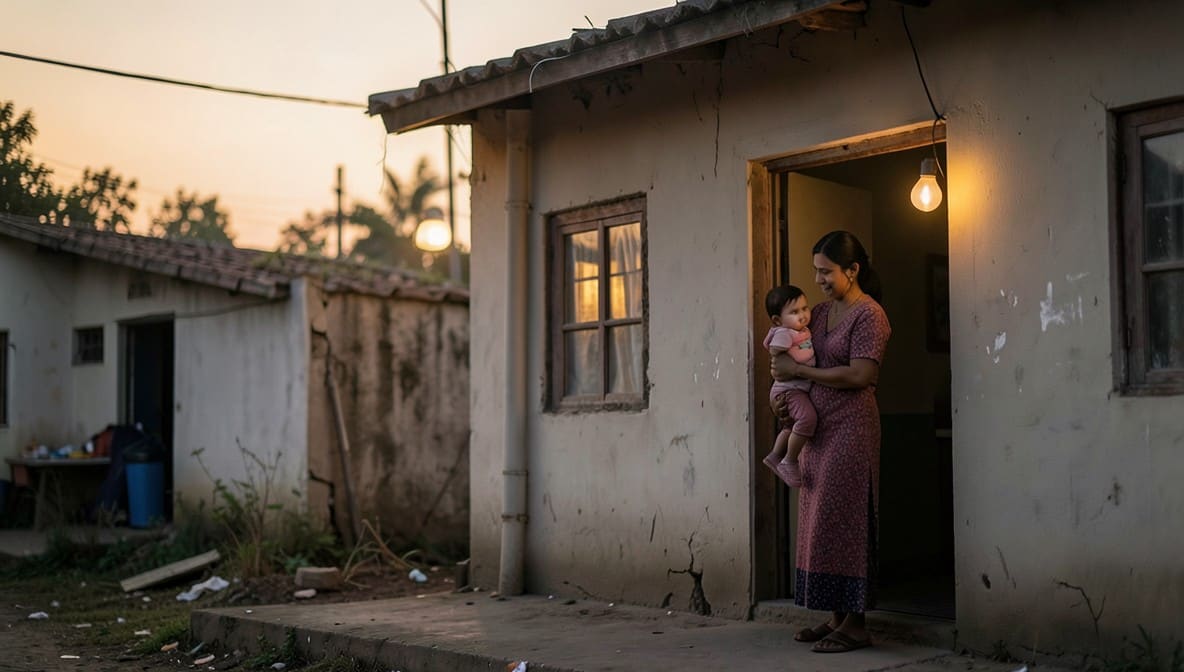
The Allahabad High Court has affirmed that access to electricity is a fundamental right under Article 21 of the Constitution, and that denying a connection solely on the ground of non-production of a title deed violates this right when the applicant is a lawful occupant. This ruling establishes a critical precedent for marginalized and displaced residents seeking basic utilities without formal property documentation.
Background & Facts
The Dispute
The petitioner, Nanhakai, is the daughter-in-law of the late Rupan and widow of the late Govind, who passed away on 02.08.2023. She has been residing in the dwelling house located at House No. 447/350, Lodhpurwa, Thakurganj, Lucknow, Uttar Pradesh 226003, for over five to six years. She is the mother of a minor girl child. The petitioner applied for a new electricity connection under two application numbers: Registration No. 167935745 dated 29.03.2024 and J8281996701 dated 22.04.2026. Both applications were rejected by Madhyanchal Vidyut Vitran Nigam Limited (MVVNL), the second respondent, on the ground that she failed to produce a title deed or proof of ownership of the property.
Key Facts
- The petitioner has resided continuously in the house since approximately 2018 - 2019.
- She was the person who paid the electricity bills prior to disconnection.
- The petitioner’s in-laws are allegedly attempting to illegally evict her from the premises.
- The petitioner has no alternative residence and is dependent on this dwelling for herself and her minor daughter.
- No dispute was raised regarding her actual occupation or possession of the house.
- The rejection order did not consider her status as a lawful occupant or her dependency on the connection for basic living.
Procedural History
- 29.03.2024: First application for electricity connection submitted (Registration No. 167935745).
- 22.04.2026: Second application submitted (Registration No. J8281996701).
- Between March and April 2026: Both applications rejected by MVVNL on grounds of absence of title deed.
- 2026: Writ Petition (Writ-C No. 6511 of 2026) filed before the Allahabad High Court, Lucknow Bench.
- 25.06.2026: Hearing conducted before a Division Bench.
Relief Sought
The petitioner sought a writ of mandamus directing MVVNL to:
- Consider and process her applications for electricity connection.
- Provide electricity to her dwelling without insisting on a title deed as a condition precedent.
- Grant the connection upon fulfillment of all other statutory formalities.
The Legal Issue
The central question was whether the denial of an electricity connection solely on the ground of non-production of a title deed, while the applicant is a lawful occupant residing in the premises, violates the right to life and dignity under Article 21 of the Constitution of India.
Arguments Presented
For the Petitioner
Learned counsel for the petitioner argued that electricity is an essential service for survival, hygiene, education, and safety, particularly for a widow with a minor child. He emphasized that the petitioner has been in continuous, peaceful possession of the house for over five years and has paid electricity bills in the past. He cited Justice K.S. Puttaswamy v. Union of India to underscore that access to basic utilities is integral to the right to life. He contended that demanding a title deed in such circumstances imposes an unreasonable and discriminatory burden on vulnerable persons, especially women in precarious domestic situations.
For the Respondent
The learned Standing Counsel for the State did not dispute the petitioner’s occupancy but defended the policy requirement of title deed as a standard procedural safeguard against fraudulent claims. He submitted that without such a requirement, utilities could be misappropriated by non-owners. However, he did not contest the petitioner’s factual claim of residence or her dependency on the connection.
The Court's Analysis
The Court observed that while title deeds are typically required for administrative clarity, they cannot be treated as an absolute precondition when the applicant is a lawful occupant with no alternative residence. The Court emphasized that Article 21 encompasses not only the right to life but also the right to live with dignity, which includes access to essential services such as electricity.
"The denial of electricity connection to a person who has been residing in a house for over five years, who has paid bills in the past, and who has no other shelter, cannot be justified merely on the ground of absence of a title deed. Such a denial strikes at the very root of dignity and survival."
The Court distinguished between ownership and possession, noting that the Constitution protects the rights of occupants, not merely owners. It held that the State’s obligation under Article 21 extends to ensuring access to basic infrastructure for all residents, regardless of formal property titles. The Court further noted that the respondent authorities could mitigate risks of fraud by requiring an affidavit of residence, a copy of ration card, or a bond from the applicant, rather than insisting on a title deed.
The Verdict
The writ petition was allowed. The Court quashed and set aside the order rejecting the petitioner’s applications for electricity connection. The Court directed Madhyanchal Vidyut Vitran Nigam Limited to provide electricity connection to the petitioner’s dwelling within four weeks from the date of compliance with all other statutory formalities, including execution of a bond. The Court explicitly held that no title deed shall be insisted upon as a condition precedent.
What This Means For Similar Cases
Electricity Access Cannot Be Denied on Title Deed Alone
- Practitioners representing marginalized women, tenants, or displaced persons can now invoke Article 21 to challenge denial of electricity where lawful occupancy is established.
- Utility providers must accept alternative proof of residence such as ration cards, voter IDs, school records, or affidavits.
Affidavit or Bond Can Substitute Title Deed
- Authorities may require a sworn affidavit of residence and a bond to prevent misuse, but cannot impose impossible documentation burdens.
- This creates a clear, enforceable standard for electricity distribution companies across Uttar Pradesh and beyond.
Gender and Vulnerability Must Inform Administrative Decisions
- Courts will increasingly scrutinize administrative policies that disproportionately affect women, widows, and economically vulnerable groups.
- Denial of utilities based on property ownership norms without considering actual habitation may now be struck down as arbitrary under Article 14.