The Allahabad High Court has granted bail in a Narcotic Drugs and Psychotropic Substances Act case where the quantity of charas recovered - 1.2 kg - barely crossed the commercial threshold. The judgment underscores that proximity to the statutory limit, combined with procedural concerns and prolonged incarceration, can justify interim release even in serious drug offences, provided strict bail conditions are imposed.
Background & Facts
The Dispute
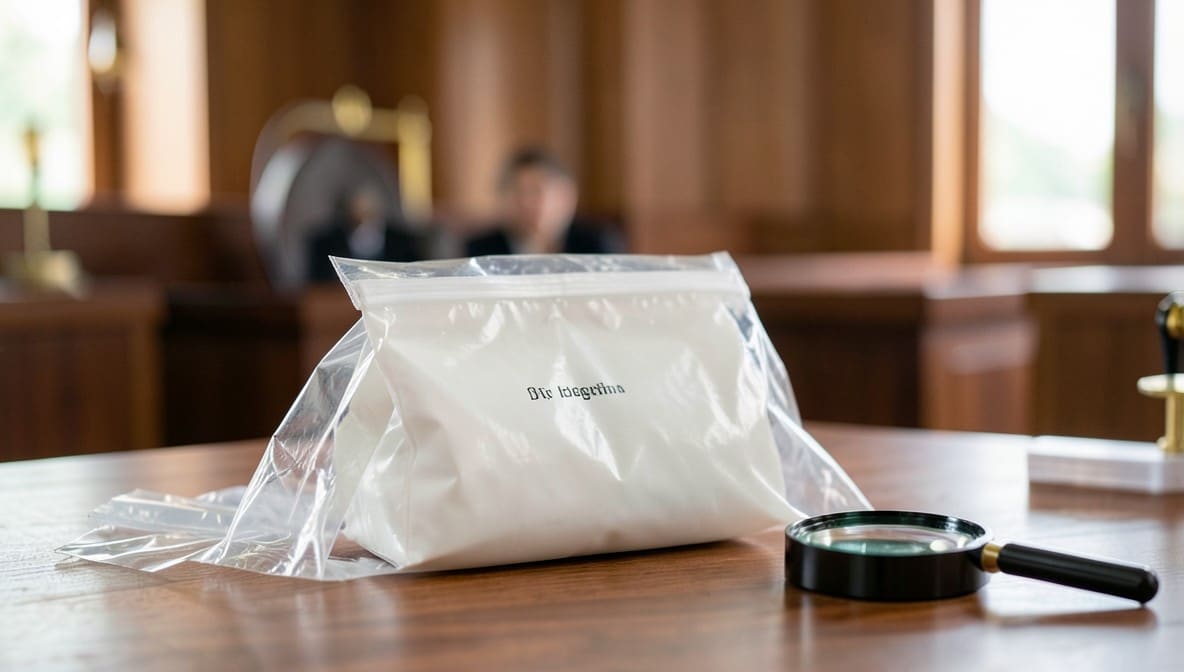
The applicant, Jane Alam alias Jane Alias Jana, is accused in Case Crime No. 79 of 2026 under Sections 8 and 20 of the Narcotic Drugs and Psychotropic Substances Act, 1985 (NDPS Act), and Section 318(4) of the Bharatiya Nagarik Suraksha Sanhita (B.N.S.), at Police Station Saidangali, District Amroha. The prosecution alleges that the applicant was in possession of 1 kg 200 gram of charas, which is just above the commercial quantity threshold under the NDPS Act.
Key Facts
- The alleged recovery of 1.2 kg charas occurred on or about 21.03.2026
- The applicant was arrested on 21.03.2026 and has remained in judicial custody since then
- Four persons, including the applicant, were named in the FIR as accused
- The quantity recovered is at the lowest end of the commercial quantity spectrum under Section 2(viia) of the NDPS Act
- The applicant’s counsel contends the quantity was inflated by police to enhance the gravity of the offence
- The applicant has five prior criminal cases, none of which resulted in conviction
- The applicant has no history of drug-related offences
- The prosecution has not yet filed a charge sheet as of the date of the bail order
Procedural History
- 21.03.2026: Arrest of applicant following alleged recovery of contraband
- 21.03.2026: FIR registered as Crime No. 79 of 2026
- 25.04.2026: Application for bail filed before the High Court
- 25.06.2026: Hearing conducted before Justice Vivek Kumar Singh
- 25.06.2026: Order passed granting bail
The Parties' Positions
For the Applicant
- The quantity of charas (1.2 kg) is barely above the commercial threshold, suggesting possible exaggeration
- The recovery procedure may have violated mandatory provisions under the NDPS Act, including Section 50 (right to be searched before a gazetted officer or magistrate)
- The prosecution’s narrative lacks corroboration and contains inconsistencies
- The applicant has been in custody for over three months without charge sheet filing
- The applicant has no prior conviction for drug offences and is not a habitual offender
- The prosecution appears motivated by malice, given the applicant’s prior unrelated criminal cases
For the Respondent (State of U.P.)
- The recovery is documented in the FIR and seizure memo, and the quantity is sufficient to invoke Section 8 of the NDPS Act
- The applicant’s criminal antecedents indicate a propensity for unlawful conduct
- The nature of the offence is serious and poses a threat to public order
- Granting bail may lead to tampering with evidence or influencing witnesses
Relief Sought
The applicant sought regular bail pending trial, with conditions to ensure his presence and prevent abuse of liberty.
The Legal Issue
Can bail be granted under the NDPS Act when the quantity of contraband is at the threshold of commercial quantity, procedural irregularities are alleged, and the accused has been in custody for over three months without a charge sheet?
Arguments Presented
For the Appellant/Petitioner
The applicant’s counsel relied on State of Punjab v. Baldev Singh and Rajesh Sharma v. State of U.P. to argue that the NDPS Act does not mandate automatic denial of bail merely because the offence is serious. The counsel emphasized that proximity to the commercial quantity threshold, absence of prior convictions, and prolonged incarceration without charge sheet filing are material factors. The counsel also cited K. S. Puttaswamy v. Union of India to underscore the right to personal liberty under Article 21, and contended that the prosecution’s failure to comply with Section 50 of the NDPS Act casts doubt on the legality of the recovery.
For the Respondent/State
The Additional Government Advocate contended that possession of commercial quantity of charas attracts stringent provisions under the NDPS Act, and bail should be denied as a deterrent. The State argued that the applicant’s five prior criminal cases indicate a pattern of criminal conduct, and that the seriousness of the offence outweighs the period of incarceration. The State also submitted that the recovery was properly documented and no procedural flaw had been conclusively established.
The Court's Analysis
The Court declined to express any opinion on the merits of the case or the veracity of the recovery. It noted that the quantity of charas - 1.2 kg - is at the very edge of the commercial quantity limit under the NDPS Act, and that the applicant has been in custody for over three months without a charge sheet being filed. The Court observed that while the NDPS Act is stringent, it does not preclude bail where the facts, including the proximity to the threshold and duration of detention, warrant it.
"The Court finds that the applicant has made out a case for grant of bail, without expressing any opinion on the merits of the case."
The Court further noted that the applicant’s criminal history consists of five non-drug-related cases, none resulting in conviction, and that there is no evidence of him being a habitual offender. The Court emphasized that the purpose of bail is not to punish but to ensure presence during trial, and that the applicant’s prolonged incarceration without formal charges supports the grant of interim relief.
The Court also acknowledged the applicant’s counsel’s concerns regarding potential procedural lapses under Section 50 of the NDPS Act, though it did not rule on their validity. The Court held that such concerns, combined with the minimal quantity involved and the absence of any threat to investigation, tip the balance in favour of bail.
The Verdict
The bail application is allowed. The applicant, Jane Alam alias Jane Alias Jana, shall be released on bail upon furnishing a personal bond of Rs. 50,000 and two sureties each in the like amount, subject to strict conditions. The sureties shall be verified before release. The applicant must remain present before the Trial Court on all dates, including for opening of the case, framing of charge, and recording of statement under Section 313 Cr.P.C. Failure to appear without sufficient cause may lead to cancellation of bail and initiation of proceedings under Section 229-A IPC or Section 269 B.N.S. Proclamation under Section 82 Cr.P.C. and prosecution under Section 174-A IPC may follow if the applicant absconds. Any breach of conditions shall result in immediate cancellation of bail. The Court clarified that its observations do not affect the Trial Court’s independent assessment of evidence.
What This Means For Similar Cases
Proximity to Commercial Threshold Can Justify Bail
- Practitioners should argue that NDPS bail denials cannot be automatic when the quantity is barely above the statutory limit
- Courts may view such cases as less severe than those involving bulk quantities
- The burden shifts to the prosecution to show why bail should be denied when the quantity is marginal
Prolonged Custody Without Charge Sheet Is Material
- Detention exceeding 90 days without filing a charge sheet strengthens the bail plea under Section 439 Cr.P.C.
- Courts are increasingly sensitive to delays in completing investigations in NDPS cases
- Counsel should highlight the absence of a charge sheet as a factor in bail applications
Procedural Irregularities Need Not Be Proven - Only Plausibly Alleged
-
Even unproven allegations of non-compliance with Section 50 NDPS Act can support bail
-
Courts may grant bail on the basis of plausible doubt, not conclusive proof
-
This lowers the threshold for invoking procedural safeguards in bail arguments
-
Always request verification of sureties in NDPS bail applications
-
Draft conditions to include mandatory court appearances on critical dates
-
Emphasize absence of prior convictions and non-habitual nature of the accused
-
Cite Baldev Singh and Rajesh Sharma to counter rigid prosecutorial positions