Chhattisgarh High Court judgments

498 Chhattisgarh High Court judgments explained in plain English: what was decided, the law applied and why it matters. Page 6 of 21.

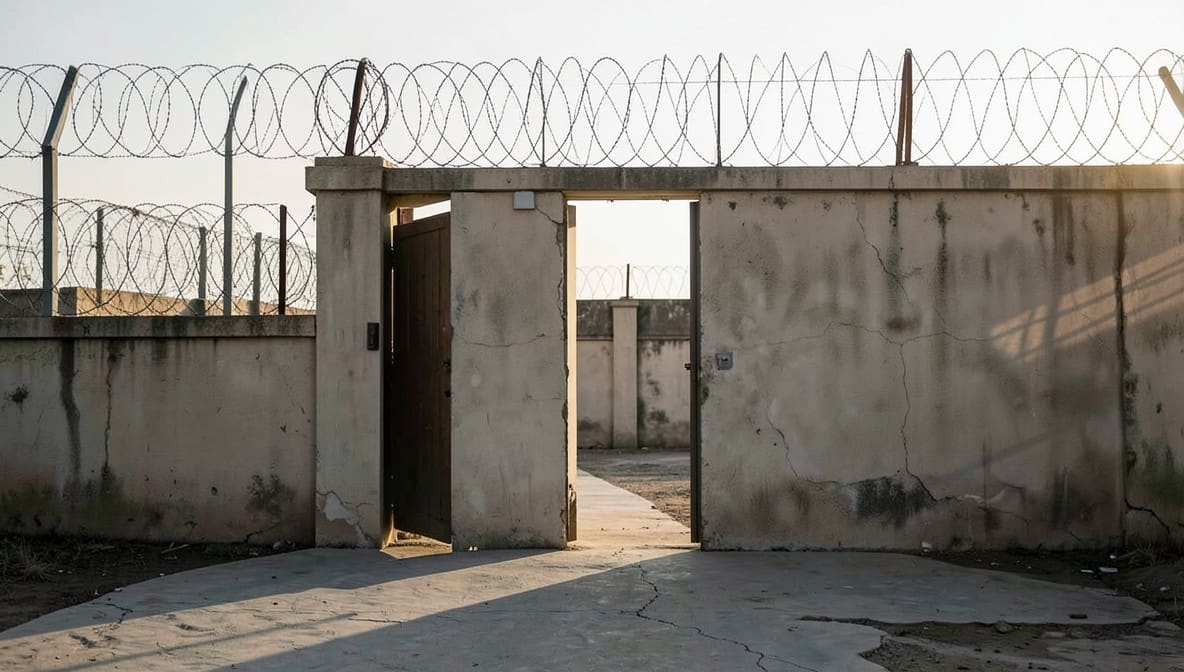
Article 21 | Medical Parole Mandatory When Prison Care Is Inadequate: Chhattisgarh HC Quashes Denial for Terminally Ill Prisoner
Case Law Analysis
|Chhattisgarh High Court

Article 21 | Medical Parole Mandatory When Prison Care Is Inadequate: Chhattisgarh HC Quashes Denial for Terminally Ill Prisoner

The Chhattisgarh High Court ruled that Article 21’s guarantee of right to life and health overrides mechanical denial of medical parole, even when prison rules are technically unmet. When institutional medical care is insufficient to save a life, the state must facilitate external treatment - setting a precedent for terminally ill prisoners nationwide.

Statutory Interest on Land Acquisition Compensation Mandatory from Possession Date | NHAI Cannot Cite Internal Lapses to Delay Payment : Chhattisgarh HC
Case Law Analysis
|Chhattisgarh High Court

Statutory Interest on Land Acquisition Compensation Mandatory from Possession Date | NHAI Cannot Cite Internal Lapses to Delay Payment : Chhattisgarh HC

Chhattisgarh High Court rules that statutory interest under the National Highways Act is payable from the date of possession, irrespective of omissions in the award or NHAI’s administrative delays. The judgment reinforces that landowners are entitled to timely compensation, and public authorities cannot evade liability due to internal procedural failures.

Rule 358(6)(ix) Chhattisgarh Jail Rules | Single Prosecution with Multiple Victims Does Not Constitute 'Two or More Cases' for Premature Release Denial : CGHC
Case Law Analysis
|Chhattisgarh High Court

Rule 358(6)(ix) Chhattisgarh Jail Rules | Single Prosecution with Multiple Victims Does Not Constitute 'Two or More Cases' for Premature Release Denial : CGHC

The Chhattisgarh High Court has ruled that denying premature release based on multiple deaths arising from a single criminal case violates the plain meaning of Rule 358(6)(ix), which requires separate prosecutions. This sets a critical precedent for prisoners convicted in compound offenses, ensuring that victim count alone cannot override statutory eligibility. Non-speaking orders rejecting release are now clearly invalid.

Section 498-A IPC | Sustained Cruelty Alone Sufficient for Conviction Without Dowry Demand : Chhattisgarh HC Reduces Sentence for Delay
Case Law Analysis
|Chhattisgarh High Court

Section 498-A IPC | Sustained Cruelty Alone Sufficient for Conviction Without Dowry Demand : Chhattisgarh HC Reduces Sentence for Delay

Chhattisgarh High Court rules that prolonged mental or physical cruelty under Section 498-A IPC does not require proof of dowry demand for conviction. The court reduced the sentence from 3 years to 6 months, citing a 22-year trial delay and prior custody, reinforcing that cruelty itself is punishable regardless of dowry allegations.

NDPS Act | Co-Accused Confessions Alone Suffice for Prima Facie Case Under Bhajan Lal & Toofan Singh : Chhattisgarh HC
Case Law Analysis
|Chhattisgarh High Court

NDPS Act | Co-Accused Confessions Alone Suffice for Prima Facie Case Under Bhajan Lal & Toofan Singh : Chhattisgarh HC

Chhattisgarh High Court rules that confessional statements of co-accused, though not sole evidence, are adequate to establish a prima facie case under Sections 20(B)/29 of the NDPS Act. The court rejected the petitioner's employment status as a ground to quash FIR, reinforcing that criminal liability under narcotics laws cannot be negated by professional role alone.

Rule 3(3) Chhattisgarh Panchayat Rules | Seven-Day Clear Notice Mandatory for No-Confidence Motion: CGHC Quashes Defective Proceedings
Case Law Analysis
|Chhattisgarh High Court

Rule 3(3) Chhattisgarh Panchayat Rules | Seven-Day Clear Notice Mandatory for No-Confidence Motion: CGHC Quashes Defective Proceedings

Chhattisgarh High Court ruled that a no-confidence motion against a Sarpanch is invalid if the seven-day clear notice requirement under Rule 3(3) of the Chhattisgarh Panchayat Rules, 1994, is not strictly complied with. The judgment reinforces procedural fairness in local governance, ensuring elected representatives cannot be removed without proper notice to all members.

Section 143(1)(a) IT Act | Summary Adjustments Cannot Disallow Debatable Issues Pending Judicial Resolution : Chhattisgarh HC
Case Law Analysis
|Chhattisgarh High Court

Section 143(1)(a) IT Act | Summary Adjustments Cannot Disallow Debatable Issues Pending Judicial Resolution : Chhattisgarh HC

Chhattisgarh High Court rules that prima facie adjustments under Section 143(1)(a) of the Income Tax Act cannot resolve legally debatable issues, particularly when the matter is pending judicial resolution. The court set aside a disallowance of ₹4.64 lakh under Section 36(1)(va), emphasizing that summary proceedings cannot override substantive legal disputes.

Judicial Review in Public Tenders | Mere Non-Selection or Delay Insufficient Without Proof of Arbitrariness or Mala Fides : Chhattisgarh HC
Case Law Analysis
|Chhattisgarh High Court

Judicial Review in Public Tenders | Mere Non-Selection or Delay Insufficient Without Proof of Arbitrariness or Mala Fides : Chhattisgarh HC

The Chhattisgarh High Court has reaffirmed that courts will not interfere in public tender awards based on speculative grievances or procedural delays alone. To challenge a tender outcome, bidders must demonstrate concrete evidence of arbitrariness, bias, or mala fides under Article 14 - a critical safeguard for government procurement integrity and bidder accountability.

Order 7 Rule 11 CPC | Cause of Action Must Be Assessed Solely from Plaint Averments, Not Defendant’s Title Claims or Pending Revenue Proceedings : Chhattisgarh HC
Case Law Analysis
|Chhattisgarh High Court

Order 7 Rule 11 CPC | Cause of Action Must Be Assessed Solely from Plaint Averments, Not Defendant’s Title Claims or Pending Revenue Proceedings : Chhattisgarh HC

The Chhattisgarh High Court has clarified that a civil suit for possession cannot be rejected under Order 7 Rule 11 CPC merely because defendants assert title or reference pending revenue proceedings. The plaint’s averments alone determine the existence of a cause of action, reinforcing that civil courts must not prematurely adjudicate title disputes reserved for revenue authorities. This protects plaintiffs from being shut out at the threshold when land title conflicts are still pending before revenue forums.

Section 138 NI Act | Civil Courts Barred from Reviewing Criminal Convictions: Chhattisgarh HC Reinforces CrPC Exclusivity
Case Law Analysis
|Chhattisgarh High Court

Section 138 NI Act | Civil Courts Barred from Reviewing Criminal Convictions: Chhattisgarh HC Reinforces CrPC Exclusivity

Chhattisgarh High Court rules that civil courts lack jurisdiction to set aside convictions under Section 138 of the Negotiable Instruments Act, emphasizing that the Code of Criminal Procedure provides the sole remedy. The judgment underscores that statutory criminal procedures implicitly exclude civil court interference, impacting litigants seeking parallel civil relief for bounced cheque cases.

Section 174(2)(c) CGST Act | Tax Incentives Survive GST Transition Unless Explicitly Rescinded : Chhattisgarh HC
Case Law Analysis
|Chhattisgarh High Court

Section 174(2)(c) CGST Act | Tax Incentives Survive GST Transition Unless Explicitly Rescinded : Chhattisgarh HC

Chhattisgarh High Court rules that tax incentives under pre-GST state policies continue post-CGST enactment unless explicitly rescinded, quashing the denial of VAT/CST refunds to Abis Exports. The judgment reinforces that fiscal incentives are protected under statutory savings provisions, mandating reconsideration of claims within 60 days.

NDPS Act | Bail Mandatory for Non-Commercial Quantity Despite Charge-Sheet Filing : Chhattisgarh HC
Case Law Analysis
|Chhattisgarh High Court

NDPS Act | Bail Mandatory for Non-Commercial Quantity Despite Charge-Sheet Filing : Chhattisgarh HC

Chhattisgarh High Court rules that prolonged pre-trial detention violates personal liberty when accused possesses heroin below commercial quantity, even after charge-sheet filing. The judgment reinforces that bail under Section 37 NDPS Act cannot be denied merely on procedural grounds for minor drug offenses, setting a precedent for humane treatment of first-time offenders.

Section 250 Chhattisgarh Land Revenue Code | Revenue Authorities Lack Jurisdiction Over Title Disputes When Civil Suit Pending : CGHC
Case Law Analysis
|Chhattisgarh High Court

Section 250 Chhattisgarh Land Revenue Code | Revenue Authorities Lack Jurisdiction Over Title Disputes When Civil Suit Pending : CGHC

Chhattisgarh High Court reinforces that revenue authorities cannot adjudicate title disputes under Section 250 of the Chhattisgarh Land Revenue Code when a civil suit is already pending. The ruling clarifies that revenue authorities' powers are limited to summary possession remedies, preserving civil court jurisdiction over substantive title disputes.

Doctrine of Laches Bars Labour Claims Under Industrial Disputes Act Even Without Statutory Limitation : CGHC
Case Law Analysis
|Chhattisgarh High Court

Doctrine of Laches Bars Labour Claims Under Industrial Disputes Act Even Without Statutory Limitation : CGHC

Chhattisgarh High Court dismisses a 25-year-old labour claim, ruling that unexplained delay and lack of corroborative evidence defeat a workman’s claim under the Industrial Disputes Act, regardless of statutory limitation. The judgment reinforces that laches can bar claims even where no specific limitation period applies, impacting daily wage workers and employers alike.

Legitimate Expectation Yields to Policy Shift | Tender Cancellation Post L-1 Declaration Lawful Under GeM Portal Mandate : CGHC
Case Law Analysis
|Chhattisgarh High Court

Legitimate Expectation Yields to Policy Shift | Tender Cancellation Post L-1 Declaration Lawful Under GeM Portal Mandate : CGHC

Chhattisgarh High Court upholds tender cancellation after L-1 bidder declaration, ruling that bona fide policy shifts toward Government e-Marketplace (GeM) procurement override bidder expectations. The decision clarifies that public authorities may lawfully cancel tenders without prior notice if changes serve public interest and align with statutory procurement reforms.

Article 226 Writ Jurisdiction | Mere Apprehension of Demolition Without Statutory Notice Insufficient for Maintainability : CGHC
Case Law Analysis
|Chhattisgarh High Court

Article 226 Writ Jurisdiction | Mere Apprehension of Demolition Without Statutory Notice Insufficient for Maintainability : CGHC

Chhattisgarh High Court reinforces that writ petitions under Article 226 must be grounded in a concrete statutory notice or imminent threat, not mere fear of demolition. The ruling clarifies that natural justice principles require actual violation, not speculative harm, protecting property owners from frivolous litigation while ensuring administrative accountability.

Section 69 BNSS | Consensual Relationships Not Criminal Without Fraudulent Intent from Inception: Chhattisgarh HC Quashes FIR
Case Law Analysis
|Chhattisgarh High Court

Section 69 BNSS | Consensual Relationships Not Criminal Without Fraudulent Intent from Inception: Chhattisgarh HC Quashes FIR

The Chhattisgarh High Court ruled that consensual relationships cannot be criminalized under Section 69 of the Bharatiya Nyaya Sanhita (BNS) unless there is proof of fraudulent intent from the very beginning. The Court dismissed the petition to quash the FIR, emphasizing that factual disputes over broken marriage promises must be resolved at trial, not through pre-trial quashing. This ruling clarifies the threshold for criminal liability in cases involving consensual relationships.

Review Jurisdiction Under Service Law | Cannot Cure Deficient Case Presentation : Chhattisgarh HC Restores Compassionate Appointment Order
Case Law Analysis
|Chhattisgarh High Court

Review Jurisdiction Under Service Law | Cannot Cure Deficient Case Presentation : Chhattisgarh HC Restores Compassionate Appointment Order

The Chhattisgarh High Court ruled that review jurisdiction cannot remedy a party's failure to present material evidence during the initial hearing. The court restored an order directing compassionate appointment across government bodies, emphasizing that review petitions are not a second chance to补救 procedural lapses.