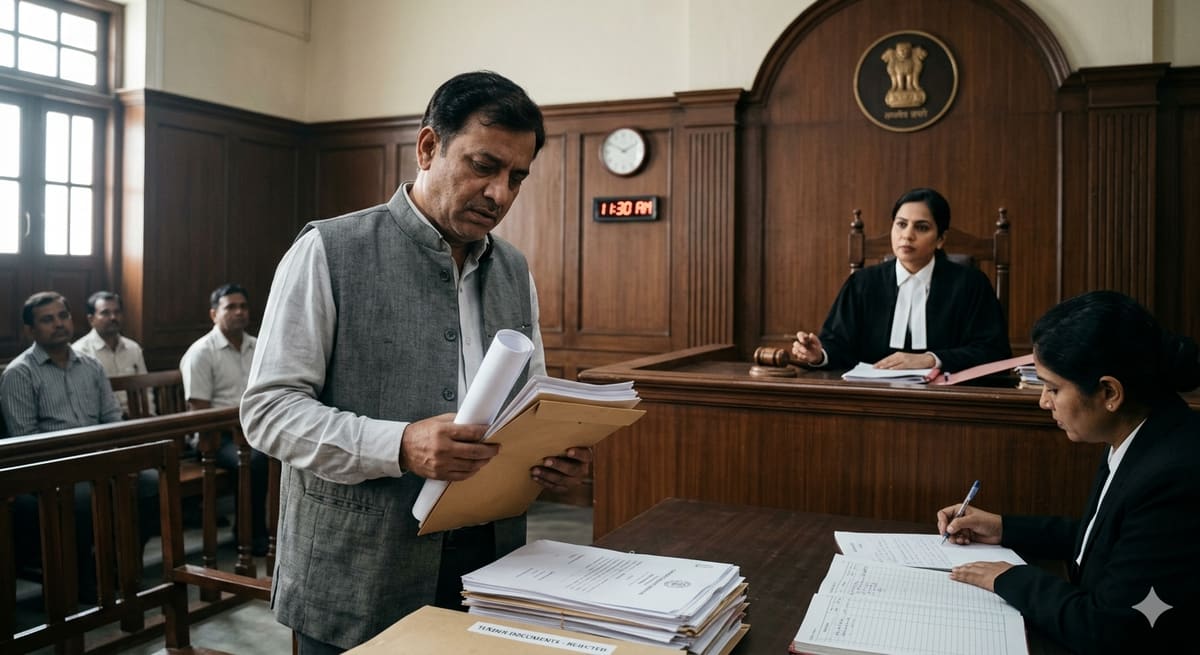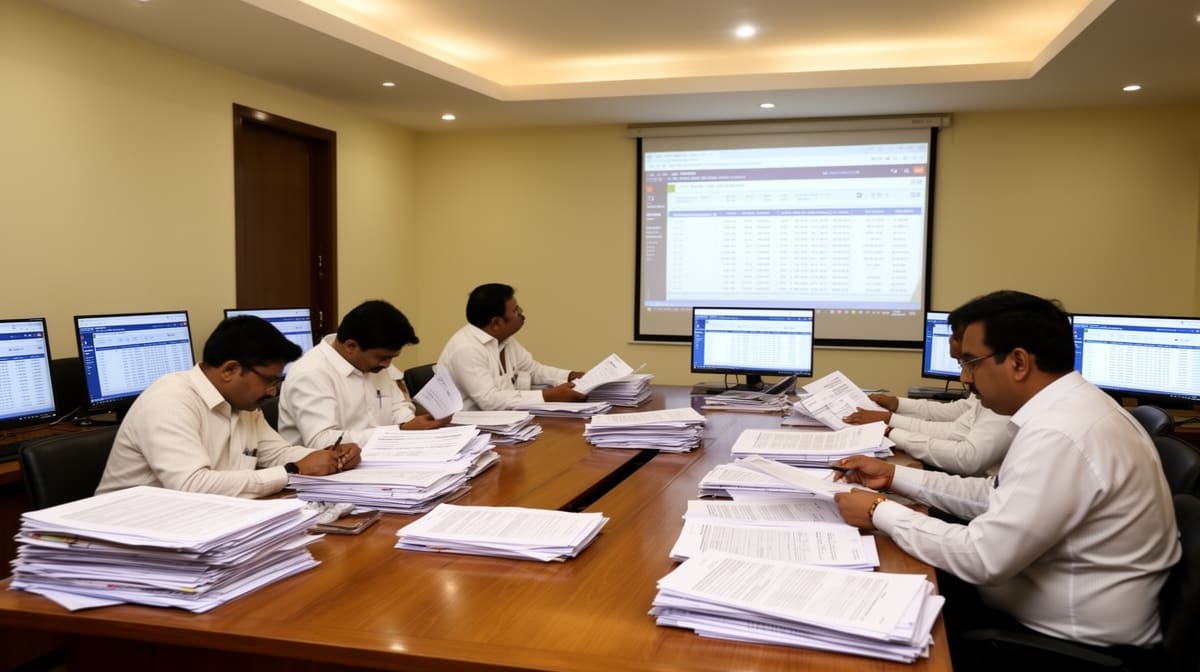
The Chhattisgarh High Court has reaffirmed the principle that judicial intervention in public tender processes is permissible only when there is clear evidence of arbitrariness, mala fides, or violation of statutory or contractual procedures. Merely being an unsuccessful bidder does not confer a right to challenge the award, particularly when the process adheres to the terms of the tender document and is conducted through a transparent e-bidding system.
Background & Facts
The Dispute
The Chhattisgarh State Power Distribution Company Limited (CSPDCL), a state undertaking, issued an e-tender under Tender No. 5313 dated 23.02.2026 for the outsourcing of manpower services at the Deorbija Distribution Center under the O&M Division, Saja, District Bemetara. The tender required participants to possess valid GST registration and mandated submission of bids exclusively through the official online e-bidding portal. Manual submissions were explicitly disallowed.
Key Facts
- The tender notice was published on 23.02.2026
- The last date and time for submission of e-bids was 14.03.2026 at 5:00 PM
- The bids were opened on 15.03.2026
- The petitioner, Nilesh Patel, participated in the tender process and submitted his bid electronically within the stipulated deadline
- Respondent No. 3, M/s W N Electricals, was declared the L1 (lowest bidder)
- The petitioner was not selected
- On 08.04.2026, the petitioner submitted a written complaint to Respondent No. 1 seeking an inquiry into the tender process, raising concerns about:
- Completeness and validity of documents submitted by Respondent No. 3
- Transparency of evaluation criteria and methodology
- Compliance with tender conditions
- Whether a level playing field was maintained
- The petitioner requested that the issuance of the work order be withheld pending inquiry
- No response was issued by CSPDCL to the complaint before the filing of the writ petition
Procedural History
- 23.02.2026: Tender No. 5313 issued by CSPDCL
- 14.03.2026: Deadline for e-bid submission
- 15.03.2026: Bids opened; M/s W N Electricals declared L1
- 08.04.2026: Petitioner submits written complaint to CSPDCL seeking inquiry and stay on work order
- 16.04.2026: Writ Petition (WPC No. 1749 of 2026) filed before the Chhattisgarh High Court
The Parties' Positions
Petitioner: Alleged lack of transparency, non-disclosure of evaluation criteria, and possible invalidity of Respondent No. 3’s bid. Argued that the process violated Article 14 of the Constitution and that the failure to respond to his complaint compelled him to approach the Court.
Respondents 1 & 2: Contended that the e-tender process was fully compliant with the tender document, conducted objectively through a transparent portal, and that the selection of Respondent No. 3 was based on financial bid evaluation alone. Asserted that mere non-selection does not constitute arbitrariness and that the petitioner’s complaint was under consideration.
Relief Sought
The petitioner sought:
- A writ of mandamus directing CSPDCL to conduct a detailed inquiry into the tender process, including verification of Respondent No. 3’s documents, evaluation methodology, and compliance with tender conditions
- A direction to withhold issuance of the work order to Respondent No. 3 until the inquiry is completed and reported to the Court
- Any other relief deemed appropriate
The Legal Issue
The central question was whether the tender process conducted by CSPDCL under Tender No. 5313 was arbitrary, discriminatory, or mala fide, thereby violating Article 14 of the Constitution, and whether the Court was justified in interfering with the award of contract in the absence of specific evidence of procedural illegality.
Arguments Presented
For the Petitioner
The petitioner’s counsel argued that the tender process lacked transparency because the evaluation criteria and basis for selecting Respondent No. 3 as L1 were not disclosed. He contended that the failure to respond to his complaint dated 08.04.2026 amounted to administrative inaction, compelling judicial intervention under Article 226. He relied on Jagdish Mandal v. State of Orissa and Banshidhar Construction Pvt. Ltd. v. Bharat Coking Coal Ltd. to assert that public authorities must act fairly and without arbitrariness. He emphasized that the absence of a comparative evaluation report and non-disclosure of bid details created a reasonable apprehension of bias.
For the Respondent/State
CSPDCL’s counsel submitted that the e-bidding system ensured objectivity and eliminated human discretion. He argued that the petitioner had no right to know the evaluation details of other bidders, and that the selection of the lowest eligible bidder is a standard commercial practice. He cited Tata Cellular v. Union of India and Mihan India Ltd. v. GMR Airports Ltd. to underscore the limited scope of judicial review in contractual matters. He further contended that the petitioner’s remedy lay in awaiting the outcome of his representation, and that the petition was premature and lacked any concrete evidence of illegality.
The Court's Analysis
The Court examined the tender process through the lens of established jurisprudence on judicial review of public contracts. It acknowledged that while Article 14 mandates fairness and non-arbitrariness in state actions, courts must not substitute their judgment for that of the tendering authority. The Court emphasized that judicial intervention is warranted only if the decision-making process is shown to be irrational, mala fide, or in violation of the tender’s terms.
"The Court does not sit as an appellate authority to re-evaluate the bids or substitute its own decision for that of the tendering authority."
The Court noted that the petitioner had not produced any specific document, communication, or material demonstrating that Respondent No. 3 was ineligible, that documents were forged, or that evaluation criteria were altered. General allegations of opacity, without substantiation, were deemed insufficient to invoke extraordinary jurisdiction under Article 226.
The Court further held that the petitioner’s complaint dated 08.04.2026, though unaddressed, did not vitiate the tender process itself. The mere lapse of time in responding to a representation cannot, by itself, render a lawful process invalid. The Court relied on Banshidhar Construction, Tata Cellular, and Jagdish Mandal to reaffirm that two tests govern judicial interference: (i) whether the process was mala fide or so irrational that no reasonable authority could have reached it, and (ii) whether public interest was adversely affected. Neither condition was met.
The Court also referenced M/S. Steag Energy Services v. GSPC Pipavav Power Co., which cautioned against ex-ante judicial interference in executive decision-making, particularly where the process is transparent and conducted through automated systems. The Court concluded that the tendering authority had acted within its domain and that the petitioner’s grievance, however genuine, did not rise to the level of constitutional violation.
The Verdict
The writ petition was dismissed. The Court held that the tender process was lawful, transparent, and conducted in accordance with the terms of the tender document. No interference was warranted in the absence of proof of arbitrariness, bias, or procedural illegality. No costs were awarded.
What This Means For Similar Cases
Judicial Review Requires Concrete Evidence, Not Speculation
- Practitioners must substantiate allegations of arbitrariness with documentary proof - mere non-selection is not grounds for intervention
- General complaints about lack of transparency without specific irregularities will not sustain a writ petition under Article 226
- Courts will not entertain speculative challenges to e-tender outcomes where the process is automated and compliant with published criteria
Timely Representation Does Not Oblige Immediate Response
- A public authority’s delay in responding to a representation does not automatically invalidate a completed tender process
- Petitioners must exhaust internal remedies before approaching the Court, unless the process is already completed and irreparable harm is imminent
- The pendency of a representation is not a substitute for demonstrating procedural illegality
E-Tender Systems Are Presumed Legitimate Unless Proven Otherwise
- Automated e-bidding platforms are presumed to ensure objectivity and reduce discretion
- Challenges to such systems must identify specific technical or procedural deviations - not just dissatisfaction with the outcome
- Courts will not second-guess financial bid evaluations unless there is evidence of manipulation or non-compliance with eligibility conditions