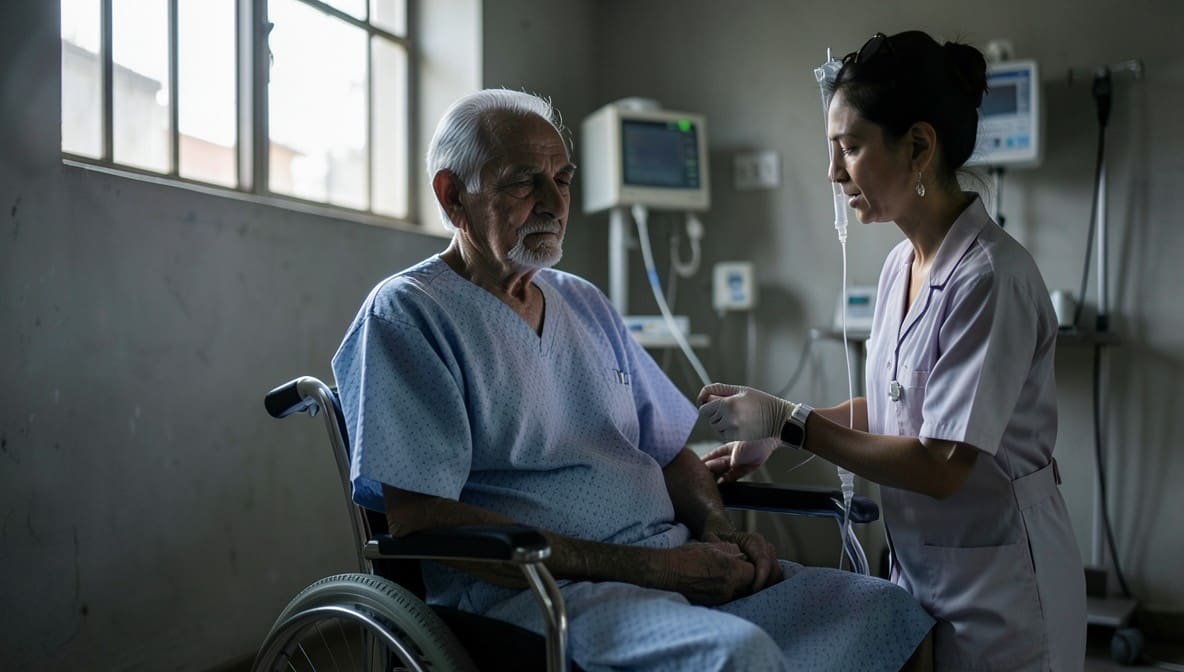
The Chhattisgarh High Court has affirmed that the right to life under Article 21 of the Constitution encompasses the right to timely and adequate medical care - even for convicted prisoners. In a landmark ruling, the Court quashed the rejection of medical parole for a 68-year-old inmate suffering from gangrene, amputation, and a cerebellar infarct, holding that rigid adherence to procedural technicalities cannot override constitutional imperatives.
Background & Facts
The Dispute
The petitioner, Dheluram S/o Motiram, aged 68, was convicted in 2002 under Sections 148, 323/149, and 304 Part-I IPC for offences arising from a violent altercation. His sentence was initially seven years of rigorous imprisonment. On appeal, the High Court modified the conviction under Section 304 Part-I to Part-II and reduced the sentence to four years on 20.09.2024. The Supreme Court dismissed his SLP on 13.12.2024, making the conviction final.
Key Facts
- The petitioner has served approximately 2 years and 9 months of his 4-year sentence as of April 2026.
- He is a senior citizen with severe, life-threatening health conditions developed during incarceration.
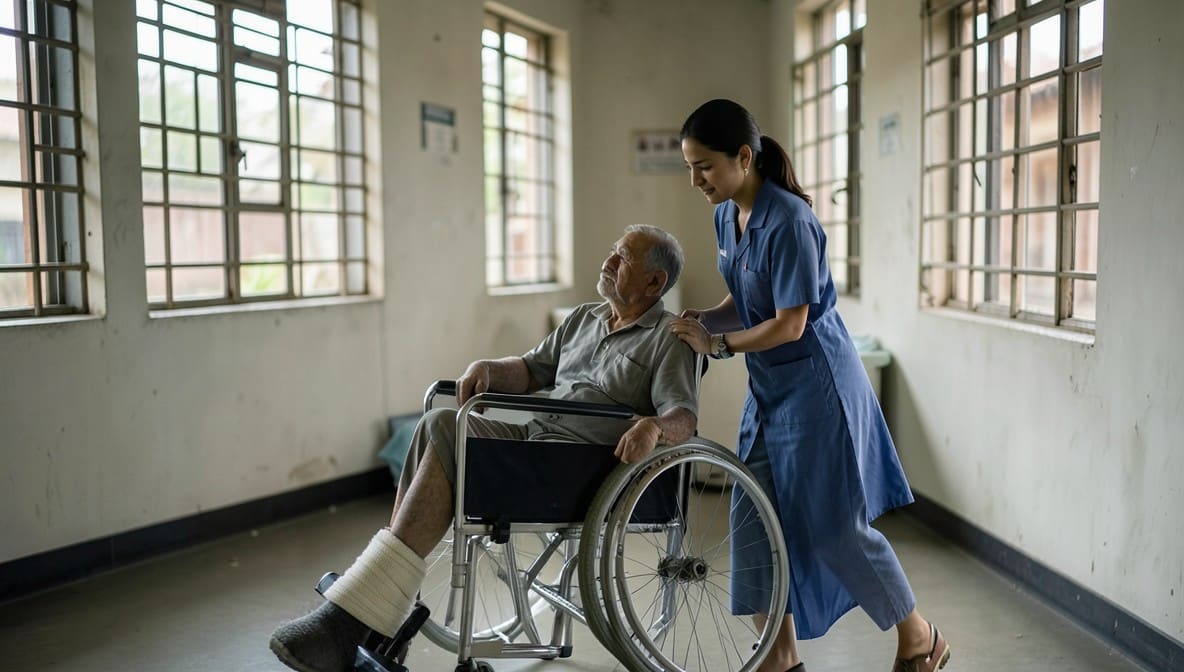
- He developed gangrene leading to amputation of a toe, followed by above-knee amputation of his leg on 02.03.2026 at Dr. B.R. Ambedkar Memorial Hospital, Raipur.
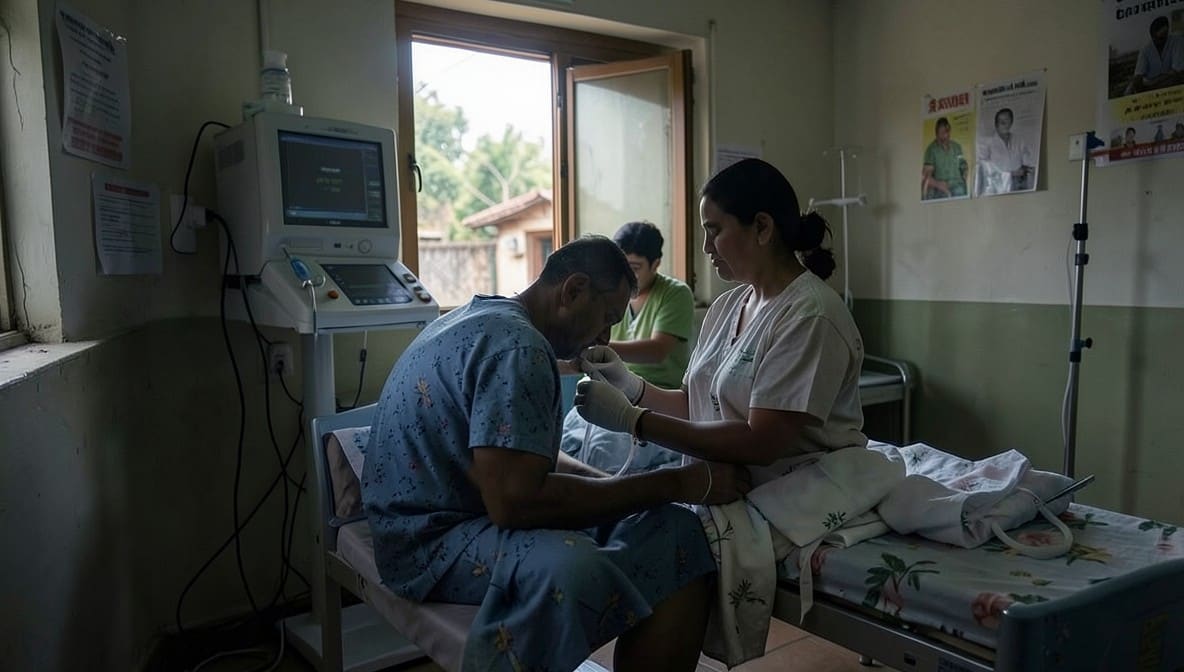
- Post-operative complications include nerve damage, loss of excretory control, chronic bedsores, and severe pain.
- An NCCT Head report dated 01.04.2026 diagnosed a subacute infarct in the left cerebellar region, indicating neurological impairment.
- On 03.04.2026, he was discharged from the hospital with instructions to seek specialized care at AIIMS, Raipur or DKS Hospital, Raipur.
- Both hospitals denied admission due to non-availability of beds.
- He was returned to Central Jail, Raipur in critical condition without follow-up care.
- He applied for medical parole on multiple occasions, including a prior application considered by the Court in WPCR No. 133/2026.
Procedural History
- 05.08.2002: Conviction and sentencing by Second Additional Sessions Judge (FTC), Mungeli.
- 20.09.2024: High Court modifies conviction to Section 304 Part-II IPC and reduces sentence to 4 years.
- 13.12.2024: Supreme Court dismisses SLP (Crl.) No. 17525/2024.
- 03.03.2026: High Court, in WPCR No. 133/2026, directs the District Magistrate to consider medical parole application and pass a reasoned order.
- 17.03.2026: District Magistrate, Mungeli, rejects medical parole application on two grounds: (i) no specific provision for medical parole under Chhattisgarh Prisoners Leave Act, 1985; (ii) petitioner failed to complete mandatory three-month interval from previous leave.
- 20.03.2026: Writ Petition (WPCR No. 202/2026) filed before the High Court.
- 16.04.2026: Judgment delivered by the Division Bench.
The Parties' Positions
For the Petitioner: Argued that the petitioner’s medical condition is life-threatening, deteriorating, and beyond the capacity of jail medical facilities. Relied on Article 21, Epuru Sudhakar, Laxman Naskar, and State of Haryana v. Jagdish to assert that discretion in remission must be exercised reasonably and humanely. Contended that procedural rules cannot override constitutional rights.
For the Respondents: Argued that the Chhattisgarh Prisoners Leave Act, 1985 does not provide for medical parole, and Rule 31-Ka(3) mandates a three-month gap between leaves. Stated that parole is a privilege, not a right, and the impugned order was legally sound.
Relief Sought
The petitioner sought:
- Quashing of the order dated 17.03.2026 rejecting medical parole.
- Immediate release on medical parole for 90 days or until medical stabilization, subject to surety, reporting, and movement restrictions.
- Alternative direction to permit treatment at a private hospital under jail supervision.
- Immediate medical attention within jail for bedsores, incontinence, and wound care.
The Legal Issue
The central question was whether Article 21 of the Constitution mandates the grant of medical parole to a terminally ill prisoner when prison medical infrastructure is demonstrably inadequate, even if statutory leave rules are not technically satisfied.
Arguments Presented
For the Petitioner
The petitioner’s counsel relied on Epuru Sudhakar v. Government of Andhra Pradesh to argue that discretionary powers under remission laws are subject to judicial review for arbitrariness. Cited Laxman Naskar to emphasize that humanitarian considerations, including health, must be weighed. Argued that the State’s constitutional obligation under Article 21 to provide medical care cannot be discharged by mere incarceration. Highlighted that the petitioner’s condition is not merely chronic but emergent and life-threatening, and that denial of release effectively amounts to cruel and inhuman treatment.
For the Respondent
The State contended that the Chhattisgarh Prisoners Leave Act, 1985 contains no provision for medical parole and that Rule 31-Ka(3) imposes a mandatory three-month waiting period between leaves. Argued that the petitioner’s prior leave history disqualifies him under the rules. Asserted that the District Magistrate acted within statutory bounds and that judicial intervention would undermine prison discipline and rule of law.
The Court's Analysis
The Court began by affirming that the right to life under Article 21 includes the right to health and access to adequate medical treatment. It emphasized that a prisoner does not forfeit fundamental rights upon incarceration. The Court observed:
"When the medical infrastructure within the prison system is demonstrably inadequate to deal with the serious condition of the petitioner, denial of temporary release on medical grounds amounts to violation of Article 21."
The Court rejected the State’s reliance on procedural technicalities. It held that the impugned order dated 17.03.2026 was non-speaking, arbitrary, and failed to engage with the medical evidence on record. The District Magistrate’s reliance on the absence of a specific provision for medical parole was deemed legally untenable, as constitutional obligations supersede statutory gaps. The Court distinguished between administrative leave rules and constitutional duties, stating:
"Procedural requirements cannot override the fundamental rights of a prisoner, especially in cases of grave medical exigency."
The Court further noted that the petitioner’s condition had worsened after the earlier order dated 03.03.2026, creating a fresh cause of action. The failure to secure admission at AIIMS or DKS Hospital, followed by forced return to jail, constituted a continuing violation. The Court invoked State of Haryana v. Jagdish to underscore that remission policies must be applied fairly and consistently, particularly in humanitarian contexts.
The Court also referenced Section 473 of the Bharatiya Nagarik Suraksha Sanhita, 2023 (successor to Section 432 CrPC), noting that while remission is discretionary, it must be exercised with reason, fairness, and without arbitrariness.
The Verdict
The petition was allowed. The impugned order dated 17.03.2026 was quashed and set aside. The respondents were directed to grant remission to the petitioner and release him forthwith, subject to usual conditions under the Chhattisgarh Prison Rules, 1968, including furnishing sureties, periodic reporting to local police, and restriction of movement to the place of treatment and residence. No order as to costs.
What This Means For Similar Cases
Constitutional Rights Trump Administrative Rules
- Practitioners must now argue that denial of medical parole based solely on statutory gaps or procedural non-compliance violates Article 21.
- Courts will scrutinize whether prison medical facilities are adequate to handle life-threatening conditions.
- A prisoner’s medical emergency, even if not codified in leave rules, triggers a constitutional duty.
Judicial Review of Discretionary Decisions Is Expanded
- Orders rejecting medical parole must be reasoned, specific, and consider medical reports.
- Failure to address medical evidence renders the order arbitrary and subject to quashing under Epuru Sudhakar.
- The burden shifts to the State to prove that alternative medical arrangements within jail are sufficient.
Precedent for Emergency Medical Release
- This judgment establishes a clear precedent for emergency medical release in cases of:
- Amputation complications
- Neurological deterioration
- Chronic bedsores or incontinence
- Inability to access external hospitals due to systemic failure
- Legal teams should immediately file writ petitions when similar conditions arise, citing this judgment as binding authority.