The Chhattisgarh High Court has clarified that tax incentives granted under state industrial policies do not automatically lapse upon the introduction of the Goods and Services Tax regime, unless the granting notification is formally rescinded. This ruling reinforces the principle that statutory savings clauses protect vested rights, offering critical guidance to industries relying on pre-GST fiscal benefits.
Background & Facts
The Dispute
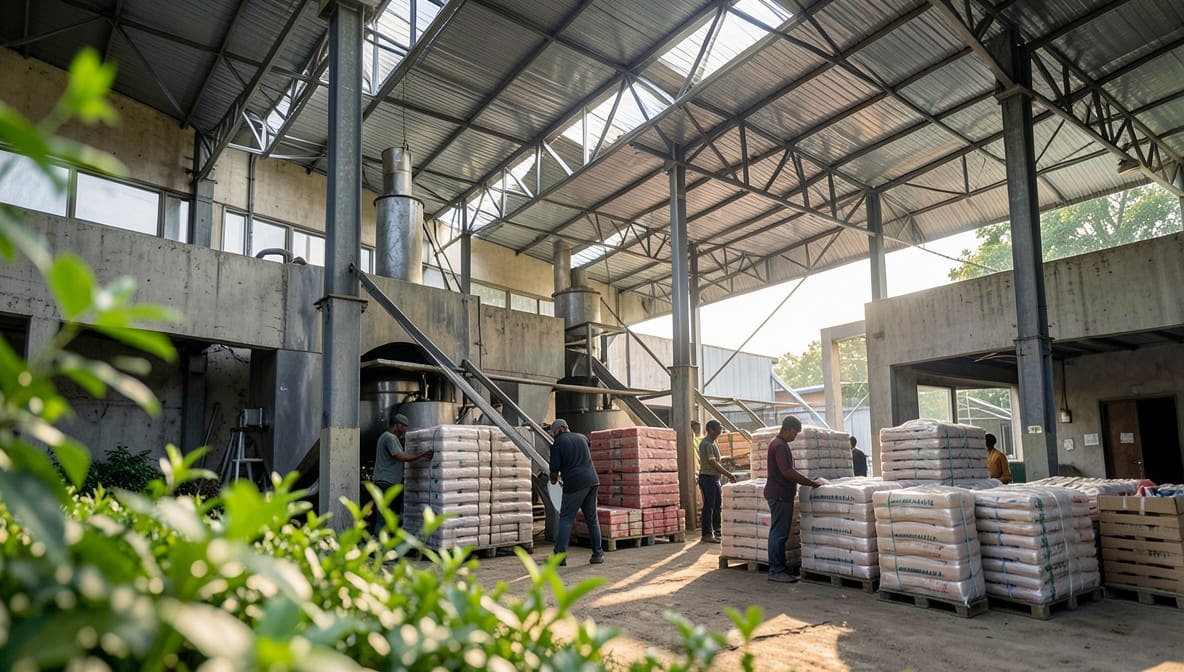
The petitioner, Abis Exports India Private Ltd, established an agro-processing industry in Rajnandgaon, Chhattisgarh, in reliance on the State’s Agriculture and Food Processing Industrial Policy, 2012. The policy promised refund of Value Added Tax (VAT) and Central Sales Tax (CST) as investment incentives to promote industrial development in the state. After the enactment of the Central Goods and Services Tax Act, 2017 (CGST Act), the petitioner’s claims for tax refunds were denied by the state authorities on the ground that the old tax regime had been repealed.
Key Facts
- The petitioner commenced operations under the 2012 Policy, investing capital and creating employment in accordance with its terms.
- The 2012 Policy provided for VAT and CST refunds as direct incentives for industrial investment.
- The CGST Act came into force on 01.07.2017 (appointed day).
- The petitioner filed multiple representations seeking continuation of tax benefits post-GST, beginning in 2017 and continuing through 2019.
- On 14.02.2020, the High Court disposed of WPC No. 614 of 2020, directing the state to decide the petitioner’s pending representations.
- The Secretary, Department of Commerce and Industry, issued an order dated 02.08.2024 (No. F 19-07/2020/11/6) rejecting the petitioner’s claims, citing the enactment of the CGST Act as a change in law.
- No document was produced by the state to show that the 2012 Policy incentives had been formally rescinded or withdrawn prior to 01.07.2017.
Procedural History
- 2017: CGST Act enacted; petitioner begins seeking continuation of VAT/CST refunds.
- 2018 - 2019: Multiple representations submitted to state authorities.
- 14.02.2020: High Court directs state to decide pending representations in WPC No. 614 of 2020.
- 02.08.2024: State issues order rejecting petitioner’s claims.
- 19.01.2025: Writ Petition No. 196 of 2025 filed before Chhattisgarh High Court.
- 13.04.2026: Hearing concluded and judgment delivered.
Relief Sought
The petitioner sought:
- Quashing of the order dated 02.08.2024
- Direction to the state to reimburse VAT and CST benefits as per the 2012 Policy
- Costs of the petition
The Parties' Positions
The petitioner contended that the 2012 Policy incentives were contractual rights protected under the saving clause of Section 174(2)(c) of the CGST Act, and that the state had never rescinded the relevant notifications. The state argued that the transition to GST constituted a change in law, extinguishing all prior tax incentives.
The Legal Issue
The central question was whether Section 174(2)(c) of the CGST Act preserves tax incentives granted under prior state policies if the granting notification has not been formally rescinded on or after the appointed day.
Arguments Presented
For the Petitioner
Learned Senior Advocate Rajiv Shrivastava argued that the proviso to Section 174(2)(c) explicitly states that tax exemptions granted as incentives through notification shall continue unless rescinded on or after the appointed day. He relied on the Supreme Court’s decision in Hero Motocorp Limited v. Union of India (2023) 1 SCC 386, which held that the mere enactment of the CGST Act does not automatically terminate pre-existing incentives. He emphasized that the state had never issued any rescission order for the 2012 Policy incentives, and therefore, the petitioner’s rights remained intact. He further contended that the CGST Act is not a change in law but a consolidation of existing tax laws, and that promissory estoppel applies where the state has made a clear, inducement-based promise.
For the Respondent
Ms. Anuradha Jain, Deputy Government Advocate, submitted that the introduction of GST constituted a comprehensive overhaul of the indirect tax system, rendering all prior state-level tax exemptions obsolete. She argued that the state government’s policy framework was inherently contingent on the pre-GST regime and that continuation of benefits would undermine fiscal uniformity. She contended that the petitioner’s reliance on the 2012 Policy was misplaced after the appointed day, and that the rejection order was lawful under the doctrine of change in law.
The Court's Analysis
The Court undertook a textual and contextual analysis of Section 174(2)(c) of the CGST Act, which provides:
"Provided that any tax exemption granted as an incentive against investment through a notification shall not continue as privilege if the said notification is rescinded on or after the appointed day."
The Court observed that the proviso operates as a conditional saving clause: the incentive continues unless rescinded. The burden, therefore, lies on the state to prove that the notification granting the incentive was formally withdrawn. The state produced no such evidence.
The Court then examined Hero Motocorp Limited v. Union of India, where the Supreme Court held that the mere enactment of the CGST Act does not imply rescission of prior notifications. The Apex Court clarified that the proviso to Section 174(2)(c) is not a blanket repeal but a targeted condition - only those incentives explicitly rescinded lose protection.
The Court rejected the state’s argument that the CGST Act constituted a "change in law" extinguishing all prior benefits. It held that the CGST Act is a legislative consolidation, not a substantive repeal of fiscal incentives unless expressly provided. The Court emphasized that the state cannot unilaterally withdraw benefits promised under policy without following due process or issuing a rescission order.
The Court further noted that the order dated 02.08.2024 was passed without considering the proviso or the binding precedent of the Supreme Court, rendering it legally unsustainable.
The Verdict
The petitioner succeeded. The Court quashed the order dated 02.08.2024 and directed the state authorities to reconsider the petitioner’s representations in light of Section 174(2)(c) of the CGST Act and the judgment in Hero Motocorp Limited v. Union of India. The authorities were directed to complete the reconsideration within 60 days of receipt of a copy of this order.
What This Means For Similar Cases
Tax Incentives Survive Unless Explicitly Rescinded
- Practitioners representing industries with pre-GST fiscal benefits must now demand proof of rescission before accepting denial of claims.
- The burden of proving rescission rests squarely on the state - mere legislative change is insufficient.
- Any denial of benefits under the CGST Act without reference to Section 174(2)(c) is legally vulnerable.
Promissory Estoppel Is Not Required - Statutory Protection Is Sufficient
- The judgment confirms that petitioners need not invoke the doctrine of promissory estoppel to claim benefits; statutory saving under Section 174(2)(c) is independently enforceable.
- This removes the high evidentiary burden of proving reliance and detriment, making claims more accessible.
- Industries can now rely on the plain language of the CGST Act to assert rights, even where policy documents are informal.
State Policies Must Be Documented and Formalized
- State governments must now maintain clear records of notifications granting incentives and any subsequent rescissions.
- Failure to issue a rescission order before or after the appointed day will result in automatic continuation of benefits.
- Legal advisors should audit all pre-GST policy notifications for potential claims by clients.