The Chhattisgarh High Court has reaffirmed a foundational principle of civil litigation: that the existence of a cause of action under Order 7 Rule 11 of the CPC must be determined exclusively from the allegations in the plaint, without reference to defenses, revenue orders, or extrinsic evidence. This ruling provides critical clarity for practitioners navigating threshold objections in civil suits.
Background & Facts
The Dispute
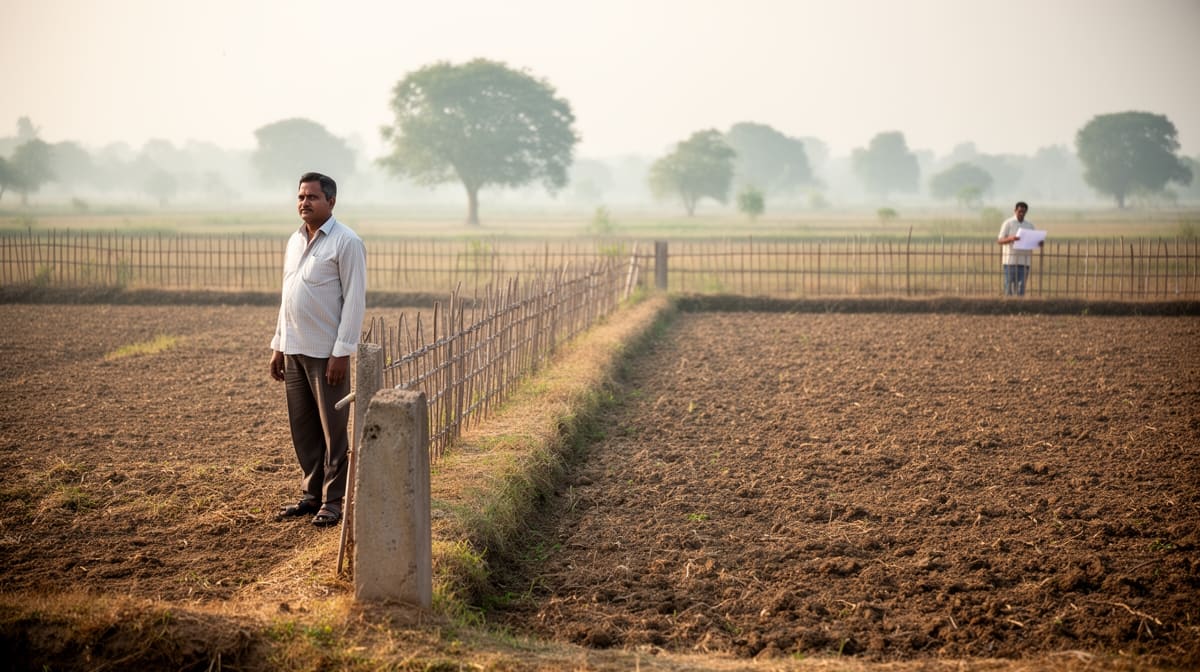
The plaintiff, Kurmi Chhetriy Kalyan Samiti, a registered institution, filed Civil Suit No. 24-A/2018 seeking declaration that a gift deed dated 24.07.2014 executed by defendants 3 and 4 (Kailash Chand Agrawal and Satyanarayan Agrawal) in favor of defendant 5 (applicant) was null and void. The plaintiff further sought permanent injunction against defendants 3 to 5 from constructing on, altering, or dispossessing the suit property, and recovery of possession. The suit property, measuring 2.18 acres, is part of a larger 3.76-acre plot near Tulsi Nagar Chowk, Korba, where the plaintiff had constructed a hall and installed a memorial statue of Sardar Vallabh Bhai Patel with permission from South Eastern Coalfields Limited (SECL).
Key Facts
- The suit property is recorded as Government Nazul land in the Misal Bandobast of 1930
- SECL was granted a 30-year lease over 267.80 acres of the land via lease deed dated 04.07.1972
- The plaintiff was permitted by SECL to construct the hall and install the statue on 3.76 acres of the leased land
- The plaintiff has been in possession since the 1970s
- Proceedings under Section 250 of the Chhattisgarh Land Revenue Code were initiated by defendants 3 and 4 against the plaintiff in 2014
- A Bedakhali order dated 21.05.2015 passed by the Tehsildar, Korba, directed demolition of structures on 2.18 acres of the suit property, executed on 03.06.2015
- The plaintiff challenged the Bedakhali order before the SDO, Korba, which dismissed the challenge on 16.11.2015
- The Second Appeal before the Commissioner, Korba, was dismissed on 31.03.2016
- The Board of Revenue allowed the plaintiff’s revision on 09.02.2026
- Defendant 5 filed a writ petition against the Board’s order dated 09.02.2026, which is pending before this Court
- Defendants 3 and 4 had previously filed Civil Suit No. 244A/2006 regarding the same land, dismissed by judgment dated 21.04.2008, which remains unchallenged
- The gift deed dated 24.07.2014 was executed by defendants 3 and 4 in favor of defendant 5, claiming ownership based on revenue records
Procedural History
- 24.07.2014: Gift deed executed by defendants 3 and 4 in favor of defendant 5
- 03.06.2015: Demolition of plaintiff’s construction on 2.18 acres pursuant to Bedakhali order
- 21.05.2015: Bedakhali order passed by Tehsildar, Korba
- 16.11.2015: SDO, Korba dismissed plaintiff’s challenge to Bedakhali order
- 31.03.2016: Commissioner, Korba dismissed Second Appeal
- 09.02.2026: Board of Revenue allowed plaintiff’s revision
- 2018: Civil Suit No. 24-A/2018 filed by plaintiff before First Civil Judge Class-I, Korba
- 22.12.2021: Trial Court dismissed defendant 5’s application under Order 7 Rule 11 CPC
- 02.03.2022: Civil Revision No. 23 of 2022 filed before Chhattisgarh High Court
- 15.04.2026: Judgment pronounced by High Court
The Parties' Positions
Plaintiff (Respondent No. 1): Alleges lawful possession since decades, construction with SECL’s permission, and that defendants 3 and 4 have no title to the land. Claims cause of action arose on 03.06.2015 upon demolition and dispossession. Asserts that the gift deed is void as defendants had no ownership rights.
Defendant 5 (Applicant): Claims ownership based on revenue records and the gift deed. Argues that the plaintiff has no title or locus standi to challenge the gift deed. Relies on the Bedakhali order and pending revenue proceedings to assert that the suit is barred and lacks cause of action.
Relief Sought
The plaintiff sought: (1) declaration that the gift deed dated 24.07.2014 is null and void; (2) permanent injunction restraining defendants from construction, alteration, or dispossession; (3) injunction against damage to the memorial statue; and (4) recovery of possession of the 2.18-acre suit property.
The Legal Issue
The central question was whether the trial court erred in refusing to reject the plaint under Order 7 Rule 11 of the CPC on the ground that the plaintiff lacked a cause of action, given the existence of pending revenue proceedings and alleged absence of title.
Arguments Presented
For the Appellant/Petitioner
Learned counsel for defendant 5 argued that the plaintiff has no title or interest in the suit property, as confirmed by the Bedakhali order dated 21.05.2015 and upheld through the revenue appellate chain. Cited Anathula Sudhakar v. P. Buchi Reddy and T.V. Ramakrishna Reddy v. M. Mallappa to assert that a suit for possession without a declaration of title is not maintainable when the plaintiff’s right is under cloud. Argued that the plaintiff’s cause of action is derivative of the revenue proceedings, which are ongoing and not challenged in the suit, rendering the civil suit incompetent. Emphasized that the plaint must be rejected under Order 7 Rule 11(c) and (d) as it fails to disclose a cause of action and is barred by the pendency of revenue adjudication.
For the Respondent/State
Learned counsel for the plaintiff contended that the plaint clearly discloses a cause of action arising from the unlawful demolition and dispossession on 03.06.2015. Stressed that the trial court is bound to examine only the averments in the plaint, not the defenses raised in the written statement. Relied on Vijay Pratap Singh v. Dukh Haran Nath Singh, Shakti Bhog Food Industries Ltd. v. Central Bank of India, and Madanuri Sri Rama Chandra Murthy v. Syed Jalal to argue that the existence of parallel revenue proceedings does not negate the civil cause of action. Asserted that the plaintiff’s possession, even if not titled, is lawful and protected under the law, and that the gift deed’s validity is a question of evidence to be decided at trial.
The Court's Analysis
The Court undertook a comprehensive review of settled jurisprudence on Order 7 Rule 11 CPC, emphasizing that the power to reject a plaint is extraordinary and must be exercised with restraint. The Court held that the trial court’s duty is confined to examining the plaint’s averments alone, without delving into the merits, defenses, or external proceedings.
"The court has not to see whether the claim made by the petitioner is likely to succeed: it has merely to satisfy itself that the allegations made in the petition, if accepted as true, would entitle the petitioner to the relief he claims."
The Court noted that the plaintiff’s plaint explicitly states that the cause of action arose on 03.06.2015, when the defendants demolished the plaintiff’s construction and dispossessed it. These averments, if accepted as true, prima facie establish a claim for injunction and recovery of possession under Section 6 of the Specific Relief Act, 1963, and common law principles of possession.
The Court rejected the appellant’s reliance on the Bedakhali order and pending revenue proceedings, observing that such matters are collateral to the civil suit and cannot be used to negate the cause of action at the threshold stage. The Court cited Shakti Bhog Food Industries Ltd. and Madanuri Sri Rama Chandra Murthy to reiterate that the written statement, revenue records, and pending appeals are wholly irrelevant under Order 7 Rule 11.
"The averments in the written statement as well as the contentions of the defendant are wholly immaterial while considering the prayer of the defendant for rejection of the plaint."
The Court further held that the plaintiff need not seek a declaration of title to maintain a suit for possession, particularly where possession has been disturbed. The judgment in T. Arivandandam v. T.V. Satyapal was invoked to caution against dismissing suits on technical grounds where the plaint, on a meaningful reading, discloses a plausible claim.
The Court concluded that the trial court correctly applied the law and that the revision petition failed to demonstrate any jurisdictional error, illegality, or material irregularity warranting interference.
The Verdict
The Civil Revision was dismissed. The High Court upheld the trial court’s order dated 22.12.2021 dismissing the application under Order 7 Rule 11 CPC. The suit shall proceed to trial, where the parties may adduce evidence on title, possession, and the validity of the gift deed. No costs were awarded.
What This Means For Similar Cases
Plaint Averments Are Sovereign at Threshold Stage
- Practitioners must draft plaints with clear, factual allegations of possession, disturbance, and entitlement to relief - even if title is disputed
- Courts cannot reject a plaint merely because the defendant claims superior title or cites pending revenue proceedings
- The burden is on the defendant to prove lack of title at trial, not at the pleading stage
Revenue Proceedings Do Not Bar Civil Suits
- Parallel revenue adjudications under Section 250 of the Land Revenue Code do not oust civil court jurisdiction over possession disputes
- A civil suit for injunction and recovery of possession remains maintainable even if revenue authorities have issued orders
- Civil courts must proceed independently unless a statute expressly bars jurisdiction
Caution Against Premature Rejection
- Courts must avoid adopting a hyper-technical approach to Order 7 Rule 11 applications
- A plaint must be read as a whole, not dissected paragraph by paragraph
- If the plaint, on its face, discloses a plausible cause of action, the suit must proceed to trial
- Judges are urged to use Order 10 CPC to examine parties at the first hearing to detect frivolous suits, not to dismiss legitimate ones