Chhattisgarh High Court judgments

498 Chhattisgarh High Court judgments explained in plain English: what was decided, the law applied and why it matters. Page 5 of 21.

No Retrospective Enforcement of Post-Tender Disclosure Rules | Human Error Without Malice Violates Natural Justice : Chhattisgarh HC
Case Law Analysis
|Chhattisgarh High Court

No Retrospective Enforcement of Post-Tender Disclosure Rules | Human Error Without Malice Violates Natural Justice : Chhattisgarh HC

The Chhattisgarh High Court struck down the downgrade of a Class-A contractor for failing to disclose sublet work, ruling that applying a newly introduced disclosure requirement to past tenders without prior notice breaches natural justice. The judgment establishes that inadvertent omissions, absent intent to deceive, cannot justify disproportionate penalties under tender regulations.

LARR Act 2013, Section 4 | No Compensation Without Formal Acquisition Proceeding: Chhattisgarh HC
Case Law Analysis
|Chhattisgarh High Court

LARR Act 2013, Section 4 | No Compensation Without Formal Acquisition Proceeding: Chhattisgarh HC

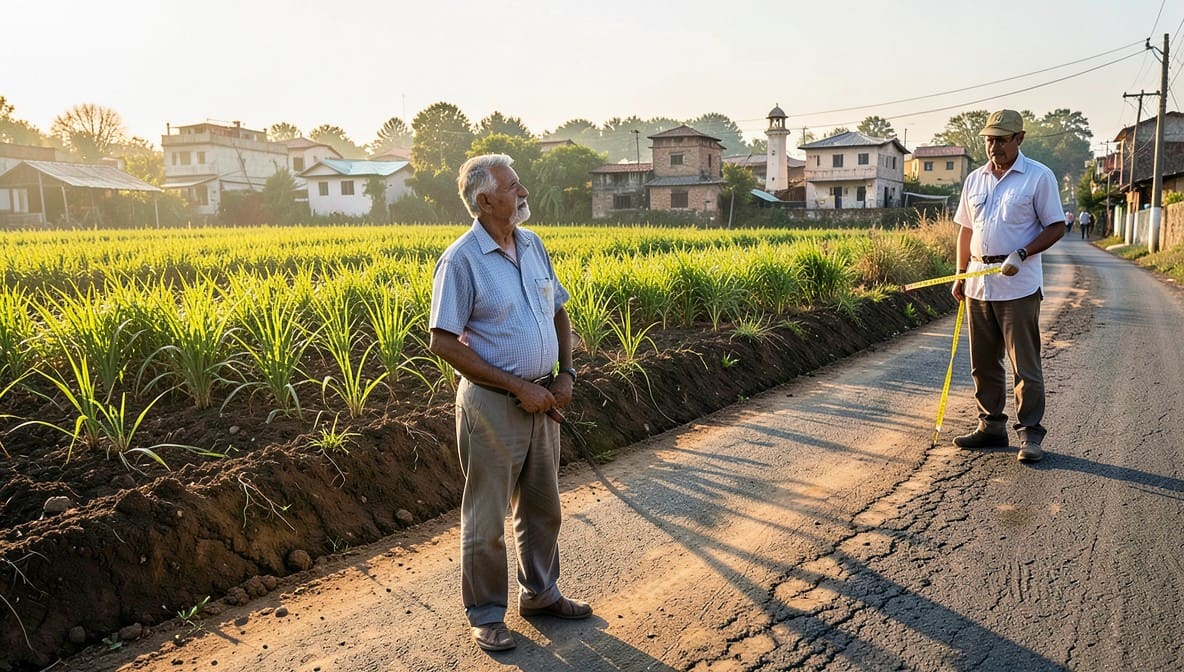
The Chhattisgarh High Court ruled that using private land for road widening without initiating acquisition under the LARR Act 2013 violates Article 300-A and due process, mandating immediate compensation with 9% interest from the date of possession. This sets a critical precedent for state agencies using land for public infrastructure without following statutory acquisition procedures.

Constitutional Challenge to Unnotified Legislation Dismissed as Premature | Chhattisgarh Freedom of Religion Bill, 2026 : CGHC
Case Law Analysis
|Chhattisgarh High Court

Constitutional Challenge to Unnotified Legislation Dismissed as Premature | Chhattisgarh Freedom of Religion Bill, 2026 : CGHC

The Chhattisgarh High Court dismissed a writ petition challenging the Freedom of Religion Bill, 2026, holding that constitutional challenges cannot be mounted against legislation that has not been notified or come into force. This reinforces the doctrine that only operative laws can trigger judicial review under Article 226, protecting legislative processes from speculative litigation.

Mere Claim of Victim Status Insufficient to Quash Charge Sheet | Prima Facie Evidence of Financial Fraud Triggers Proceeding : Chhattisgarh HC
Case Law Analysis
|Chhattisgarh High Court

Mere Claim of Victim Status Insufficient to Quash Charge Sheet | Prima Facie Evidence of Financial Fraud Triggers Proceeding : Chhattisgarh HC

The Chhattisgarh High Court ruled that alleging victim status does not halt criminal proceedings when there is prima facie evidence of conspiracy and fraud under Sections 420 and 120-B IPC. This sets a clear precedent that procedural protection cannot override investigative momentum in large-scale financial scams, affecting both complainants and accused in white-collar cases.

Section 5, Limitation Act 1908 | Bureaucratic Delays Within State Machinery Do Not Constitute Sufficient Cause for Condonation : Chhattisgarh HC
Case Law Analysis
|Chhattisgarh High Court

Section 5, Limitation Act 1908 | Bureaucratic Delays Within State Machinery Do Not Constitute Sufficient Cause for Condonation : Chhattisgarh HC

The Chhattisgarh High Court has ruled that internal administrative delays in state departments cannot justify extending the limitation period under Section 5 of the Limitation Act, 1908. This sets a clear precedent that public bodies are held to the same strict timelines as private litigants, reinforcing legal accountability and deterring institutional inertia in time-sensitive claims.

Writ Jurisdiction Under Article 226 | Cannot Substitute for CrPC Remedies After Charge-Sheet Filing : CGHC
Case Law Analysis
|Chhattisgarh High Court

Writ Jurisdiction Under Article 226 | Cannot Substitute for CrPC Remedies After Charge-Sheet Filing : CGHC

The Chhattisgarh High Court has ruled that once a charge-sheet is filed, writ jurisdiction cannot be invoked to demand reinvestigation or supplementary challans, as the petitioner’s remedies lie fully within the trial court under CrPC. This reinforces the principle that writ petitions are not forums for challenging investigative adequacy after formal prosecution begins, safeguarding the structured criminal procedure framework.

Post-Retirement Excess Salary Recovery Barred After 4 Years | Rafiq Masih Doctrine Applies to Class-III Employees : CGHC
Case Law Analysis
|Chhattisgarh High Court

Post-Retirement Excess Salary Recovery Barred After 4 Years | Rafiq Masih Doctrine Applies to Class-III Employees : CGHC

The Chhattisgarh High Court quashed the recovery of Rs. 60,510 from a retired Class-III employee, ruling that delay of over four years in detecting payroll errors bars recovery under the Rafiq Masih precedent. This reinforces that public employers cannot claw back overpayments after unreasonable delays, even after retirement, protecting low-income service retirees from financial hardship.

Section 307 IPC | Conviction Requires Proof of Life-Threatening Intent via Medical Evidence, Not Just Weapon Use: Chhattisgarh HC
Case Law Analysis
|Chhattisgarh High Court

Section 307 IPC | Conviction Requires Proof of Life-Threatening Intent via Medical Evidence, Not Just Weapon Use: Chhattisgarh HC

The Chhattisgarh High Court overturned a Section 307 IPC conviction, ruling that using a knife alone does not establish intent to kill without medical confirmation of a life-threatening injury. This sets a critical precedent for prosecutors and defense counsel: injury severity and expert medical opinion are indispensable to prove attempt to murder under Section 307, not mere weapon possession.

Chhattisgarh Land Revenue Code Section 250-A | Writ Petition Dismissed for Failure to Exhaust Statutory Appeal Before SDO: Chhattisgarh HC
Case Law Analysis
|Chhattisgarh High Court

Chhattisgarh Land Revenue Code Section 250-A | Writ Petition Dismissed for Failure to Exhaust Statutory Appeal Before SDO: Chhattisgarh HC

The Chhattisgarh High Court has ruled that petitioners cannot bypass the statutory appellate process under Section 250-A of the Chhattisgarh Land Revenue Code by filing writ petitions against non-execution of encroachment removal orders. The court directed the Sub-Divisional Officer to decide the pending appeal within 60 days, reinforcing that administrative remedies must be exhausted before judicial intervention - a critical procedural safeguard for land dispute litigants.

Section 107(5) CG Land Revenue Code | Clerical Khasra Number Errors Must Be Rectified Within 90 Days: Chhattisgarh HC
Case Law Analysis
|Chhattisgarh High Court

Section 107(5) CG Land Revenue Code | Clerical Khasra Number Errors Must Be Rectified Within 90 Days: Chhattisgarh HC

The Chhattisgarh High Court has mandated that revenue authorities must decide applications to correct clerical errors in Khasra numbers within 90 days under Section 107(5) of the CG Land Revenue Code, 1959. This binding timeline prevents administrative delay in land record accuracy, directly impacting landowners, revenue officials, and digital land governance systems across the state.

Section 149(2)(a)(ii) Motor Vehicles Act | Inconclusive RTI Reply Fails to Prove Invalid Licence; Insurer Liable for Claims : CGHC
Case Law Analysis
|Chhattisgarh High Court

Section 149(2)(a)(ii) Motor Vehicles Act | Inconclusive RTI Reply Fails to Prove Invalid Licence; Insurer Liable for Claims : CGHC

Chhattisgarh High Court rules that an insurer cannot escape liability merely on the basis of an inconclusive RTI response regarding the driver's licence validity. The burden of proof under Section 149(2)(a)(ii) of the Motor Vehicles Act remains on the insurer, and failure to conclusively establish the driver's lack of a valid licence bars repudiation of claims.

Revenue Authorities Must Seek Seized Records to Decide Mutation | EOW Investigation Pending : Chhattisgarh HC
Case Law Analysis
|Chhattisgarh High Court

Revenue Authorities Must Seek Seized Records to Decide Mutation | EOW Investigation Pending : Chhattisgarh HC

The Chhattisgarh High Court has ruled that revenue officers cannot indefinitely stall property mutation merely because an EOW investigation is ongoing. They are legally obligated to obtain and review seized documents to fairly assess claims grounded in registered title and statutory permissions, ensuring natural justice in administrative decisions affecting property rights.

Section 3H(4) National Highways Act | Compensation Entitlement Disputes Exclusively Within Competent Authority’s Domain, Not Writ Jurisdiction : Chhattisgarh HC
Case Law Analysis
|Chhattisgarh High Court

Section 3H(4) National Highways Act | Compensation Entitlement Disputes Exclusively Within Competent Authority’s Domain, Not Writ Jurisdiction : Chhattisgarh HC

The Chhattisgarh High Court has ruled that even when revenue records are corrected, disputes over compensation under the National Highways Act must be resolved solely by the Competent Authority under Section 3H(4). This reinforces the statutory exclusivity of administrative remedies and bars petitioners from bypassing them via writ petitions, affecting thousands of landowners awaiting delayed payouts.

Rule 358(6)(ix) Chhattisgarh Jail Rules | Single-Trial Multiple Murders Do Not Qualify as 'Multiple Cases' for Premature Release : Chhattisgarh HC
Case Law Analysis
|Chhattisgarh High Court

Rule 358(6)(ix) Chhattisgarh Jail Rules | Single-Trial Multiple Murders Do Not Qualify as 'Multiple Cases' for Premature Release : Chhattisgarh HC

The Chhattisgarh High Court ruled that Rule 358(6)(ix) requires convictions in two or more distinct criminal cases-not multiple offenses arising from a single trial-to qualify for premature release. This decision grants immediate release to a prisoner serving 19+ years for multiple murders in one case, setting a critical precedent for prison law interpretation across states with similar rules.

Preliminary Inquiry in Cyber Crime Complaints | Bank Freezes Lawful During Investigation of Invoice Fraud in Commercial Disputes : Chhattisgarh HC
Case Law Analysis
|Chhattisgarh High Court

Preliminary Inquiry in Cyber Crime Complaints | Bank Freezes Lawful During Investigation of Invoice Fraud in Commercial Disputes : Chhattisgarh HC

The Chhattisgarh High Court has ruled that preliminary inquiry into cyber complaints alleging invoice manipulation and fund routing in commercial transactions cannot be prematurely quashed, and that bank account freezes initiated during such investigations are lawful. This sets a critical precedent for businesses facing digital fraud allegations, affirming investigative powers even before formal charges are filed.

Section 19 Contempt of Court Act | Appeal Maintainable Only Against Punitive Orders, Not Procedural Directions : CGHC
Case Law Analysis
|Chhattisgarh High Court

Section 19 Contempt of Court Act | Appeal Maintainable Only Against Punitive Orders, Not Procedural Directions : CGHC

Chhattisgarh High Court clarifies that appeals under Section 19 of the Contempt of Court Act, 1971, lie only against orders imposing punishment or framing charges, not against interim procedural directions. This ruling narrows appellate recourse in contempt proceedings, impacting litigants seeking to challenge non-punitive orders.

Motor Vehicles Act | Interest on Future Prospects Accrues from Date of Claim Filing, Not Award Date: Chhattisgarh HC Affirms Oriental Insurance Precedent : CGHC
Case Law Analysis
|Chhattisgarh High Court

Motor Vehicles Act | Interest on Future Prospects Accrues from Date of Claim Filing, Not Award Date: Chhattisgarh HC Affirms Oriental Insurance Precedent : CGHC

The Chhattisgarh High Court has ruled that interest on future prospects in motor accident compensation must be calculated from the date the claim is filed, not from the date of the award. This clarifies the timeline for financial redressal, ensuring claimants receive timely compensation and aligning lower courts with the Supreme Court’s stance in Oriental Insurance v. Niru. The decision impacts insurers, claimants, and tribunals nationwide by standardizing interest computation.

Section 302 IPC | Uncorroborated Police Confession + Delayed Recovery Invalidates Murder Conviction: Chhattisgarh HC
Case Law Analysis
|Chhattisgarh High Court

Section 302 IPC | Uncorroborated Police Confession + Delayed Recovery Invalidates Murder Conviction: Chhattisgarh HC

The Chhattisgarh High Court overturned a murder conviction where the sole incriminating statement was an uncorroborated extra-judicial confession and the recovery of evidence was unreasonably delayed. This reinforces that no conviction under Section 302 IPC can rest on custodial statements without independent corroboration, safeguarding against coerced confessions in tribal and rural investigations.

CGST Act Section 112(8)-(9) | Stay on Recovery Permitted via Pre-Deposit & Undertaking Amid Unconstituted Appellate Tribunal: Chhattisgarh HC
Case Law Analysis
|Chhattisgarh High Court

CGST Act Section 112(8)-(9) | Stay on Recovery Permitted via Pre-Deposit & Undertaking Amid Unconstituted Appellate Tribunal: Chhattisgarh HC

Taxpayers facing GST recovery orders can now secure a stay on collection by filing a pre-deposit and undertaking under CBIC Circular 224/2024, even when the Appellate Tribunal remains unconstituted, provided compliance occurs within 15 days. This relief bridges a critical procedural gap for taxpayers awaiting appellate review, offering immediate financial protection without requiring tribunal formation.

RFCTLARR Act 2013, Section 30(3) | Submerged Land Entitles Owner to Compensation Even Without Formal Acquisition: Chhattisgarh HC
Case Law Analysis
|Chhattisgarh High Court

RFCTLARR Act 2013, Section 30(3) | Submerged Land Entitles Owner to Compensation Even Without Formal Acquisition: Chhattisgarh HC

The Chhattisgarh High Court has ruled that land submerged due to dam construction triggers statutory compensation under the Land Acquisition Act, 2013, regardless of whether formal acquisition proceedings were initiated. This sets a critical precedent for displaced landowners in infrastructure projects, mandating authorities to identify, demarcate, and pay compensation within 150 days - reinforcing Article 300A’s protection against arbitrary deprivation of property.

Motor Vehicles Act | Married Sister Not a Legal Dependent for Loss of Income Compensation: Chhattisgarh HC
Case Law Analysis
|Chhattisgarh High Court

Motor Vehicles Act | Married Sister Not a Legal Dependent for Loss of Income Compensation: Chhattisgarh HC

The Chhattisgarh High Court has ruled that a married sister, absent proof of financial dependency on her deceased brother, cannot claim loss of income under Section 166 of the Motor Vehicles Act. Only conventional heads like funeral expenses and filial consortium are recoverable, capped at ₹85,000 as per Supreme Court precedent - a critical clarification for insurers and claimants navigating familial dependency claims.

Long-Standing Possession + Flawed Revenue Demarcation Establish Prima Facie Case for Injunction | Chhattisgarh HC
Case Law Analysis
|Chhattisgarh High Court

Long-Standing Possession + Flawed Revenue Demarcation Establish Prima Facie Case for Injunction | Chhattisgarh HC

The Chhattisgarh High Court granted temporary injunction to defendants who had held continuous possession of land for over 15 years, ruling that administrative orders issued after the fact-without proper revenue survey or notice-cannot override established possession. This reinforces that procedural fairness in land records matters more than post-facto documentation in interim relief.

Section 34 Arbitration Act | Loss of Profit Award Without Evidence or Contractual Basis Constitutes Patent Illegality : Chhattisgarh HC
Case Law Analysis
|Chhattisgarh High Court

Section 34 Arbitration Act | Loss of Profit Award Without Evidence or Contractual Basis Constitutes Patent Illegality : Chhattisgarh HC

Chhattisgarh High Court sets aside an arbitral award granting loss of profit, holding that damages cannot be awarded without proof of actual loss or a contractual entitlement. The ruling reinforces that arbitrators exceed their jurisdiction under Section 34 of the Arbitration and Conciliation Act when granting unproven claims, protecting parties from speculative compensation.