The Chhattisgarh High Court has affirmed that landowners whose property is submerged due to public infrastructure projects are entitled to compensation under the Right to Fair Compensation and Transparency in Land Acquisition, Rehabilitation and Resettlement Act, 2013, even in the absence of formal acquisition proceedings. This ruling clarifies the state’s obligation to act proactively when land is effectively taken by submergence.
Background & Facts
The Dispute
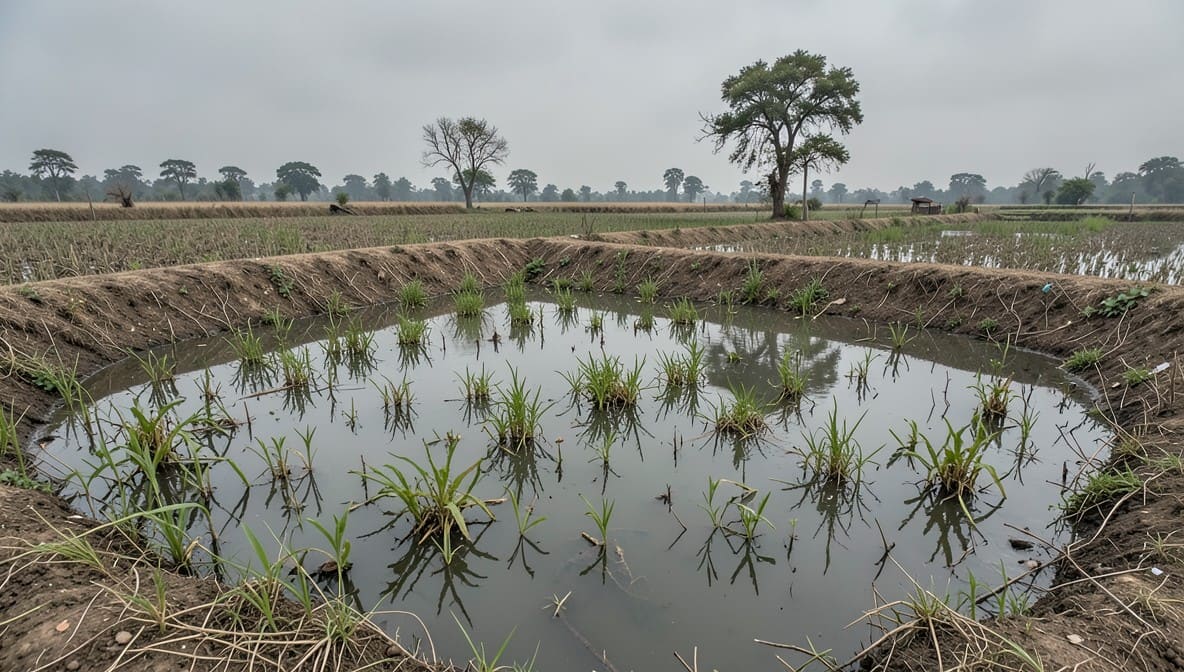
The petitioners, Bhojkumar Patel and Hemant Kumar, both sons of Gugan Prasad and residents of Village Kabaripali, Tahsil Dabhra, District Sakti, Chhattisgarh, are owners of agricultural land affected by the construction of the Ghatoi Dam. Despite the dam’s completion and the subsequent submergence of portions of their land, no acquisition proceedings were initiated under the Land Acquisition Act, 2013. The petitioners’ land, identified by Khasra Nos. 164/6, 282/2, and 282/5, with respective areas of 0.0730, 0.2180, and 0.0490 hectares, has been rendered unusable due to submergence, yet they have received no compensation, notice, or formal recognition of loss.
Key Facts
- The petitioners’ land is located in the designated submergence zone of the Ghatoi Dam project.
- No notification under Section 4 or Section 6 of the Land Acquisition Act, 2013, has been issued for their land.
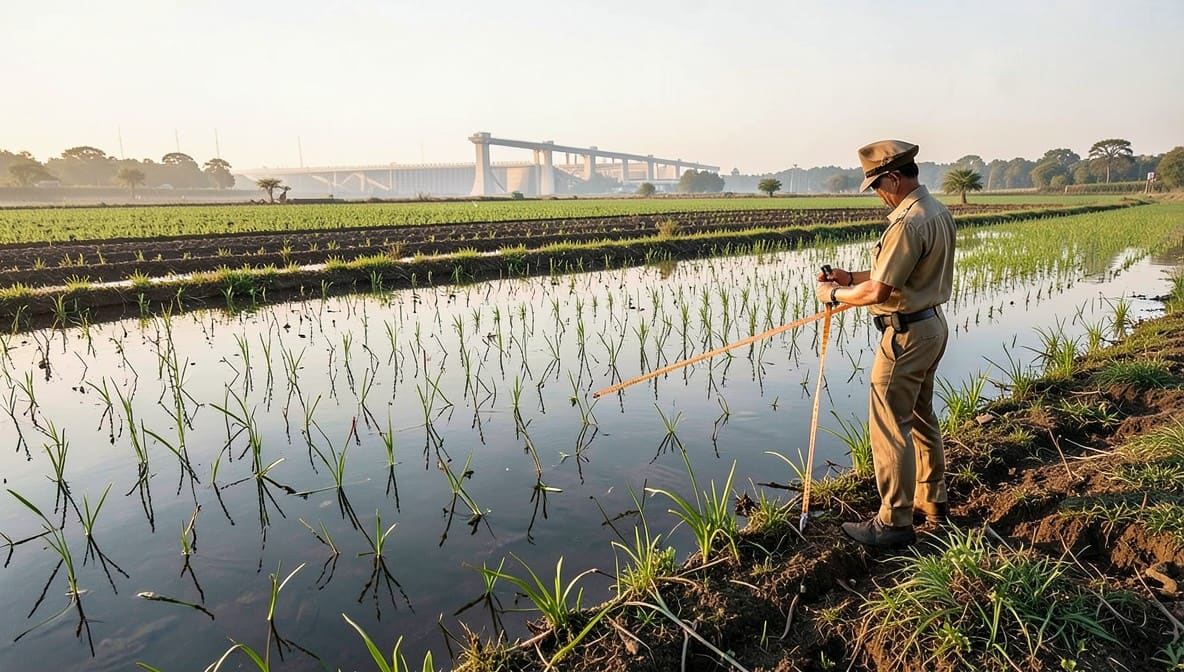
- No survey, demarcation, or assessment of land value has been conducted by the authorities.
- The petitioners have made no prior formal representation seeking compensation prior to filing this writ petition.
- The respondents include the State of Chhattisgarh, the Collector of Sakti, the Sub-Divisional Officer (Revenue Cum Land Acquisition), and the Executive Engineer of the Water Resources Department.
Procedural History
- Date of filing: Writ Petition No. 1792 of 2026 filed before the High Court of Chhattisgarh, Bilaspur.
- Date of hearing: 17 April 2026.
- No prior litigation or administrative representation by the petitioners is recorded in the judgment.
The Parties' Positions
For the Petitioners
The petitioners, through their counsel Mr. Pranjal Agrawal, submitted that the submergence of their land constitutes a de facto acquisition under the Land Acquisition Act, 2013. They argued that the state cannot evade its statutory obligation to compensate merely because formal acquisition proceedings were not initiated. They sought directions for demarcation, initiation of acquisition, and payment of compensation with interest under Sections 30(3) and 80 of the Act.
For the Respondents
The State, represented by Mr. Anand Dadariya, Dy. Advocate General, did not contest the factual assertion of submergence. The counsel conceded that the matter required administrative action and requested the Court to dispose of the petition with appropriate directions.
Relief Sought
The petitioners sought:
- A direction for spot inspection and demarcation of their land.
- Initiation of acquisition proceedings under the Land Acquisition Act, 2013.
- Payment of compensation with statutory interest and additional amounts under Sections 30(3) and 80.
- A direction to decide their representation, which had not been formally filed.
The Legal Issue
The central question was whether the submergence of private land due to a public project without formal acquisition proceedings triggers the state’s obligation to initiate compensation under the Land Acquisition Act, 2013, and whether the Court can direct authorities to act where no statutory process has been commenced.
Arguments Presented
For the Petitioner
The petitioners contended that submergence constitutes a permanent deprivation of land, equivalent to acquisition under Section 3(1)(i) of the 2013 Act, which defines acquisition as including any form of taking possession or control. They relied on the principle that the state cannot avoid its constitutional duty under Article 300A by failing to follow procedural formalities. They emphasized that the Act mandates compensation even in cases of indirect acquisition, and that delay in initiating proceedings cannot extinguish the right to compensation.
For the Respondent
The State did not dispute the factual claim of submergence but argued that the absence of a formal notification under Section 4 of the Act precluded automatic liability. However, the counsel accepted the Court’s jurisdiction to direct administrative action and did not oppose the grant of liberty to file a representation.
The Court's Analysis
The Court declined to adjudicate the merits of the claim at this stage, noting the absence of a formal representation or administrative record. However, it recognized the gravity of the petitioners’ situation: their land has been rendered unusable by a state project, and the state has taken no steps to assess or compensate for the loss. The Court emphasized that the right to compensation under the Land Acquisition Act, 2013, is not contingent upon prior procedural compliance by the state.
"The state cannot remain passive when private land is effectively taken by submergence due to a public project. The obligation to compensate arises from the fact of deprivation, not merely from the issuance of a notification."
The Court held that while it could not order compensation outright without a demarcation and assessment, it had the power under Article 226 to direct the authorities to initiate the necessary administrative process. The Court rejected the notion that procedural lapses by the state could deprive citizens of their statutory rights. It further noted that the Act’s objective of fairness and transparency requires proactive state action, especially when the deprivation is visible and permanent.
The Verdict
The petition succeeded in part. The Court granted liberty to the petitioners to file a fresh representation before the respondent authorities within 15 days, along with a copy of this order. Upon filing, the authorities are directed to demarcate the petitioners’ land within 45 days. If the land is confirmed to be within the submergence zone, acquisition proceedings under the Land Acquisition Act, 2013, must be initiated, and compensation - including interest under Section 30(3) and additional amounts under Section 80 - must be determined and paid within 90 days of demarcation. All pending applications are disposed of. No costs are awarded.
What This Means For Similar Cases
Submergence Triggers Statutory Obligation
- Practitioners must now argue that physical submergence by a public project constitutes de facto acquisition, regardless of whether a Section 4 notification was issued.
- Landowners affected by dams, reservoirs, or flood control projects can invoke the 2013 Act even if no formal acquisition process was initiated.
Procedural Delay Cannot Nullify Rights
- The state cannot use its own inaction as a defense to deny compensation.
- Courts may direct authorities to initiate proceedings where rights are clearly infringed, even in the absence of prior representation.
Actionable Steps for Practitioners
- File a representation immediately upon confirmation of submergence, attaching satellite imagery or official maps showing inundation.
- Cite this judgment to compel demarcation and compensation under Sections 30(3) and 80 of the Land Acquisition Act, 2013.
- Where authorities delay, file a writ petition seeking mandatory directions under Article 226.