The Chhattisgarh High Court has reaffirmed that prior possession under a registered sale deed, coupled with settled occupation, constitutes a strong prima facie case for grant of temporary injunction, even when rival claims are supported by subsequent revenue orders. This ruling clarifies the threshold for interim relief in land disputes where documentation and possession conflict with administrative determinations.
Background & Facts
The Dispute
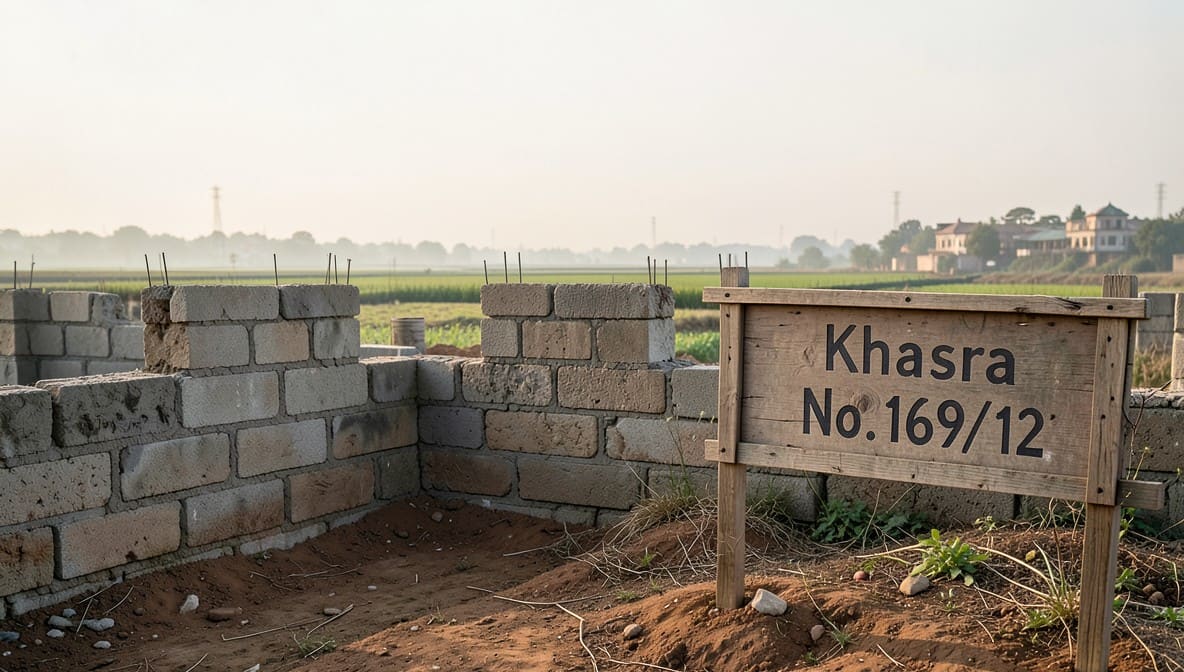
The plaintiffs, Nikhilesh Kumar and others, filed a civil suit seeking declaration of title, permanent injunction, and damages concerning a plot of land bearing Khasra No. 401/16, admeasuring 2420 sq. ft., situated at village Rudri Khar, Dhamtari. They claimed ownership through a registered sale deed dated 13.07.2007 executed in favor of their deceased father, late Maheshwar Singh Gautam, who had taken physical possession thereafter. After his death, the plaintiffs continued in peaceful possession. The defendants, Chandrashekhar Chandrakar and others, contested this claim, asserting ownership over the same parcel through a registered sale deed dated 24.07.2018 and relying on revenue demarcation proceedings.
Key Facts
- The plaintiffs’ father purchased the property on 13.07.2007 via a registered sale deed (Exhibit P-1)
- The defendants purchased the same parcel on 24.07.2018 via a registered sale deed (Exhibit D-1)
- The plaintiffs have been in continuous, peaceful possession since 2007
- A demarcation was conducted by the Revenue Inspector on 15.01.2022
- The Tahsildar issued an order on 03.05.2022 affirming the defendants’ claim
- The Collector, Dhamtari, affirmed the Tahsildar’s order on 18.07.2022
- The plaintiffs were not notified of the demarcation proceedings
- The demarcation report allegedly misidentified the boundaries and excluded the plaintiffs’ possession
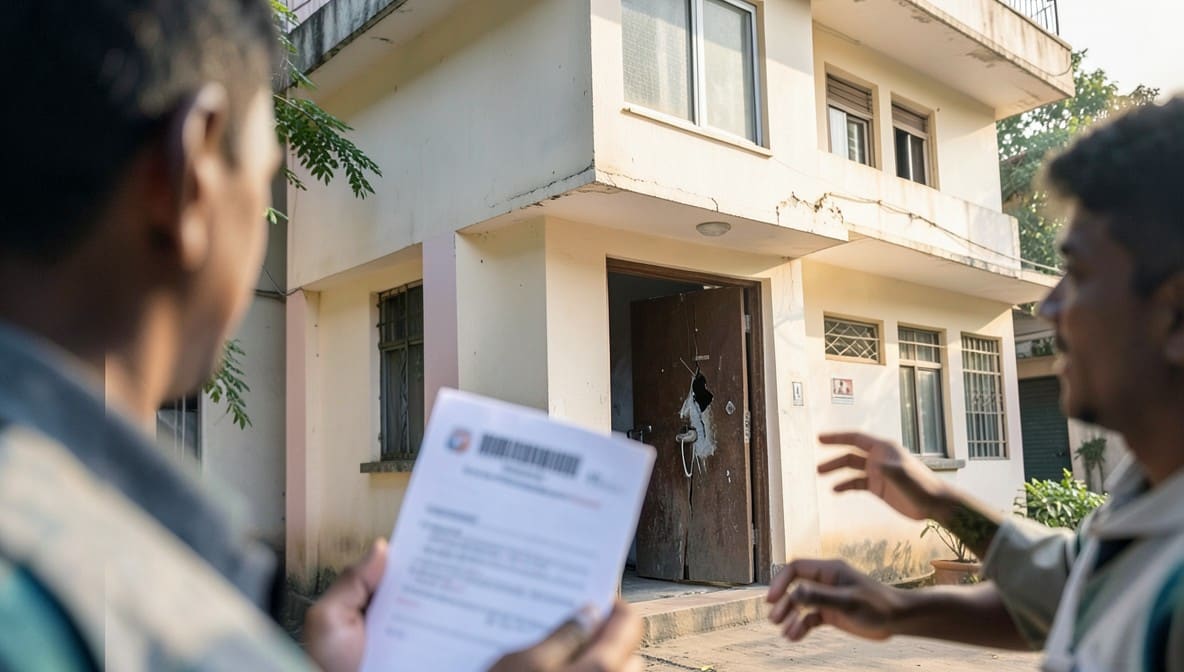
- The plaintiffs allege the defendants damaged the boundary wall and gate in early 2023 to assert control
Procedural History
- 13.07.2007: Plaintiffs’ father executed registered sale deed for Khasra No. 401/16
- 24.07.2018: Defendants executed registered sale deed for same parcel
- 15.01.2022: Revenue Inspector conducted demarcation without notice to plaintiffs
- 03.05.2022: Tahsildar issued order favoring defendants
- 18.07.2022: Collector affirmed Tahsildar’s order in revision
- 20.02.2023: Civil Suit No. 5-A/2023 filed by plaintiffs seeking declaration, permanent injunction and damages
- 05.04.2023: Plaintiffs filed application under Order 39 Rules 1 & 2 r/w Section 151 CPC for temporary injunction
- 29.07.2025: Learned District Judge allowed injunction application
- 15.08.2025: Defendants filed appeal under Order 43 Rule 1(r) CPC
- 16.04.2026: Chhattisgarh High Court heard appeal and delivered judgment
The Parties' Positions
Plaintiffs’ Position: They are prior purchasers with registered title and continuous possession since 2007. The demarcation was conducted without notice, violated natural justice, and misidentified the property. The defendants’ claim is a subsequent attempt to displace lawful possessors.
Defendants’ Position: They are lawful owners under a registered sale deed dated 2018. The revenue authorities have conclusively determined their title and possession through demarcation and appellate orders. The plaintiffs’ possession is unlawful and based on suppression of revenue proceedings.
Relief Sought
The plaintiffs sought: (1) declaration of title to Khasra No. 401/16, (2) permanent injunction restraining defendants from interference, and (3) damages for trespass and destruction of boundary structures. The interim relief sought was temporary injunction pending final disposal of the suit.
The Legal Issue
The central question was whether a plaintiff who establishes prior possession under a registered sale deed, and whose possession has been uninterrupted for over 15 years, can be denied temporary injunction merely because a revenue authority later issued an order in favor of a subsequent purchaser, especially when the revenue proceedings were conducted without notice to the prior possessor.
Arguments Presented
For the Appellant/Petitioner
Learned counsel for the appellants contended that the Trial Court erred in granting injunction without considering the binding effect of the Tahsildar’s order dated 03.05.2022 and its affirmation by the Collector. He argued that under Section 250 of the Chhattisgarh Land Revenue Code, revenue orders are conclusive as to possession and title until set aside by a competent court. He further submitted that the plaintiffs suppressed material facts by not disclosing the pending revenue proceedings and approached the Court with unclean hands. He relied on Sardar Singh v. State of Rajasthan to argue that courts must defer to revenue authorities in land disputes.
For the Respondent/State
The State, through its panel lawyer, supported the Trial Court’s order. He submitted that the revenue demarcation was procedurally flawed - conducted without notice to the plaintiffs, without proper measurement, and without recording their objections. He argued that revenue orders are not conclusive on questions of title in civil suits and are merely prima facie evidence. He cited K. S. Srinivasan v. K. S. Srinivasan to emphasize that possession under a registered deed, coupled with long-standing occupation, constitutes a strong prima facie case for injunction.
The Court's Analysis
The High Court undertook a meticulous review of the pleadings, documents, and the Trial Court’s reasoning. It emphasized that the grant of temporary injunction hinges on three elements: prima facie case, balance of convenience, and irreparable injury. The Court found that the plaintiffs had established all three.
"The plaintiffs are prior purchasers under a registered sale deed dated 13.07.2007 and have been in continuous possession since then. The defendants’ claim, though supported by a later sale deed and revenue order, cannot override settled possession at the interim stage."
The Court noted that the demarcation proceedings were conducted on 15.01.2022 without serving notice to the plaintiffs, violating principles of natural justice. The Revenue Inspector’s report was internally inconsistent, as it failed to reconcile the physical boundaries with the recorded survey numbers. The Trial Court rightly treated the revenue order as not conclusive at the interim stage, particularly where procedural irregularities were evident.
The Court further held that possession under a registered sale deed, even if contested, creates a prima facie title. The defendants’ possession, being subsequent and based on a disputed revenue order, could not outweigh the plaintiffs’ long-standing, peaceful, and documented occupation. The Court observed that the Trial Court had correctly applied the principles laid down in Manoj Kumar v. State of Haryana and S. S. Srinivasan v. S. S. Srinivasan, which hold that courts must protect existing possession unless the rival claim is clearly superior.
The Court rejected the argument of unclean hands, noting that the plaintiffs were not aware of the demarcation proceedings and had no opportunity to challenge them. The burden to prove suppression lay with the defendants, which they failed to discharge.
The Verdict
The appeal was dismissed. The High Court upheld the order dated 29.07.2025 of the District Judge, Dhamtari, granting temporary injunction in favor of the plaintiffs. The defendants are restrained from interfering with the suit property bearing Khasra No. 401/16 until final disposal of the suit or until further orders. The Court directed that the status quo be maintained, and any attempt to alter the boundary, demolish structures, or displace the plaintiffs shall be treated as contempt of court.
What This Means For Similar Cases
Prior Possession Trumps Subsequent Revenue Orders
- Practitioners must argue that revenue demarcation orders are not conclusive in civil suits unless challenged and set aside
- A registered sale deed coupled with long-term possession creates a prima facie case sufficient for interim relief
- Courts will not grant injunctions to parties who obtained possession through procedurally flawed revenue proceedings
Notice and Natural Justice Are Non-Negotiable
- Failure to serve notice during revenue demarcation renders the order vulnerable to challenge in civil court
- Courts will disregard revenue findings if procedural fairness is compromised
- Legal notices must be served on all known claimants before any boundary determination
Injunction Standard Is Possession-Centric
- The balance of convenience favors the party in settled possession, even if title is disputed
- Irreparable injury is presumed when possession is disturbed after 15 years of uninterrupted occupation
- Damages are inadequate remedy where physical displacement occurs