The Chhattisgarh High Court has clarified that an insurance company cannot escape liability under the Motor Vehicles Act merely by raising a speculative defence that the driver lacked a valid licence. Absent concrete evidence establishing this denial, the insurer remains bound to compensate victims, reinforcing the protective intent of the statutory regime.
Background & Facts
The Dispute
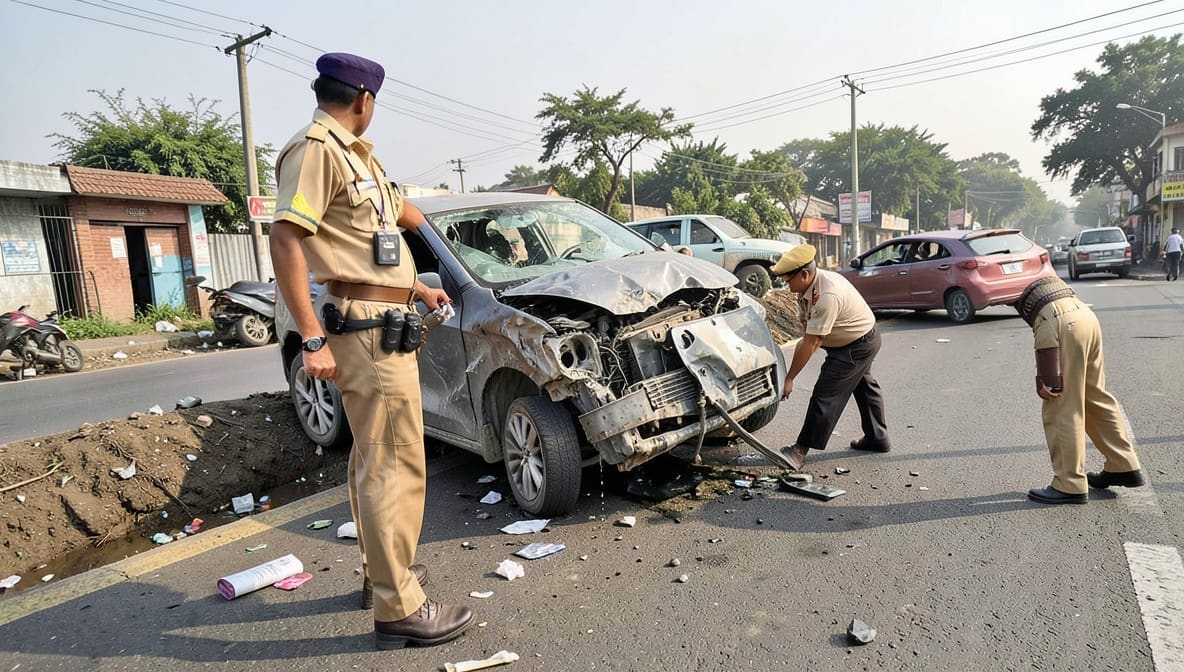
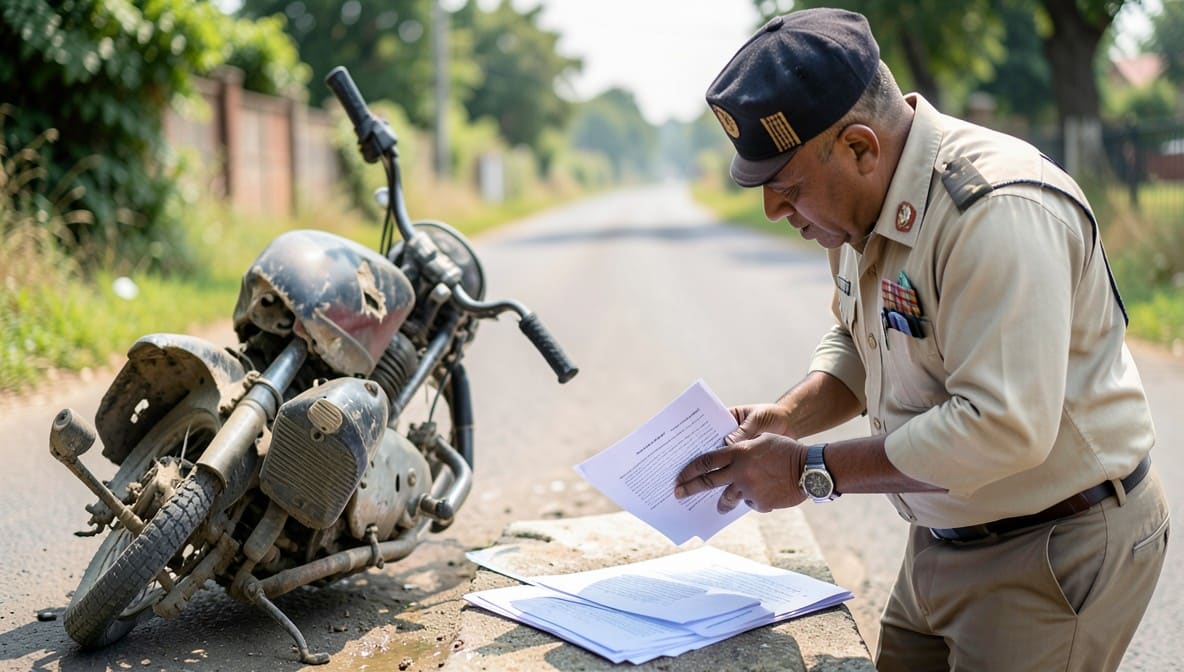
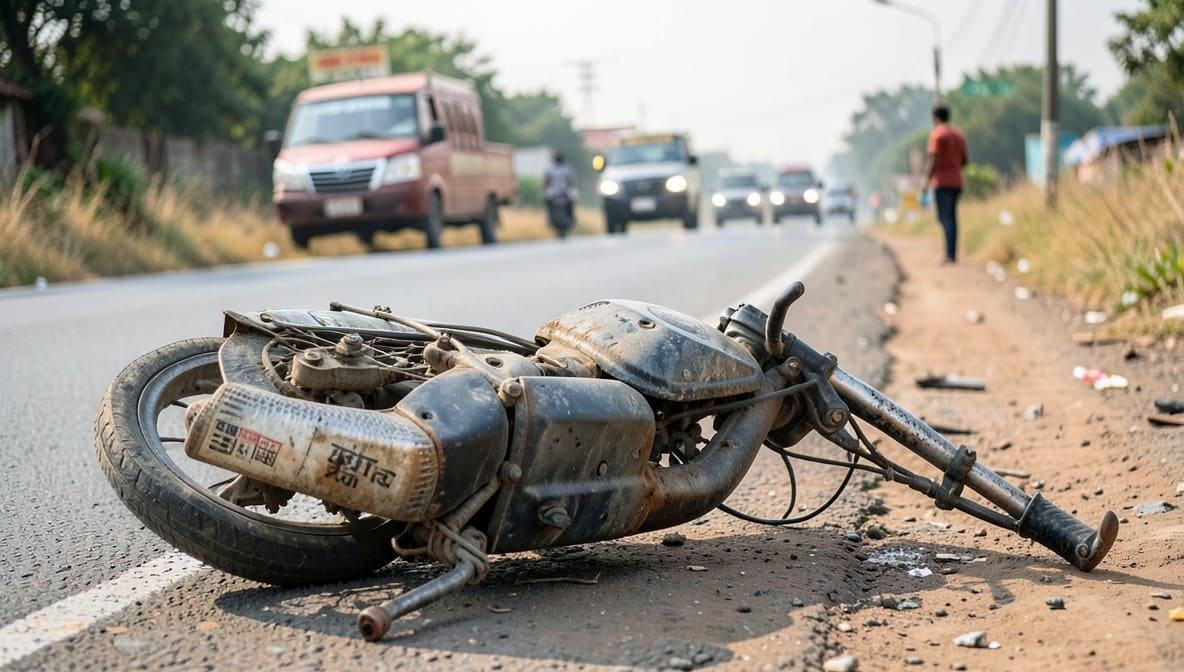
The dispute arose from a fatal motor accident involving a two-wheeler bearing registration number C.G. 12-AT-0496, driven by Vedprakash Yadav, who died at the scene. The accident occurred on 15.08.2017 in the vicinity of Village Kadri, Police Station Ratanpur, District Bilaspur, Chhattisgarh. The deceased driver was the owner of the vehicle. The accident resulted in the death of Vedprakash Yadav and serious injuries to his wife, Smt. Surekah Bai, who later filed a claim for compensation before the Motor Accident Claims Tribunal.
Key Facts
- The deceased driver, Vedprakash Yadav, was the owner of the motorcycle (C.G. 12-AT-0496) insured with Bajaj Allianz General Insurance Company Limited.
- The claimants were Radheshyam Yadav (father of the deceased), Mahetarin Bai (mother of the deceased), and Smt. Surekah Bai (wife of the deceased).
- The claim petition was filed on 10.09.2018 before the 5th Additional Motor Accident Claims Tribunal, Bilaspur (Claim Case No. 436/2018).
- The insurer, Bajaj Allianz, raised a defence that the deceased driver did not possess a valid driving licence at the time of the accident.
- To substantiate this, the insurer’s Law Officer, Aleem Ahmad Khan, examined Kanta Gour, an investigator, who filed an RTI application with the Regional Transport Office (RTO), Bilaspur, seeking confirmation of the driver’s licence status.
- The RTO, Bilaspur, responded on 12.11.2018 stating that due to incomplete information provided, the requested document could not be supplied.
- The insurer took no further steps to obtain the licence status through alternative means, such as direct verification, official records, or witness testimony.
- The claimants produced evidence of the accident, death certificate, and dependency documents.
Procedural History
- 15.08.2017: Motor accident resulting in death of Vedprakash Yadav and injury to Smt. Surekah Bai.
- 10.09.2018: Claim petition filed before the 5th Additional Motor Accident Claims Tribunal, Bilaspur.
- 12.11.2018: RTO, Bilaspur, replied to RTI application stating insufficient information to verify licence status.
- 23.12.2019: Claims Tribunal awarded compensation of Rs. 9,27,200/- against the insurer, holding that the defence of invalid licence was not substantiated.
- 20.01.2020: Appeal filed by Bajaj Allianz before the High Court under Section 173 of the Motor Vehicles Act, 1988 (MAC No. 303/2020).
- 20.04.2026: Hearing before the Single Bench of the Chhattisgarh High Court.
The Parties' Positions
For the Appellant (Insurer)
- Argued that the deceased driver did not hold a valid driving licence.
- Relied solely on the inconclusive RTI reply from the RTO as proof of licence invalidity.
- Contended that under Section 149(2)(a)(ii) of the Motor Vehicles Act, 1988, the insurer is not liable if the driver was unlicensed.
- Asserted that the Claims Tribunal erred in not examining the licence status conclusively.
For the Respondents (Claimants)
- Did not appear before the High Court.
- The Tribunal’s award stood unchallenged by any counter-evidence or rebuttal.
Relief Sought
The appellant sought setting aside of the Claims Tribunal’s award dated 23.12.2019 and a declaration that the insurer is not liable to pay compensation on the ground of the driver’s alleged lack of a valid licence.
The Legal Issue
The central question was whether an insurer can successfully avoid liability under Section 149(2)(a)(ii) of the Motor Vehicles Act, 1988, by relying on an inconclusive RTI response without taking further steps to establish that the driver lacked a valid licence.
Arguments Presented
For the Appellant
The appellant’s counsel contended that Section 149(2)(a)(ii) of the Motor Vehicles Act, 1988, explicitly excludes insurer liability where the driver of the vehicle was not duly licensed. He argued that the RTI reply from the RTO, which stated that the document could not be supplied due to incomplete information, was sufficient to raise a reasonable doubt about the driver’s licence status. He cited National Insurance Co. Ltd. v. Laxmi Narain Dhut to support the proposition that insurers are entitled to raise such defences and must be given a fair opportunity to prove them.
For the Respondent
No appearance was made on behalf of the respondents. The Tribunal’s findings, therefore, stood unchallenged by any opposing submissions.
The Court's Analysis
The Court examined the insurer’s obligation under Section 149(2)(a)(ii) and the evidentiary standard required to invoke this exclusion. It noted that while the insurer is entitled to raise the defence of invalid licence, the burden of proving it lies squarely on the insurer. The Court emphasized that an inconclusive RTI response, which merely states that records cannot be furnished due to incomplete information, does not constitute proof of licence invalidity.
"The Insurance Company did not take further steps to prove that the driver of the offending vehicle did not have valid driving licence to drive the offending vehicle."
The Court held that the insurer’s failure to pursue alternative means of verification - such as obtaining a certified copy of the driving licence register from the RTO, cross-checking with police records, or examining the vehicle’s insurance proposal form - rendered its defence speculative and legally insufficient. The Court distinguished this case from those where insurers had produced official records or court-certified evidence of licence non-issuance. It reaffirmed the principle that the Motor Vehicles Act is a welfare legislation, and its provisions must be interpreted to ensure prompt and adequate compensation to victims, not to provide insurers with loopholes based on procedural lapses.
The Claims Tribunal had correctly placed the burden on the insurer and found no credible evidence to support the denial of liability. The High Court found no error in this reasoning.
The Verdict
The appeal was dismissed. The Court upheld the award of Rs. 9,27,200/- passed by the Claims Tribunal on 23.12.2019. The insurer is directed to pay the full compensation amount within 8 weeks from the date of this order. Interest at 7.5% per annum shall accrue from the date of the Tribunal’s award (23.12.2019) until actual payment. Costs of Rs. 10,000/- are awarded to the respondents.
What This Means For Similar Cases
Insurer’s Burden Is Not Met By Inconclusive RTI Responses
- Practitioners must now treat RTI replies that state "information incomplete" or "records not traceable" as legally insufficient to discharge the insurer’s burden under Section 149(2)(a)(ii).
- Insurers must proactively obtain certified records from RTOs or produce official documentation to substantiate licence invalidity.
Procedural Diligence Is Non-Negotiable
- Failure to follow up on initial RTI responses or to explore alternative verification methods will result in dismissal of the defence.
- Claims Tribunals and High Courts will not accept speculative or half-hearted attempts to deny liability.
Compensation Remains Paramount
-
The judgment reinforces that the Motor Vehicles Act prioritizes victim compensation over technical defences.
-
Insurers cannot delay or deny claims based on procedural gaps unless they provide conclusive, verifiable evidence.
-
Always obtain certified copies of driving licence records from RTOs, not just RTI replies.
-
If an RTI response is inconclusive, file a formal application under Section 151 CPC for production of records or seek a court direction.
-
Do not rely on silence or non-response as proof - affirmative evidence is mandatory.