The Chhattisgarh High Court has reaffirmed that where a dispute arises over who is entitled to compensation for land acquired under the National Highways Act, 1956, the remedy lies exclusively with the statutory Competent Authority, not in writ jurisdiction. This decision underscores the principle that constitutional remedies cannot bypass statutory adjudicatory mechanisms designed for such disputes.
Background & Facts
The Dispute
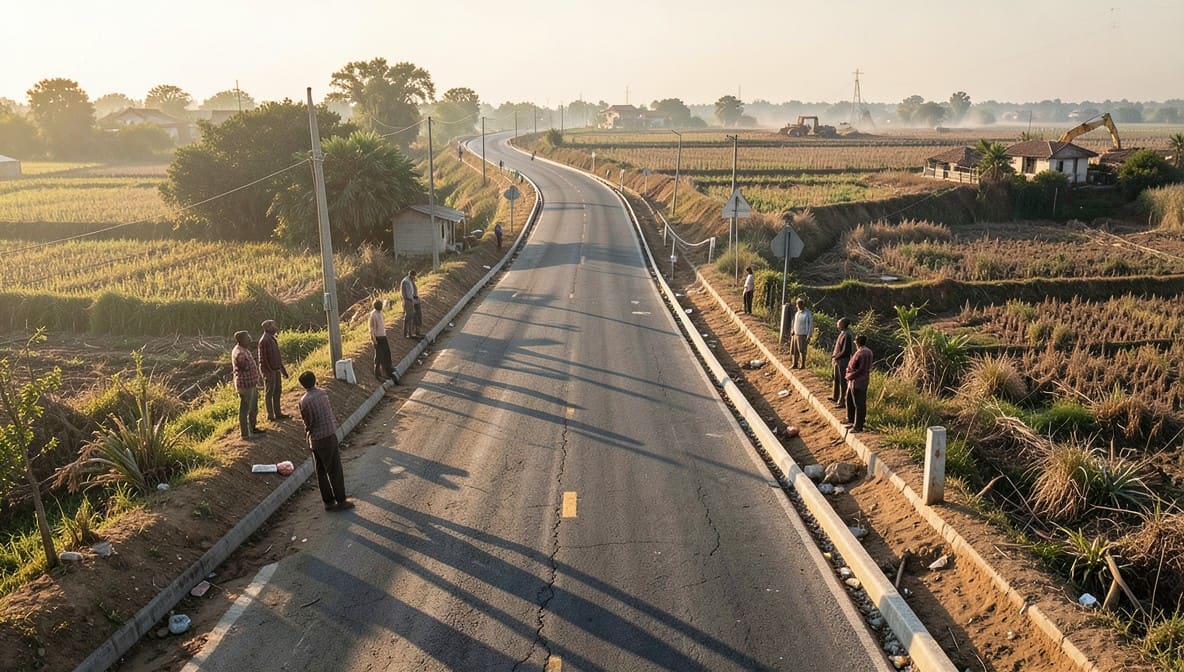
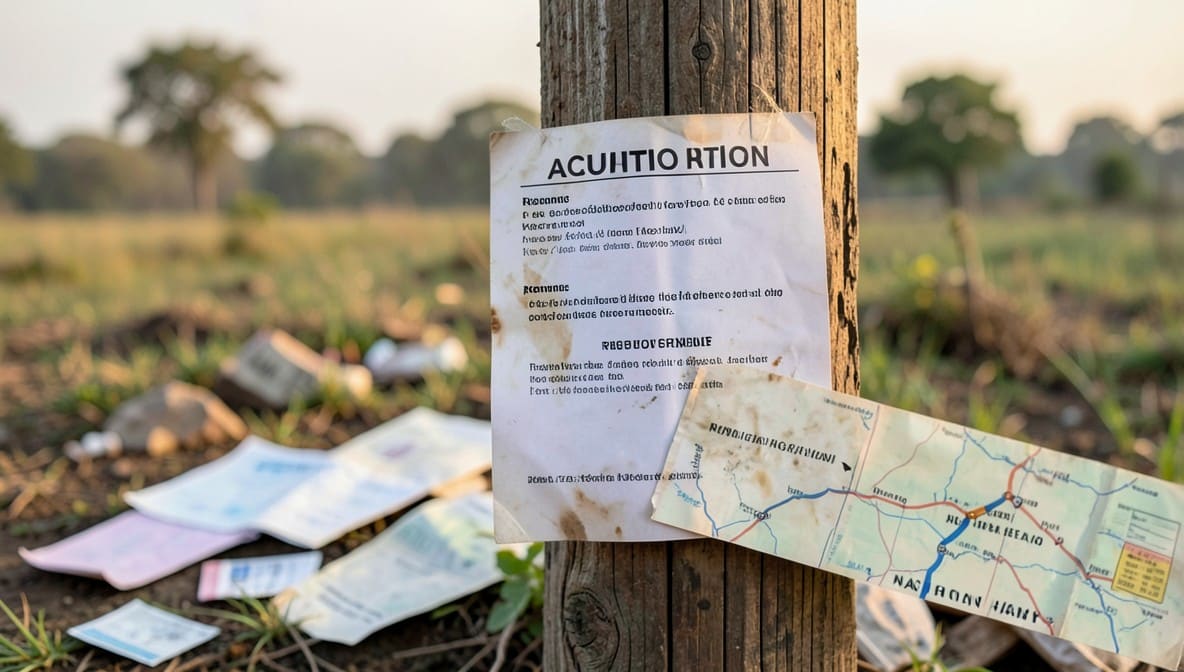
The petitioner, Manharan Suryavanshi, claims ownership of two parcels of land - Khasra Nos. 1204 and 1306 - at Village Afrid, Tahsil Saragaon, District Janjgir-Champa, which were acquired by the State for the widening of National Highway No. 200 (New No. 49). Although compensation was determined under Section 3G of the National Highways Act, 1956, the respondent authorities have failed to disburse the awarded amount since the award was passed on 30.07.2016.
Key Facts
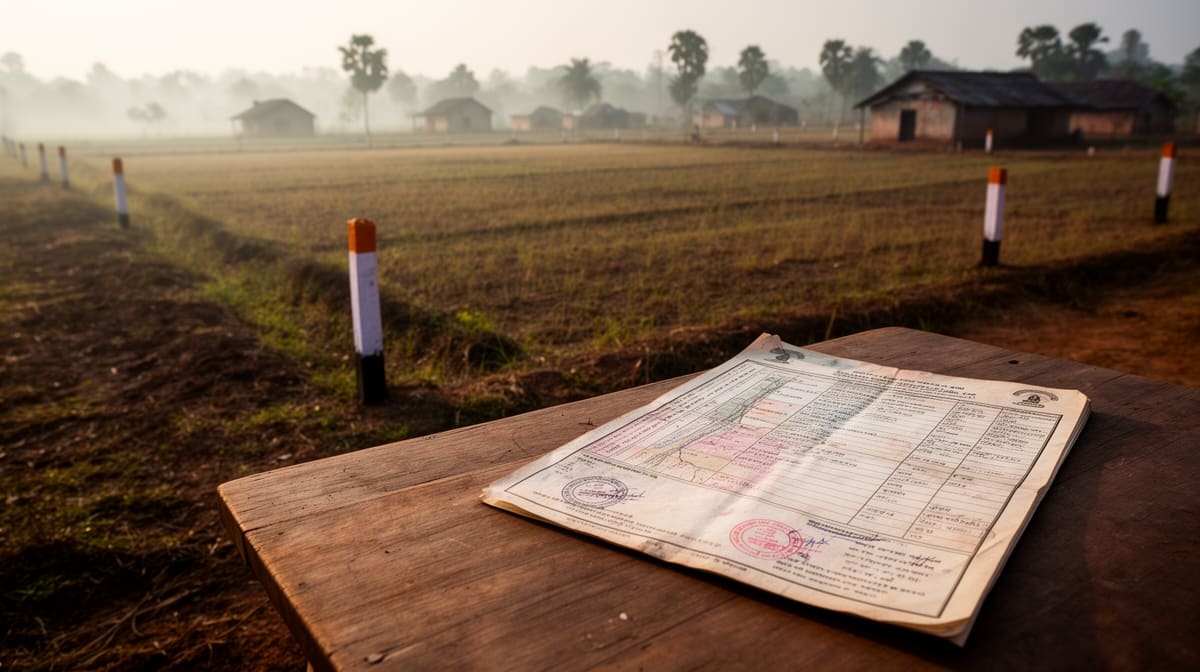
- The petitioner acquired the land through a Tabadalanama (transfer deed) from a predecessor.
- The Tahsildar, after due inquiry, issued an order recognizing the petitioner’s title on the basis of the Tabadalanama and supporting documents.
- Mutation entries were updated in the revenue records (B-1 and P-II) to reflect the petitioner as the lawful owner.
- Initially, the acquisition notification dated 2016 erroneously named Prem Bai as the owner.
- The petitioner raised objections to this error, leading to the correction of the notification and mutation in his favor.
- Despite these corrections, no compensation has been disbursed as of the filing of the petition in 2021.
- The petitioner has made repeated representations to the authorities, all of which have remained unaddressed.
Procedural History
- 30.07.2016: Compensation award passed under Section 3G of the National Highways Act, 1956.
- 2016 - 2021: Repeated representations made by petitioner to revenue and highway authorities seeking disbursement.
- 2021: Writ Petition (WPC No. 1121 of 2021) filed before the Chhattisgarh High Court.
- 20.04.2026: Judgment delivered by the High Court.
The Parties' Positions
Petitioner’s Position: The petitioner asserts that his title is beyond dispute, having been confirmed by the Tahsildar’s order and duly recorded in revenue records. He argues that no genuine dispute exists between rival claimants, and therefore, the authorities’ continued inaction is arbitrary, illegal, and violative of Article 300-A of the Constitution. He seeks immediate disbursement of compensation with interest from the date of notification.
Respondents’ Position: The State, through its counsel, did not contest the petitioner’s claim on merits but relied on the statutory framework to argue that any dispute over entitlement must be resolved by the Competent Authority under Section 3H of the Act.
NHAI’s Assistance: Though not a party, NHAI’s counsel was invited to assist the Court and argued that Section 3H(4) mandates adjudication of entitlement disputes by the Competent Authority, and writ jurisdiction is not a substitute.
Relief Sought
The petitioner sought:
- Production of all records relating to the acquisition.
- Direction to disburse the compensation amount determined under Section 3G.
- Interest on the compensation from the date of notification until actual payment.
- Costs and any other relief deemed just.
The Legal Issue
The central question was whether a claimant whose name has been duly mutated in revenue records following a Tahsildar’s order is entitled to direct disbursement of compensation under the National Highways Act, 1956, or whether such claims must first be adjudicated by the Competent Authority under Section 3H(4) despite the absence of a live dispute between rival claimants.
Arguments Presented
For the Petitioner
The petitioner’s counsel contended that the issue is not one of apportionment or conflicting claims but of rectification of an administrative error. He relied on the Tahsildar’s order and mutation entries as conclusive proof of title, arguing that Section 3H(3) of the Act obliges the Competent Authority to determine the rightful claimant, and that determination has already been made. He further cited Article 300-A of the Constitution, asserting that the State cannot deprive a lawful owner of compensation without due process.
For the Respondent
The State, through its counsel, did not oppose the petitioner’s factual claims but deferred to the statutory mechanism. NHAI’s counsel emphasized that the initial notification named Prem Bai, and even though the error was later corrected, the process of determining entitlement under Section 3H(4) remains mandatory. He relied on Vinod Kumar v. District Magistrate, Mau to argue that writ jurisdiction cannot be invoked to bypass the statutory forum for entitlement disputes.
The Court's Analysis
The Court undertook a detailed examination of the statutory scheme under the National Highways Act, 1956, particularly Sections 3G and 3H, and the Supreme Court’s ruling in Vinod Kumar v. District Magistrate, Mau. The Court noted that while the petitioner’s title appears well-established through revenue records and the Tahsildar’s order, the initial misnomer in the notification created a procedural ambiguity that falls squarely within the scope of Section 3H(4).
"The scheme of the Act reveals that the remedy of reference under Section 18 is intended to be available only to a 'person interested'. ... Section 30 is not confined in its operation only to 'persons interested'. It would, therefore, be available for being invoked by the 'persons interested' if they were neither present nor represented in proceedings before the Collector..."
The Court held that even if the petitioner’s claim is based on a post-notification devolution of title, the statutory mechanism under Section 3H(4) is the exclusive forum for resolving such disputes. The Court emphasized that the Competent Authority is statutorily mandated to determine the person entitled to compensation, and this function cannot be usurped by writ jurisdiction.
The Court further clarified that the correction of the notification and mutation in revenue records, while strong evidence, do not constitute a final adjudication under the Act. The Competent Authority must still conduct a hearing, examine all claims, and issue a reasoned order.
The Court rejected the petitioner’s argument that no dispute exists, noting that the very fact that the notification originally named another person creates a prima facie issue of entitlement that must be resolved by the designated authority.
The Verdict
The petition was dismissed without costs. The Court directed the Competent Authority under the National Highways Act, 1956, to issue notices to all concerned parties, afford them a full hearing, and decide the petitioner’s claim for compensation within three months of receipt of a certified copy of this order. The Court made clear that no opinion was expressed on the merits of the petitioner’s claim, and all issues remain open for adjudication by the Competent Authority.
What This Means For Similar Cases
Statutory Forums Are Exclusive for Entitlement Disputes
- Practitioners must not file writ petitions seeking direct disbursement of compensation where title or entitlement is contested, even if supported by revenue records.
- The existence of mutation entries or Tahsildar orders does not oust the jurisdiction of the Competent Authority under Section 3H(4).
- Writ jurisdiction under Article 226 cannot be used to circumvent statutory adjudicatory mechanisms.
Procedural Errors Require Statutory Correction
- Administrative errors in notifications (e.g., wrong name) must be addressed through the Competent Authority’s adjudicatory process, not through judicial intervention.
- Petitioners should file applications before the Competent Authority under Section 3H(4) to claim entitlement, even if they believe their title is uncontested.
- Delay in filing before the Competent Authority may be excused if the claimant acted promptly upon discovering the error, but the forum remains mandatory.
Evidence Must Be Presented to the Statutory Body
- Revenue records, Tahsildar orders, and Tabadalanamas are admissible evidence before the Competent Authority but are not conclusive without its adjudication.
- Practitioners should prepare comprehensive dossiers for submission to the Competent Authority, including all documentary proof of title and correspondence with authorities.
- Failure to approach the Competent Authority first may result in dismissal of subsequent writ petitions on grounds of alternate remedy.