The Chhattisgarh High Court has delivered a significant ruling affirming that a conviction under Sections 302 and 201 of the Indian Penal Code cannot rest on speculative inferences, uncorroborated recovery, or non-existent confessions. The judgment underscores the foundational principle that guilt must be established beyond reasonable doubt through credible, admissible evidence.
Background & Facts
The Dispute
The appellant, Birsingh S/o Jhingur Baiga, was convicted by the Sessions Judge, Kabirdham, for the murder of his brother, Rajesingh Baiga, and for causing disappearance of evidence. The prosecution alleged that Birsingh, along with his juvenile son Sukhiram, murdered Rajesingh by pressing his mouth with a blanket while he was attempting to assault them, and then staged the death as a suicide by hanging the body.
Key Facts
- The deceased, Rajesingh Baiga, was reportedly mentally disturbed for one and a half to two months prior to his death.
- On 03.07.2014, Rajesingh assaulted his wife, Smt. Aghnibai, with a pestle, causing grievous injuries, after which she was hospitalized.
- On 07.07.2014, Birsingh filed a merger intimation (Ex.P.-11) with Police Station Chilphi, reporting that his brother had been found hanged.
- The post-mortem report (Ex.P.-12) by Dr. Sulbha Ahluwaliya (PW-10) concluded the cause of death as homicidal, due to sudden cardiac and respiratory arrest.
- An FIR (Ex.P.-14) was registered on 24.07.2014 against an unknown person under Section 302 IPC.
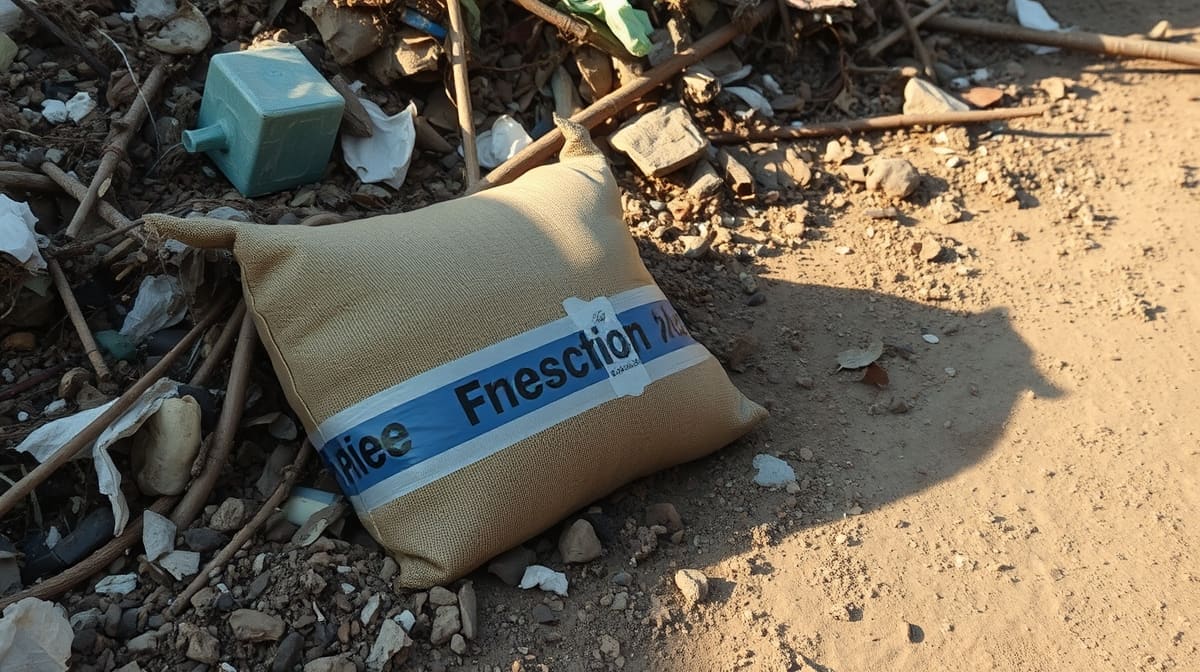
- The alleged murder weapon - a blanket - was seized on 06.04.2015, more than seven months after the incident, under a disclosure statement (Ex.P.-1, Ex.P.-2).
- The seizure was purportedly conducted in the presence of two witnesses: Ram Singh (PW-1) and Kamal (PW-7).
- Smt. Aghnibai (PW-4), the deceased’s wife, testified that her husband was mentally unstable and that she believed he committed suicide by hanging.
- No other prosecution witness provided substantive evidence supporting the murder theory.
- The trial court relied on the alleged extra-judicial confession of the appellant and the seizure of the blanket to convict him.
Procedural History
- 07.07.2014: Discovery of the deceased’s body; merger intimation filed.
- 24.07.2014: FIR registered under Section 302 IPC.
- 06.04.2015: Seizure of blanket (Ex.P.-3) based on disclosure statement.
- Date unspecified: Charge sheet submitted before Judicial Magistrate, First Class, Kabirdham.
- 15.10.2015: Sessions Judge convicted appellant under Sections 302 and 201 IPC; sentenced to life imprisonment and 7 years RI, to run concurrently.
- 17.04.2026: Appeal heard and decided by Division Bench of Chhattisgarh High Court.
Relief Sought
The appellant sought quashing of the conviction and sentence, arguing that the evidence was insufficient, the seizure was delayed and uncorroborated, and no extra-judicial confession was proven.
The Legal Issue
The central question was whether a conviction under Section 302 and Section 201 of the Indian Penal Code can be sustained when the only incriminating evidence is an uncorroborated recovery made after a seven-month delay and an alleged extra-judicial confession that is not substantiated by any witness testimony.
Arguments Presented
For the Appellant
Learned counsel argued that the blanket (Ex.P.-3) was recovered after an unexplained delay of over seven months, with no independent corroboration from the attesting witnesses Ram Singh (PW-1) and Kamal (PW-7), who failed to support the seizure in their testimony. The trial court’s reliance on an extra-judicial confession was misplaced, as no such confession was recorded or substantiated by any witness. The prosecution’s case was built on speculation and lacked direct or circumstantial evidence linking the appellant to the murder.
For the Respondent
The State defended the conviction, asserting that the disclosure statement led to recovery of the murder weapon and that the trial court had rightly appreciated the evidence. However, no independent evidence or witness testimony was presented to substantiate the confession or the seizure.
The Court's Analysis
The Division Bench conducted a meticulous review of the entire prosecution record and found that the case against the appellant was devoid of credible evidence. The court emphasized that the recovery of the blanket on 06.04.2015, after a gap of over seven months, was inherently suspect and could not be relied upon without corroboration from the attesting witnesses, who themselves did not confirm the seizure in their depositions.
"None of these witnesses have, however, supported the same and, that apart, the alleged ‘blanket’ was recovered on 06.04.2015, i.e., after passing of a considerable period of more than seven months from the date of occurrence of the alleged incident, therefore, no reliance could be placed upon it in order to attribute the appellant for the commission of the alleged crime."
The court further observed that the wife of the deceased, Smt. Aghnibai (PW-4), explicitly stated that her husband was mentally unstable and that she believed he committed suicide. No other witness provided any material evidence contradicting this version. The trial court’s finding of an extra-judicial confession was held to be entirely unsupported, as no witness testified to having heard or recorded such a confession.
"We, however, do not find any confession as such that was made by him. In view thereof, the finding of the trial Court convicting the appellant, thus, found to be based upon virtually no evidence, which, therefore, cannot be held to be sustained."
The court reiterated the well-established principle that conviction cannot rest on suspicion, conjecture, or uncorroborated recovery. The burden of proof lies squarely on the prosecution, and failure to discharge it mandates acquittal.
The Verdict
The appeal was allowed. The conviction and sentence dated 15.10.2015 under Sections 302 and 201 IPC were set aside. The appellant, who was on bail, had his bail bond and surety discharged. The court directed a copy of the order to be sent to the trial court for necessary compliance.
What This Means For Similar Cases
Extra-Judicial Confessions Require Corroboration
- Practitioners must challenge convictions based solely on alleged extra-judicial confessions unless they are independently corroborated by credible evidence or testimony.
- Courts must scrutinize the circumstances under which confessions are claimed to have been made; mere reference in the judgment without witness support is insufficient.
Delayed Recovery Undermines Credibility
- Recovery of incriminating objects after a prolonged delay - especially beyond six months - must be rigorously justified and corroborated by independent witnesses.
- Failure to examine attesting witnesses on the recovery process renders the evidence inadmissible and unreliable.
Prosecution Must Prove Guilt Beyond Doubt
- In cases involving serious offences like murder, the prosecution must present a complete, consistent, and unbroken chain of evidence.
- Where the defence version is plausible and not disproved, and the prosecution’s case is built on gaps and contradictions, acquittal is the only legally tenable outcome.