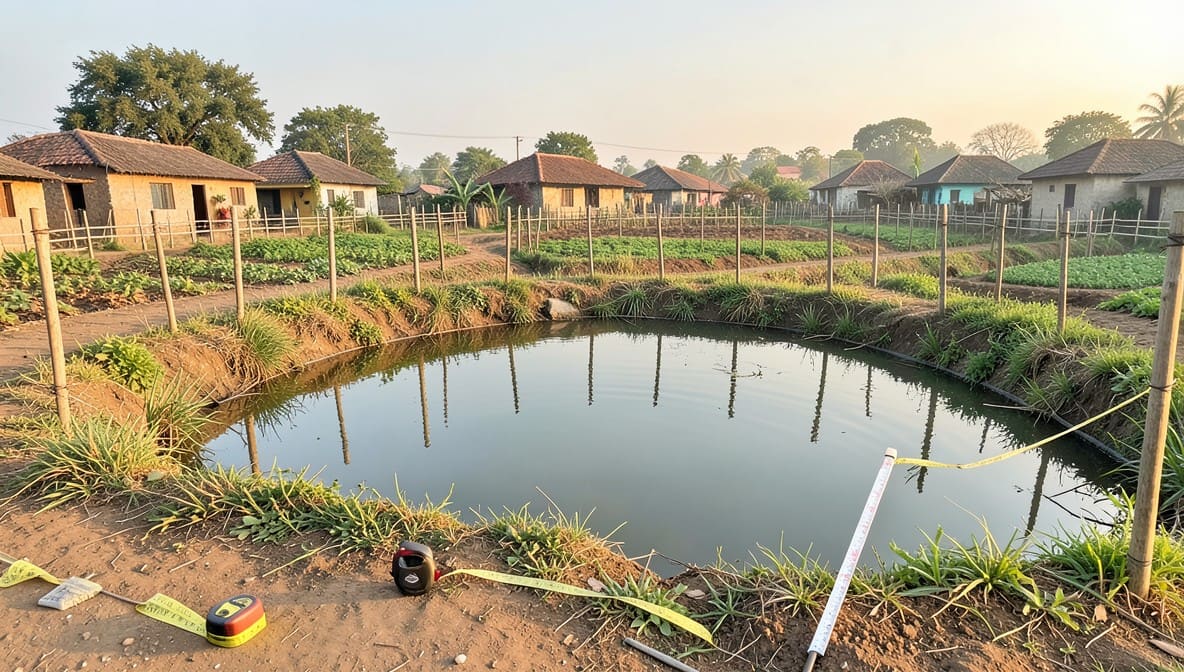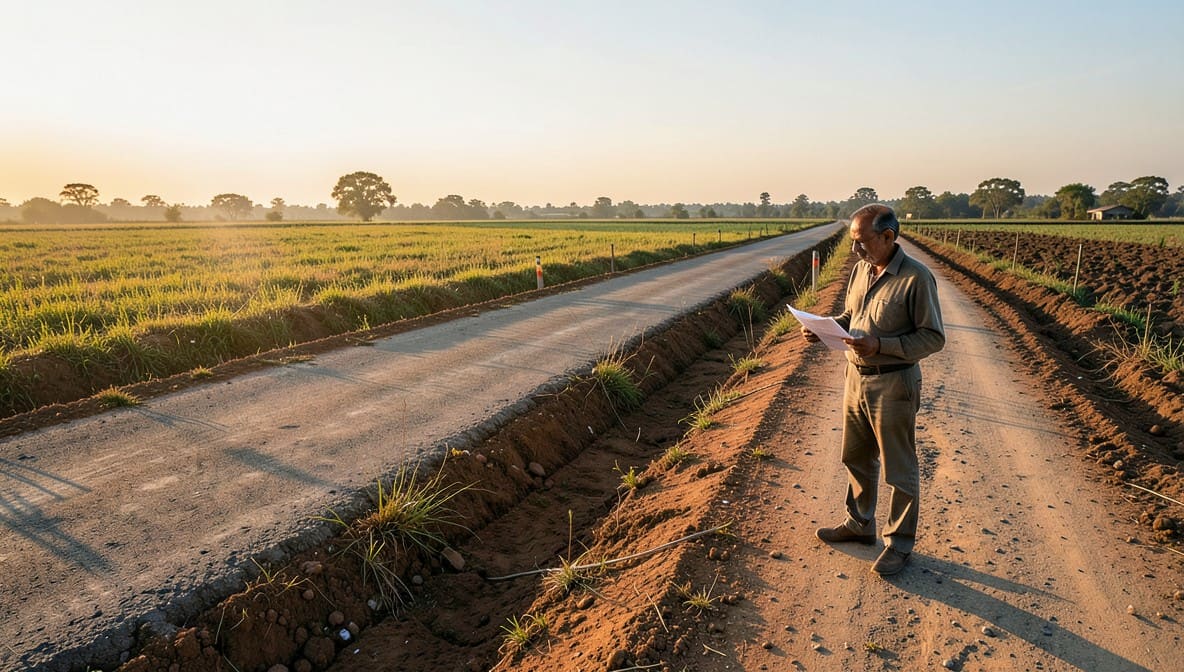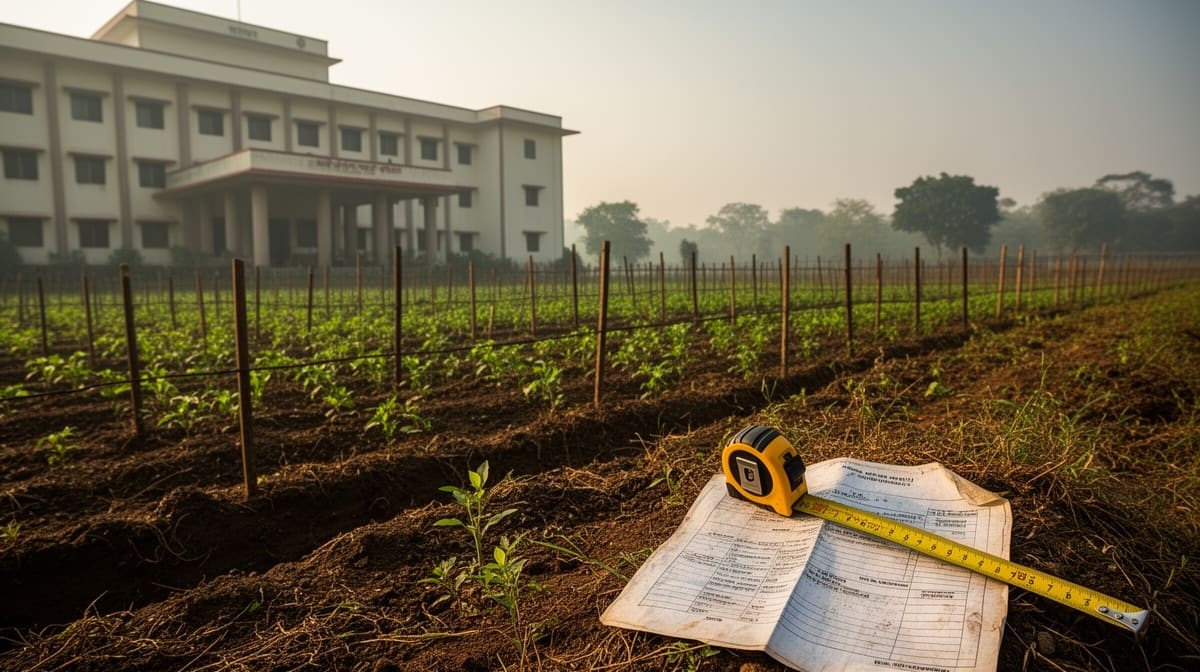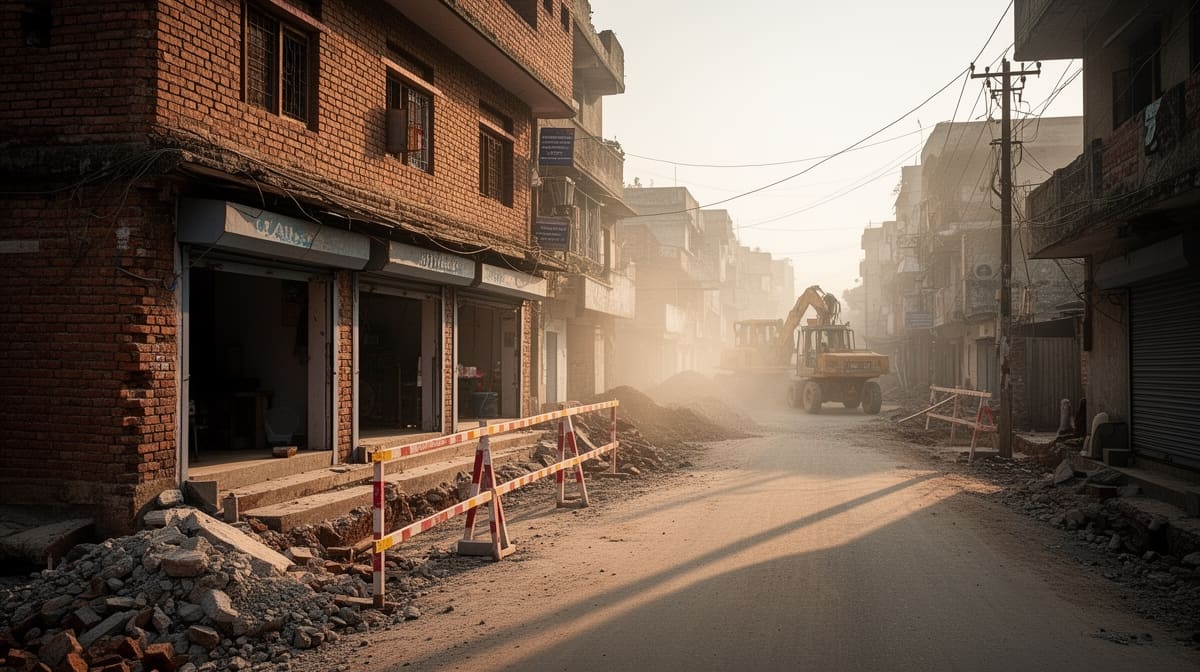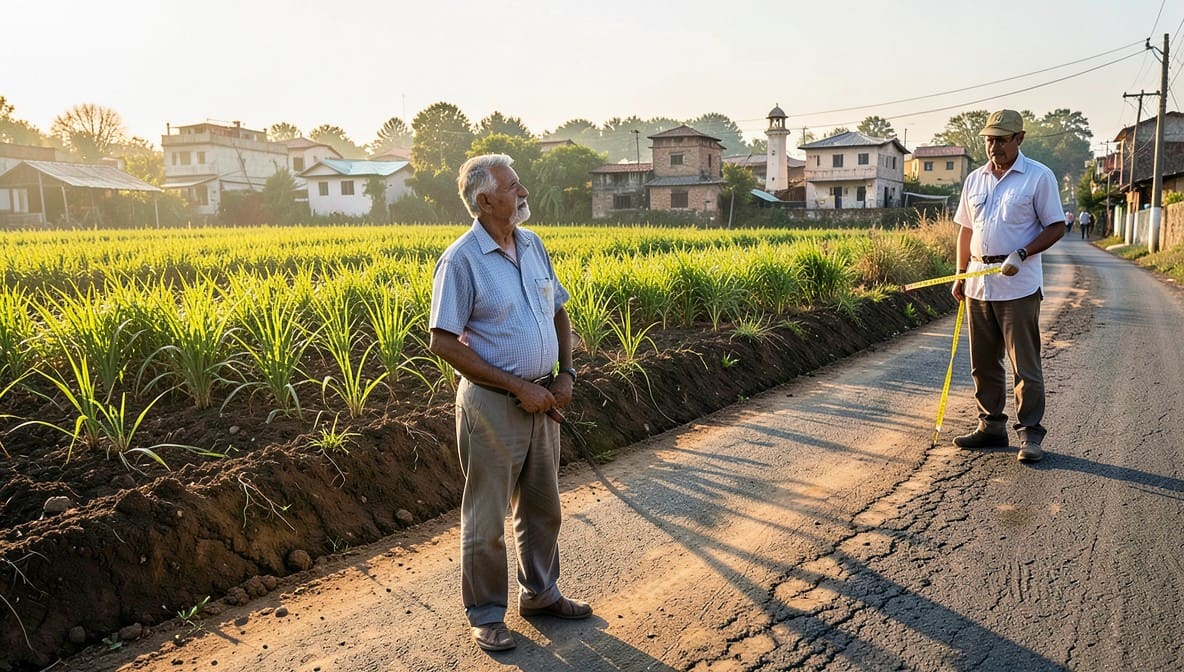
The Chhattisgarh High Court has reaffirmed that the state cannot lawfully utilize private land for public infrastructure projects without initiating formal acquisition proceedings under the Right to Fair Compensation and Transparency in Land Acquisition, Rehabilitation and Resettlement Act, 2013. This judgment underscores the non-negotiable requirement of procedural fairness and statutory compliance in land acquisition, even when the project serves a public purpose.
Background & Facts
The Dispute
The petitioner, Dharmilal Gavel, is a farmer and recorded owner of agricultural land bearing Khasra Nos. 286, 290, 190/1, 61, and 109/1 in revenue village Sukalipali, District Sakti, Chhattisgarh. The State undertook the widening of the existing Sakarra - Bhothiya road, a vital link connecting villages including Sonadula, Katari, Sukalipali, Suloni, Dongiya, and Chikhalrauda. During this work, a portion of the petitioner’s land was physically used for road expansion without any formal acquisition, notification, or payment of compensation.
Key Facts
- The petitioner’s land is duly recorded in revenue records as his proprietary interest
- The road widening project was initiated by the Public Works Department without initiating acquisition proceedings under the LARR Act, 2013
- No Section 4 notification, Section 6 declaration, or Section 9 award was issued
- The petitioner submitted representations on 21.11.2016 to the Sub-Divisional Officer (Revenue), Sakti, and again on 22.11.2016 to the Collector, Janjgir-Champa, seeking compensation
- Despite repeated follow-ups and personal representations, no response or payment was made
- Construction on the petitioner’s land commenced without any legal authority or prior settlement
- The State has not disputed the petitioner’s ownership but claims the extent of land used is a factual dispute
Procedural History
- 21.11.2016: First representation made to Sub-Divisional Officer (Revenue), Sakti
- 22.11.2016: Second representation made to Collector, Janjgir-Champa
- 2017 - 2025: Repeated oral and written requests to Public Works Department, Sub-Divisional Officer (P.W.D.), and Tahsildar remained unaddressed
- 2026: Construction activities on the petitioner’s land continued without compensation
- 2026: Writ Petition No. 1836 of 2026 filed before the High Court of Chhattisgarh
Relief Sought
The petitioner sought:
- Production of all records relating to the land use
- Payment of fair compensation under the LARR Act, 2013
- Stay on further construction on his land until compensation is paid
- Any other relief deemed just by the Court
The Legal Issue
The central question was whether the State can lawfully use a private landowner’s property for public road widening without initiating acquisition proceedings under the Right to Fair Compensation and Transparency in Land Acquisition, Rehabilitation and Resettlement Act, 2013, and whether the petitioner’s constitutional right to property under Article 300A and statutory right to compensation are enforceable absent formal acquisition.
Arguments Presented
For the Petitioner
Learned counsel argued that the State’s use of the petitioner’s land without any acquisition notification, survey, or compensation violates the mandatory procedural safeguards under the LARR Act, 2013. The petitioner’s ownership is undisputed and recorded in revenue records. The State’s conduct amounts to arbitrary deprivation of property under Article 300A and breaches the principles of natural justice. The petitioner has exhausted all alternative remedies through repeated representations, which were ignored. The Court must intervene to prevent irreparable harm.
For the Respondent
The State counsel contended that the claim of land use is a disputed question of fact, requiring demarcation to determine whether the petitioner’s land was actually encroached upon. The State asserted that the road project was approved for public purpose and that compensation would be paid if the land use is confirmed. The petitioner’s remedy lies before the Collector or Land Acquisition Officer under the LARR Act, 2013, and the writ petition is not maintainable as an alternative remedy exists.
The Court's Analysis
The Court acknowledged the State’s assertion that the extent of land used is in dispute. However, it emphasized that the absence of formal acquisition proceedings cannot be justified even if factual ambiguity exists. The Court held that the LARR Act, 2013, is a complete code for land acquisition, and its procedural mandates are not optional. The State cannot bypass statutory requirements on the pretext of administrative convenience or disputed facts.
"The right to property, though no longer a fundamental right, remains a constitutional right under Article 300A, and the State cannot deprive any person of property except by authority of law."
The Court rejected the argument that the petitioner had an efficacious alternative remedy, noting that the petitioner had already approached the administrative authorities multiple times over eight years without result. The Court further observed that the commencement of construction on the land without any compensation or legal process amounted to a continuing violation.
The Court concluded that the only way to resolve the factual dispute was through a neutral, legally mandated demarcation process. It directed the concerned revenue and public works authorities to conduct a joint demarcation with the petitioner’s participation, ensuring transparency and due notice.
The Verdict
The writ petition was disposed of with directions. The concerned authorities are directed to conduct a demarcation of the land in question within 60 days, with due notice to the petitioner. If the demarcation confirms that any portion of the petitioner’s land has been used for road widening, the authorities shall immediately initiate acquisition proceedings under the Right to Fair Compensation and Transparency in Land Acquisition, Rehabilitation and Resettlement Act, 2013, and pay compensation as per Section 30, including solatium and interest. The petitioner is entitled to interest at 9% per annum from the date of physical possession until payment. Costs of Rs. 10,000 are awarded to the petitioner.
What This Means For Similar Cases
Demarcation Is Mandatory Before Acquisition
- Practitioners must insist on formal demarcation by revenue officers in all land use disputes, even when the State claims no encroachment
- Oral assertions by officials without survey or record are insufficient to rebut a landowner’s title
- Failure to demarcate before construction renders the entire project procedurally defective
LARR Act 2013 Overrides Administrative Convenience
- No public project can proceed without compliance with Sections 4, 6, and 9 of the LARR Act, 2013
- The doctrine of "public purpose" cannot override statutory procedure
- Compensation cannot be deferred pending internal review or investigation
Constitutional Right to Property Is Enforceable
- Article 300A is not a dead letter; it provides a direct remedy against unlawful dispossession
- Courts will intervene where administrative remedies are ineffective or ignored for years
- Delay in compensation is itself a violation, entitling claimants to interest from the date of possession