Bombay High Court judgments

2132 Bombay High Court judgments explained in plain English: what was decided, the law applied and why it matters. Page 42 of 89.

SARFAESI Act | DRAT Exceeds Jurisdiction by Adjudicating Unrelated Property Disputes After Appeal Becomes Infructuous : Bombay HC
Case Law Analysis
|Bombay High Court

SARFAESI Act | DRAT Exceeds Jurisdiction by Adjudicating Unrelated Property Disputes After Appeal Becomes Infructuous : Bombay HC

The Bombay High Court has ruled that once an appeal under the SARFAESI Act is infructuous, the DRAT loses all jurisdiction to entertain or decide collateral disputes over auctioned properties. This clarifies that appellate tribunals cannot expand their scope to protect defaulting borrowers after the core dispute is moot, safeguarding auction purchasers' rights and preventing procedural abuse.


Verbal Agreement Enforceable Under Indian Contract Act | Silence After Notice Constitutes Conduct Supporting Specific Performance : Bombay HC
Case Law Analysis
|Bombay High Court

Verbal Agreement Enforceable Under Indian Contract Act | Silence After Notice Constitutes Conduct Supporting Specific Performance : Bombay HC

Bombay High Court rules that a verbal property sale agreement can be specifically enforced if the defendant's silence after a legal notice constitutes conduct under Section 9 of the Indian Contract Act. The judgment underscores that preponderance of probabilities can validate verbal contracts in real estate disputes, impacting property buyers and sellers relying on informal agreements.

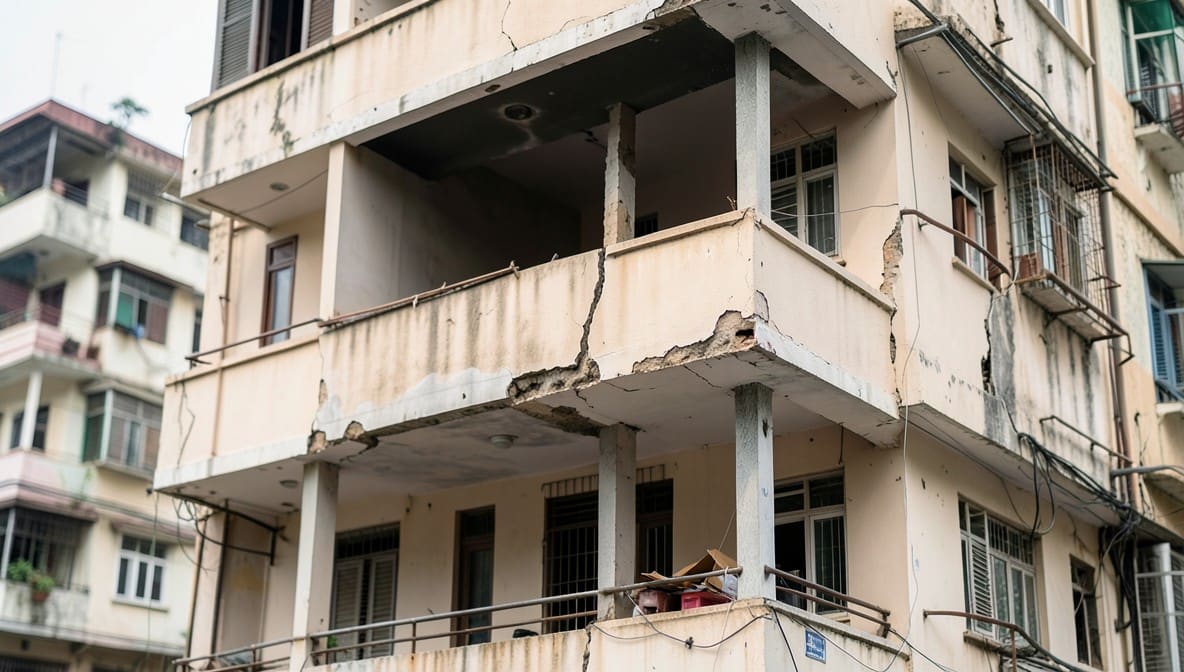
Section 9 Arbitration Act | Delay in Redevelopment Project Bars Interim Injunction; Members' Right to Safe Housing Prevails : Bombay HC
Case Law Analysis
|Bombay High Court

Section 9 Arbitration Act | Delay in Redevelopment Project Bars Interim Injunction; Members' Right to Safe Housing Prevails : Bombay HC

Bombay HC rules that a developer's prolonged delay in a housing society redevelopment project disentitles it to interim relief under Section 9 of the Arbitration Act. The court prioritized the society members' right to safe housing over the developer's contractual claims, setting a precedent for balancing equities in stalled projects.

Section 12(5) Arbitration Act | Unilateral Appointment Voids Award Ab Initio; Ineligibility Challenge Permitted at Any Stage : Bombay HC
Case Law Analysis
|Bombay High Court

Section 12(5) Arbitration Act | Unilateral Appointment Voids Award Ab Initio; Ineligibility Challenge Permitted at Any Stage : Bombay HC

The Bombay High Court has set aside multiple arbitral awards where the arbitrator was unilaterally appointed, affirming that such appointments are void from the outset under Section 12(5) of the Arbitration and Conciliation Act. This ruling reinforces the Supreme Court’s position in Bhadra International, ensuring parties cannot circumvent neutrality requirements even after award issuance - impacting corporate contracts, construction disputes, and commercial arbitration strategies nationwide.

Section 11-A Industrial Disputes Act | Reinstatement Mandatory Even for Negligent Driving Unless Role Involves Fiduciary Trust : Bombay HC
Case Law Analysis
|Bombay High Court

Section 11-A Industrial Disputes Act | Reinstatement Mandatory Even for Negligent Driving Unless Role Involves Fiduciary Trust : Bombay HC

The Bombay High Court ruled that termination for negligent driving cannot override the mandatory reinstatement mandate under Section 11-A of the Industrial Disputes Act, unless the position entails fiduciary responsibility. Back wages were denied due to the petitioner’s post-termination employment, reinforcing that reinstatement and back pay are distinct remedies. This clarifies the limits of 'loss of confidence' as a justification in non-fiduciary roles.

Future Prospects Entitled to Homemakers with Permanent Disability | Kirti Doctrine Applied : Bombay HC
Case Law Analysis
|Bombay High Court

Future Prospects Entitled to Homemakers with Permanent Disability | Kirti Doctrine Applied : Bombay HC

The Bombay High Court has ruled that homemakers suffering 30% permanent disability are entitled to future prospects compensation under the Kirti v. Oriental Insurance framework, rejecting the Tribunal’s flawed reduction to 15%. This sets a critical precedent for non-wage-earning claimants in motor accident cases, ensuring equitable valuation of domestic labor in compensation awards.

Order VII Rule 11 | Amendment of Plaint Must Precede Rejection for Technical Defects Unless Jurisdiction Is Seriously Impugned : Bombay HC
Case Law Analysis
|Bombay High Court

Order VII Rule 11 | Amendment of Plaint Must Precede Rejection for Technical Defects Unless Jurisdiction Is Seriously Impugned : Bombay HC

The Bombay High Court ruled that when a plaint is challenged under Order VII Rule 11 for technical defects-such as inadequate court fee or lack of positive declaration-the court must first allow amendment rather than reject the suit outright. This procedural safeguard prevents unnecessary re-filing, reduces litigation burden, and protects plaintiffs from being penalized for curable formalities, reinforcing procedural justice in civil litigation.

Maharashtra Rent Control Act, Section 10(1) | Judicial Admissions + Photographic Evidence Suffice for Eviction Over Permanent Alterations : Bombay HC
Case Law Analysis
|Bombay High Court

Maharashtra Rent Control Act, Section 10(1) | Judicial Admissions + Photographic Evidence Suffice for Eviction Over Permanent Alterations : Bombay HC

The Bombay High Court ruled that landlords need not produce sanctioned plans to evict tenants for unauthorized permanent alterations-admissions during cross-examination and photographic proof are sufficient to establish breach of tenancy terms. This clarifies the evidentiary standard for eviction cases under rent control laws, empowering landlords to act decisively against structural violations without costly documentation.

Pre-1950 Documentary Evidence Conclusively Proves ST Identity | Affinity Test Cannot Override Caste Certificate: Bombay HC
Case Law Analysis
|Bombay High Court

Pre-1950 Documentary Evidence Conclusively Proves ST Identity | Affinity Test Cannot Override Caste Certificate: Bombay HC

The Bombay High Court has ruled that caste certificates based on pre-constitutional documents - such as revenue records and school certificates from before 1950 - are conclusive proof of Scheduled Tribe status, and administrative affinity tests cannot override them. This sets a critical precedent for tribal claimants facing scrutiny in government appointments, ensuring historical documentation trumps subjective tribal linkage assessments.

Wildlife Protection Act | Compensation for Crop Damage by Schedule-II Parrots Mandatory Under Government Resolution : Bombay HC (Nagpur Bench)
Case Law Analysis
|Bombay High Court

Wildlife Protection Act | Compensation for Crop Damage by Schedule-II Parrots Mandatory Under Government Resolution : Bombay HC (Nagpur Bench)

Bombay HC rules that farmers are entitled to compensation for crop damage caused by Schedule-II protected parrots, even if the species is not explicitly listed in the Government Resolution. The judgment interprets the Wildlife Protection Act to include such damages under compensation schemes, reinforcing farmers' rights against wildlife-induced losses.

Section 7 Prevention of Corruption Act | Demand and Acceptance of Bribe Constitutes Offence Even If Public Servant Has No Authority to Fulfill Request : Bombay HC
Case Law Analysis
|Bombay High Court

Section 7 Prevention of Corruption Act | Demand and Acceptance of Bribe Constitutes Offence Even If Public Servant Has No Authority to Fulfill Request : Bombay HC

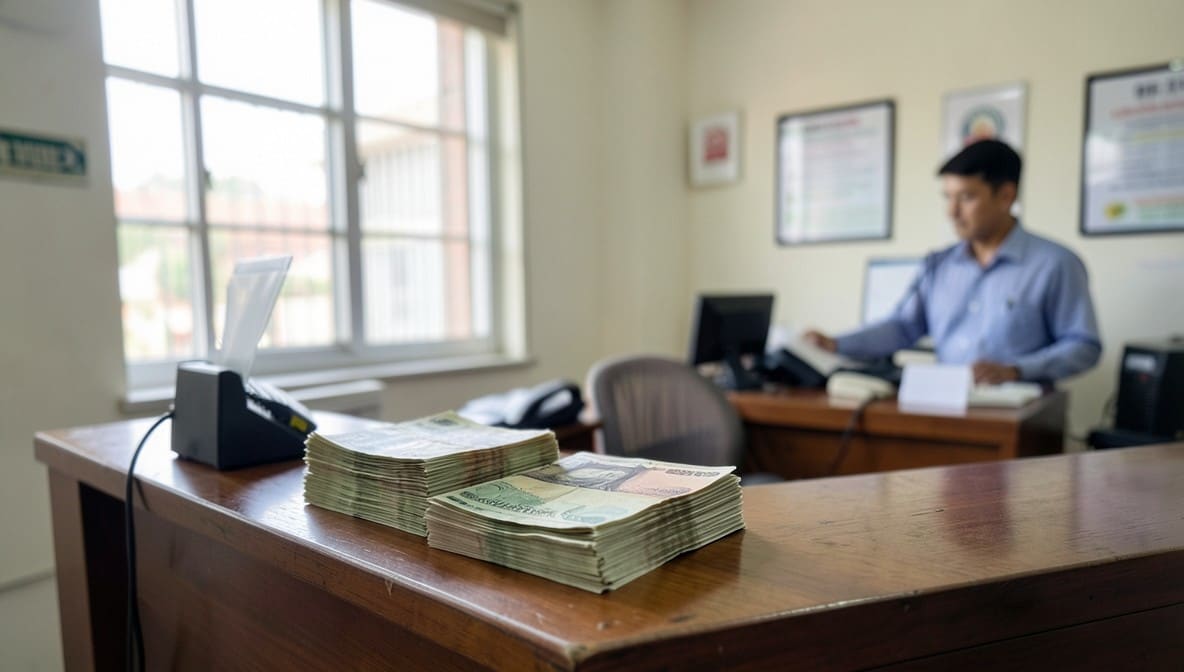
The Bombay High Court has ruled that under Section 7 of the Prevention of Corruption Act, 1988, a public servant commits an offence merely by demanding or accepting a bribe-even if they lack the official authority to perform the requested act. This clarifies that the law targets the corrupt act itself, not the outcome, strengthening accountability across all levels of public service.

Specific Performance Enforceable via Preponderance of Probabilities | Verbal Real Estate Agreement + Silence + Partial Payment : Bombay HC
Case Law Analysis
|Bombay High Court

Specific Performance Enforceable via Preponderance of Probabilities | Verbal Real Estate Agreement + Silence + Partial Payment : Bombay HC

The Bombay High Court enforced a 35-year-old verbal property sale contract not merely due to silence, but because the defendant’s conduct - accepting partial payment and failing to rebut a detailed notice - created a preponderance of probabilities that a binding agreement existed. This sets a critical precedent for oral real estate deals where written documentation is absent but conduct strongly implies mutual assent.

Seven Years of Unblemished Service | Provisional Appointment Subject to Pending SLP Becomes Regular; Promotion Eligibility Triggered : Bombay HC
Case Law Analysis
|Bombay High Court

Seven Years of Unblemished Service | Provisional Appointment Subject to Pending SLP Becomes Regular; Promotion Eligibility Triggered : Bombay HC

The Bombay High Court has ruled that after seven years of continuous, unblemished service, an appointment made subject to the outcome of a pending Special Leave Petition can no longer be treated as provisional. Petitioners are now entitled to regularization and must be considered for promotion, irrespective of the unresolved SLP, affirming that prolonged service overrides conditional language in appointment letters.

Habeas Corpus Ineligible Where Family Court Actively Adjudicating Custody | Parens Patriae Doctrine Applies : Bombay HC
Case Law Analysis
|Bombay High Court

Habeas Corpus Ineligible Where Family Court Actively Adjudicating Custody | Parens Patriae Doctrine Applies : Bombay HC

The Bombay High Court has ruled that constitutional writs for habeas corpus cannot be invoked to bypass ongoing custody proceedings in Family Court, even where parental disputes are acrimonious. This reinforces that child welfare matters must be resolved through specialized family jurisprudence, not constitutional remedies, unless illegal detention is proven - safeguarding the integrity of the Family Court’s parens patriae authority.

Section 108 Evidence Act | Limitation for Declaration of Death Begins at Police Certificate Issuance, Not Disappearance Date : Bombay HC
Case Law Analysis
|Bombay High Court

Section 108 Evidence Act | Limitation for Declaration of Death Begins at Police Certificate Issuance, Not Disappearance Date : Bombay HC

The Bombay High Court has ruled that the three-year limitation period to seek a judicial declaration of death under Section 108 of the Indian Evidence Act starts from the date the police issue a certificate confirming permanent disappearance, not from the date the person went missing. This clarifies a critical procedural hurdle for heirs and successors seeking to settle property, inherit assets, or obtain official death records after prolonged absences.

Section 12(5) Arbitration Act | Unilateral Arbitrator Appointment Void Ab Initio; Limitation Excluded for Fresh Proceedings : Bombay HC
Case Law Analysis
|Bombay High Court

Section 12(5) Arbitration Act | Unilateral Arbitrator Appointment Void Ab Initio; Limitation Excluded for Fresh Proceedings : Bombay HC

The Bombay High Court has declared all arbitral awards void where arbitrators were unilaterally appointed, affirming the Supreme Court’s position in Bhadra International. Crucially, it permits parties to initiate fresh arbitration by excluding the entire period of the invalid proceeding from the limitation period, offering a rare procedural lifeline to claimants caught in defective appointments.

Arbitration Clause | Partial Payment of Insurance Claim Admits Liability; Dispute Over Balance Is Quantum, Not Arbitrability : Bombay HC
Case Law Analysis
|Bombay High Court

Arbitration Clause | Partial Payment of Insurance Claim Admits Liability; Dispute Over Balance Is Quantum, Not Arbitrability : Bombay HC

The Bombay High Court has ruled that when an insurer pays part of an insurance claim, it constitutes an admission of liability for the entire claim, and any dispute over the unpaid balance relates only to quantum-not arbitrability. This clarifies that policyholders can compel arbitration for residual amounts even when insurers attempt to sever liability from payment, reinforcing the enforceability of arbitration clauses in commercial insurance disputes.

Specified Bank Notes Act | Seized Demonetised Currency Must Be Exchanged If Legitimate and Held by Authorities Beyond Cut-Off : Bombay HC (Nagpur Bench)
Case Law Analysis
|Bombay High Court

Specified Bank Notes Act | Seized Demonetised Currency Must Be Exchanged If Legitimate and Held by Authorities Beyond Cut-Off : Bombay HC (Nagpur Bench)

Bombay High Court rules that demonetised currency notes seized before the exchange cut-off date but returned post-deadline must still be exchanged if their legitimacy is undisputed. The judgment protects citizens from procedural delays caused by state authorities, reinforcing natural justice under the Specified Bank Notes Act.

Trademark Infringement | Prefixing 'AB' to 'SUN' Creates Deceptive Similarity & Passing Off : Bombay HC
Case Law Analysis
|Bombay High Court

Trademark Infringement | Prefixing 'AB' to 'SUN' Creates Deceptive Similarity & Passing Off : Bombay HC

The Bombay High Court ruled that 'ABSUN PHARMA' is deceptively similar to 'SUN PHARMA', constituting trademark infringement and passing off under Section 29(4) of the Trade Marks Act and common law. Exporting goods to Africa does not exempt the defendant from liability in India, reinforcing that consumer confusion in the domestic market is the decisive factor.

CPC Order XVII | Right to Cross-Examination Is Fundamental to Substantive Justice; Denial Without Opportunity Violates Procedural Fairness : Bombay HC
Case Law Analysis
|Bombay High Court

CPC Order XVII | Right to Cross-Examination Is Fundamental to Substantive Justice; Denial Without Opportunity Violates Procedural Fairness : Bombay HC

Bombay HC reaffirms that cross-examination is an invaluable right under the Code of Civil Procedure, essential for a just determination of disputes. The court set aside a 'no-cross order' where an advocate's conflict denied the defendant this right, permitting cross-examination in two sessions with costs to balance fairness and efficiency.