The Bombay High Court has reaffirmed that the mere act of demanding illegal gratification by a public servant, irrespective of whether they possess the official authority to fulfill the request, constitutes a punishable offence under the Prevention of Corruption Act. This judgment clarifies a critical doctrinal point in anti-corruption jurisprudence, with direct implications for prosecution strategies in bribery cases.
Background & Facts
The Dispute
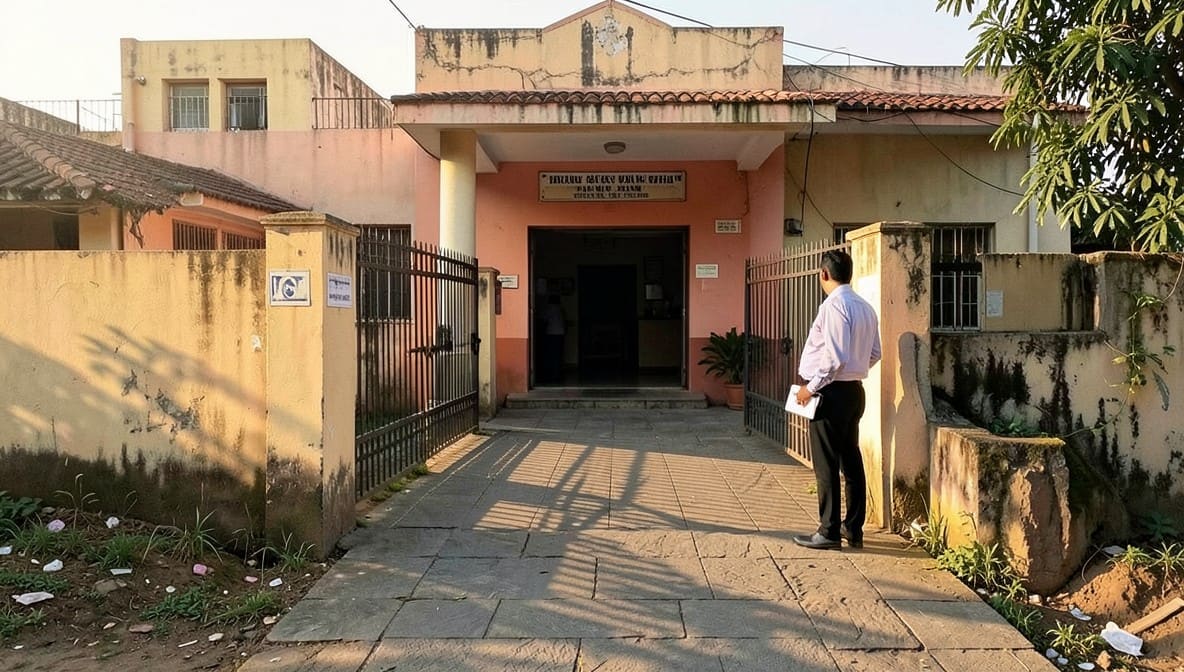
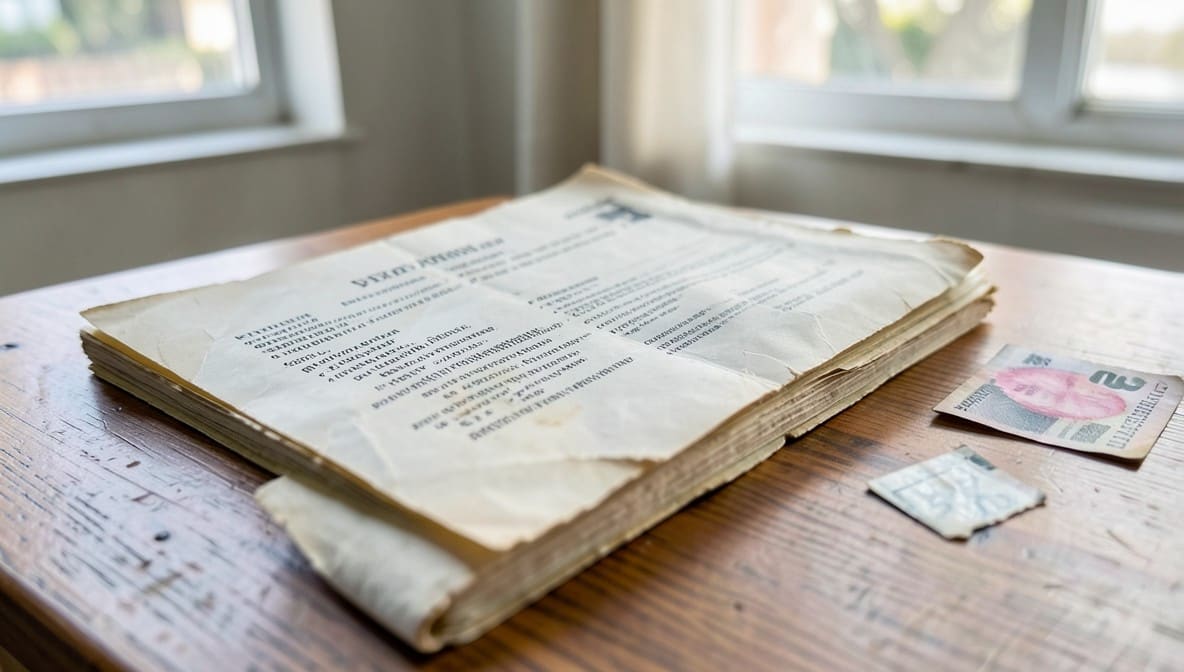
The case arose from an alleged demand and acceptance of Rs. 200 by the respondent, Ashok Daga Bachhav, a stenographer in the Assistant Charity Commissioner’s Office, Dhule, for issuing a certified copy of Form "F". The complainant, PW1, approached the office on 31.07.2009 seeking the document and was told by the accused that Rs. 300 was required, later reduced to Rs. 200. When the complainant refused to pay, he filed a complaint with the Anti-Corruption Bureau (ACB) on 31.07.2009 (Exhibit 21), leading to a trap operation on 01.08.2009.
Key Facts
- The respondent was employed as a stenographer in the Assistant Charity Commissioner’s Office, Dhule.
- The complainant had submitted an application for certified copy of Form "F" on 24.07.2009 to a lady clerk, who endorsed it as "received" and instructed him to return after two to four days.
- The complainant did not know the name of the lady clerk and could not produce her as a witness.
- On 01.08.2009, the complainant, accompanied by a shadow pancha (PW2), visited the office again.
- The accused allegedly stated that the document was ready, the superior’s signature was obtained, and asked whether Rs. 200 had been brought.
- The complainant handed over two currency notes, which the accused accepted with his right hand and placed in his right pant pocket.
- A signal was given, and the ACB team entered the office.
- Recovery of the currency notes was made from the accused’s person, according to the Investigating Officer (PW3).
- The panchanama (Exhibit 26) recorded traces of anthracene powder on the hands of the accused.
- The sanction for prosecution under Section 19 of the PC Act was granted by the competent authority (PW4) on 15.09.2009.
- The accused was not assigned the official duty to issue certified copies or collect fees for them.
Procedural History
- 24.07.2009: Complainant submits application for certified copy of Form "F" to the ACC office.
- 31.07.2009: Complainant approaches accused; alleged demand of Rs. 200 made; complaint filed with ACB (Exhibit 21).
- 01.08.2009: Trap operation conducted; alleged acceptance of bribe; recovery made.
- 15.09.2009: Sanction for prosecution granted under Section 19 of the PC Act.
- 01.10.2009: Chargesheet filed in Special Case No. 44 of 2009.
- 30.11.2011: Additional Sessions Judge, Dhule, acquits the accused, holding that demand and acceptance were not proved beyond reasonable doubt and that the accused had no official duty to issue the document.
- 21.04.2026: Appeal heard and reserved by the Bombay High Court, Aurangabad Bench.
- 24.04.2026: Judgment pronounced allowing the State’s appeal.
The Parties' Positions
For the State (Appellant)
- The prosecution established demand and acceptance through consistent testimony of PW1 and PW2.
- The panchanama recorded anthracene traces on the accused’s hands, confirming recovery from his person.
- The trial court erred in ignoring the panchanama’s explicit mention of anthracene powder.
- The accused’s lack of official duty does not negate the offence under Section 7 or Section 13(1)(d) of the PC Act.
- The acquittal was perverse and contrary to the evidence.
For the Respondent (Accused)
- No credible evidence of demand or acceptance was established.
- PW1 admitted that no conversation about payment occurred until after the document was handed over.
- PW2 admitted that the currency was recovered from a rack, not the accused’s person, two and a half hours after entering the office.
- The sanction was defective as the accused was not the proper authority to issue the document.
- The trial court’s acquittal was correct and based on reasonable doubt.
Relief Sought
The State sought: (1) setting aside the acquittal order dated 30.11.2011; (2) conviction of the accused under Sections 7 and 13(1)(d) read with Section 13(2) of the Prevention of Corruption Act, 1988; and (3) imposition of appropriate sentence.
The Legal Issue
The central question was whether Section 7 and Section 13(1)(d) of the Prevention of Corruption Act, 1988 are attracted when a public servant demands illegal gratification, even if he has no official duty to perform the act for which the bribe is sought.
Arguments Presented
For the Appellant
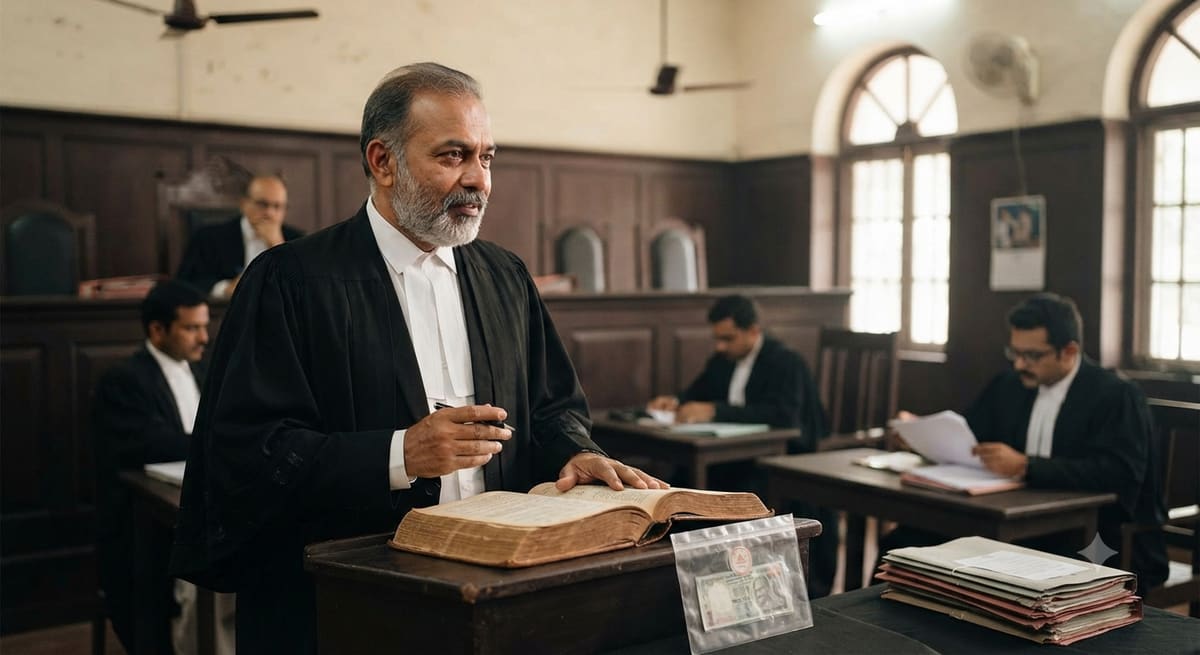
The State argued that the prosecution had established the essential ingredients of the offence beyond reasonable doubt. The testimonies of PW1 and PW2 were mutually corroborative on the demand and acceptance of Rs. 200. The panchanama (Exhibit 26) explicitly recorded anthracene traces on the accused’s hands, contradicting the trial court’s observation that it was silent on this point. The Investigating Officer flatly denied recovery from a rack. The High Court of Delhi in Ved Prakash Maurya v. State of Delhi held that lack of official capacity does not exonerate a public servant from liability for demanding a bribe. The trial court’s findings were perverse and ignored material evidence.
For the Respondent
The accused contended that the prosecution failed to prove demand and acceptance. PW1 admitted that no discussion about payment occurred until after the document was handed over. PW2 admitted that the currency was recovered from a rack, not the accused’s person. The accused had no official duty to issue Form "F" or collect fees, undermining the motive. The trial court rightly found reasonable doubt and acquitted the accused. The stray admission by PW2 should not be disregarded, and the recovery was not from the accused’s person.
The Court's Analysis
The Court undertook a meticulous re-appreciation of the evidence, emphasizing that the offence under Section 7 of the Prevention of Corruption Act requires proof of demand and acceptance of illegal gratification, and not the actual performance of the official act. The Court noted that Section 13(1)(d) criminalizes obtaining any valuable thing or pecuniary advantage by corrupt or illegal means, irrespective of whether the public servant is in a position to deliver.
"A person may not actually be in a position to perform the work for which a bribe is allegedly demanded cannot, by itself, exonerate him, since the offence under the PC Act is attracted by the very act of demanding illegal gratification, irrespective of whether the public servant is capable of doing the work."
The Court found that the testimonies of PW1 and PW2 were consistent on the core events: the accused initiated the demand, the complainant handed over the money, and the accused accepted it. The trial court’s reliance on PW1’s admission that no conversation occurred until after receiving the document was misplaced, as the demand had already been made prior to the document’s handover. The Court held that the accused’s statement - "is the amount of Rs. 200 brought as per your directions?" - constituted a clear demand.
The Court further held that the trial court erred in concluding that the panchanama was silent on anthracene traces. Exhibit 26 explicitly recorded: "anthracene traces were found on the hands of the accused." The trial court’s observation to the contrary was contrary to the record and therefore perverse.
The Court rejected the argument that recovery from a rack invalidated the case. PW2’s stray admission was contradicted by the Investigating Officer’s categorical denial and the panchanama’s contemporaneous recording. The Court held that the recovery was from the accused’s person, as per the panchanama and the Investigating Officer’s testimony.
The Court emphasized that the absence of official duty does not negate criminal liability under the PC Act. The offence is complete upon demand and acceptance, regardless of the public servant’s capacity to deliver. The sanction under Section 19 was valid and properly granted.
The Verdict
The appeal is allowed. The acquittal order dated 30.11.2011 is set aside. The respondent, Ashok Daga Bachhav, is convicted under Section 7 and Section 13(1)(d) read with Section 13(2) of the Prevention of Corruption Act, 1988. He is sentenced to six months’ simple imprisonment and a fine of Rs. 5,000 for the offence under Section 7, and one year’s simple imprisonment and a fine of Rs. 10,000 for the offence under Section 13(1)(d). The sentences shall run concurrently. In default of fine payment, he shall undergo additional simple imprisonment of 15 days for Section 7 and 30 days for Section 13(1)(d). The respondent is entitled to set-off under Section 428 CrPC. He shall surrender before the trial court within six weeks. His bail bond stands cancelled.
What This Means For Similar Cases
Demand Alone Is Sufficient for Conviction
- Practitioners must now argue that the prosecution need not prove the public servant’s ability to perform the requested act - only that a demand was made and accepted.
- This removes a common defense tactic used in bribery cases: claiming the accused had no authority to grant the benefit.
- Prosecutors should focus on establishing the timing, context, and clarity of the demand, even if the act is outside official duties.
Panchanama Evidence Is Critical
- Any discrepancy between trial court observations and the panchanama’s contents must be challenged as perverse.
- Anthracene powder traces on the hands of the accused, if recorded, are strong corroborative evidence of recovery from the person.
- Courts must not ignore contemporaneous documentation in favor of later, inconsistent oral testimony.
Recovery from Person vs. Location Is Decisive
- Recovery from a nearby object (like a rack) does not automatically invalidate a case if the panchanama and Investigating Officer confirm recovery from the accused’s person.
- The burden shifts to the defense to prove that the recovery was fabricated or tampered with.
- Consistency between panchanama, Investigating Officer’s testimony, and recovery report is essential for conviction.