The Bombay High Court has held that farmers suffering crop damage from protected wild birds listed under Schedule-II of the Wildlife (Protection) Act, 1972, are entitled to compensation under existing government resolutions, even if those birds are not explicitly named. This ruling affirms that statutory protections override administrative circulars and that exclusionary classifications violate constitutional equality.
Background & Facts
The Dispute
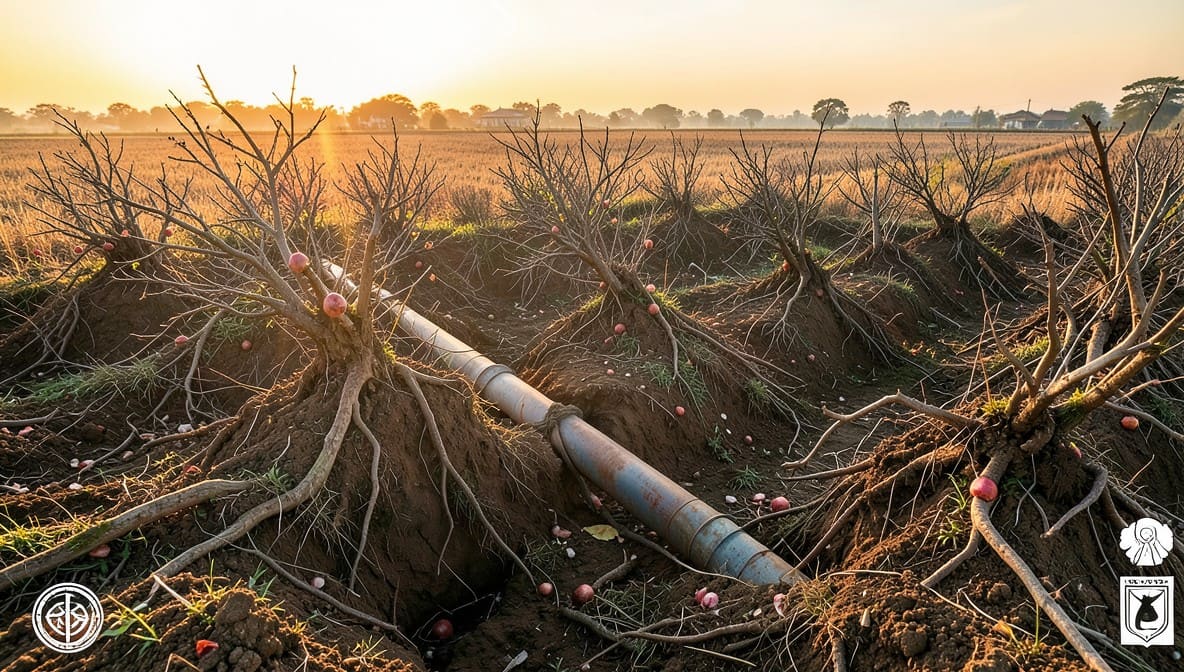
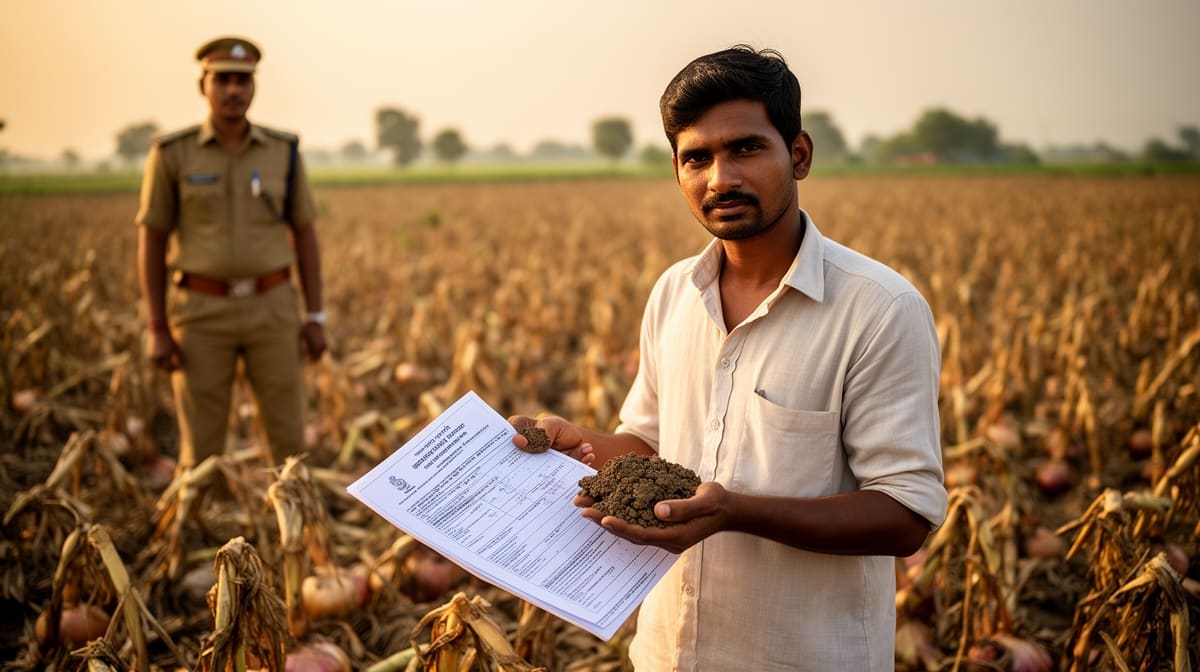
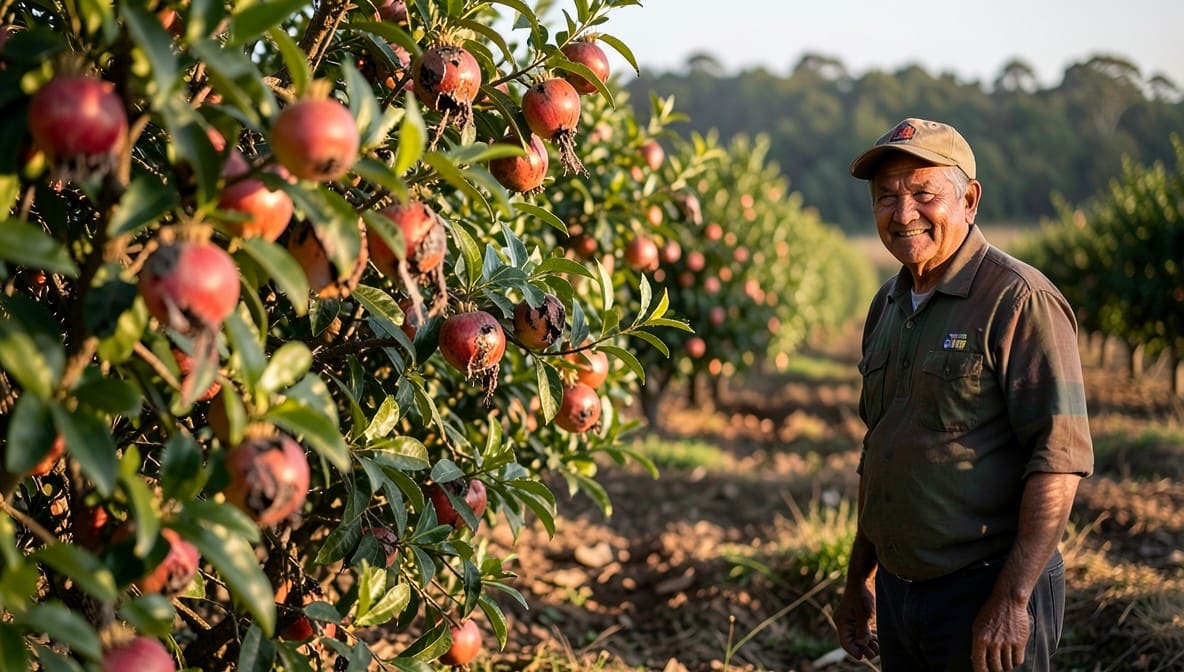
The petitioner, Shri Mahadeo s/o Jagannath Dekate, an agriculturist and resident of Hingni, Tahsil Selu, District Wardha, cultivated 800 Pomegranate trees (variety "Bhagwa") on 1.5 acres of agricultural land adjacent to the Bore Wild Life Sanctuary. In May 2016, a flock of parakeets (parrots) severely damaged the fruit-bearing trees, destroying an estimated 50% to 55% of the crop. The petitioner claimed losses between Rs. 20.00 lakhs and Rs. 25.00 lakhs.
Key Facts
- The petitioner planted the 800 Pomegranate trees between 2013 and 2014; trees were 2.5 to 3 years old at the time of damage.
- The Bore Wild Life Sanctuary covers 61.10 square kilometers, including 3,237 hectares of Reserved Forest and 2,213 hectares of Protected Forest.
- The petitioner filed a formal complaint with the Range Forest Officer (Respondent No. 5) in May 2016.
- The complaint was initially rejected by Respondent No. 4 (Deputy Conservator of Forest, Wardha) on the ground that no provision existed for bird-caused damage.
- The District Collector directed the petitioner to approach the District Agriculture Officer.
- The Taluka Agriculture Officer conducted a spot inspection on 19.05.2016 and prepared a panchanama.
- The panchanama recorded: 800 trees, 50-55% fruit damage, no signs of mammalian intrusion, and concluded that only parrots could have caused such damage.
- The petitioner submitted representations on 20.05.2016 and 10.06.2016, both of which were rejected by the Forest Department.
- The Government Resolutions dated 02.07.2010, 05.09.2013, and 25.11.2013 were cited by the respondents as the sole basis for compensation eligibility.
Procedural History
- 19.05.2016: Taluka Agriculture Officer conducts spot inspection and prepares panchanama.
- 20.05.2016: Petitioner submits first formal representation to Forest Department.
- 10.06.2016: Second representation submitted to District Collector.
- 15.06.2016: Official rejection received from Deputy Conservator of Forest, Wardha.
- 20.07.2016: Writ Petition No. 5639 of 2016 filed before the Bombay High Court, Nagpur Bench.
- 15.04.2026: Court closed the matter for arguments.
- 24.04.2026: Judgment pronounced.
The Parties' Positions
Petitioner: Argued that parrots (specifically Alexandrine and Rose-ringed parakeets) are protected wild animals under Schedule-II of the Wildlife (Protection) Act, 1972, and that damage caused by such animals triggers the State’s obligation to compensate under the spirit and object of the Government Resolutions. He relied on Vimal Haribhau Naik v. State of Maharashtra and Baburao Abaji Aglawe v. State of Maharashtra.
Respondents (State): Contended that the Government Resolutions explicitly list only quadrupeds (wild boar, deer, elephant, monkey, etc.) as compensable animals. Parrots, though protected under Schedule-II, are not mentioned in any resolution. The State argued that legislative omission implies intentional exclusion and that courts cannot expand compensation schemes by judicial interpretation.
Relief Sought
The petitioner sought:
- A declaration that he is entitled to compensation for damage caused by protected wild birds.
- Payment of compensation at Rs. 200 per tree for 200 trees (50% of 800 trees), totaling Rs. 40,000.
- Interest at 6% per annum from the date of damage (May 2016) until payment.
- Costs of litigation.
The Legal Issue
The central question was whether a farmer suffering crop damage from wild birds protected under Schedule-II of the Wildlife (Protection) Act, 1972, is entitled to compensation under Government Resolutions that do not explicitly mention birds, when the object of those resolutions is to compensate for damage caused by wild animals generally.
Arguments Presented
For the Petitioner
The petitioner’s counsel argued that Section 2(36) of the Wildlife (Protection) Act, 1972, defines "wild animal" to include any animal specified in Schedule-I or Schedule-II and found wild in nature. Parakeets, including Alexandrine and Rose-ringed species, are explicitly listed in Schedule-II. Therefore, they are legally classified as wild animals. The Government Resolutions, while listing specific mammals, were framed to address the broader objective of compensating farmers for losses caused by wild animals. Excluding birds like parrots, which are statutorily protected and demonstrably responsible for the damage, violates the principle of equality under Article 14 of the Constitution. The petitioner relied on Vimal Haribhau Naik, where this Court held that compensation schemes must be interpreted in light of their stated purpose, not restricted by rigid enumeration.
For the Respondent/State
The State contended that the Government Resolutions dated 02.07.2010, 05.09.2013, and 25.11.2013 are exhaustive lists of compensable animals. The deliberate omission of birds indicates a policy decision not to extend compensation to avian damage. Citing Commissioner of Sales Tax, U.P. v. M/s. Parson Tools and Plants and Ekta Shakti Foundation v. Government of NCT of Delhi, the State argued that courts cannot supply omissions in legislative or administrative schemes under the guise of interpretation. The State emphasized that policy decisions on fiscal allocation are within the exclusive domain of the executive, and judicial interference would encroach upon the separation of powers.
The Court's Analysis
The Court began by affirming the statutory definition of "wild animal" under Section 2(36) of the Wildlife (Protection) Act, 1972. It held that parrots, specifically the Alexandrine and Rose-ringed parakeets, are unequivocally included in Schedule-II and are therefore protected wild animals under the Act. The Court noted that the panchanama, prepared by a trained Agriculture Officer, conclusively established that the damage was caused by parrots and not by any other animal.
The Court then examined the Government Resolutions. While acknowledging that the Resolutions do not explicitly mention birds, the Court emphasized that their preamble explicitly states their purpose: "to compensate farmers for loss caused to standing crops and fruit-bearing trees by wild animals." The Court observed that the Resolutions were issued to address the inadequacy of prior compensation schemes and to adopt a comprehensive approach.
"The object of the scheme of compensation formulated under this Resolution can be seen from the introductory part which makes good the loss to the standing crops and the fruit bearing trees suffered by the farmers on account of raiding of crops and trees by the wild animals."
The Court rejected the State’s argument that legislative omission implies exclusion. It held that Government Resolutions are administrative instruments, subordinate to statutory mandates. Citing Chairman and Managing Director, FCI v. Jagdish Balaram Bahira, the Court reiterated that "administrative circulars and government resolutions are subservient to legislative mandate and cannot be contrary either to constitutional norms or statutory principles."
The Court further held that excluding birds like parrots while compensating for damage by mammals creates an arbitrary classification with no reasonable nexus to the stated object of the scheme. Such exclusion violates Article 14 of the Constitution, as it treats similarly situated farmers unequally based on the species of the wild animal causing damage.
"It cannot be accepted that to allow payment of compensation to one category and disallow to other category. It would be breach of equality principle and violation of Article 14 of the Constitution."
The Court also warned that denying compensation would incentivize farmers to take extralegal measures against protected wildlife, undermining the very purpose of the Wildlife Act.
The Verdict
The writ petition is allowed. The petitioner is declared entitled to compensation for damage caused to his Pomegranate trees under Part-II of the Government Resolution dated 02.07.2010. Compensation shall be paid at the rate of Rs. 200 per tree for 200 trees (50% of 800 trees), amounting to Rs. 40,000. Interest at 6% per annum shall accrue from 01.06.2016 until actual payment. The State shall disburse the amount within six weeks from the date of this judgment. Costs of Rs. 10,000 are awarded to the petitioner.
What This Means For Similar Cases
Compensation Is Not Limited to Listed Species
- Practitioners must now argue that if a wild animal is statutorily protected under the Wildlife Act, damage caused by it triggers compensation obligations under general government schemes, even if the species is not explicitly named.
- The focus must shift from rigid enumeration to the stated object of the compensation policy.
- Administrative circulars cannot override statutory definitions or constitutional rights.
Article 14 Bars Arbitrary Exclusions
- Any compensation scheme that distinguishes between protected wild animals without a rational basis is vulnerable to constitutional challenge.
- Farmers suffering loss from protected birds (e.g., crows, mynas, parrots) can now claim compensation under analogous circumstances.
- State authorities must review existing resolutions to ensure alignment with statutory protections.
Policy Decisions Must Align with Statutory Framework
- The executive cannot use non-inclusion in a resolution as a shield against statutory obligations.
- Courts will interpret administrative schemes purposively when they conflict with legislative intent.
- Future compensation claims involving protected species not listed in resolutions should be filed with reference to Section 2(36) of the Wildlife Act and Article 14.