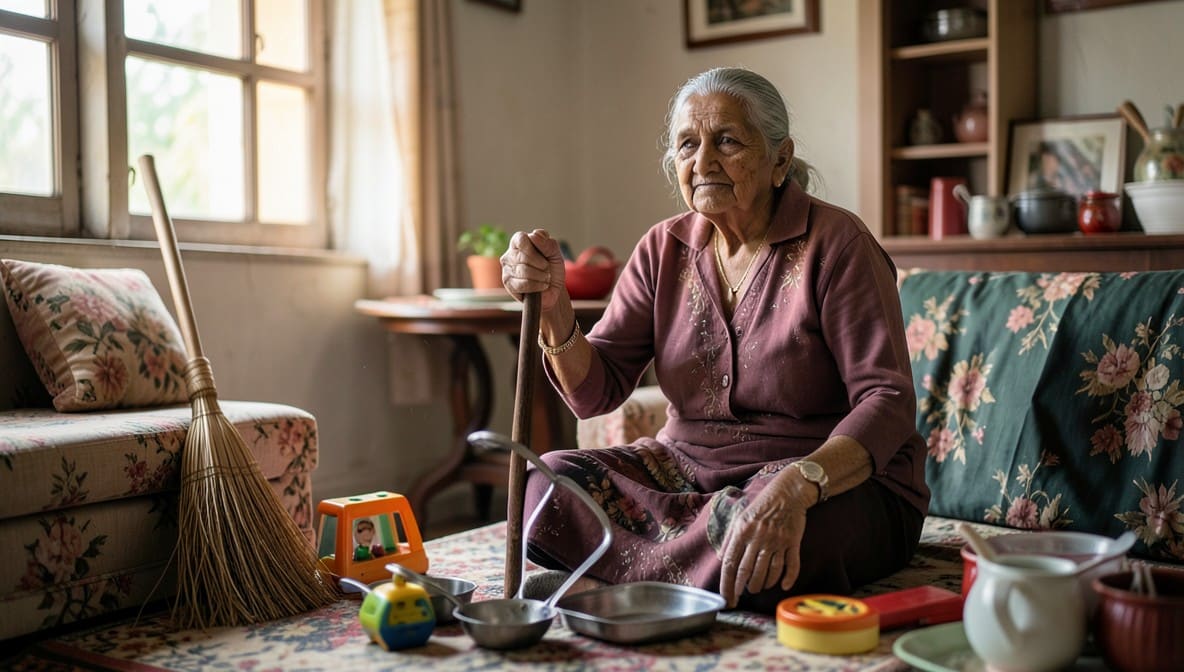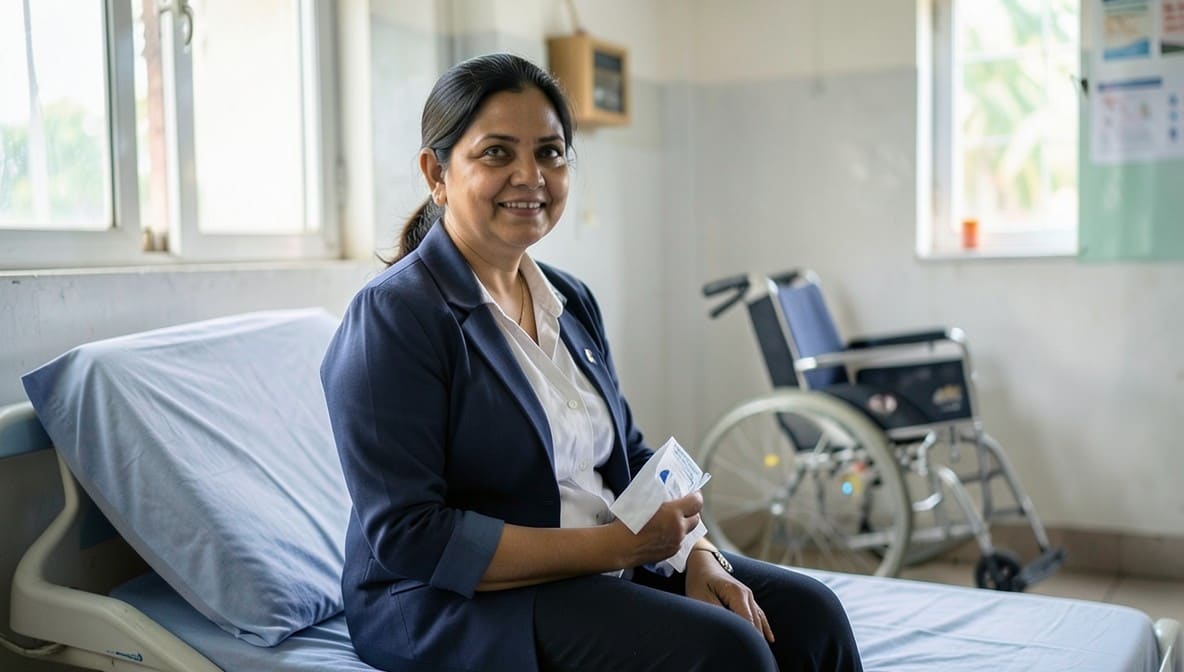
The Bombay High Court has affirmed that homemakers suffering permanent disability in motor accidents are entitled to compensation for future prospects, irrespective of formal employment status. This ruling reinforces the Supreme Court’s directive in Kirti v. Oriental Insurance Company Limited to value domestic contributions equitably in compensation awards.
Background & Facts
The Dispute
The appellant, Kalyani w/o Subhash Bhosale, a homemaker from Walghud, Ahmednagar, filed a claim petition under Section 166 of the Motor Vehicles Act, 1988, seeking compensation for injuries sustained in a motor accident on 31.10.2008. She was a pillion rider on a motorcycle driven by her son-in-law, Ajay Kale, when it collided with a Maharashtra State Road Transport Corporation (MSRTC) bus bearing registration number MH-20 D-9124 coming from the opposite direction. The collision resulted in the immediate death of Ajay Kale and serious injuries to the appellant.
Key Facts
- The accident occurred on 31.10.2008 on the Nagar-Daund road.
- The appellant sustained fractures to the right clavicle and right fibula, along with injury to the left thigh.
- She was hospitalized and treated for her injuries.
- A medical certificate (Exhibit P-21) issued by a qualified practitioner certified a 30% permanent disability.
- The appellant claimed total compensation of Rs. 2,00,000/- under various heads including medical expenses, loss of amenities, and future prospects.
- She was a homemaker with no formal employment income.
Procedural History
- 31.10.2008: Date of accident.
- 2008: Motor Accident Claim Petition (MACP No. 819 of 2008) filed before the Motor Accident Claims Tribunal, Ahmednagar.
- 21.02.2012: Tribunal awarded Rs. 1,30,000/- as compensation, but did not grant any amount for future prospects.
- The Tribunal accepted the claim of 15% permanent disability, despite the medical certificate indicating 30%.
- 2014: First Appeal No. 2257 of 2014 filed before the Bombay High Court, Aurangabad Bench.
- 21.04.2026: Judgment reserved.
- 24.04.2026: Judgment pronounced.
The Parties' Positions
For the Appellant
The appellant, through her counsel, contended that:
- The Tribunal erred in reducing the permanent disability from 30% to 15% without valid reasoning.
- The medical certificate (Exhibit P-21) was unchallenged and should have been accepted as conclusive.
- As a homemaker, she was entitled to future prospects under the Supreme Court’s ruling in Kirti v. Oriental Insurance Company Limited.
- The award of Rs. 1,30,000/- was inadequate and failed to account for long-term loss of earning capacity and domestic contribution.
For the Respondent
Respondent No. 2 (MSRTC) supported the Tribunal’s award, arguing that:
- The compensation was fair and in line with precedent.
- No evidence of actual income loss was produced.
- Future prospects should not be granted to homemakers absent proof of economic activity.
Relief Sought
The appellant sought:
- Enhancement of compensation by Rs. 70,000/- to account for 30% permanent disability and future prospects.
- Interest at an appropriate rate from the date of filing the claim petition.
- Costs and compliance timelines for payment.
The Legal Issue
The central question was whether a homemaker suffering 30% permanent disability in a motor accident is entitled to compensation for future prospects, and whether the Motor Accident Claims Tribunal erred in reducing the disability percentage from 30% to 15% despite a duly submitted medical certificate.
Arguments Presented
For the Appellant
The appellant relied on the Supreme Court’s decision in Kirti v. Oriental Insurance Company Limited (2021 SCC Online SC 3), which held that homemakers are entitled to future prospects as part of compensation, since their domestic work adds measurable economic value. It was argued that the Tribunal’s failure to consider the 30% disability certificate (Exhibit P-21) was arbitrary and contrary to the principle of equitable valuation. The appellant emphasized that the burden to challenge medical evidence lies with the respondent, and since no contrary evidence was adduced, the certificate must be accepted.
For the Respondent
Respondent No. 2 (MSRTC) contended that the Tribunal’s award was reasonable and aligned with past precedents. It argued that future prospects are typically granted to earning members and that the appellant, as a homemaker, had no demonstrable income stream. It further submitted that the 15% disability assessment was based on the Tribunal’s discretion in evaluating medical reports and that the appellant’s failure to examine the doctor in person rendered the certificate less reliable.
The Court's Analysis
The Court examined the Supreme Court’s ruling in Kirti v. Oriental Insurance Company Limited, which explicitly rejected the notion that homemakers are ineligible for future prospects. The Court observed:
"The attempt of Court should be towards determining, in the best possible manner, the truest approximation of the value added by homemaker for the purpose of granting monetary compensation and thereby Hon’ble Apex Court has endorsed entitlement of all victims to receive future prospects including homemaker."
The Court noted that the Tribunal had accepted the claim of permanent disability but arbitrarily halved the percentage from 30% to 15% without any medical or evidentiary justification. The medical certificate (Exhibit P-21) was unchallenged by the respondents and formed part of the record. The Court held that mere non-examination of the certifying doctor does not invalidate a medical certificate, especially when no contrary evidence is produced.
The Court further held that the award of Rs. 1,30,000/- was reasonable for medical expenses, pain and suffering, and loss of amenities, but entirely omitted compensation for the loss of future earning capacity due to permanent disability. Given the appellant’s age (40 years at the time of accident), the 30% disability, and the Supreme Court’s directive, the Court concluded that an additional lump sum of Rs. 70,000/- was just and equitable to reflect the value of future prospects.
The Verdict
The appellant succeeded. The High Court modified the Tribunal’s award by enhancing compensation by Rs. 70,000/-, bringing the total to Rs. 2,00,000/-. The Court directed interest at 7.5% per annum from the date of filing the claim petition (2008) until realization. Respondent No. 2 (MSRTC) was ordered to deposit the enhanced amount, including interest, within 12 weeks. The claimant may withdraw the amount upon deposit. Court fees on the enhanced amount are to be paid by the claimant. The rest of the Tribunal’s award was upheld.
What This Means For Similar Cases
Homemakers Are Entitled to Future Prospects
- Practitioners must now assert future prospects as a matter of right for homemakers suffering permanent disability in motor accidents.
- The Kirti precedent is binding: domestic labor has economic value and must be compensated.
- Tribunals cannot reduce disability percentages arbitrarily without medical or evidentiary basis.
Medical Certificates Carry Presumptive Weight
- A duly issued medical certificate of permanent disability, unchallenged by the opposing party, must be accepted as prima facie evidence.
- Failure to examine the certifying doctor does not invalidate the certificate unless rebuttal evidence is produced.
- Tribunals must record reasons for rejecting or reducing medical opinions.
Compensation Must Reflect True Loss
- Awards must be holistic: medical costs, pain and suffering, loss of amenities, and future prospects must all be considered.
- The absence of formal employment does not equate to absence of economic contribution.
- Courts must apply the Kirti principle uniformly across all claimants, regardless of gender or occupation.