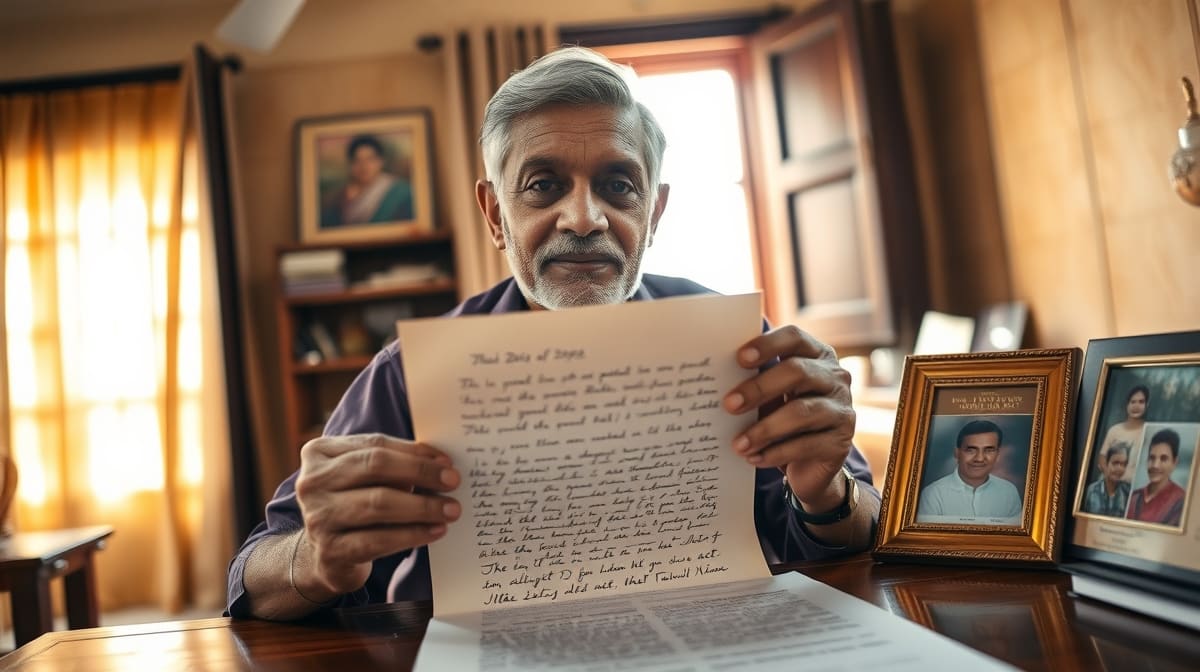
The Bombay High Court has clarified that under the Hindu Adoptions and Maintenance Act, 1956, an adoption is effective from the date of execution, not registration. This ruling directly impacts eligibility for compassionate appointments in public employment, setting a binding precedent for administrative bodies across Maharashtra.
Background & Facts
The Dispute
The petitioner, Sumit Bhushankumar Patle, sought restoration of his name on the waiting list for compassionate appointment following the death of his adoptive father, Bhushankumar Patle, who was a teacher employed by the Zilla Parishad, Gondia. The respondent denied his claim on the ground that the adoption deed was registered only on 14.10.2015 - after the death of the employee on 08.07.2015 - thereby deeming him ineligible under State Government Resolutions governing compassionate appointments.
Key Facts
- The petitioner was legally adopted by Bhushankumar Patle and his wife Janakibai on 24.10.2003, pursuant to a memorandum of adoption executed in the presence of witnesses.
- The adoption was not registered at the time of execution, as registration was not mandatory under the Hindu Adoptions and Maintenance Act, 1956.
- On the advice of well-wishers, the adoption deed was registered on 14.10.2015, over a year after the death of Bhushankumar Patle.
- A Gazette notification effecting the petitioner’s name change to reflect his adoptive father was issued on 01.03.2017 and again on 02.04.2025.
- On 17.03.2016, the Joint Civil Judge (Junior Division), Gondia, issued a legal heirship certificate confirming the petitioner and his adoptive mother as the sole legal heirs of Bhushankumar Patle.
- The petitioner applied for compassionate appointment on 29.09.2015, shortly after the death of his adoptive father.
- His name was included in the official waiting list for compassionate appointments from 2016 and remained there until 2023.
- On 12.11.2021, 11.03.2022, and 12.05.2023, the respondent issued notices requiring document verification, to which the petitioner fully complied.
- On 18.12.2024, a revised list was published, but the petitioner’s name was removed with the remark that the adoption deed was registered after the death of the employee.
- The adoptive mother, Janakibai, passed away on 19.04.2020.
Procedural History
- 29.09.2015: Petitioner applies for compassionate appointment.
- 17.03.2016: Legal heirship certificate issued.
- 2016 - 2023: Petitioner’s name remains on the compassionate appointment waiting list.
- 12.11.2021: First notice issued for document verification.
- 14.10.2015: Adoption deed registered (posthumously).
- 18.12.2024: Final list published excluding petitioner.
- 2025: Writ Petition No. 4265 of 2025 filed under Article 226 of the Constitution.
- 18.04.2026: Judgment reserved.
- 24.04.2026: Judgment pronounced.
Relief Sought
The petitioner sought quashing of the order removing his name from the waiting list, restoration of his name in its original position, and a declaration that he is eligible for compassionate appointment based on adoption dated 24.10.2003.
The Legal Issue
The central question was whether Section 12 of the Hindu Adoptions and Maintenance Act, 1956 renders an adoption effective from the date of execution, even if registration occurs later, and whether administrative authorities may deny compassionate appointment on the ground that the adoption deed was registered after the death of the employee.
Arguments Presented
For the Petitioner
Shri M.G. Rathi argued that adoption under the Hindu Adoptions and Maintenance Act, 1956, is complete upon execution and does not require registration. He relied on Section 12, which states that an adopted child is deemed the child of the adoptive parents from the date of adoption, severing all ties with the birth family. He further cited Section 17 of the Registration Act, which provides that a registered document operates from the date it would have taken effect if unregistered. He emphasized that the respondent had already accepted the petitioner’s eligibility for seven years (2016 - 2023), indicating constructive admission of validity.
For the Respondent
Shri V.M. Gadkari contended that compassionate appointment is a discretionary benefit, not a right, and must be granted strictly in accordance with Government Resolutions. He argued that the delayed registration of the adoption deed - over a year after the employee’s death - raised suspicion of fabrication. He further pointed to the petitioner’s continued use of his biological name until 2017 as evidence that the adoption was not acted upon in practice.
The Court's Analysis
The Court undertook a detailed statutory interpretation of the Hindu Adoptions and Maintenance Act, 1956, and the Registration Act, 1908. It held that Section 6 of the Hindu Act sets out the requisites for a valid adoption, none of which include registration. Section 12 explicitly states that the adoption takes effect from the date of execution, and Section 17 of the Registration Act confirms that registration does not alter the operative date of a document.
"The deed of adoption would come into operation or would be operative from 24.10.2003 and not from the date when it was subsequently registered on 14.10.2015."
The Court rejected the respondent’s reliance on the registration date, noting that the Registration Act treats adoption deeds as optional for registration under Section 18, and that Section 47 mandates that a registered document operates retrospectively from its execution date. The Court further observed that the respondent’s own conduct - maintaining the petitioner’s name on the waiting list for nearly eight years - constituted an implicit acknowledgment of the adoption’s validity.
The Court also dismissed the argument that the petitioner’s continued use of his biological name undermined the adoption, holding that name change is not a legal requirement under the Hindu Act and may be delayed for personal or administrative reasons without affecting the validity of the adoption.
The Verdict
The writ petition was allowed. The Court quashed the respondent’s order dated 18.12.2024, which removed the petitioner’s name from the compassionate appointment waiting list. The respondent is directed to restore the petitioner’s name to the list in its original position as it existed prior to deletion. The petitioner is entitled to be considered for compassionate appointment on the same seniority and priority as before removal. No monetary compensation or interest was awarded, as the relief sought was purely declaratory and restorative.
What This Means For Similar Cases
Adoption Date Controls Eligibility for Compassionate Appointments
- Practitioners must argue that eligibility for compassionate appointments under State Resolutions is determined by the date of adoption, not the date of registration.
- Administrative bodies cannot impose additional conditions (e.g., mandatory pre-death registration) not found in the governing statutes.
- Long-standing inclusion in a waiting list constitutes constructive acceptance and cannot be revoked without fresh, valid grounds.
Registration Is Not a Prerequisite for Valid Adoption
- Section 12 of the Hindu Adoptions and Maintenance Act, 1956 is the sole determinant of legal effect.
- Delayed registration, even years after adoption, does not invalidate the adoption or affect its legal consequences.
- Courts will not entertain suspicion of fraud based solely on registration timing unless there is concrete evidence of collusion or forgery.
Administrative Consistency Is Legally Binding
- Where an authority has accepted a claim for years without objection, it cannot later deny it on technical grounds absent fraud or material misrepresentation.
- Public employers must apply policies uniformly and cannot retroactively impose new conditions on applicants who have relied on prior acceptance.