The Bombay High Court has reaffirmed that landlords may evict tenants for unauthorized permanent alterations even without producing municipal sanctioned plans, provided the tenant's own admissions and photographic evidence establish structural changes. This judgment clarifies the evidentiary standards under the Maharashtra Rent Control Act and reinforces the principle that defenses of oral consent are insufficient without documentary proof.
Background & Facts
The Dispute
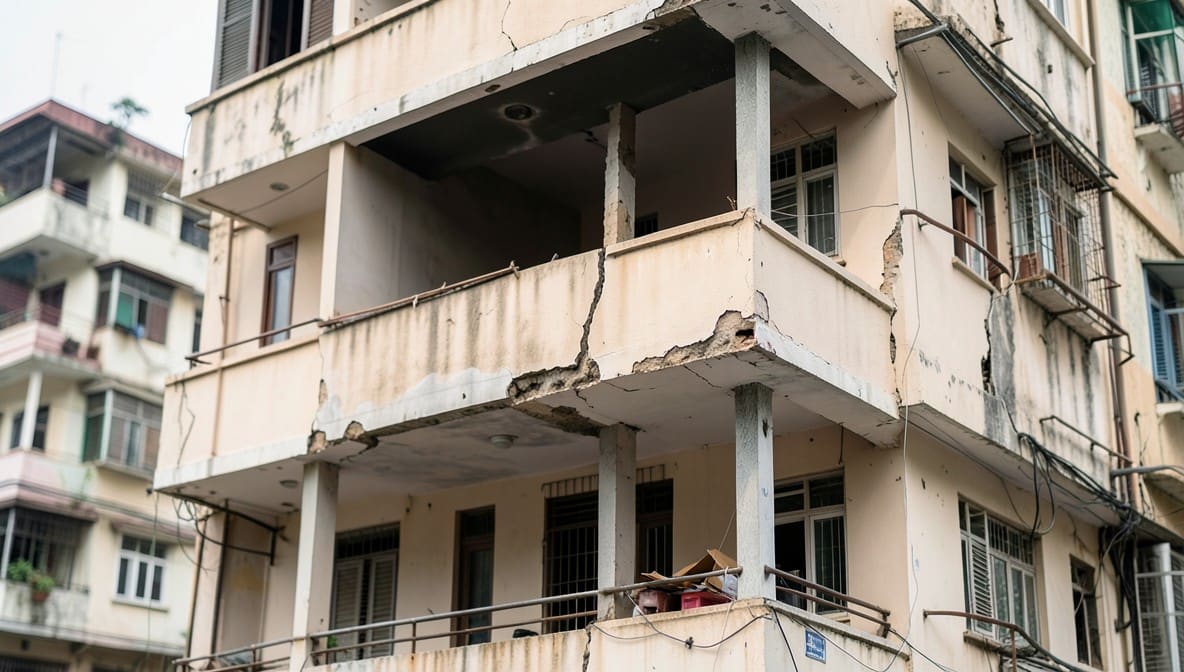
The Bablibai Shapurji Sorabji Trust, as landlord, filed a Recovery of Possession and Eviction (R.A.E.) Suit No.59/94 of 2012 against its tenants, Dr. Hemant B. Bhandari and Smt. Kamlabai B. Bhandari, seeking eviction of the Defendants from the suit premises - Block No.5, First Floor, Laxmi Niwas, Dadar, Mumbai. The Plaintiffs alleged that the Defendants had carried out unauthorized permanent additions and alterations to the structure, including demolition of load-bearing walls, construction of new bathrooms and WCs, removal of kitchen platforms, replacement of wooden windows with larger ones, and enclosure of a balcony into the hall by breaking supporting pillars. The suit also raised grounds of non-use, nuisance, bonafide requirement, and damage to the property, but the Trial Court dismissed all claims.
Key Facts
- The suit premises are part of a 70-year-old building owned by a family trust
- The original tenant, Dr. B.C. Bhandari, died in 2005; tenancy devolved to his legal heirs, the Defendants
- The Plaintiffs filed the suit on 15.03.2012
- On 14.01.2012, the Municipal Corporation of Greater Mumbai (MCGM) issued a notice regarding unauthorized construction
- On 10.02.2012, the Trial Court granted a partial injunction restraining further construction
- On 18.06.2013, the Trial Court permitted the Plaintiffs to inspect the premises with an architect and photographer
- On 01.02.2012, Plaintiffs visited the premises with architect Mr. Jamshed Sethna (P.W.2) and photographer Mr. Kiran Shetye (P.W.3)
- Photographs and architectural sketches were marked as exhibits during trial
- The Defendants claimed they obtained oral permission from Plaintiff No.1 for tenantable repairs in October-November 2011
- Plaintiff No.1 was not examined as a witness
- The Defendants did not produce any written consent, call records, or MCGM approval
Procedural History
- 15.03.2012: R.A.E. Suit No.59/94 of 2012 filed before the Court of Small Causes, Mumbai
- 10.02.2012: Trial Court granted partial injunction against further construction
- 18.06.2013: Trial Court allowed inspection of premises with architect and photographer
- 20.11.2017: Cross-examination of P.W.1 (Plaintiff No.3) conducted, during which Defendants made admissions regarding structural changes
- 30.10.2021: Trial Court dismissed the suit, rejecting all grounds of eviction
- 05.03.2025: Appellate Bench of Small Causes Court allowed the appeal and decreed the suit on the ground of unauthorized permanent alterations
- 23.06.2025: Statement recorded by Plaintiffs confirming non-filing of execution proceedings
- 28.03.2025: Civil Revision Application No.272 of 2025 filed before Bombay High Court under Section 115 CPC
- 23.04.2026: Judgment delivered by Justice Sandep V. Marne
The Parties' Positions
Applicants/Defendants: Argued that no permanent alterations were made; any changes were tenantable repairs with oral consent from Plaintiff No.1. Contended that Plaintiffs failed to produce MCGM sanctioned plans, making their case unprovable. Asserted that the Trial Court correctly dismissed the suit due to lack of evidence.
Respondents/Plaintiffs: Maintained that structural changes were evident from photographs and admissions in cross-examination. Argued that the Appellate Court correctly appreciated the evidence and that oral consent is legally insufficient under Section 16(1)(b) of the Maharashtra Rent Control Act, 1999.
Relief Sought
The Applicants sought setting aside of the Appellate Court’s decree dated 05.03.2025, restoration of the Trial Court’s dismissal order, and dismissal of the eviction suit. The Respondents sought confirmation of the eviction decree and direction for handover of possession.
The Legal Issue
Can a landlord successfully evict a tenant for unauthorized permanent alterations under Section 16(1)(b) of the Maharashtra Rent Control Act, 1999, without producing municipal sanctioned plans, if the tenant’s own cross-examination admits to structural changes and photographic evidence corroborates them?
Arguments Presented
For the Appellant/Petitioner
Mr. Vishal Kanade, counsel for the Applicants, argued that the burden to prove unauthorized alterations lay solely on the Plaintiffs. He contended that the Plaintiffs failed to produce the MCGM sanctioned plan, which was central to their pleaded case. He emphasized that the Trial Court rightly rejected the evidence of the architect and photographer due to bias and lack of independence. He relied on Sukhlal Chunilal Ghagani v. Harish Suvarna to argue that the landlord must prove the tenant’s responsibility for alterations. He further asserted that suggestions made during cross-examination cannot be treated as admissions and that the Appellate Court erred in shifting the burden to the Defendants to prove their defense of oral consent.
For the Respondent/State
Mr. Prashant Chawan, Senior Advocate for the Respondents, argued that the Appellate Court correctly appreciated the evidence. He highlighted that the Defendants admitted in cross-examination to demolishing walls, relocating bathrooms, removing kitchen platforms, and breaking structural pillars. He submitted that the photographs, admitted by the Defendants, clearly showed unauthorized structural changes. He relied on Purushottam Das Bangur v. Dayanand Gupta to argue that permanence is determined by intention, durability, and damage to structure - not by municipal plans. He emphasized that oral consent is not recognized under Section 16(1)(b) and that the Defendants failed to prove their defense.
The Court's Analysis
The Court began by noting that the Appellate Court’s reversal of the Trial Court’s finding was under challenge under Section 115 CPC, which permits revision only for jurisdictional errors or material irregularities. The Court held that the Trial Court’s dismissal of the suit was based on a flawed appreciation of evidence, particularly the rejection of photographic evidence and the architect’s testimony on grounds of bias without substantive reasoning.
"The Trial Court has erroneously discarded the evidence of the Architect and Photographer without any basis. It has not even taken pains to take into consideration the sketch, map and photographs both of which speaks volumes about blatant unauthorized work carried out by the Defendants."
The Court emphasized that the cross-examination of P.W.1 (Plaintiff No.3) contained clear admissions by the Defendants regarding demolition of partition walls, construction of new bathrooms, removal of kitchen platforms, and replacement of windows. These were not mere suggestions but acknowledgments of fact.
"The manner in which cross-examination of P.W.1 is conducted leaves no manner of doubt that Defendants have caused various additions and alterations of permanent nature in the suit premises."
The Court further held that the Defendants’ defense of oral consent was legally untenable. Section 16(1)(b) of the Maharashtra Rent Control Act requires written consent for alterations. The absence of written permission, call records, or any corroborative document rendered the defense unproven.
The Court distinguished Sukhlal Chunilal Ghagani on the basis that in that case, the landlord had not pleaded or proved any alterations by the tenant. Here, the Plaintiffs had both pleaded and proved the alterations through admissions and photographs. The Court relied on Purushottam Das Bangur v. Dayanand Gupta to define permanence: intention, durability, material used, and damage to structure. The enclosure of a balcony by breaking load-bearing pillars, the construction of new bathrooms, and the replacement of wooden windows with larger ones were held to be permanent alterations.
The Court rejected the argument that the absence of MCGM sanctioned plans was fatal. It held that where the tenant admits to structural changes and photographic evidence confirms them, the landlord need not produce municipal plans to establish the nature of the alterations.
The Verdict
The Applicants’ Civil Revision Application was dismissed. The Appellate Court’s decree dated 05.03.2025 was upheld. The Defendants were directed to hand over possession of the suit premises to the Plaintiffs within 30 days of the judgment. The Court rejected the request to continue the stay on execution proceedings, noting that the Defendants no longer resided in the premises. No costs were awarded.
What This Means For Similar Cases
Oral Consent Is Not a Valid Defense
- Practitioners must advise landlords that oral permission for structural alterations is legally insufficient under Section 16(1)(b) of the MRC Act
- Written consent must be documented and preserved; reliance on telephone conversations or verbal assurances will not withstand scrutiny
- Tenants claiming oral consent must be challenged on the absence of corroborative evidence such as SMS, emails, or witness testimony
Photographic Evidence and Cross-Examination Admissions Are Sufficient
- Photographs admitted by the tenant, even without certified bills, can form the basis of eviction if they depict structural changes
- Cross-examination that elicits admissions about demolition, construction, or modification of load-bearing elements constitutes probative evidence
- Courts will not require municipal sanctioned plans if the tenant’s own conduct and admissions establish unauthorized alterations
Burden Shifts When Tenant Raises a Positive Defense
- When a tenant claims alterations were made with consent or constitute tenantable repairs, the burden shifts to the tenant to prove that defense
- The landlord’s initial burden to prove alterations remains, but once the tenant raises a specific defense, the onus to disprove it lies with the tenant
- This principle reinforces procedural fairness and prevents tenants from using vague defenses to evade accountability